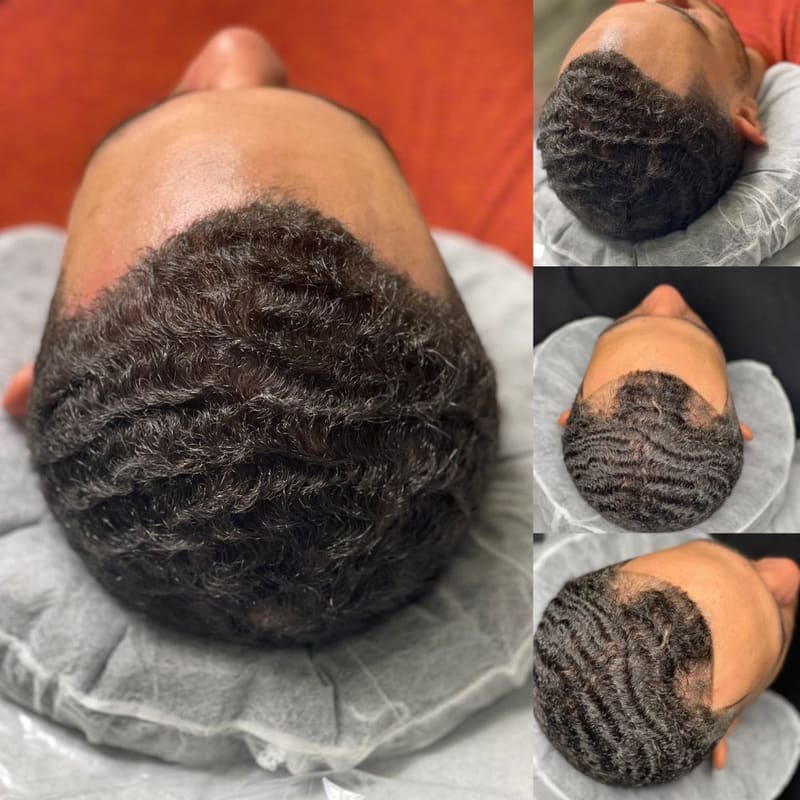
Myths vs Facts · Hair Loss & SMP

25 Hair Loss & SMP Myths, Answered Honestly

Thirteen scalp micropigmentation myths and twelve general hair loss myths — what each one gets wrong, what it gets right, and why it stuck around. No shaming, no hype, and no using a myth to sell you something.

Why myths about hair loss actually matter

A myth about hair loss is rarely just a harmless piece of bad trivia. It changes what people do. Someone who believes nothing can be done never books the dermatologist appointment that would have told them what they are actually dealing with. Someone who believes SMP grows hair back books the wrong procedure for the wrong reason and ends up disappointed by work that was never going to do what they wanted. Someone who believes it always looks fake spends another five years under a hat, when a consultation would have taken twenty minutes.

So this page exists to clear the ground. Twenty-five myths, each in three parts: the myth as people actually say it, the honest reality, and why the myth persists. That third part is deliberate. Every myth on this list is believed by intelligent people — usually because it was true once, is true sometimes, or was told to them by someone they trust. If you have nodded along at any of these, you were being reasonable with the information you had. Nobody gets laughed at here.

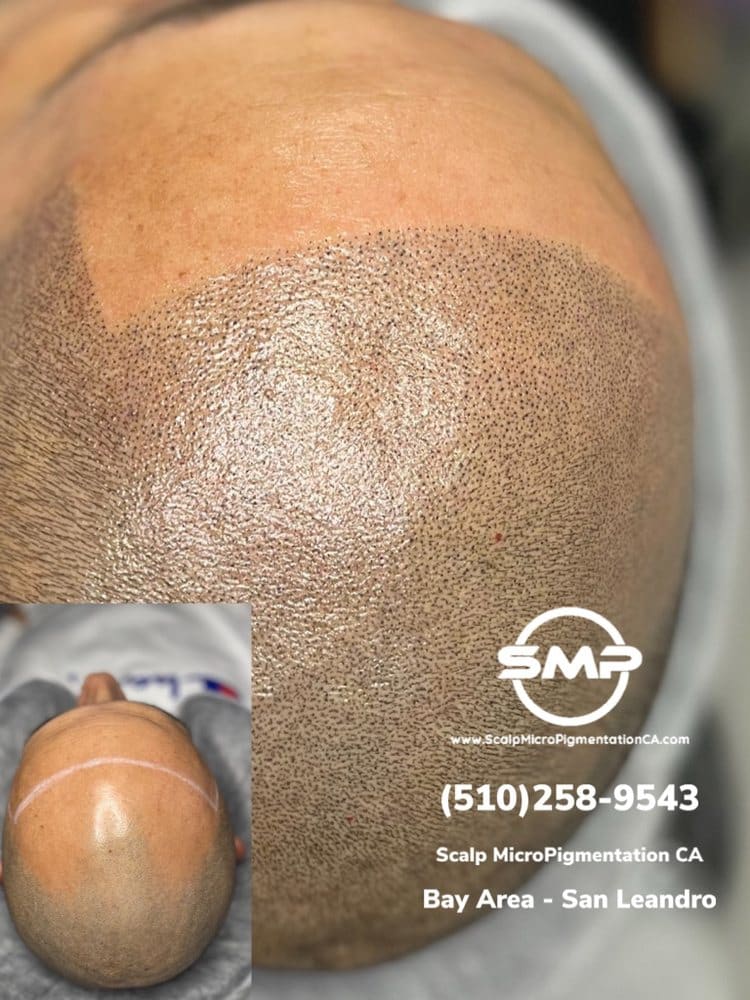
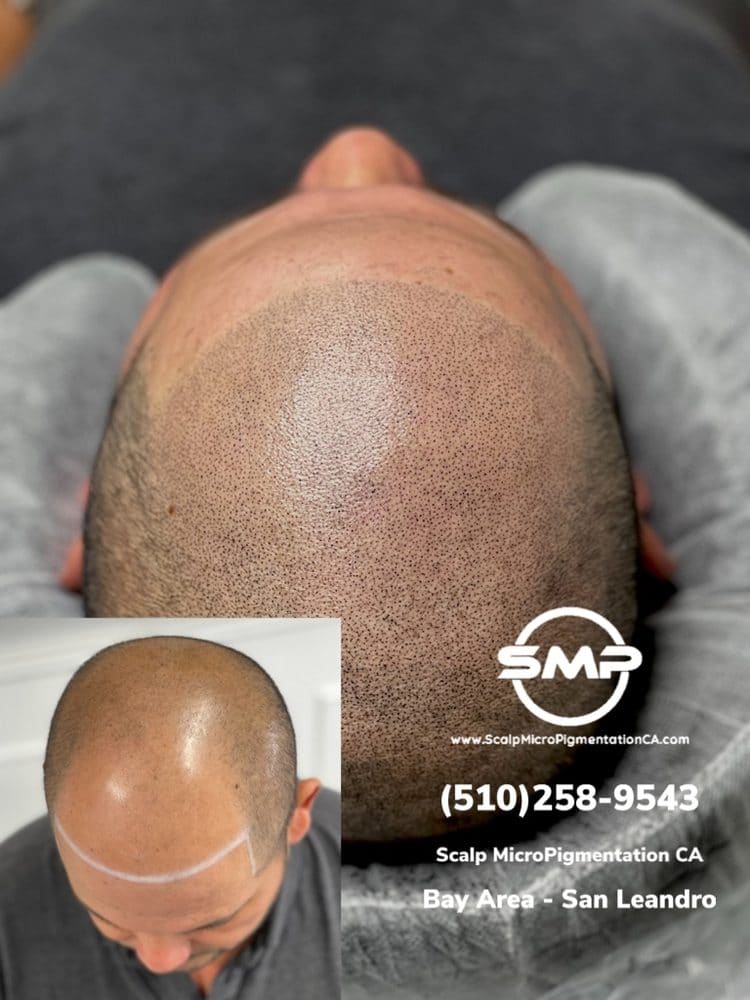
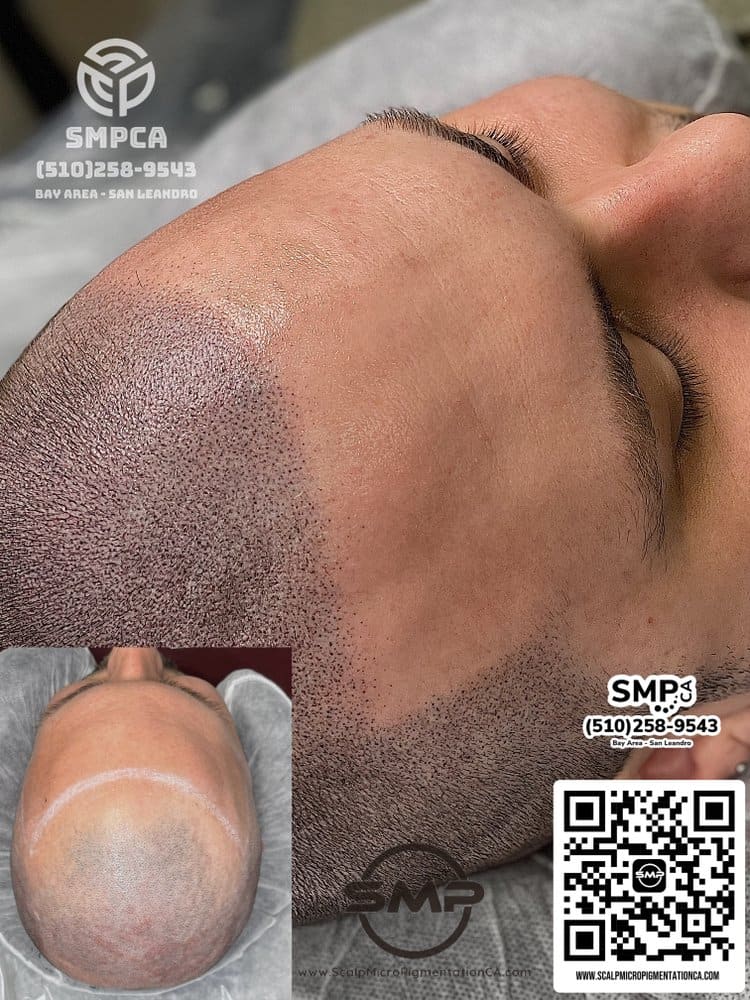
Two standing notes. First: SMPCA is an SMP studio, not a medical provider. Everything in the general hair loss section is educational only and defers to a board-certified dermatologist. Second: none of these myths is a setup to sell you scalp micropigmentation. Several of the SMP myths below are corrected in ways that make SMP sound less convenient than the marketing suggests, because that is what is true. Results vary from person to person, and SMP is a cosmetic tattoo procedure — it does not grow hair or treat the cause of hair loss.

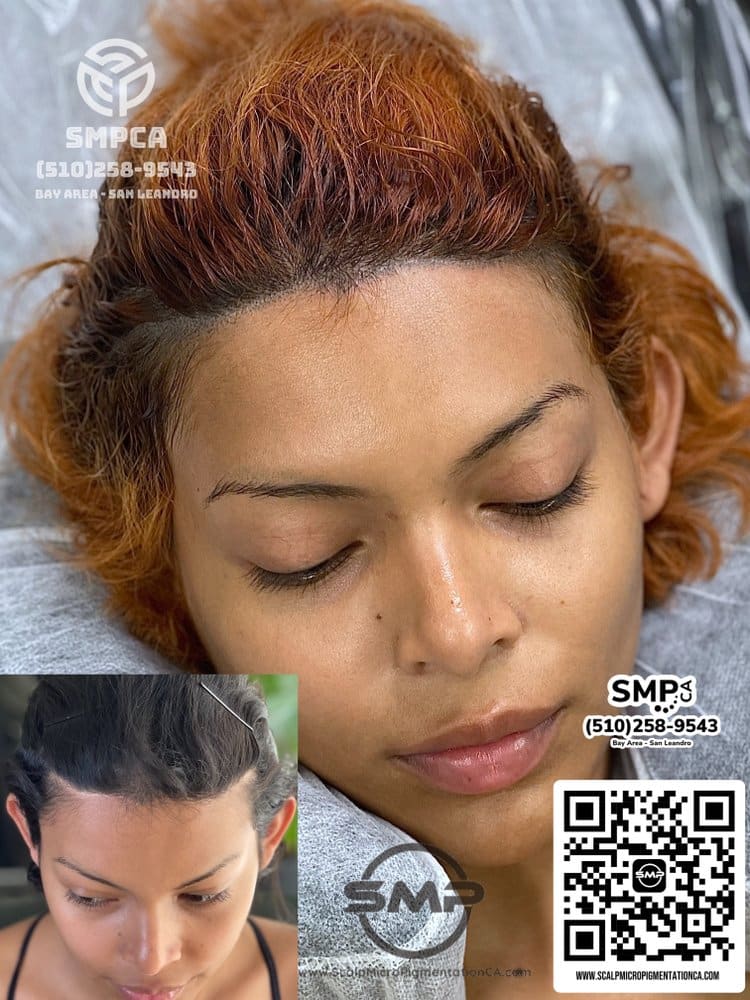
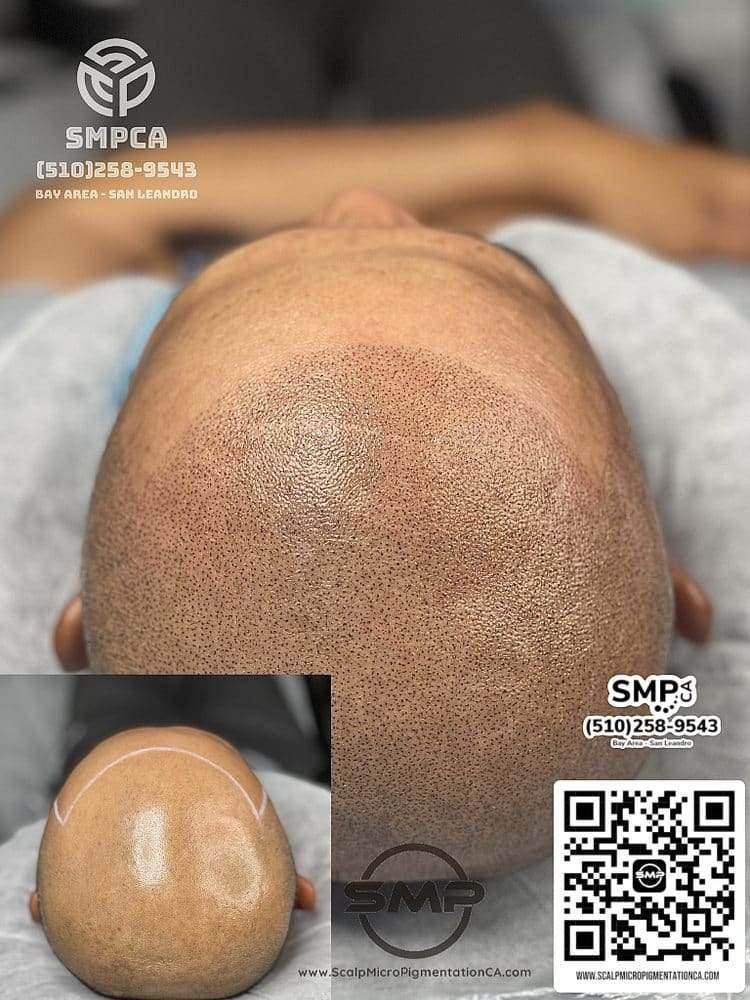
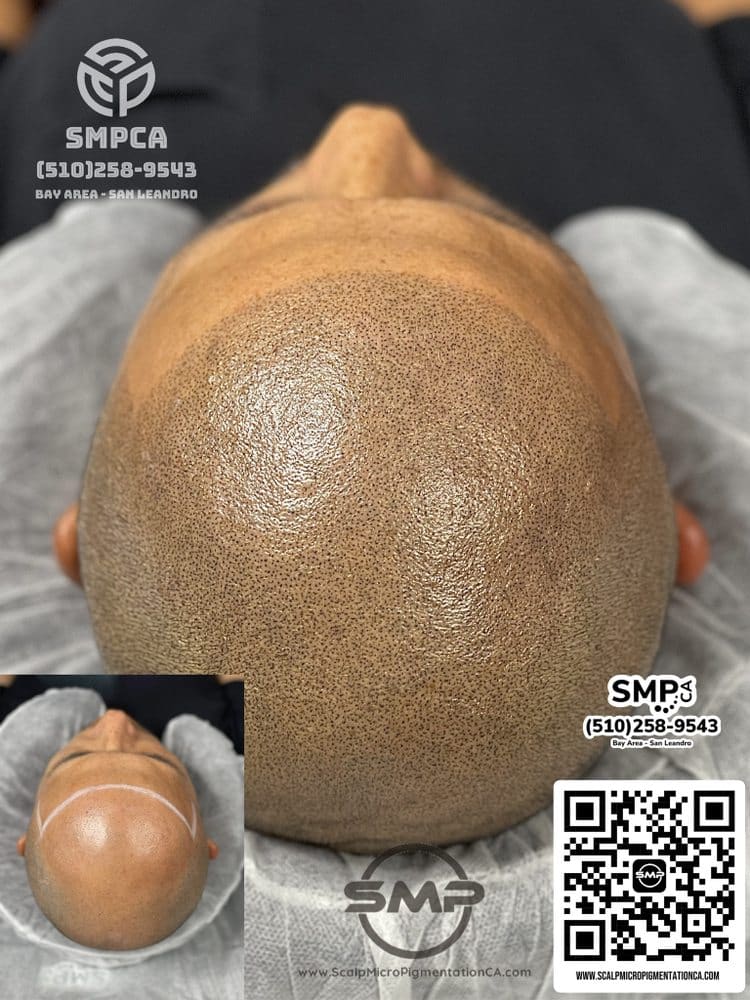
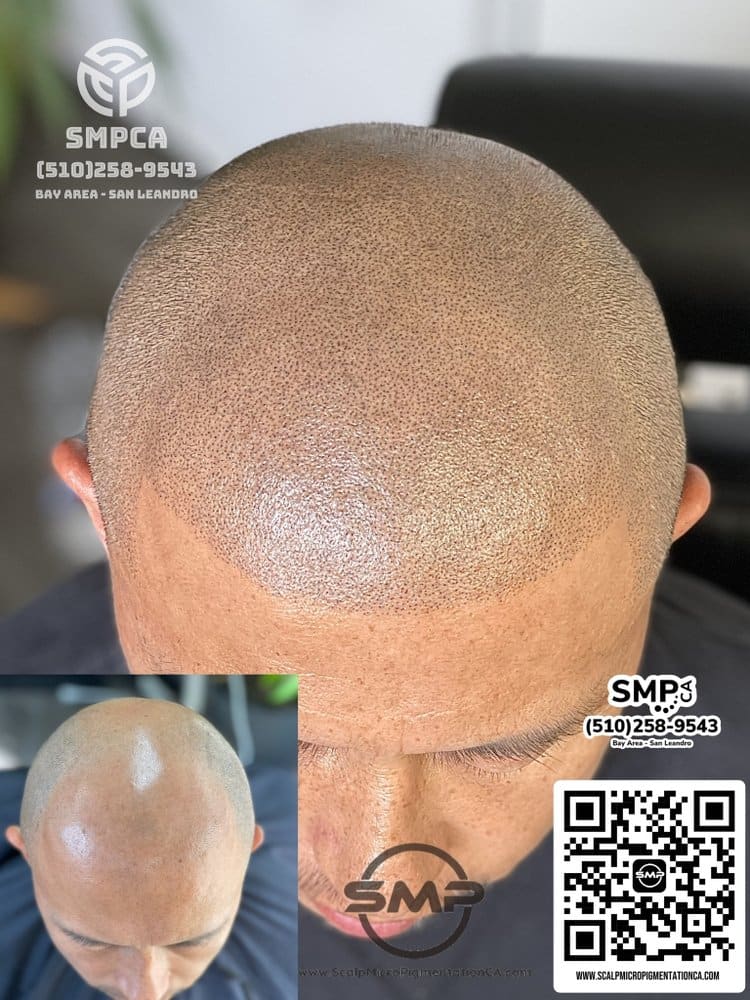
Part 1 · Myths 1–13

Scalp micropigmentation myths

These are the thirteen things people say to me most often at consultations — usually as a question, sometimes as an accusation, occasionally as a reason they almost did not come in. Several of them are partly true, and I say so.

1. Myth:SMP is just a tattoo.

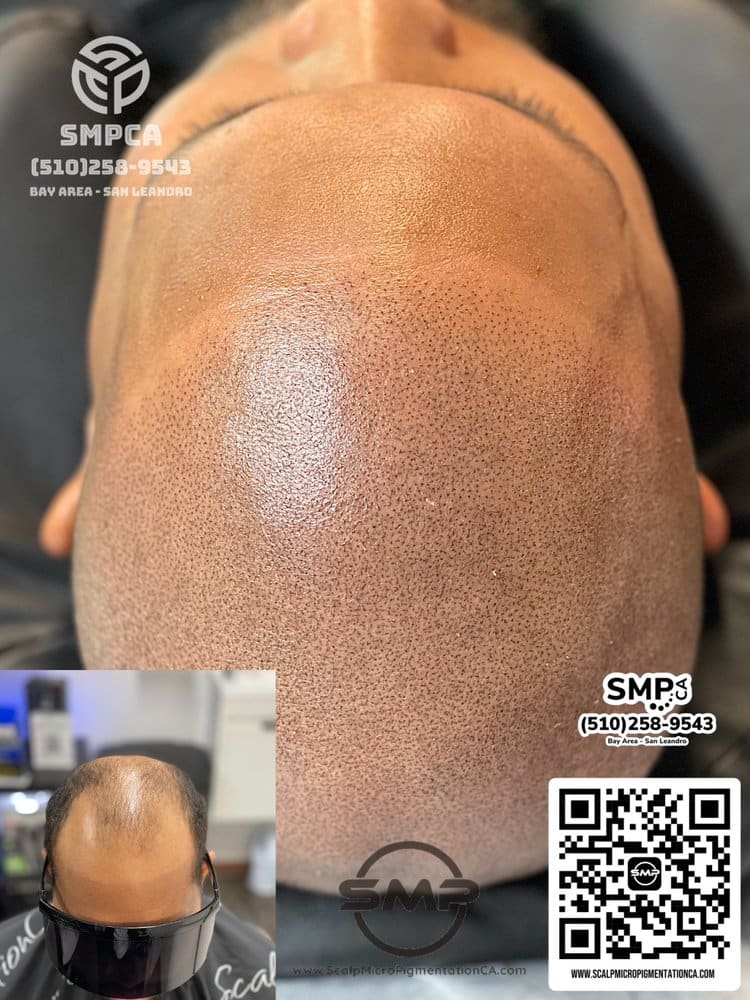
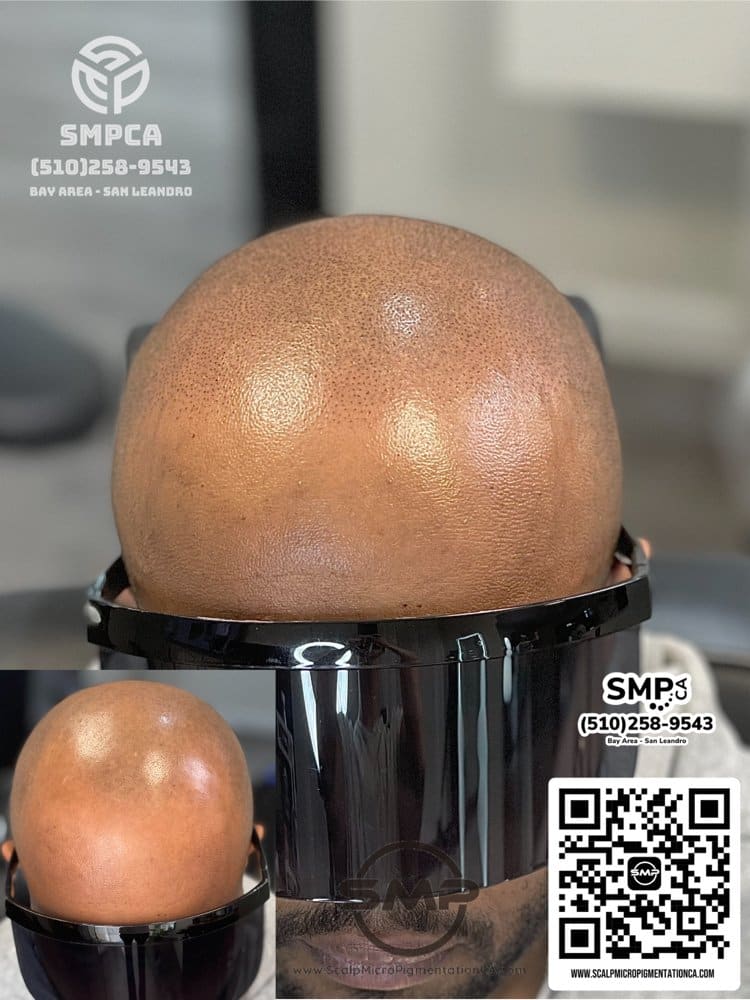
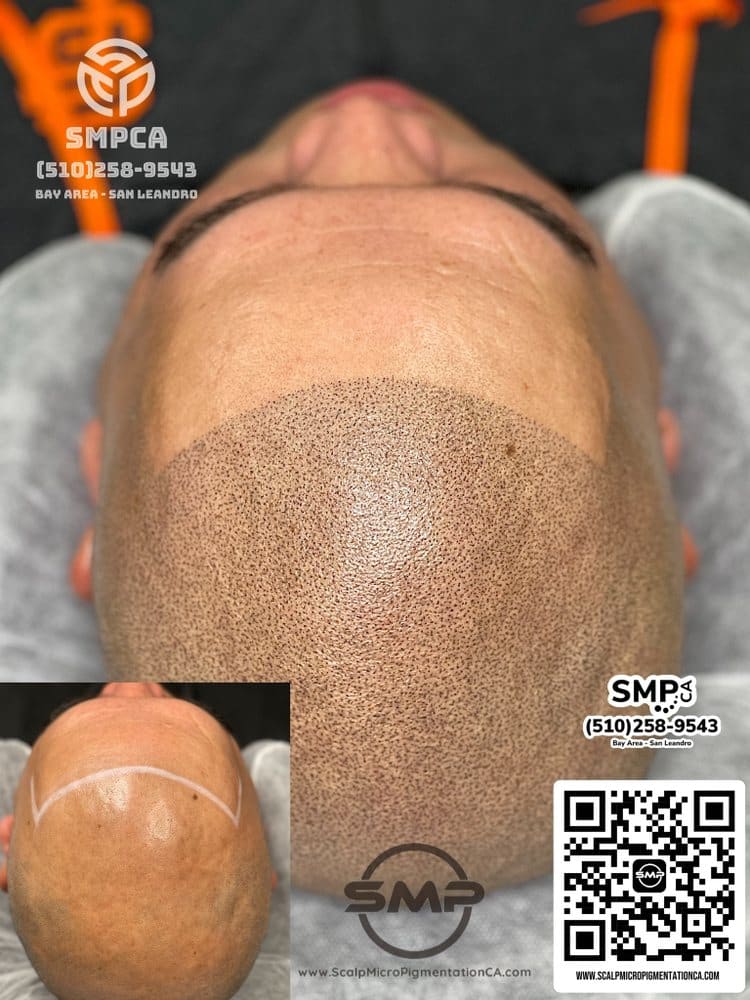
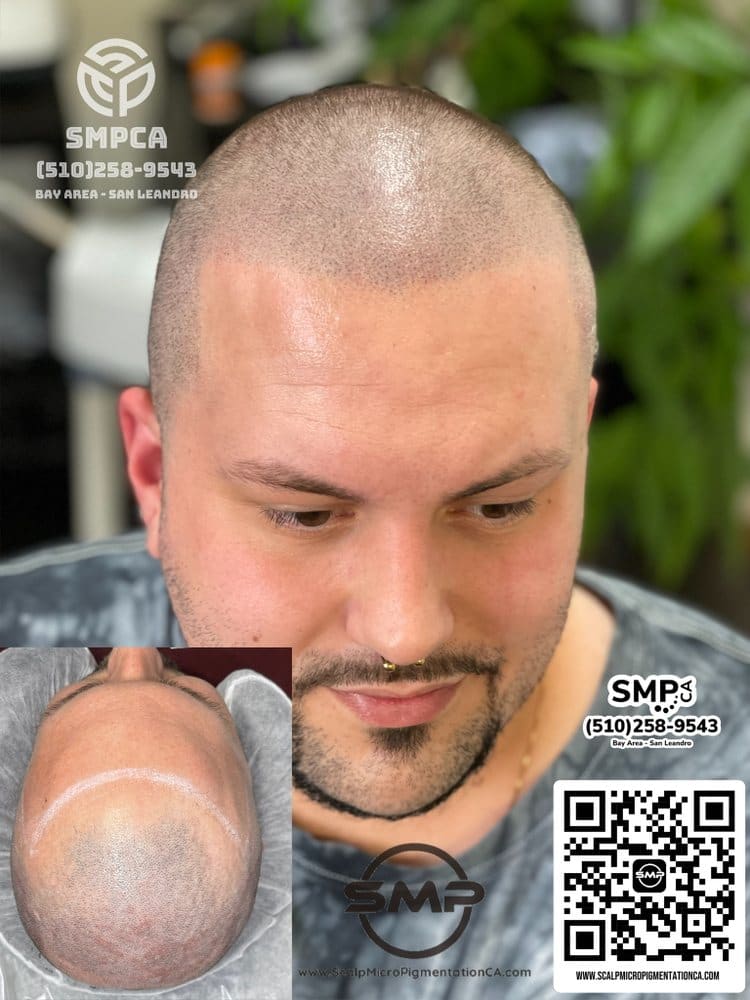
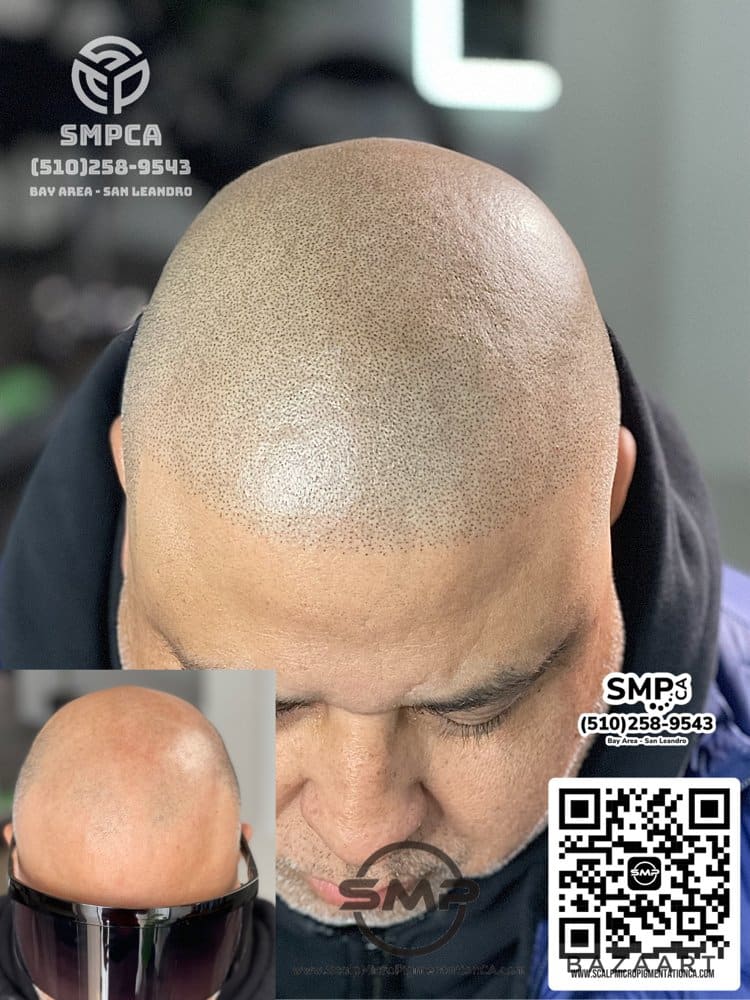
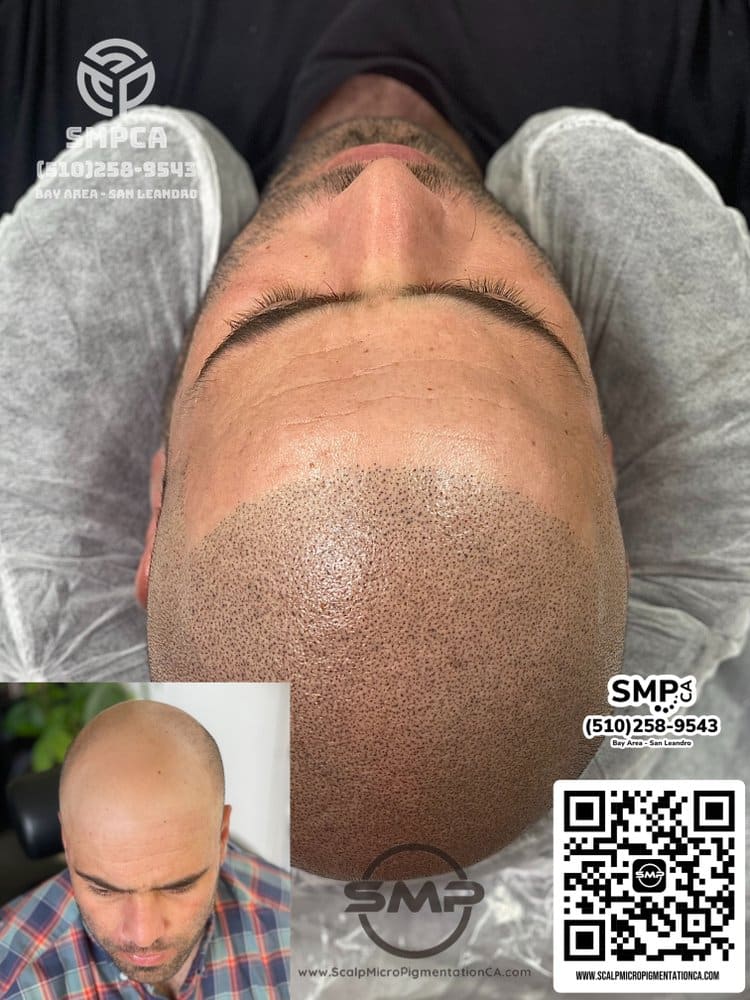
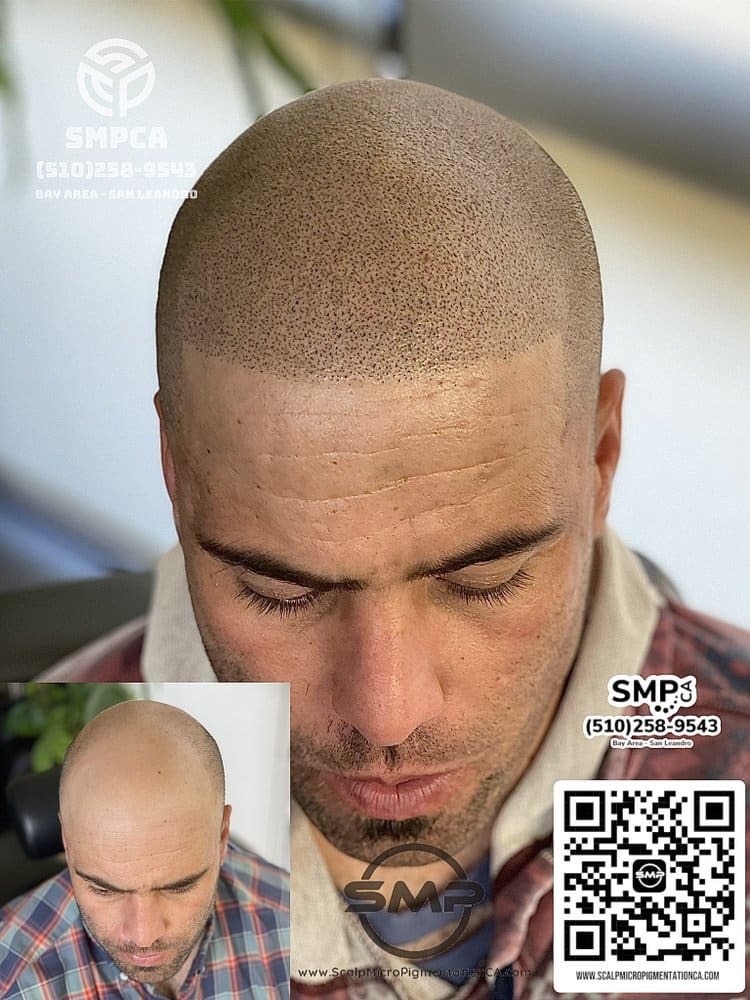
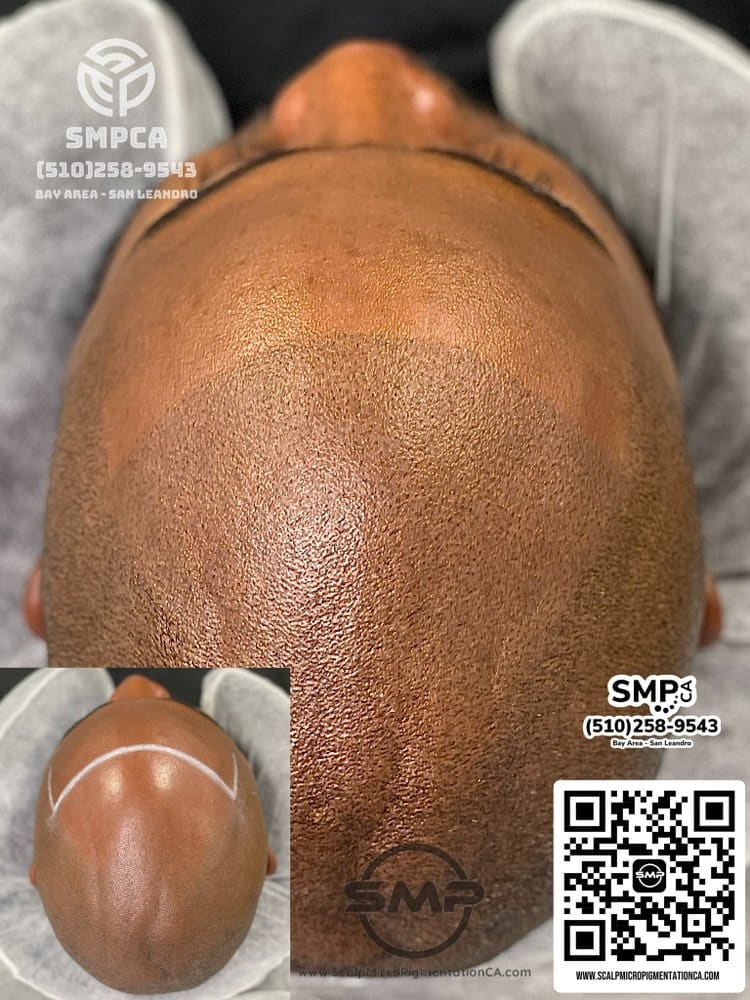
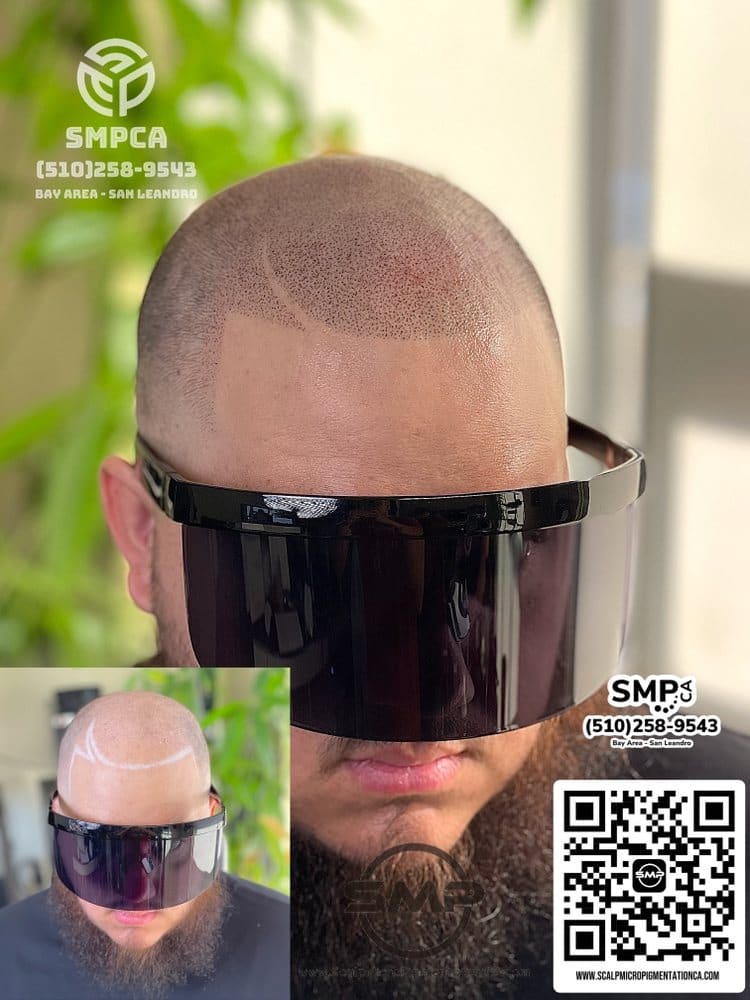
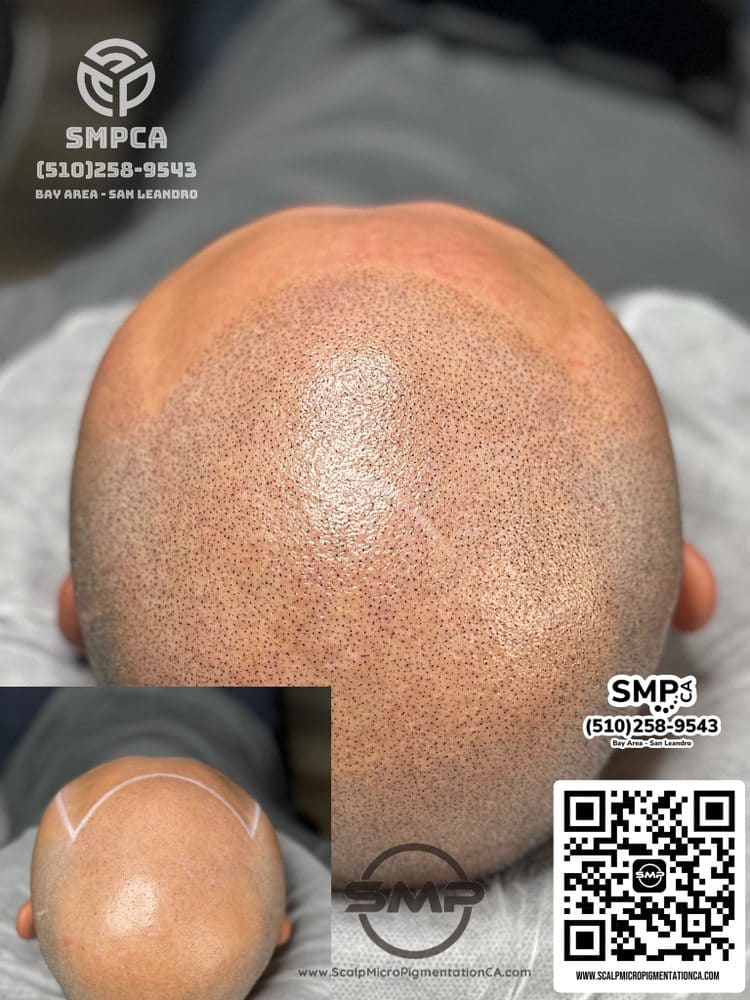
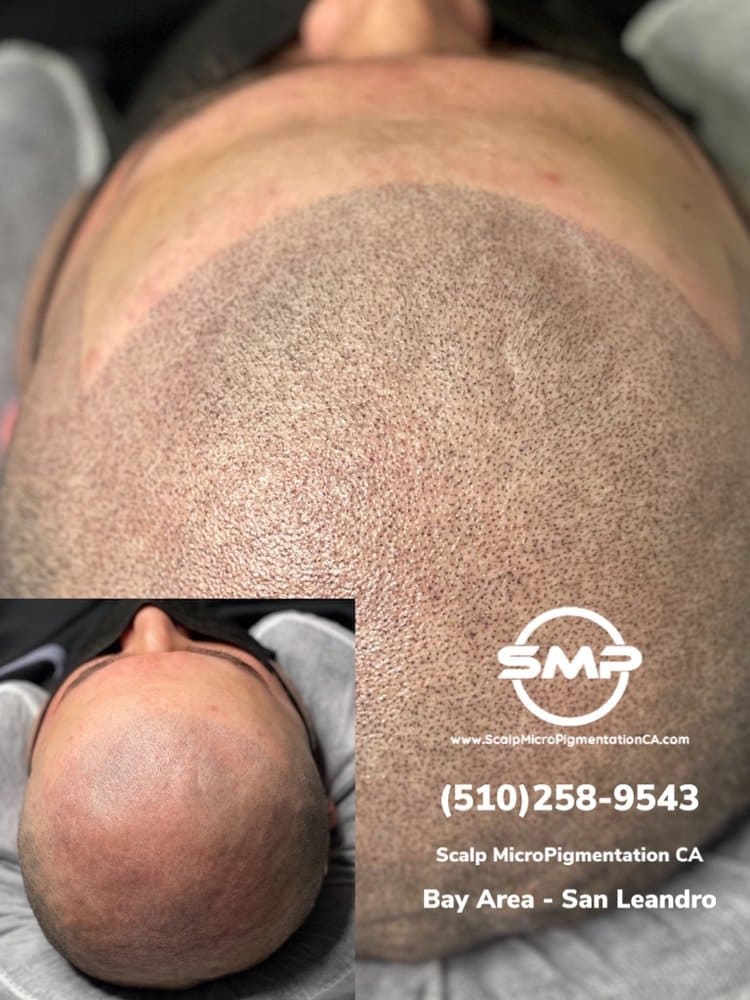
The reality — SMP is a form of cosmetic tattooing — that part is true and we do not dodge it. But the practice differs meaningfully from traditional body art: different pigments formulated to fade toward neutral grey, much finer needle configurations, a shallower and tightly controlled depth, and a completely different goal, which is replicating the appearance of shaved follicles rather than drawing an image. A traditional tattoo artist and an SMP artist are both tattooing. They are not doing the same job.

Why it persists — Because the one-sentence version is technically correct, and because early scalp tattooing genuinely was done by body-art artists using body-art ink and technique — with results that aged the way body art ages.

What scalp micropigmentation actually is

2. Myth:SMP turns blue on everyone.

The reality — SMP uses carbon-based pigments formulated to soften toward neutral grey rather than shift toward blue. That said, no pigment in skin is immune to change — depositing too deep, using inappropriate pigment, and heavy sun exposure over years can all produce tonal shifts, and outcomes vary by individual. It is a real risk managed by technique and pigment selection, not a certainty, and not something to wave away entirely.

Why it persists — Because plenty of people have seen a blued-out old tattoo, and because early scalp work done with standard black tattoo ink did shift. The fear is grounded in real results people actually saw. It is just not the current state of the craft.

How to vet an SMP artist properly

3. Myth:SMP will make my hair grow back.

The reality — No. SMP does not grow hair, create hair strands, or affect follicles in any way. It places pigment in the skin to replicate the appearance of shaved follicles, and whatever is causing your hair loss continues unaffected. If your goal is actual hair growth, SMP is the wrong category entirely and the right conversation is with a dermatologist or a hair restoration surgeon.

Why it persists — It sits in the hair restoration category next to treatments that do target biology, some marketing blurs the line, and before-and-after photos genuinely look like more hair. The visual result is convincing enough that the mechanism gets assumed.

How the options actually differ

4. Myth:SMP is permanent — it is done and I never think about it again.

The reality — SMP fades. Pigment softens and lightens over time as the body processes it and sun acts on it, and most people return for touch-ups. How long that takes varies substantially by skin type, sun exposure, immune response, aftercare, and how the work was placed — so we cannot give you a number, and you should be skeptical of anyone who does. Plan for touch-ups as part of the cost of ownership.

Why it persists — Permanent makeup and tattoo both carry a permanence connotation, and some marketing leans on the phrase permanent solution because it sells.

How long SMP really lasts

5. Myth:SMP is completely painless.

The reality — We will not tell you that. Most clients describe it as manageable and comparable to or milder than a conventional tattoo, but there are needles involved and sensation varies — by person, by scalp region, and by session. The hairline and areas over bone tend to be sharper. Comfort options can be discussed at consultation. Anyone promising you painless is managing your expectations badly.

Why it persists — Marketing shorthand. Virtually painless is an easy phrase to write and a hard promise to be held to.

What a session is actually like

6. Myth:SMP always looks fake — like a drawn-on helmet.

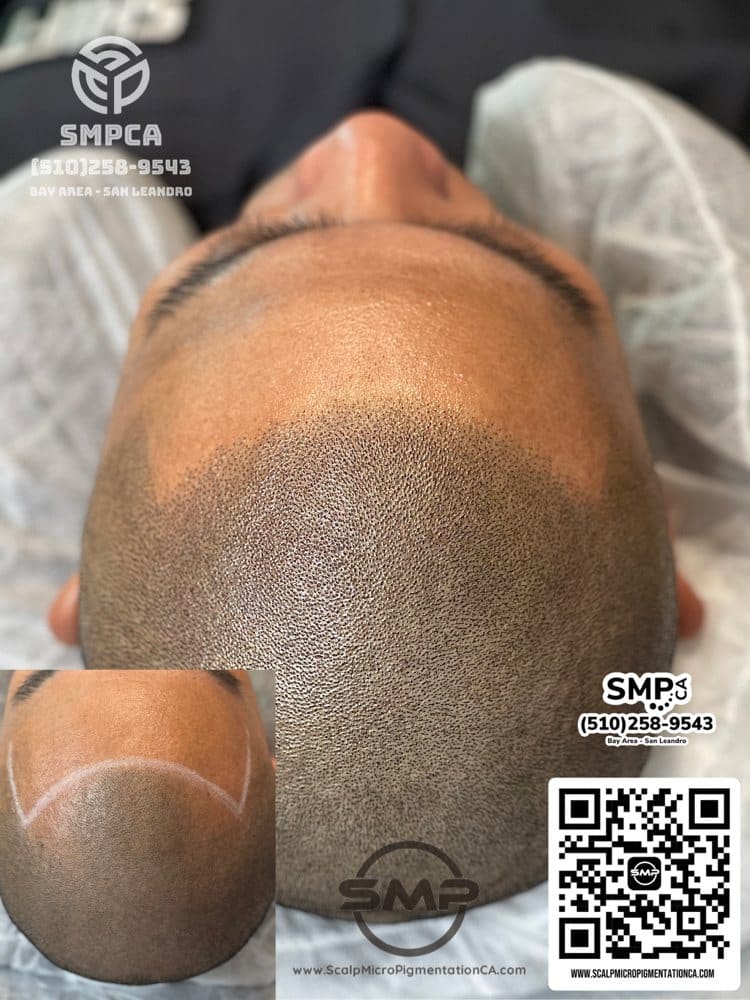
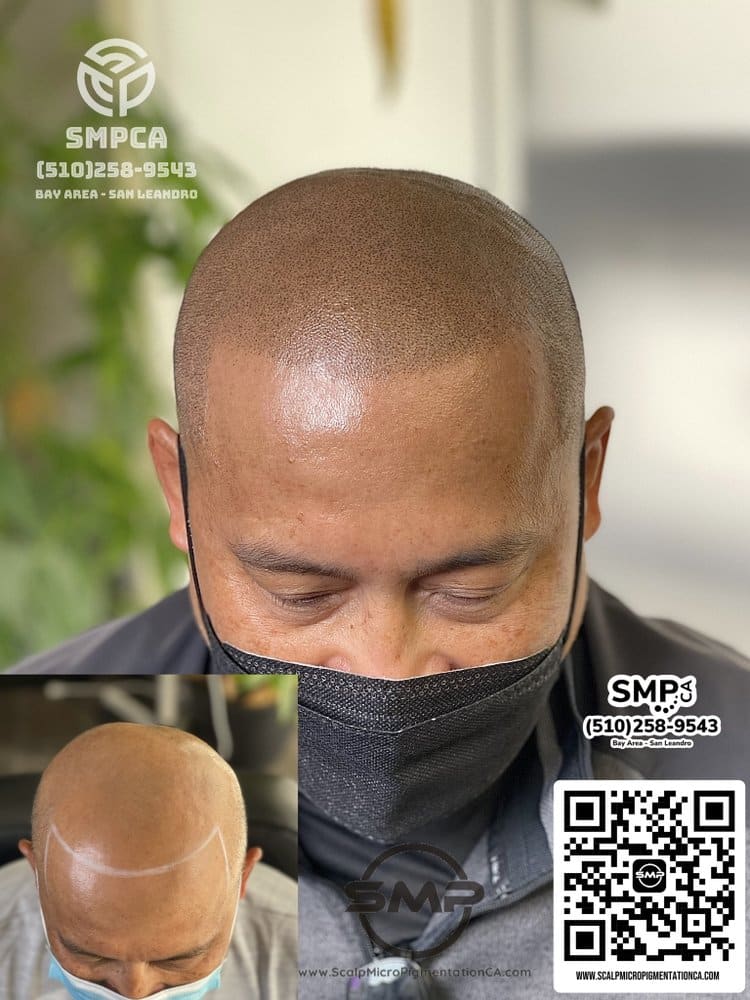
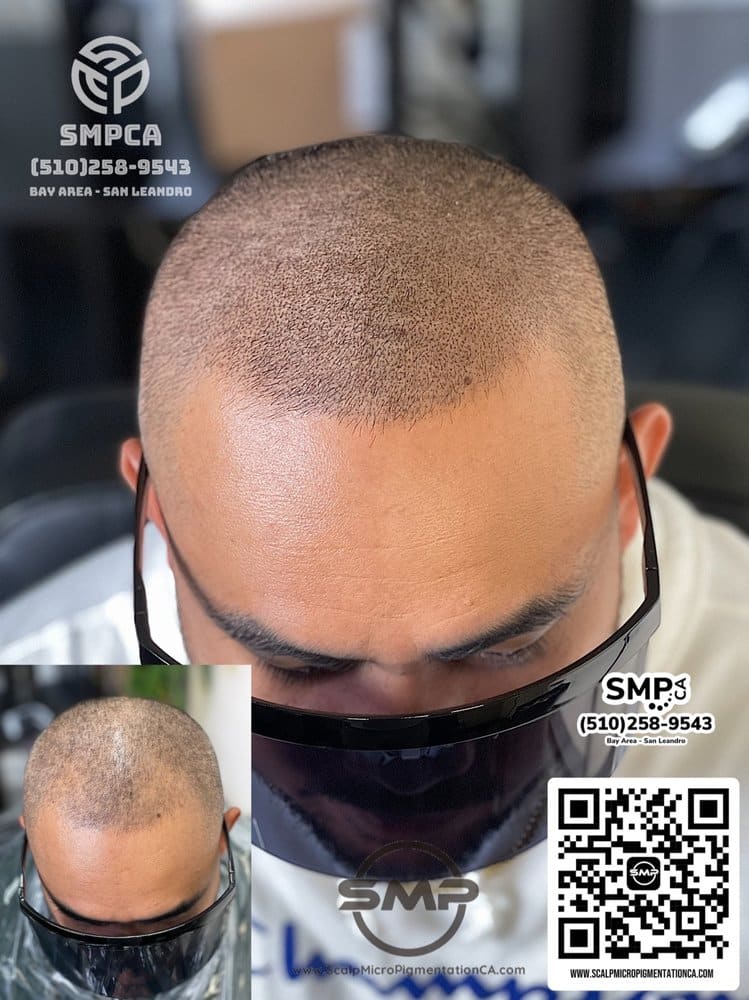
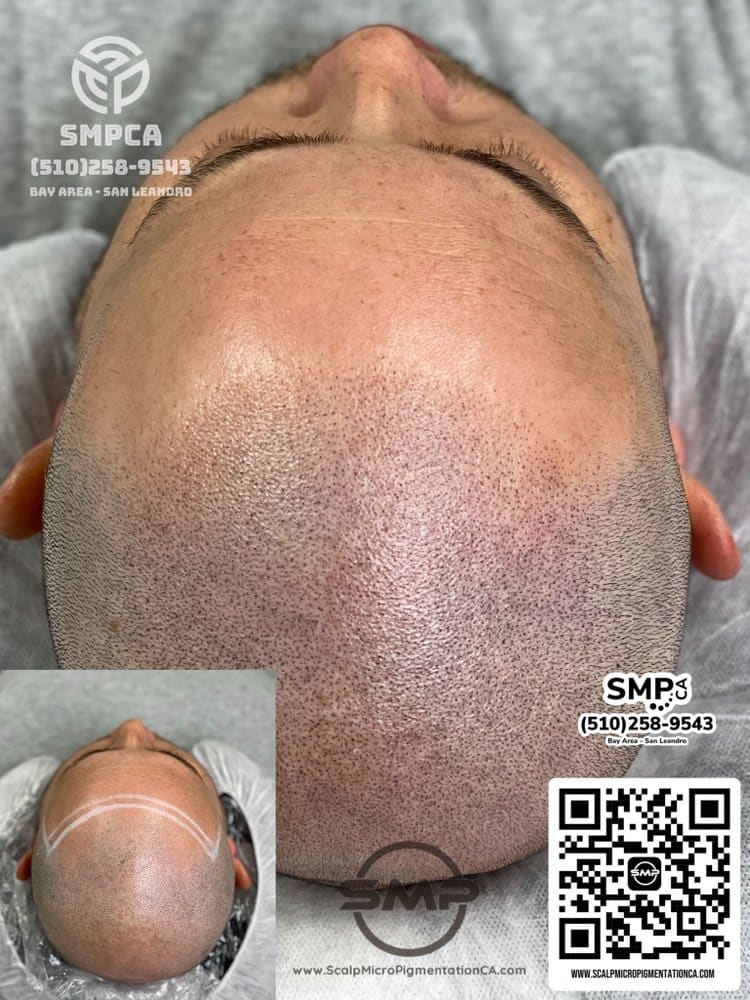
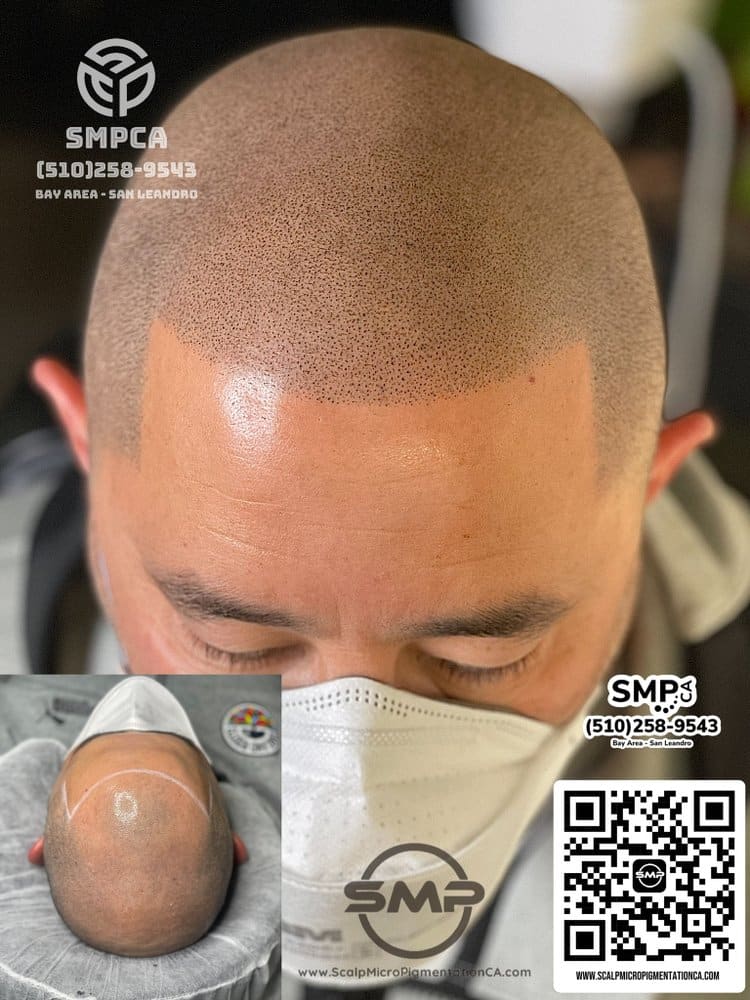
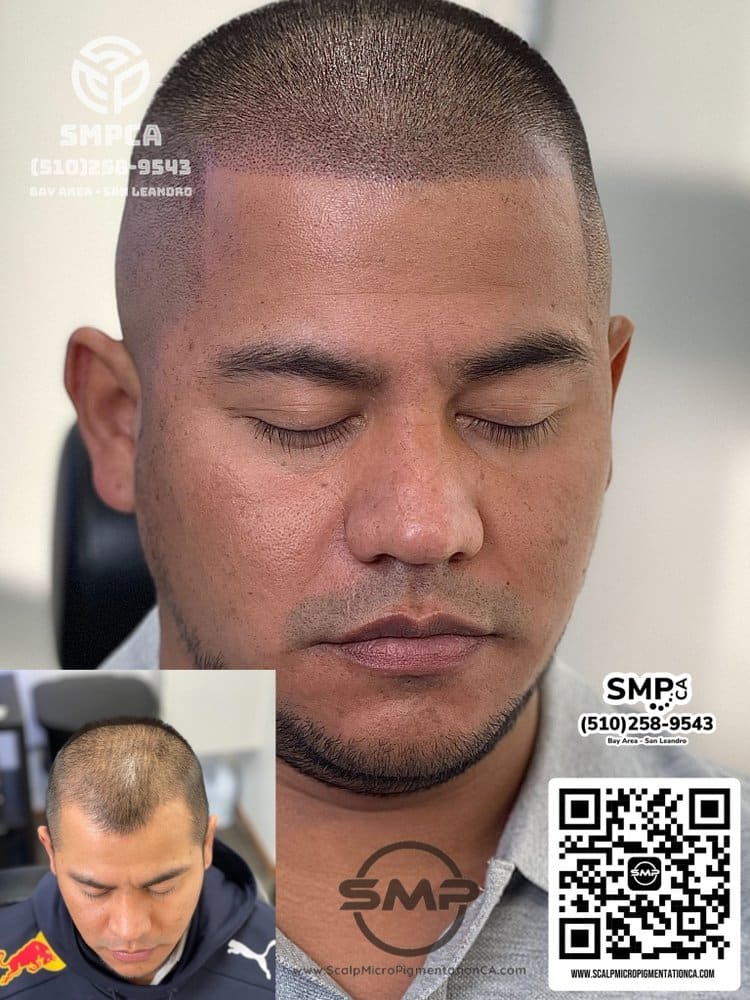
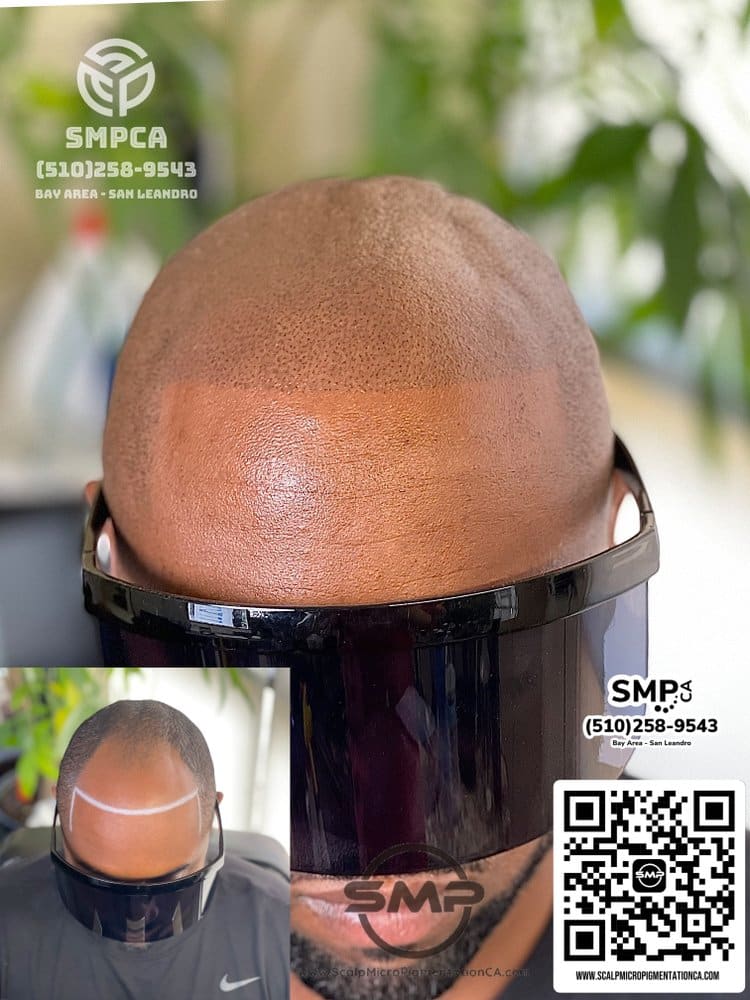
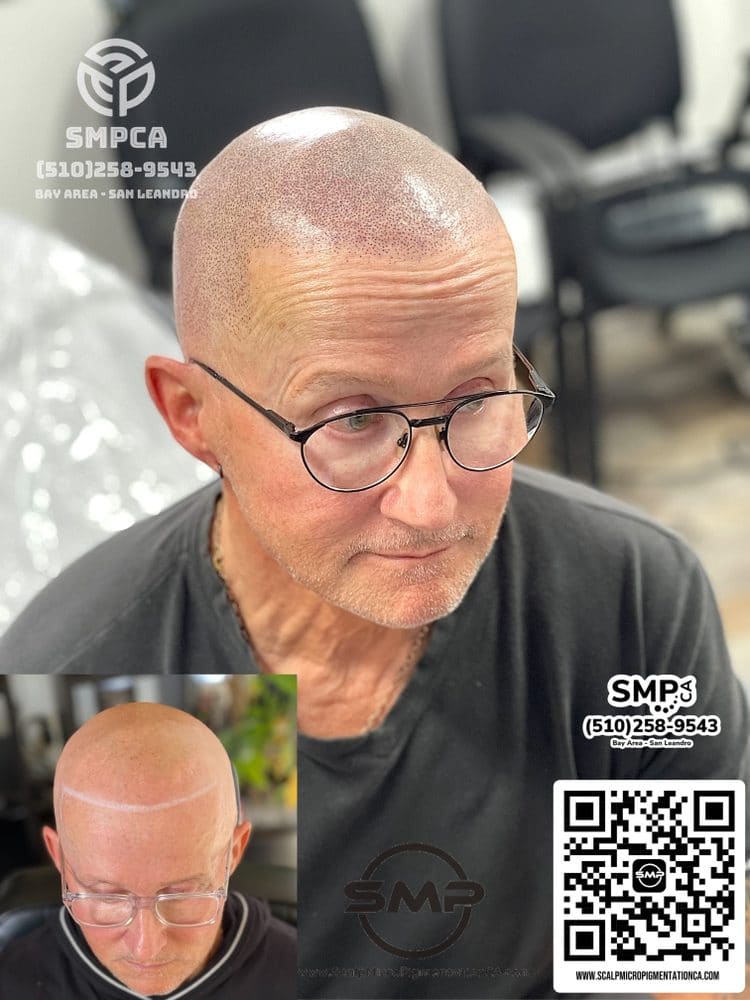
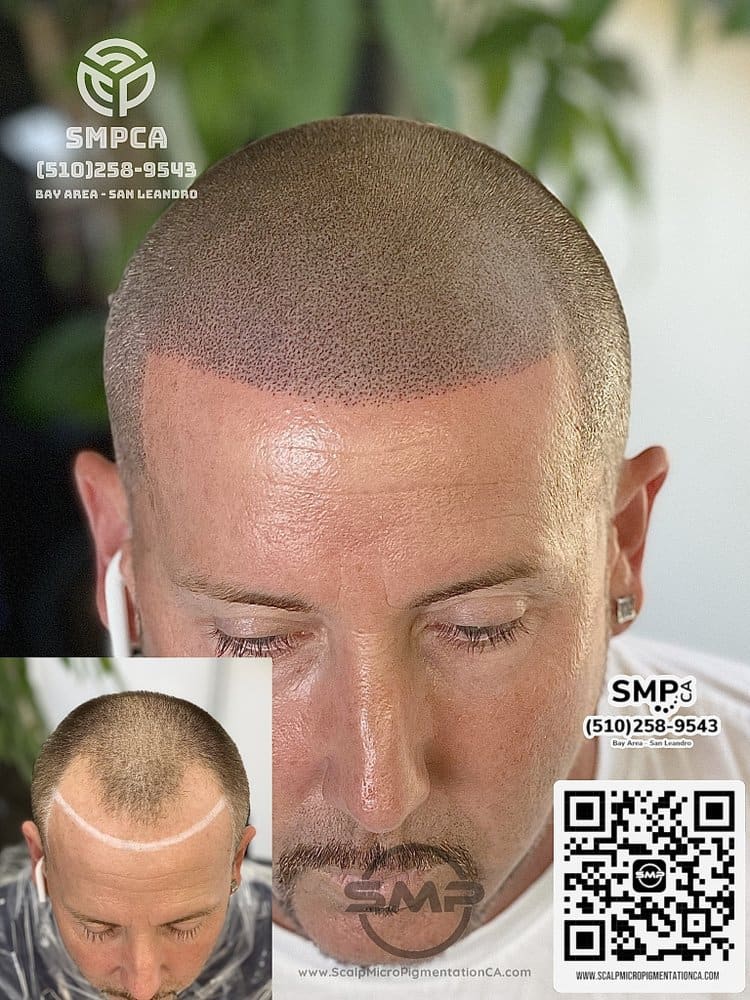
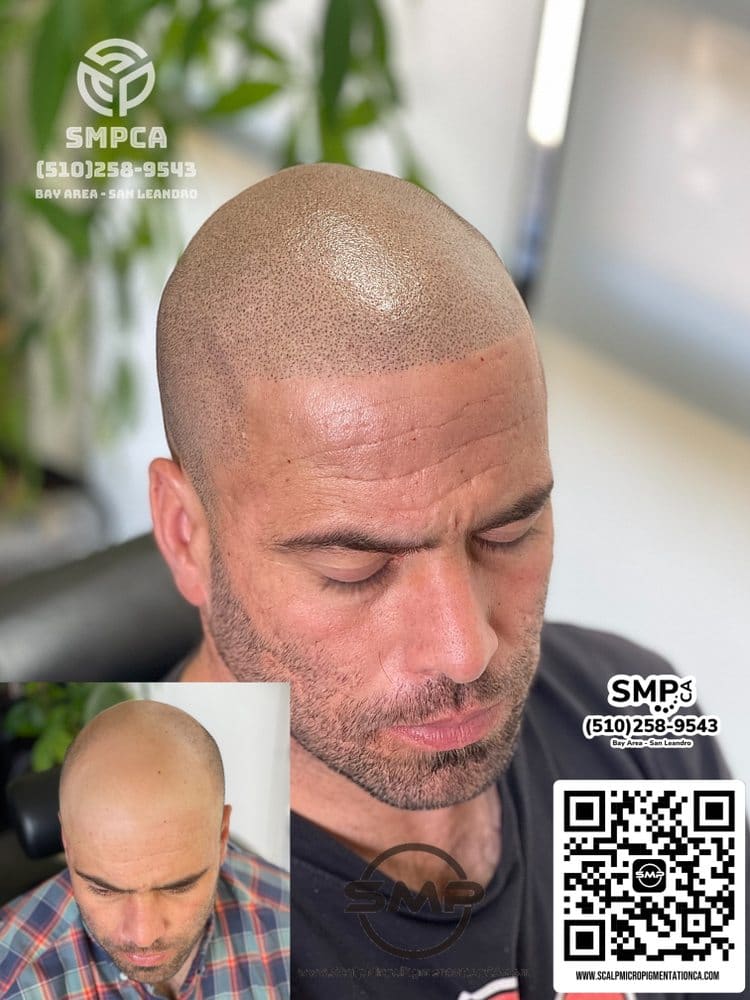
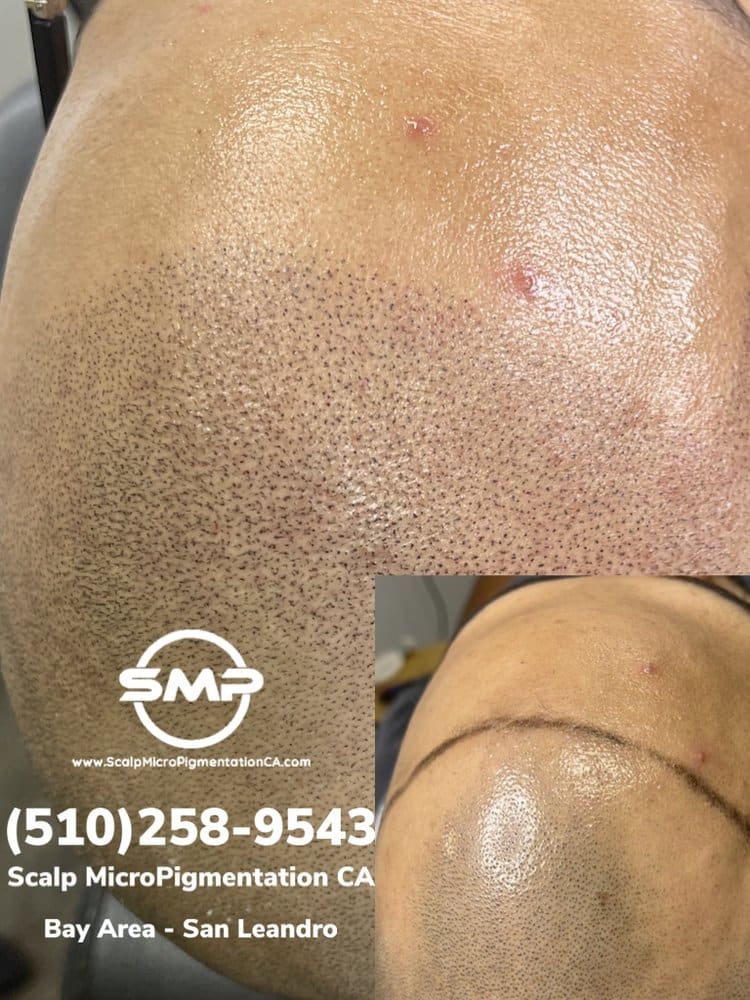
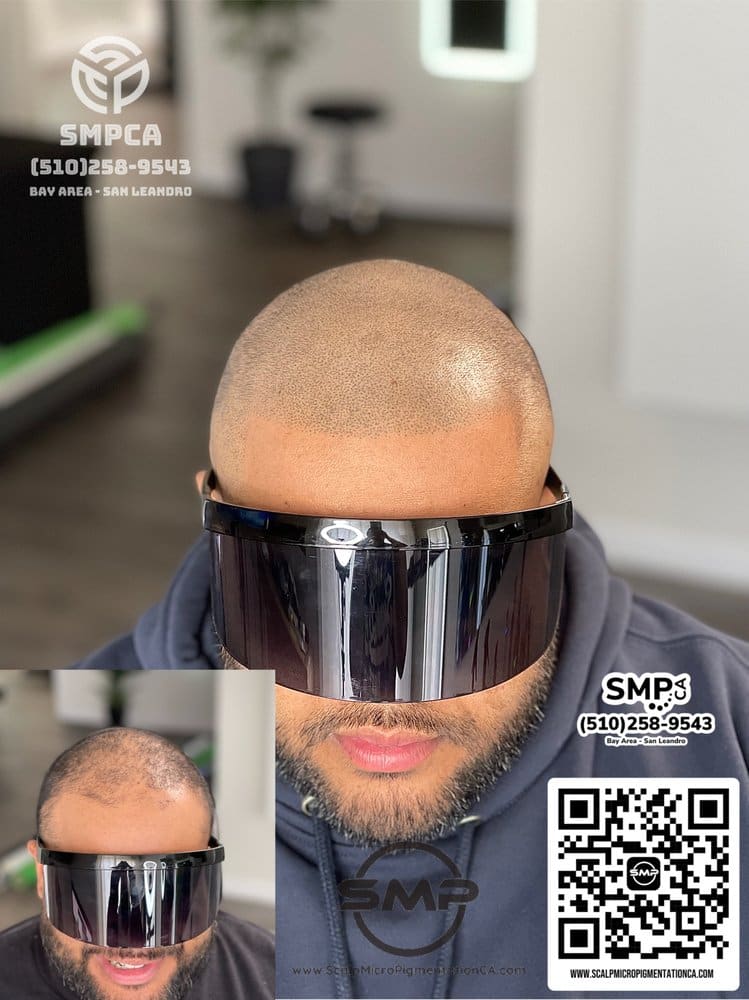
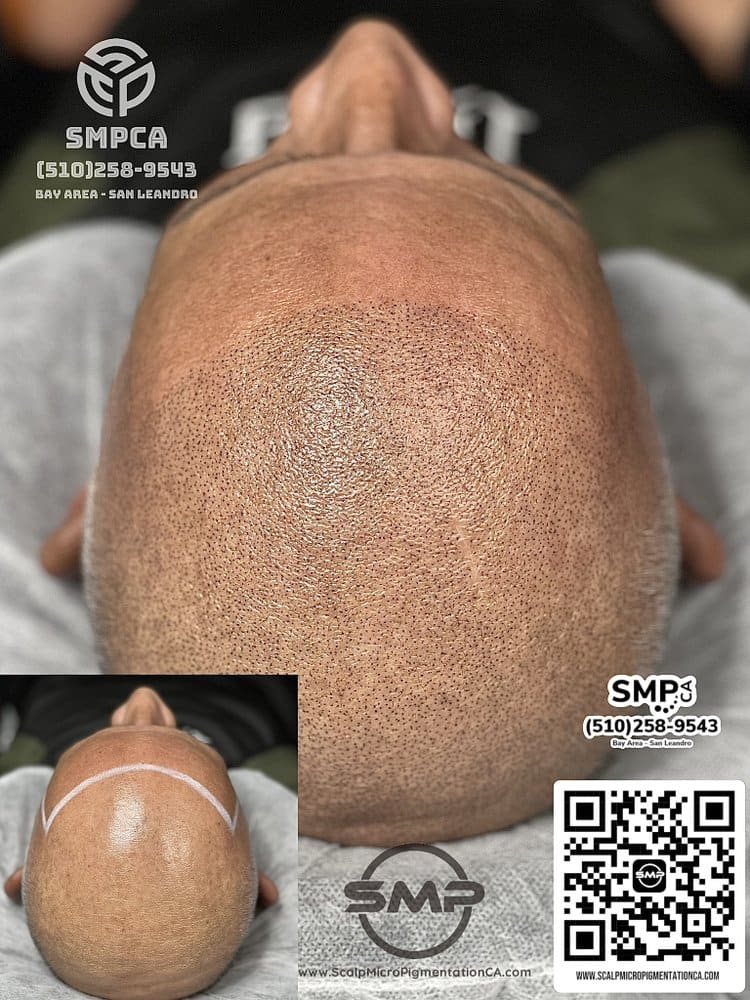
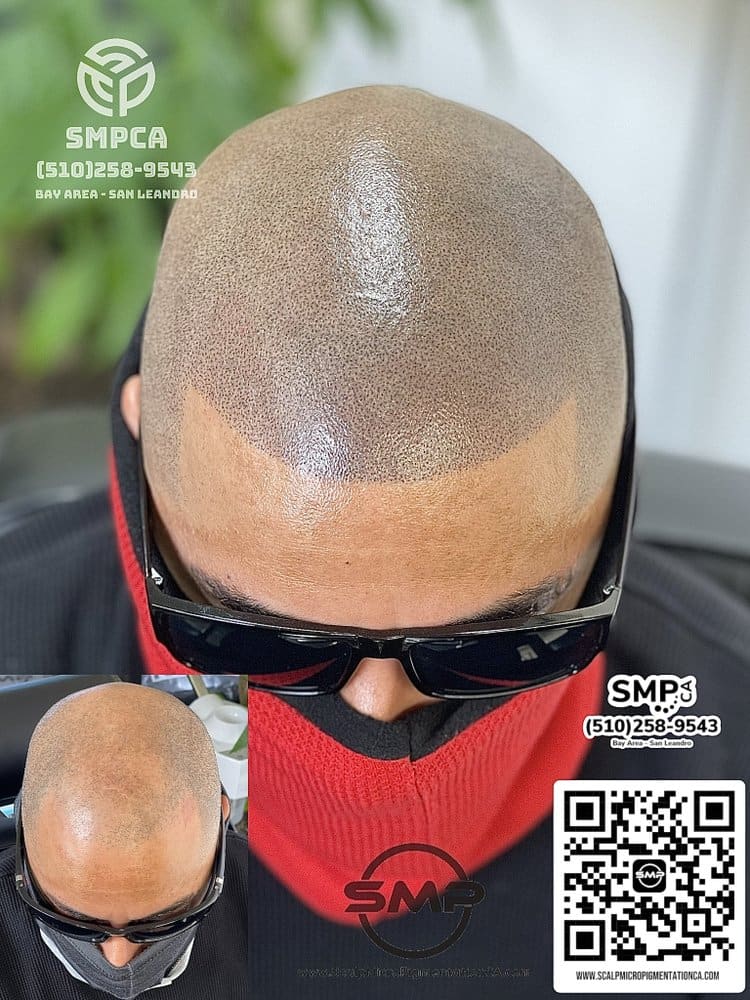
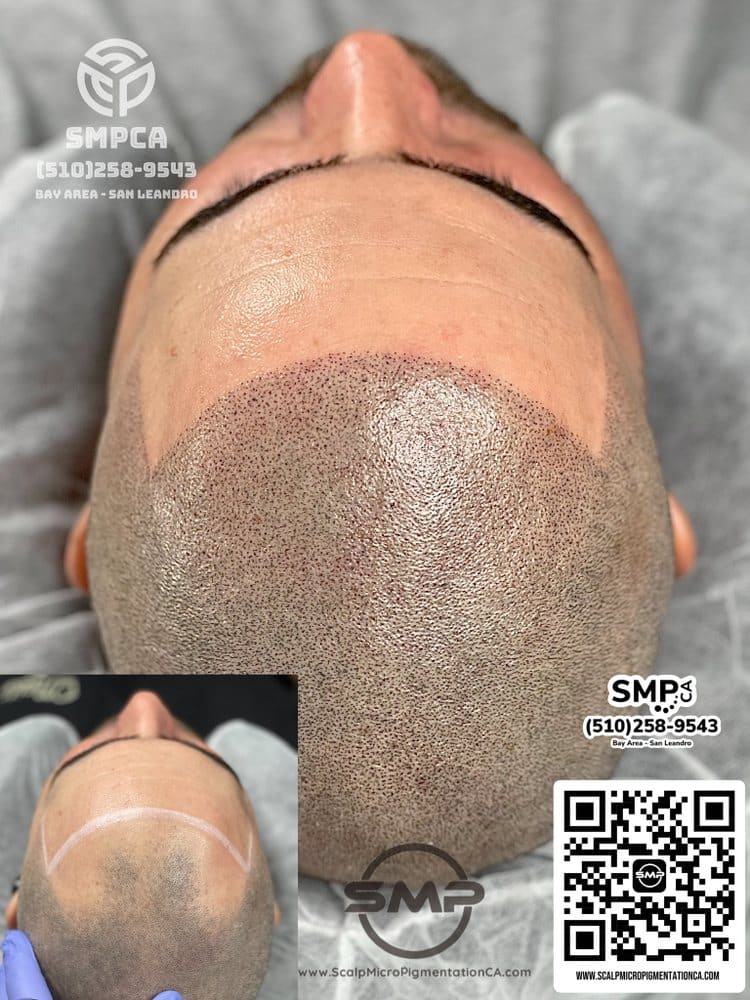
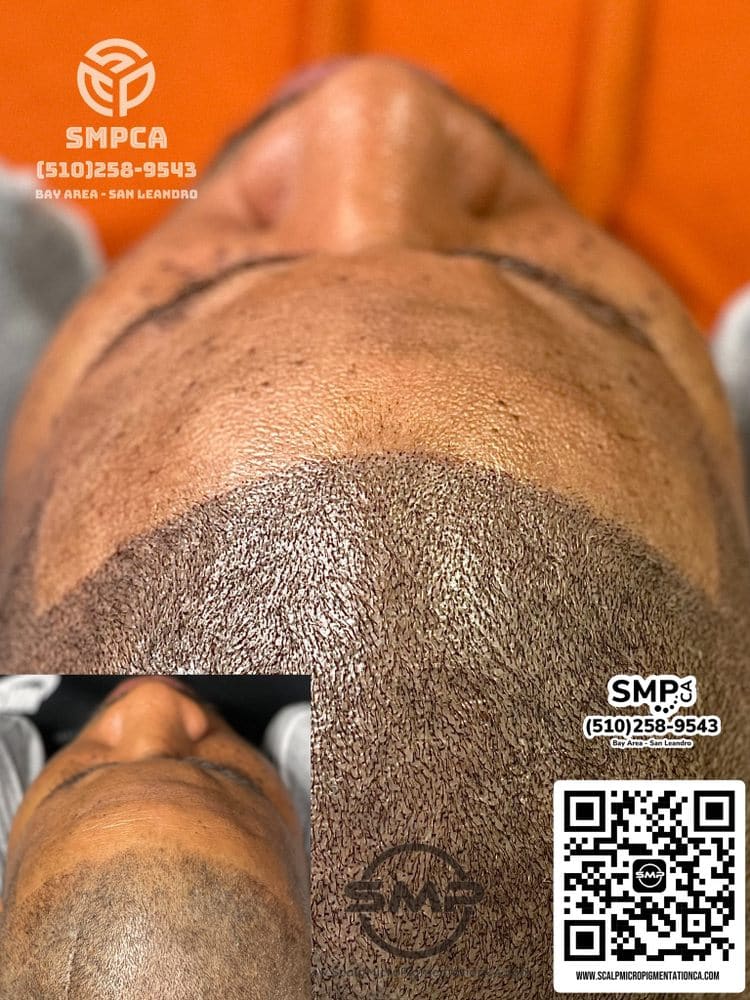
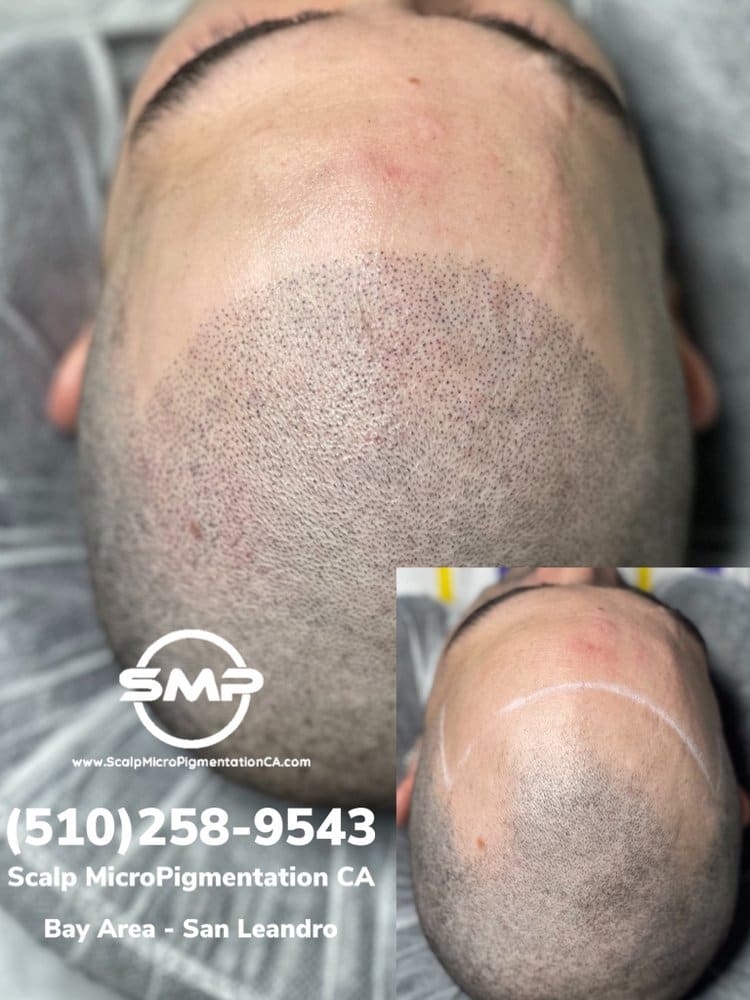
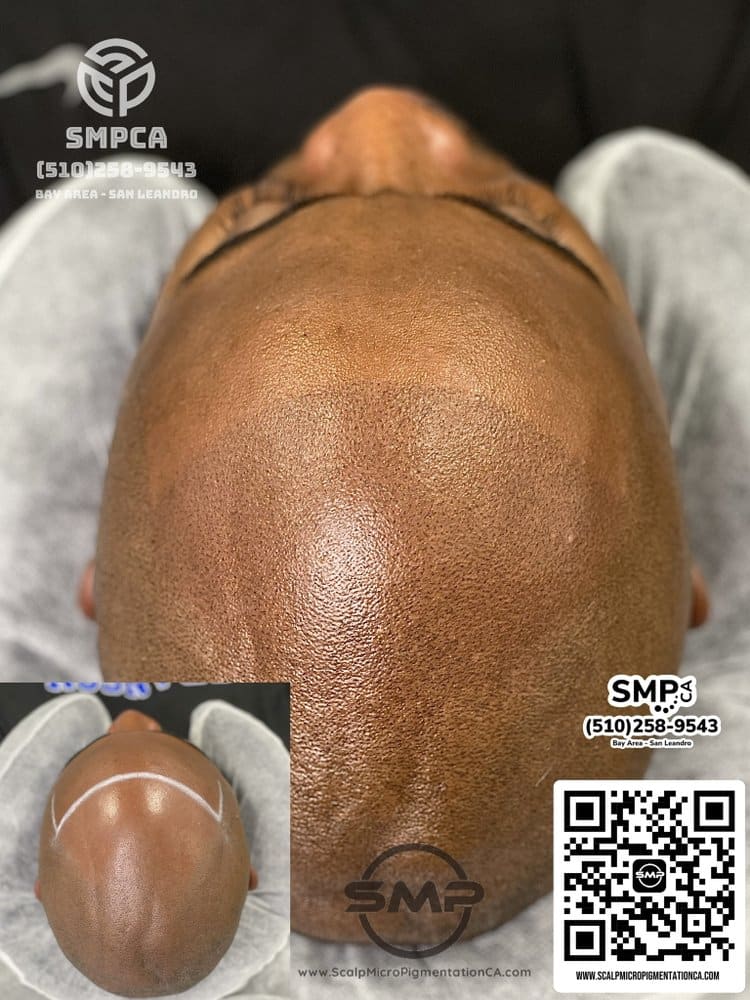
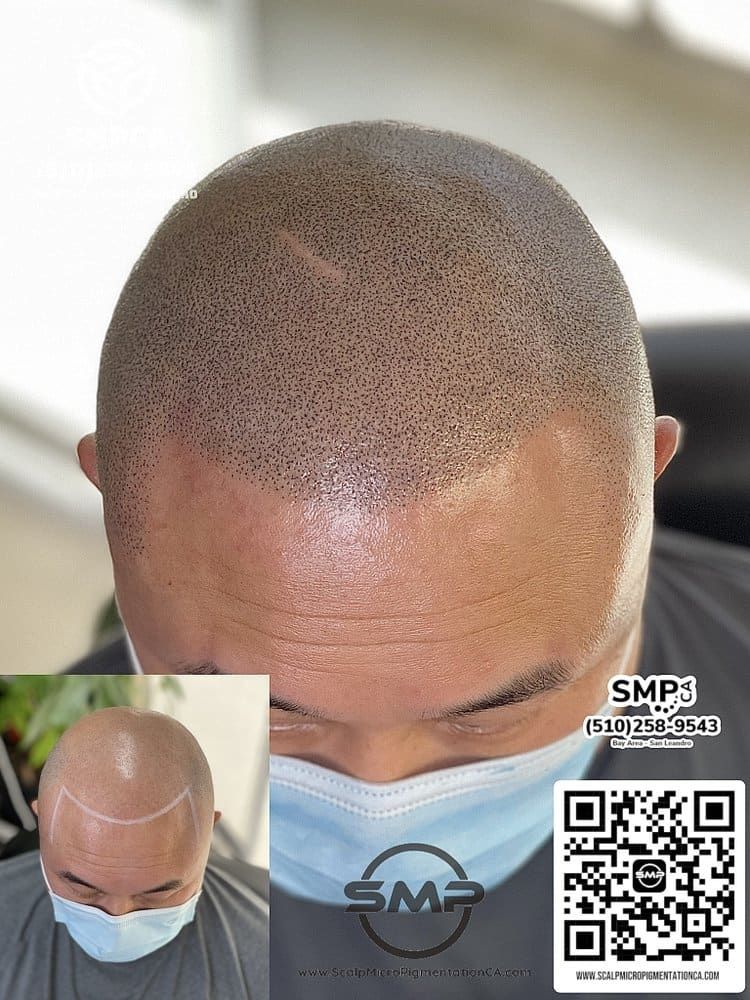
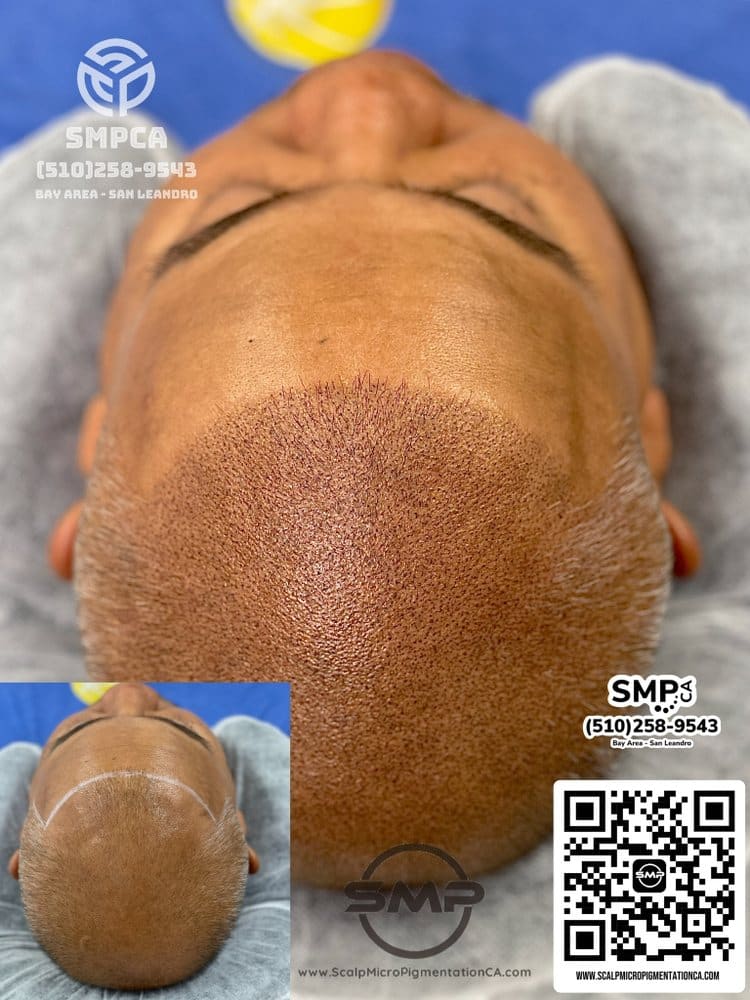
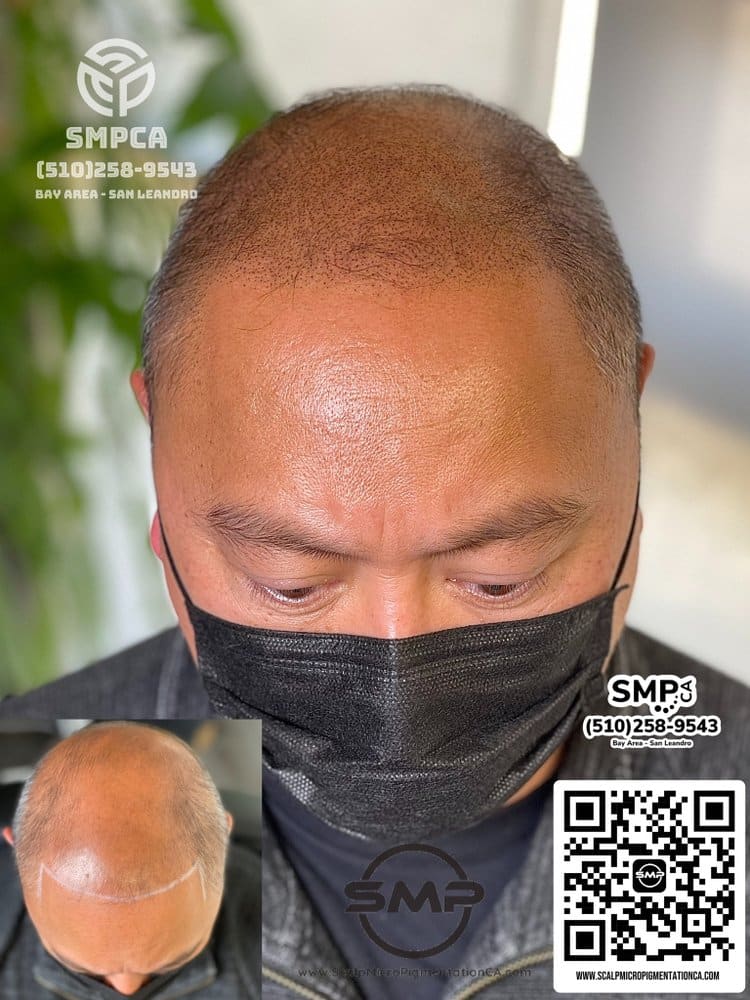
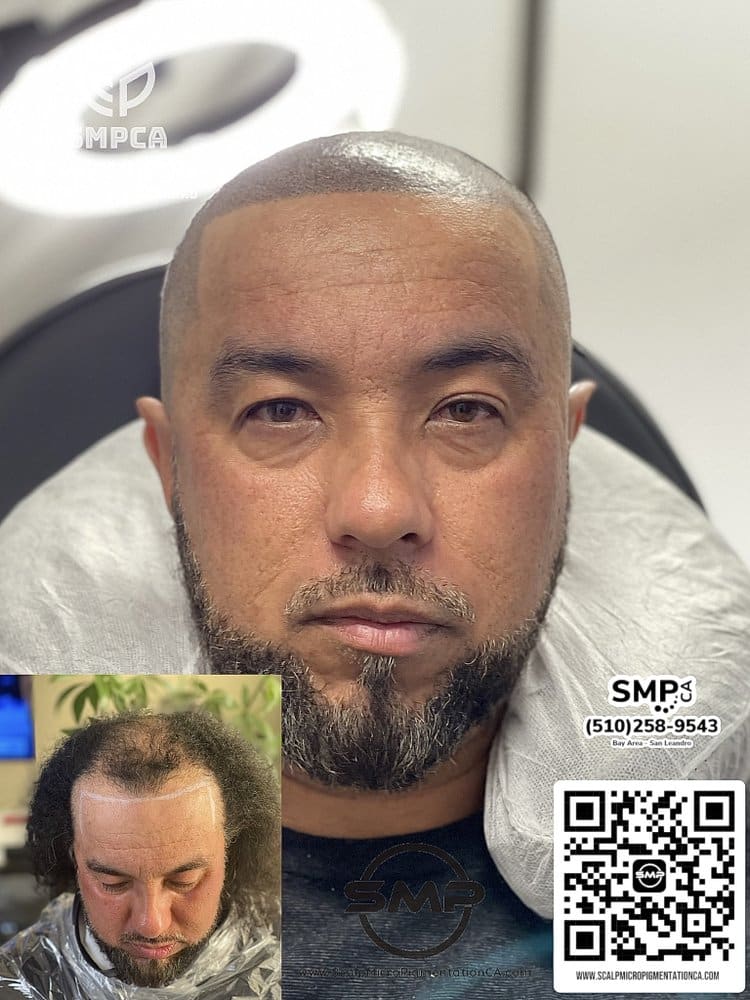
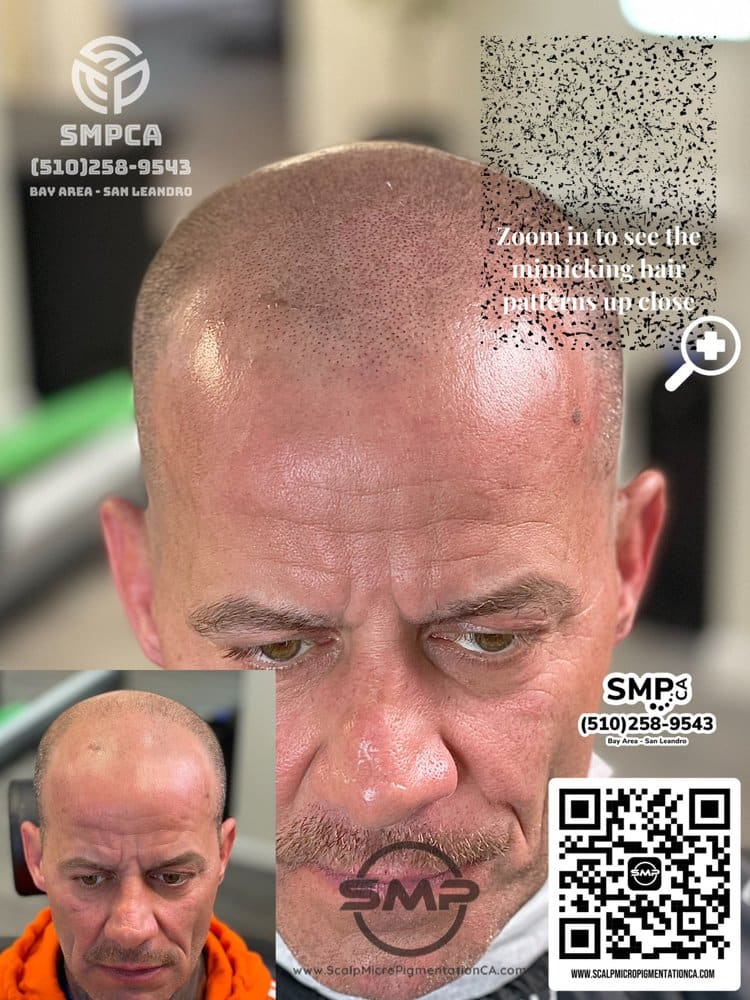
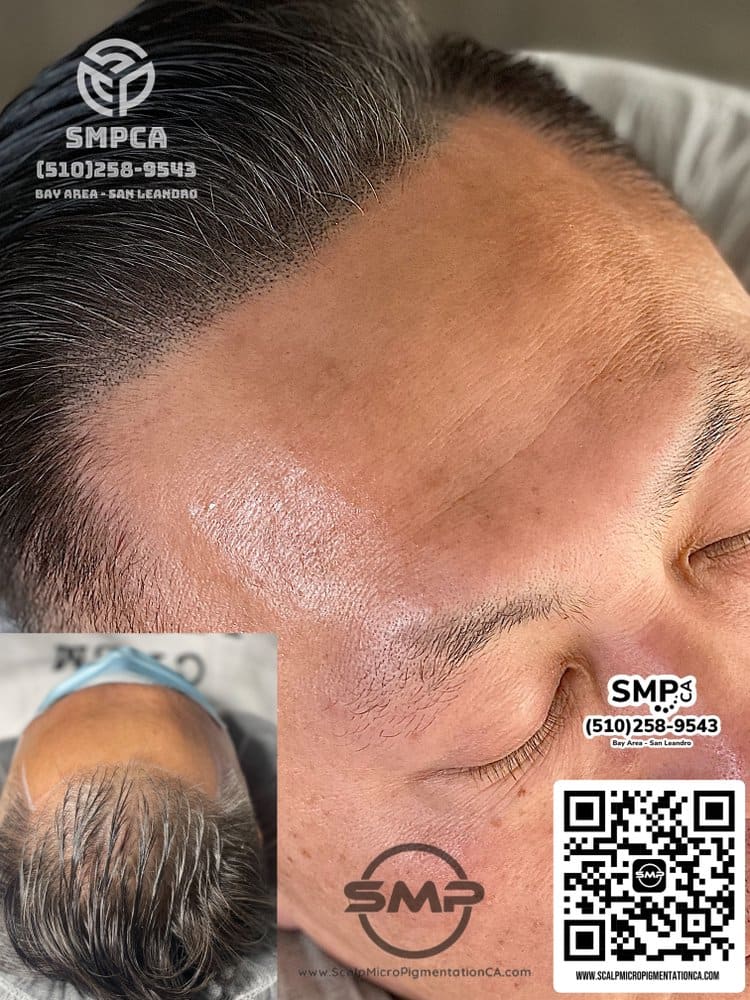
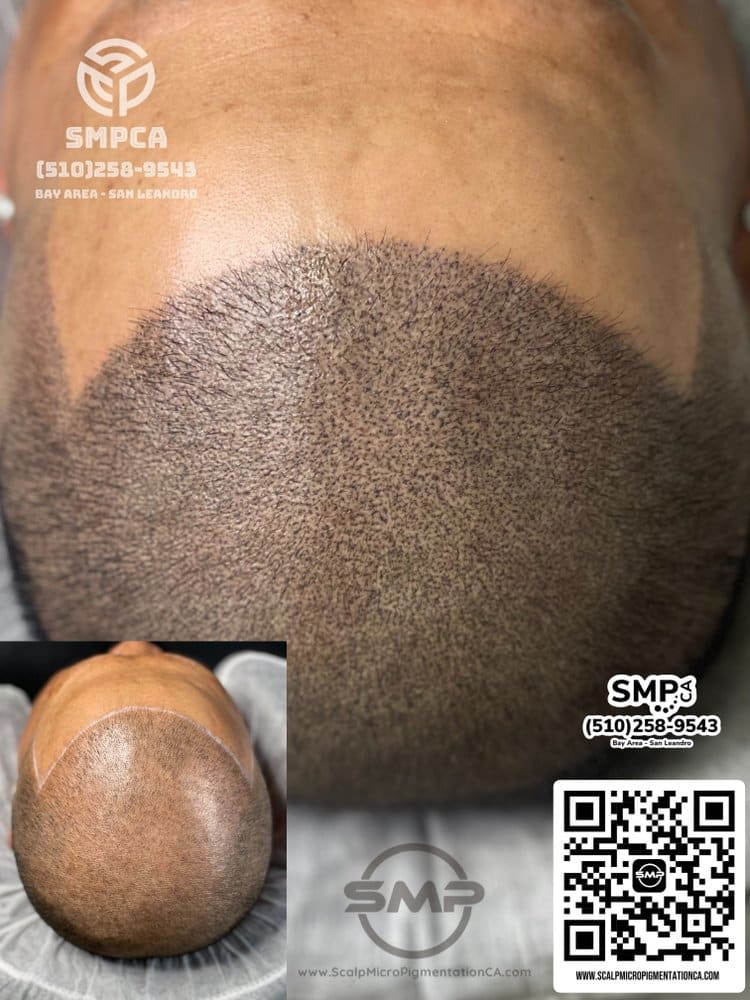
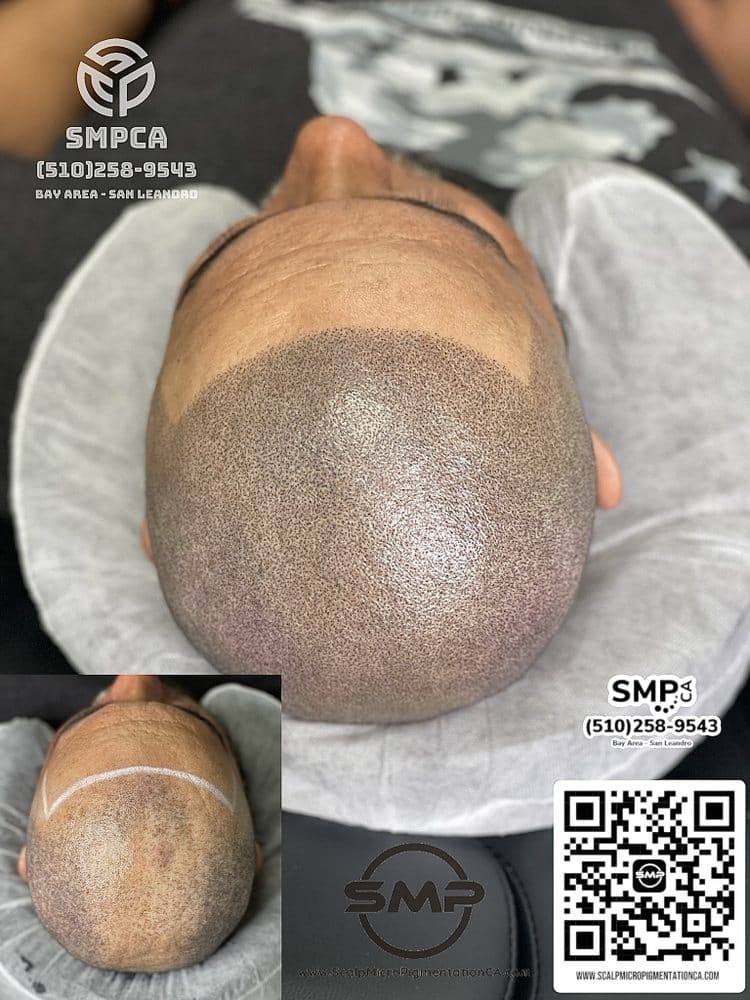
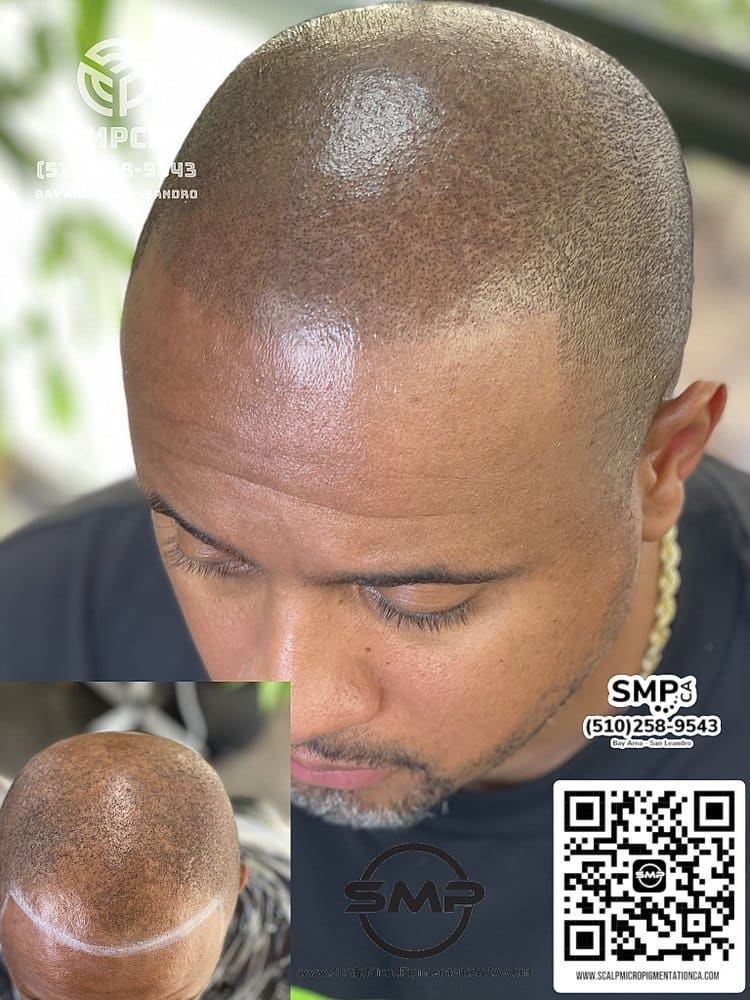
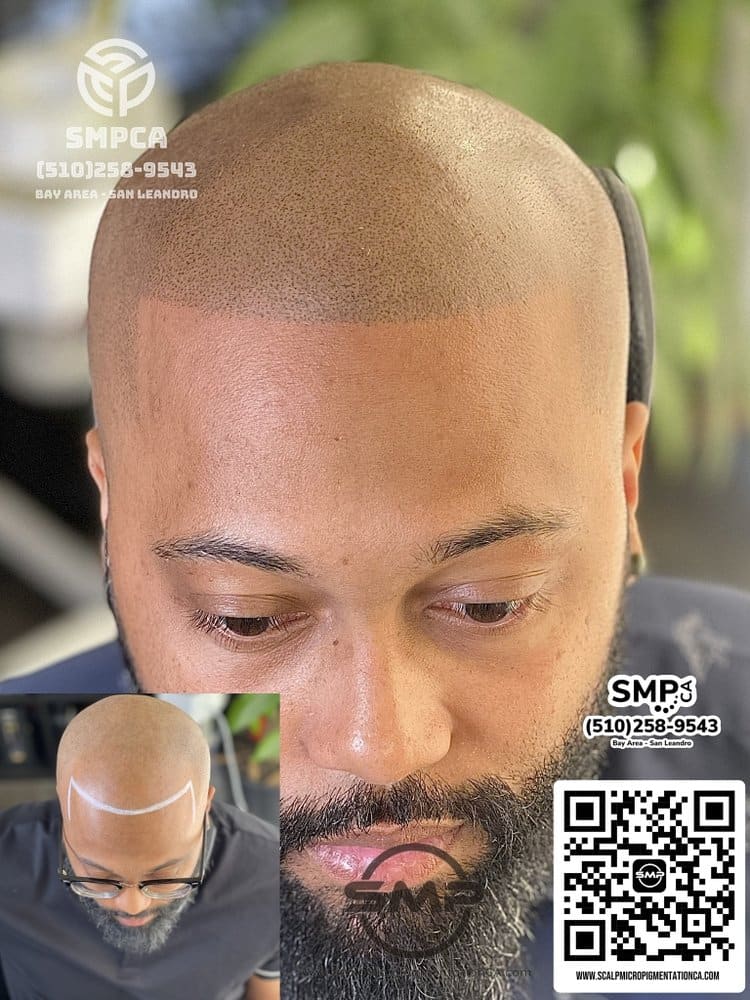
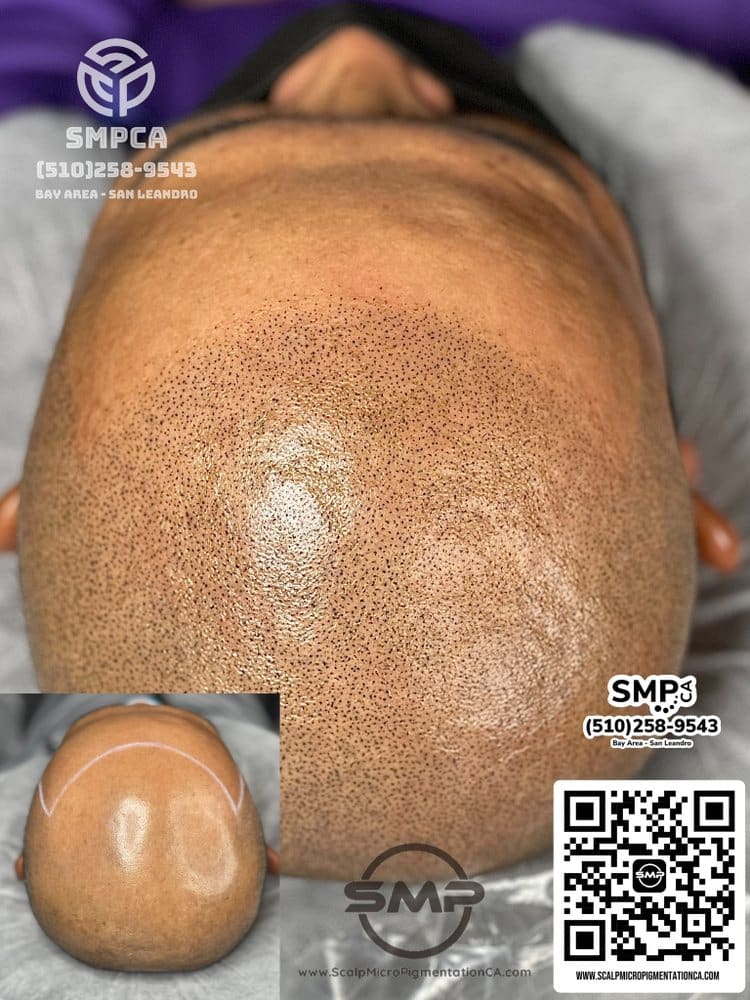
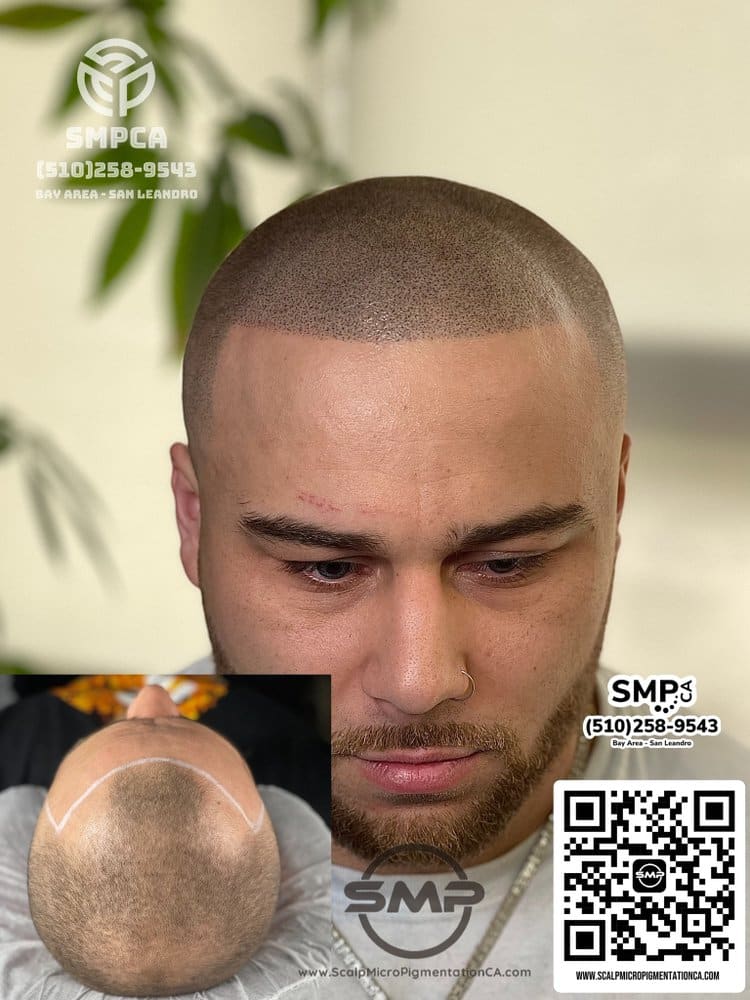
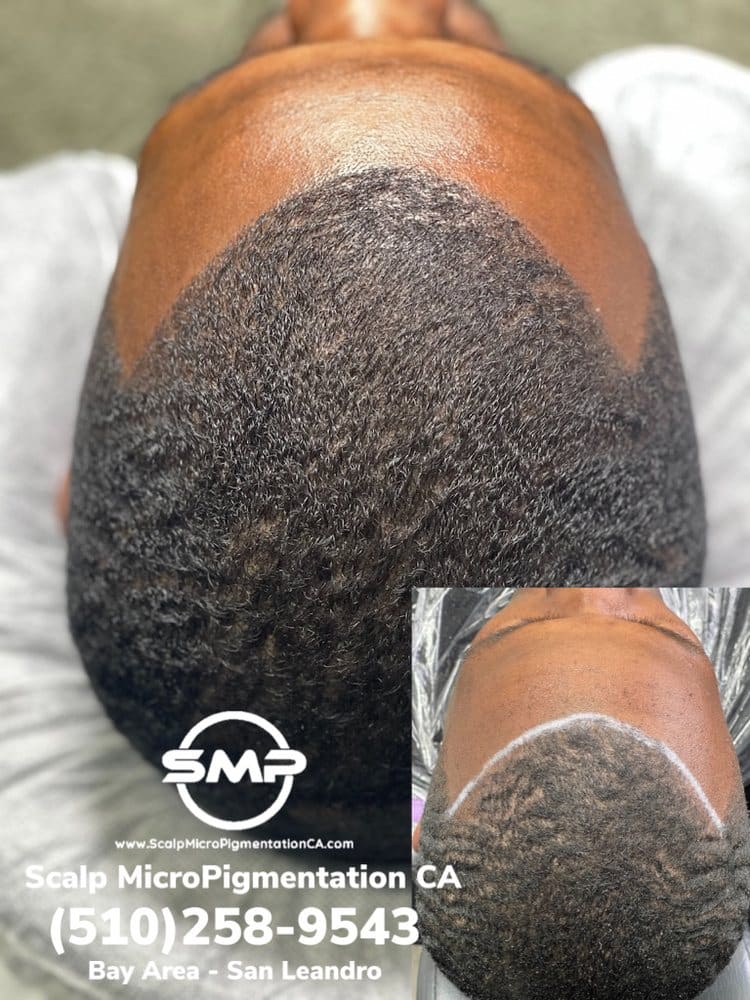
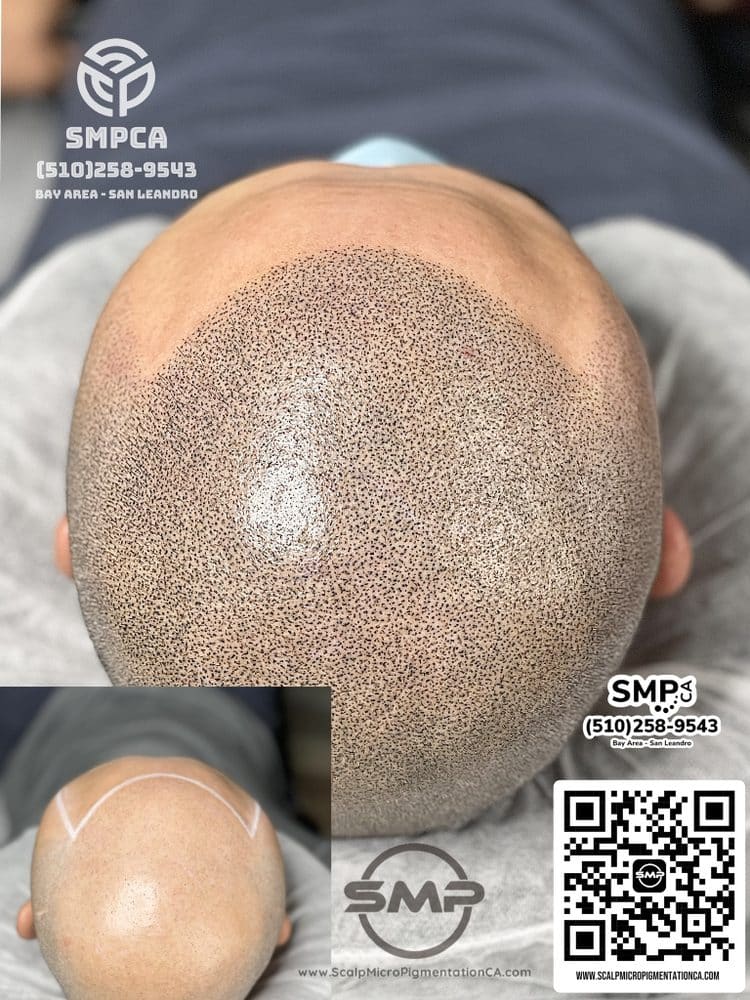
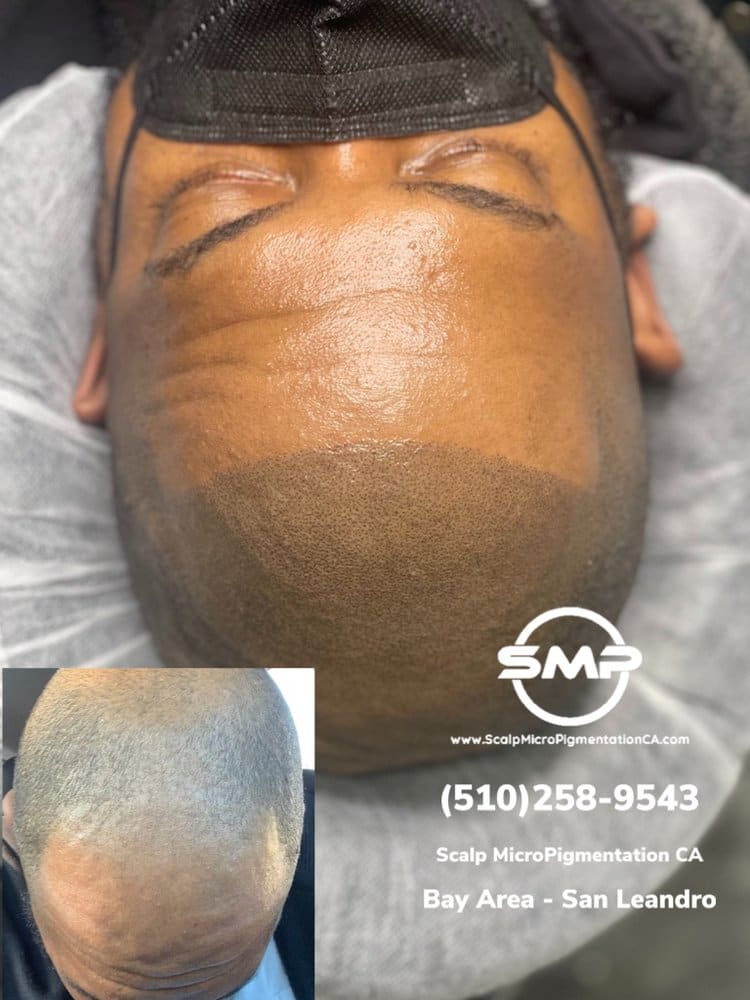
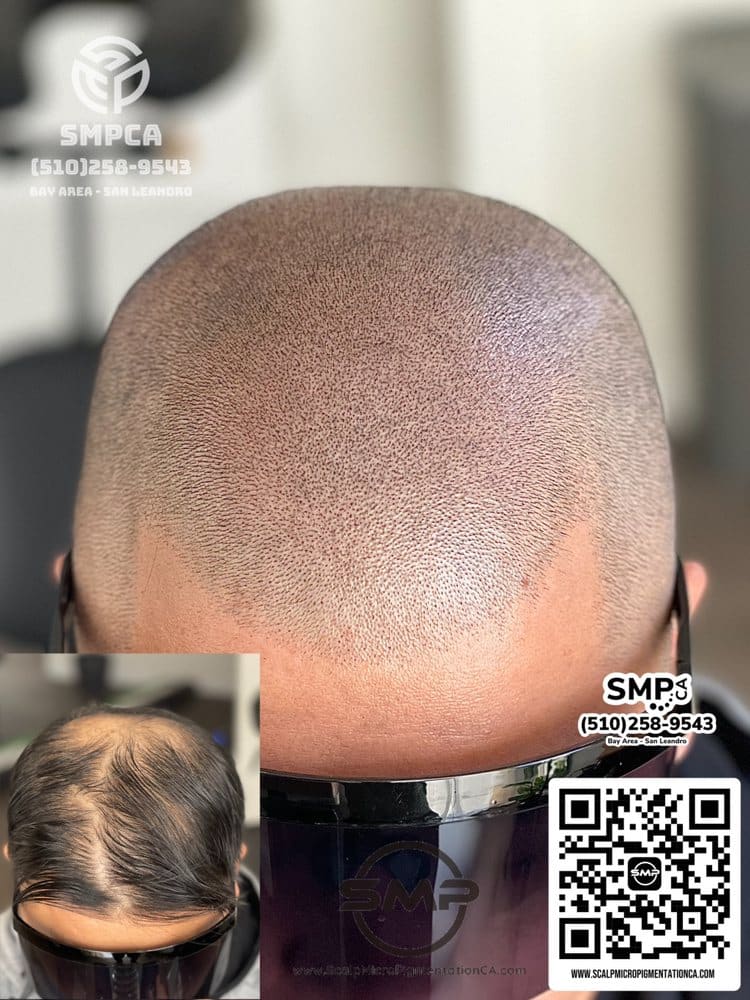
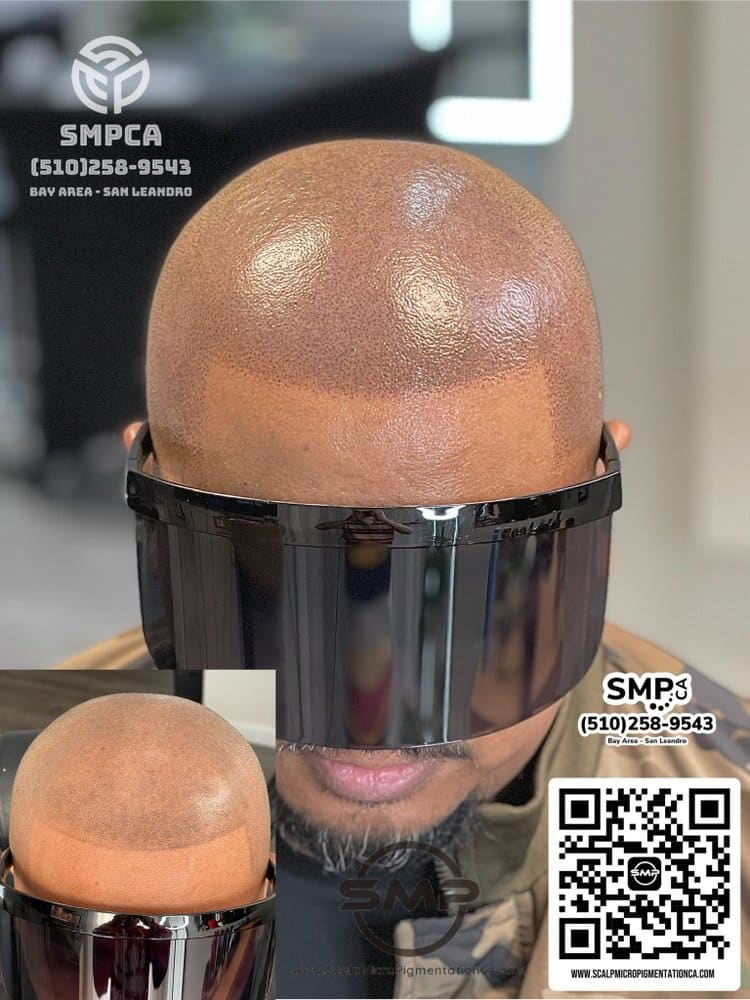
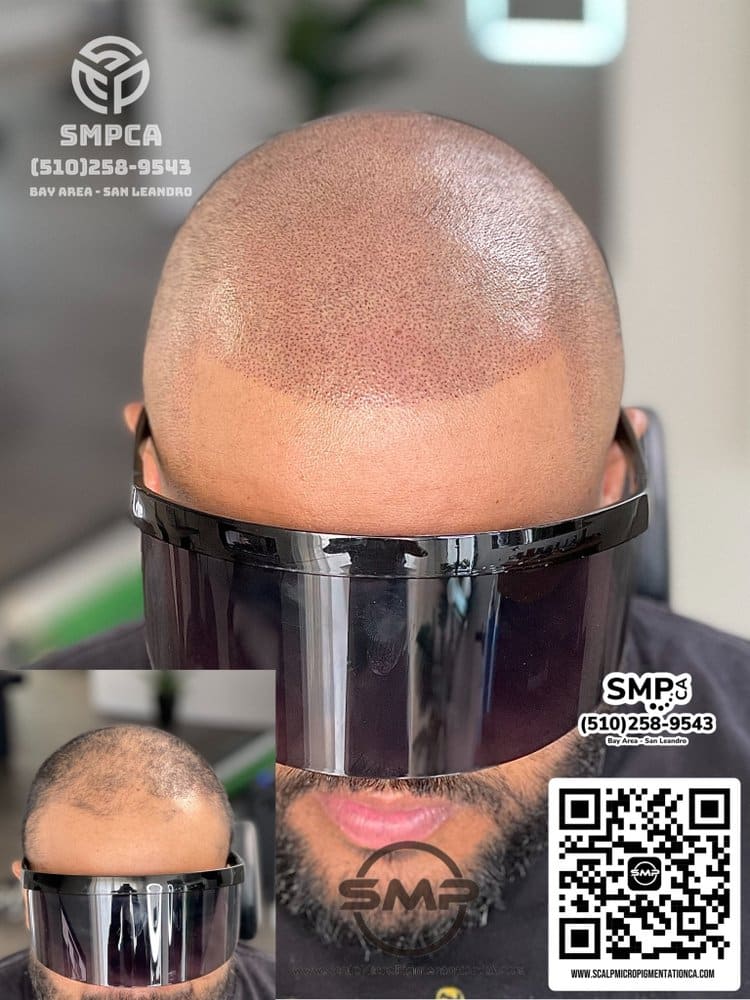
The reality — It can look that way, and when it does the causes are usually identifiable: impressions placed too large or too uniform, a hairline drawn too low or too straight for the client's face and age, over-saturation, or pigment placed too deep so the dots blur into a solid shadow. Well-executed work uses irregular placement, varied impression size, and a softened hairline. Judge any practitioner by healed results on skin like yours, not by day-one photos.

Why it persists — Bad work is more visible than good work. Good SMP goes unnoticed by definition, so the failures are disproportionately what the public has actually seen. That is a genuinely rational basis for skepticism.

Does SMP look real?

7. Myth:SMP is only for completely bald men.

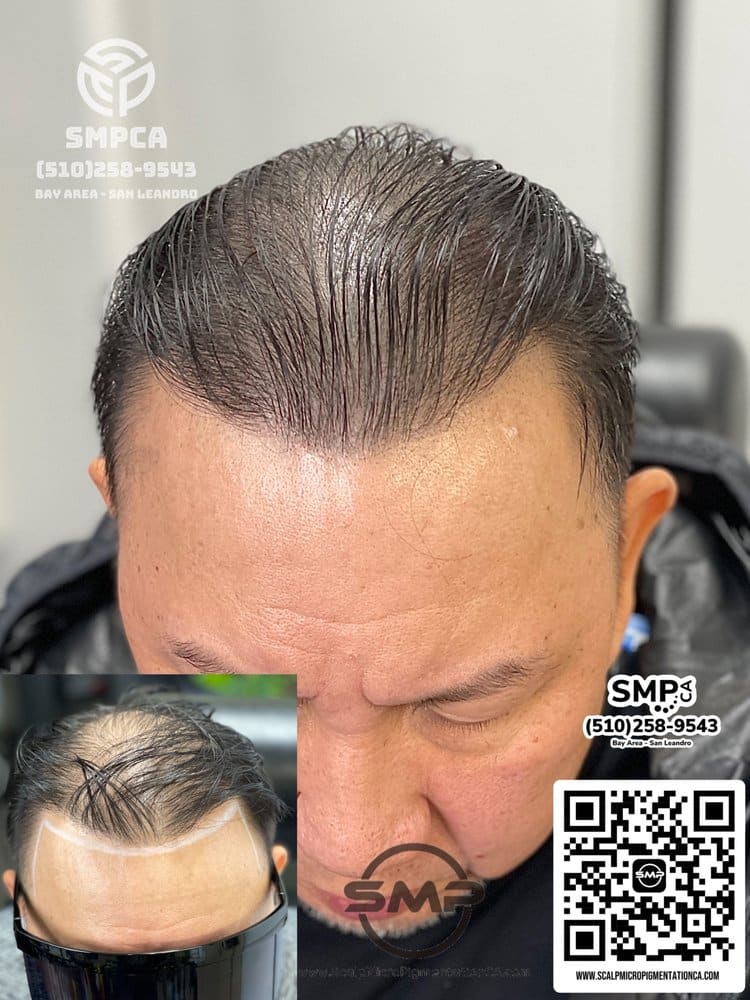
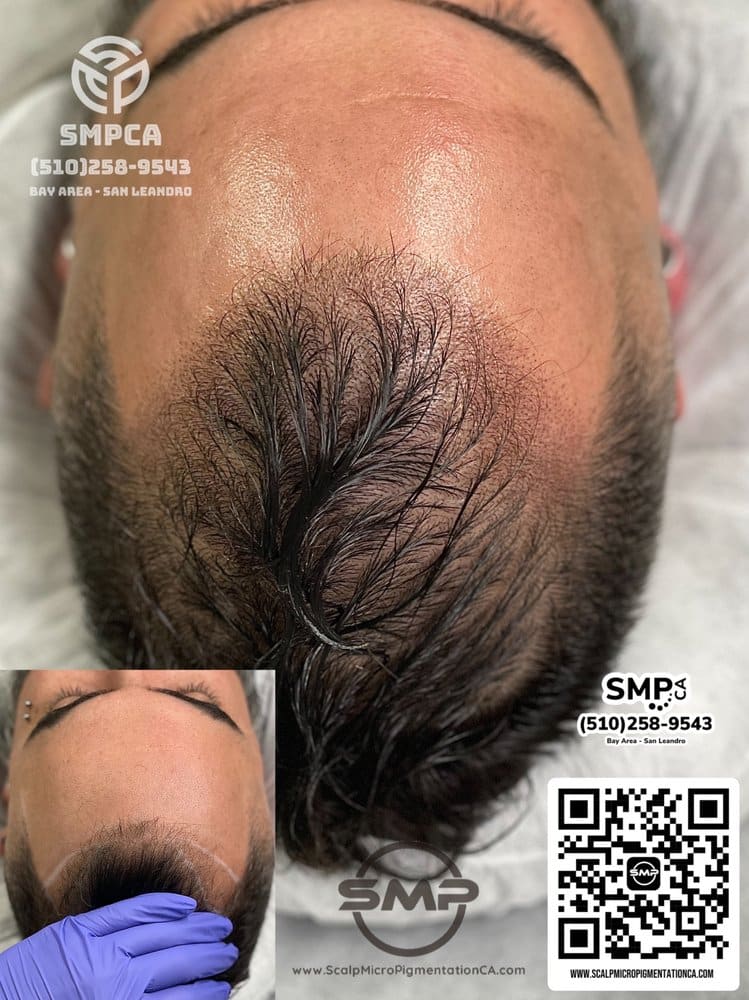
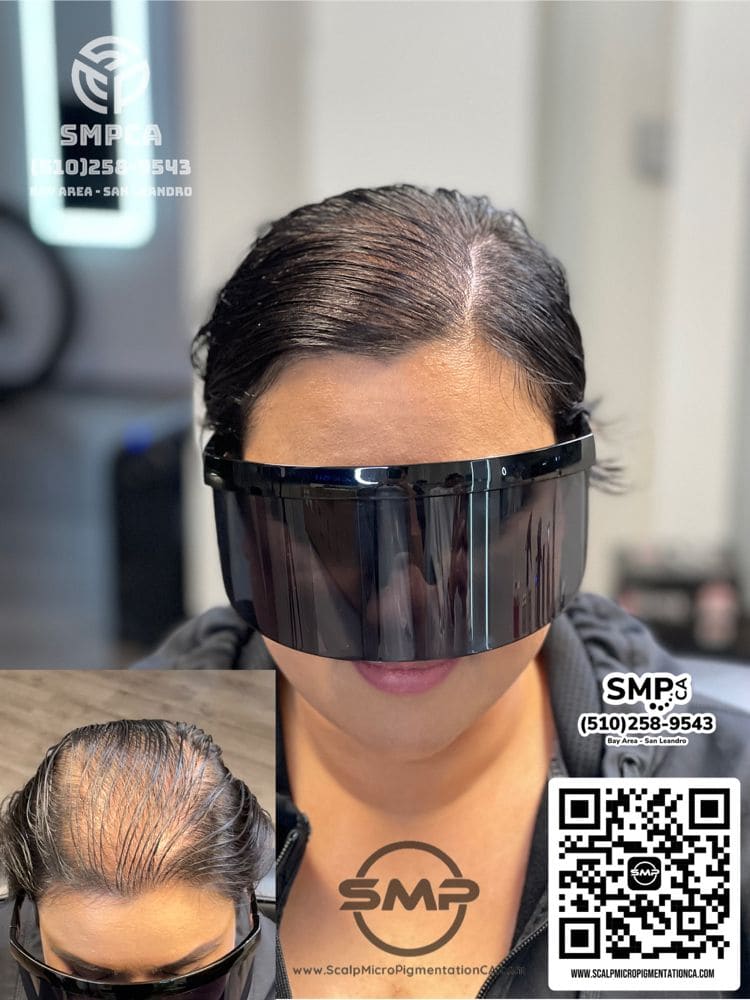
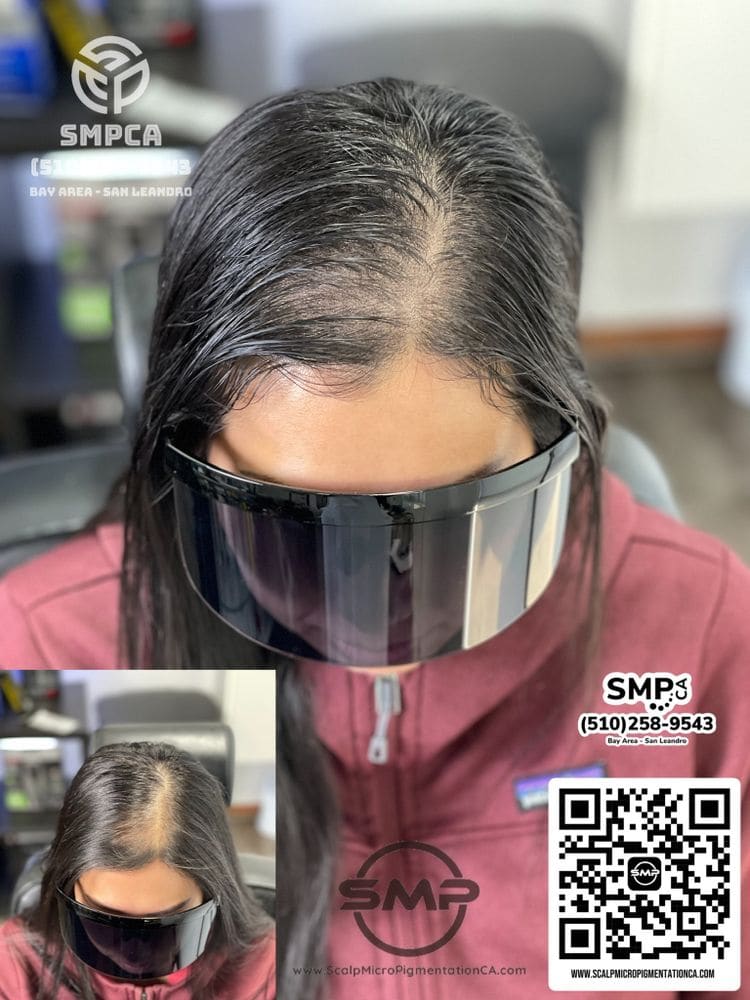
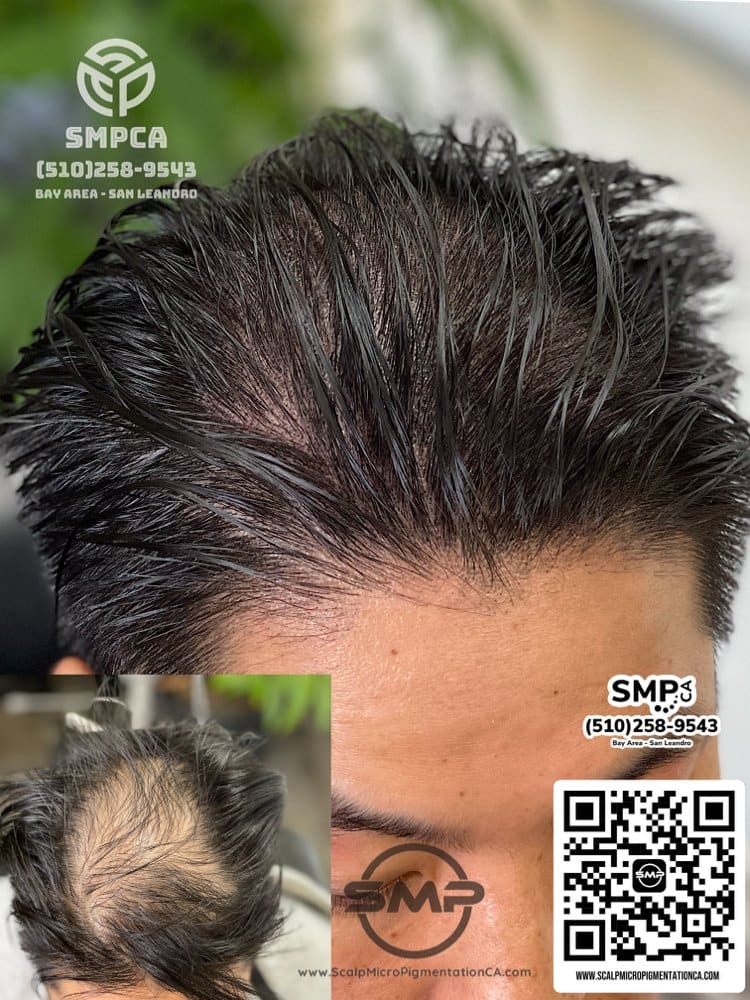
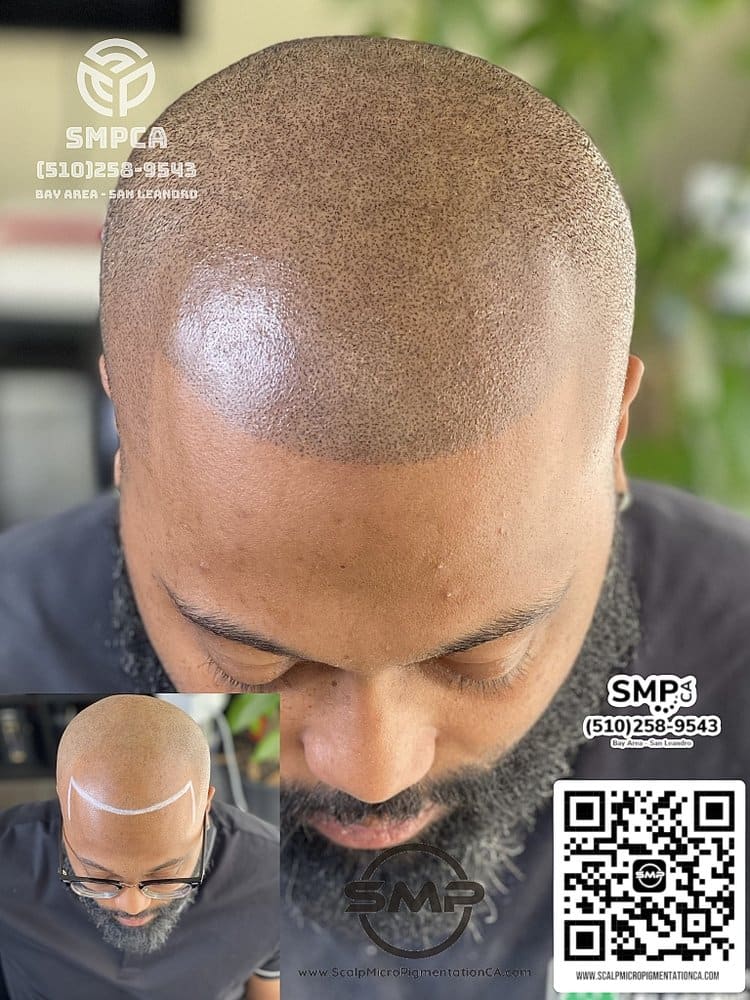
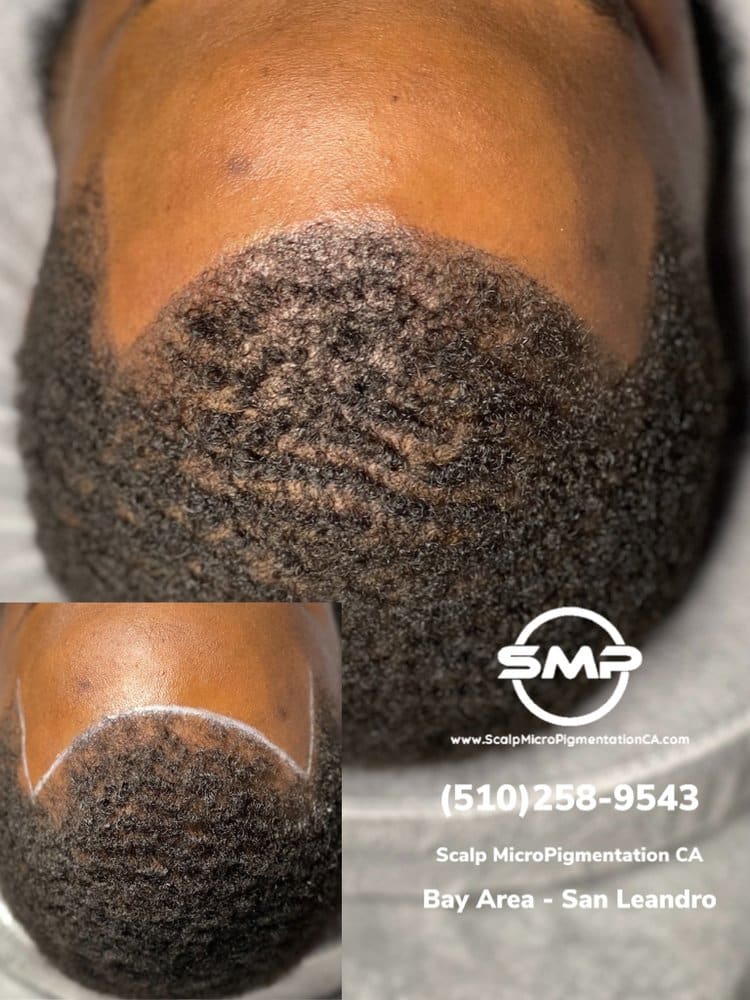
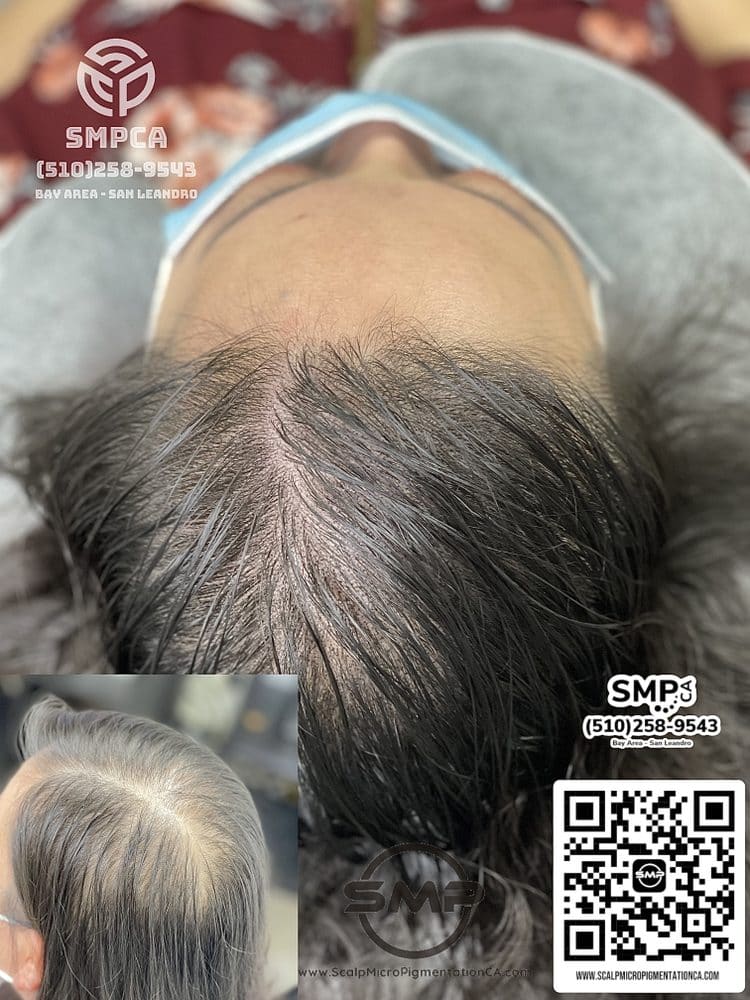
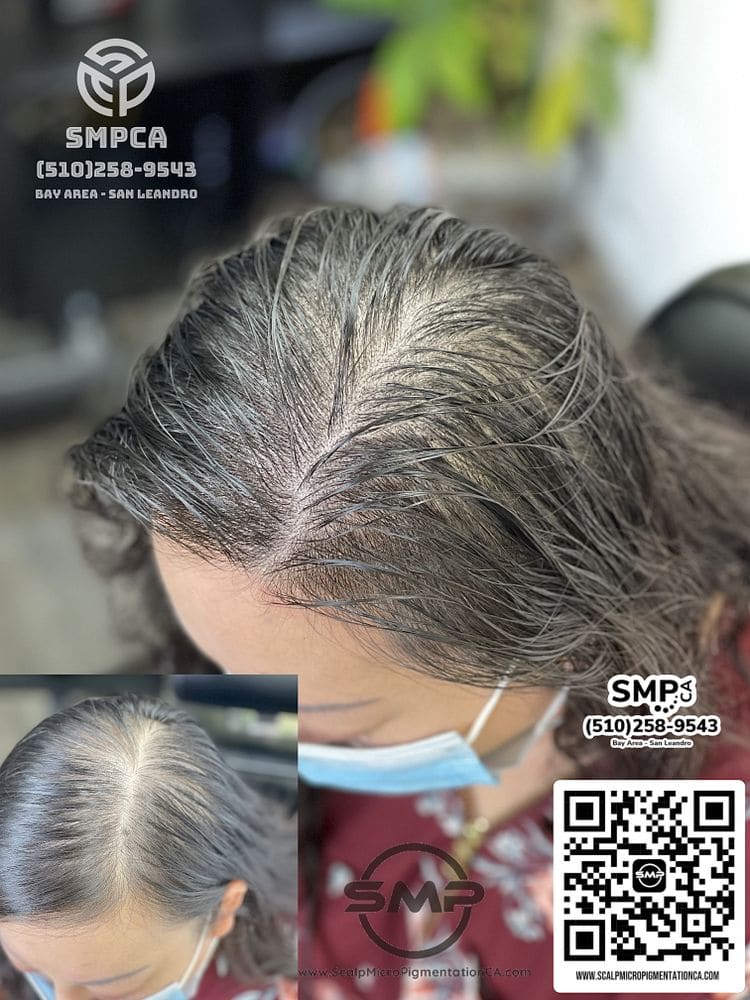
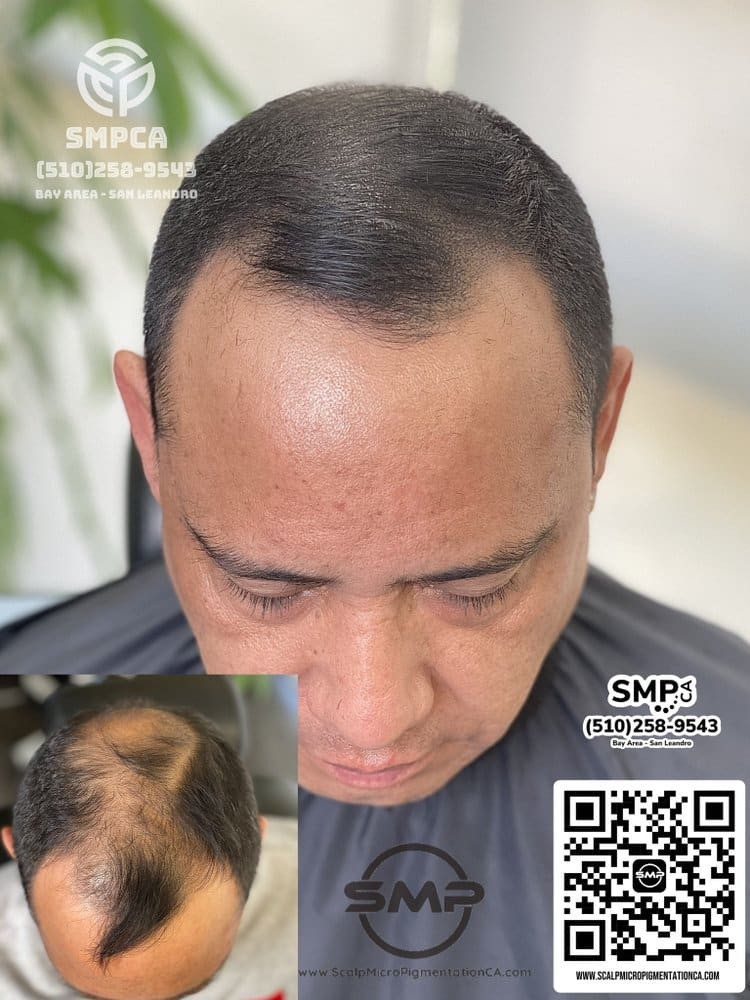
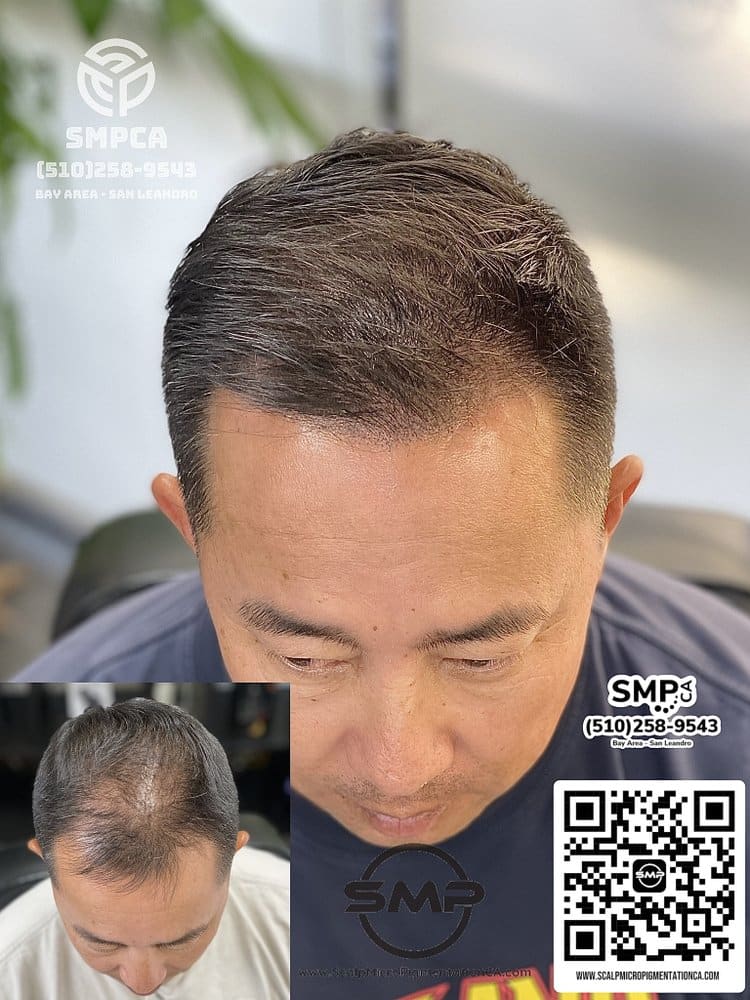
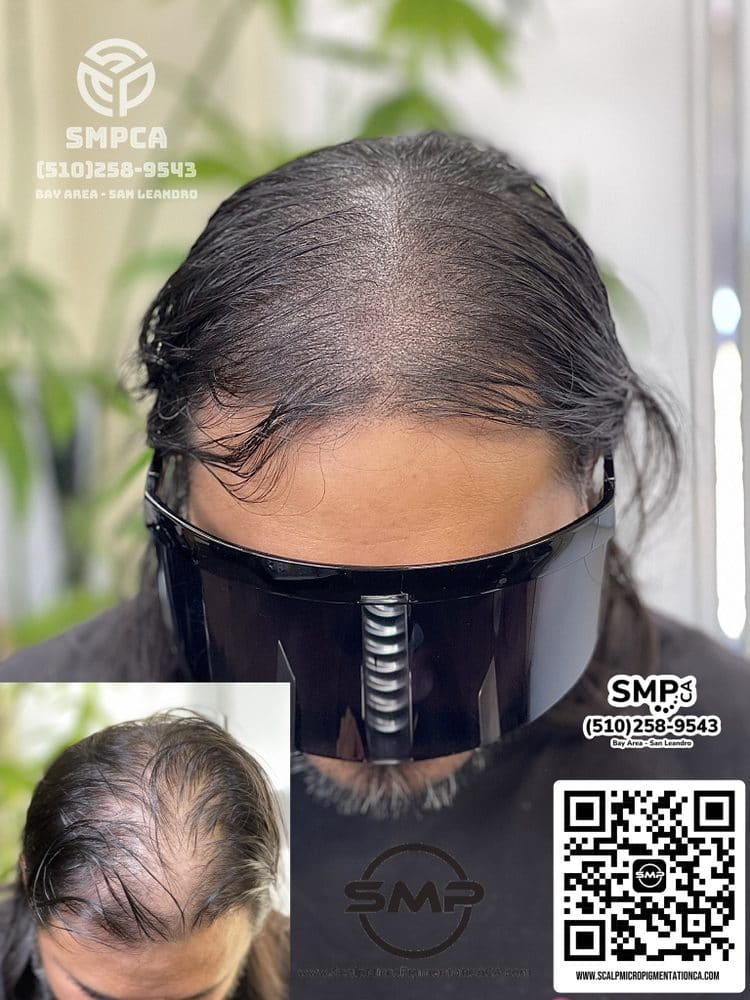
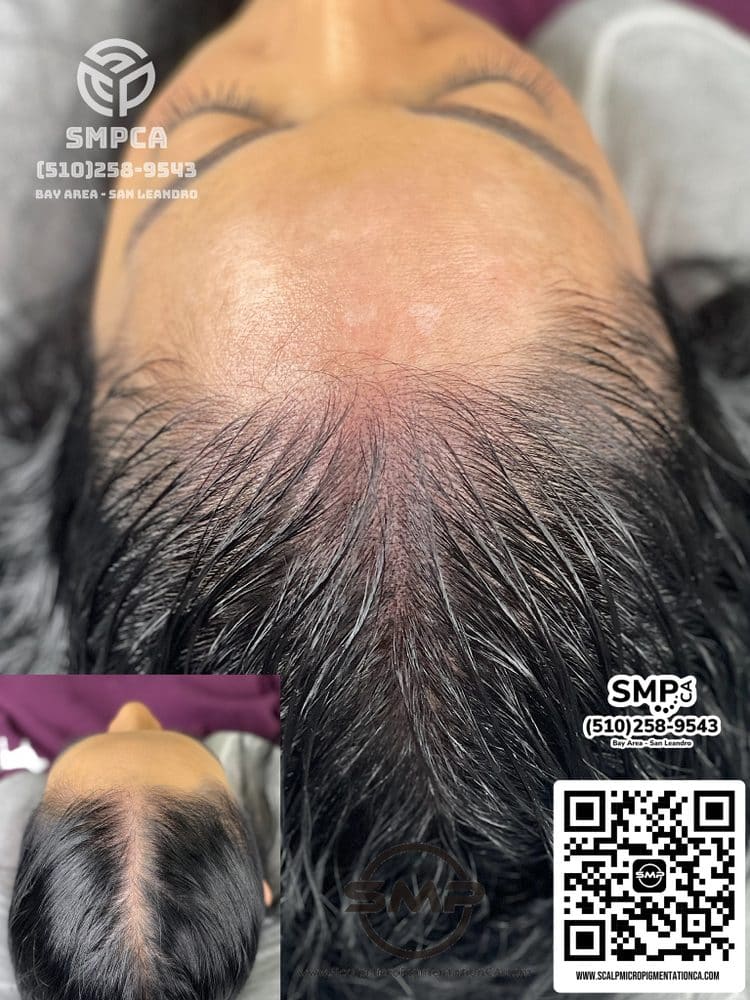
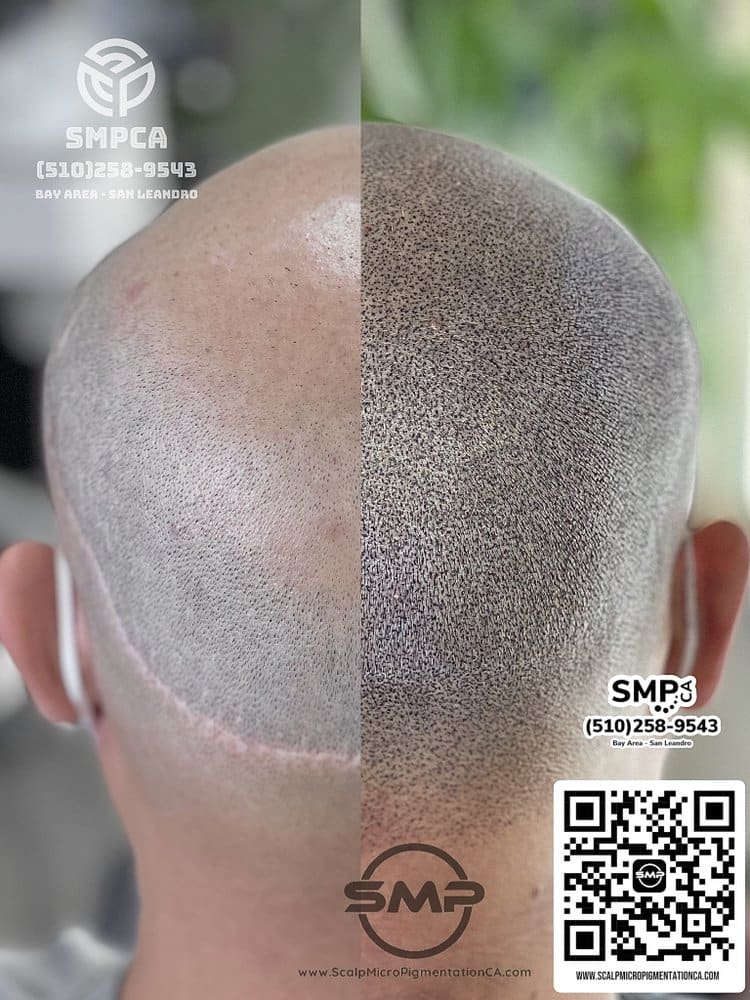
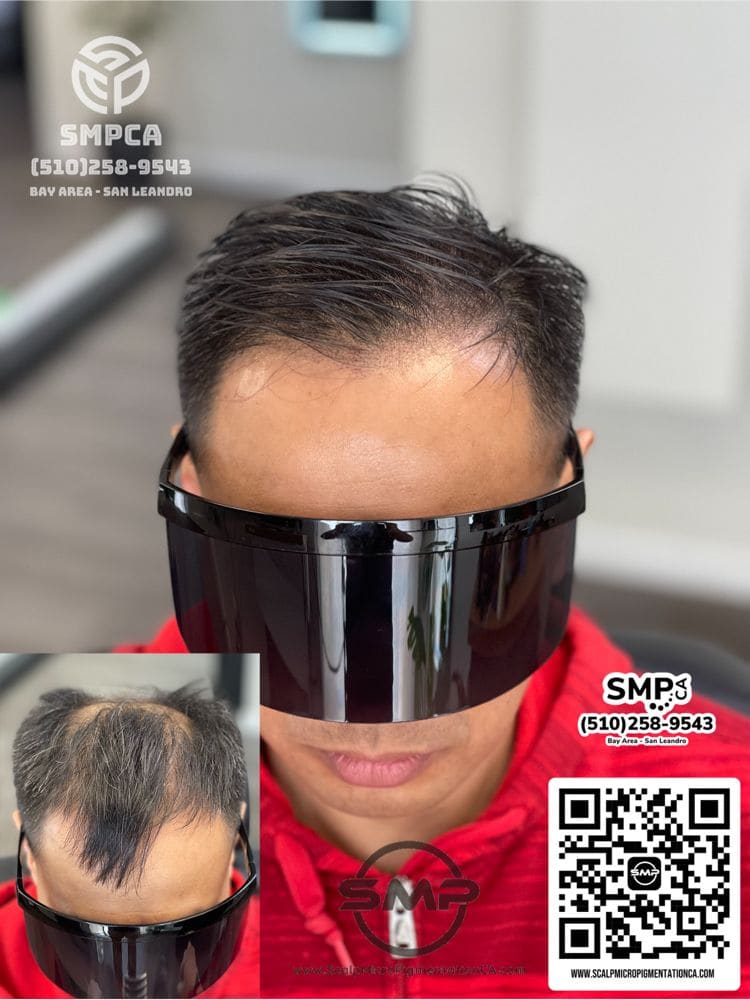
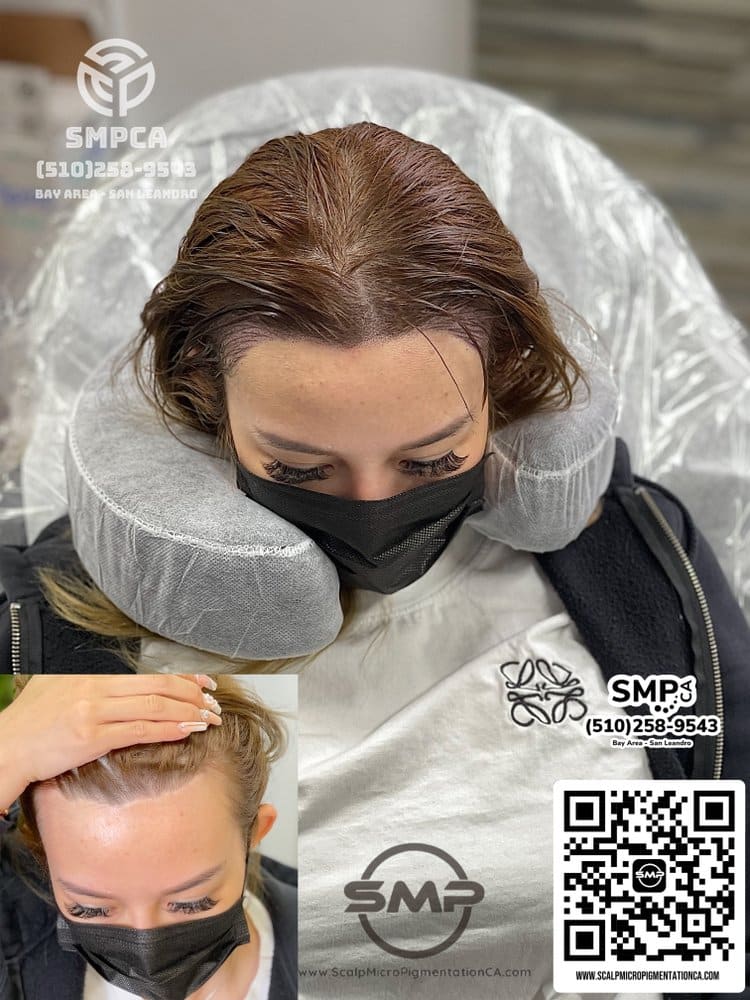
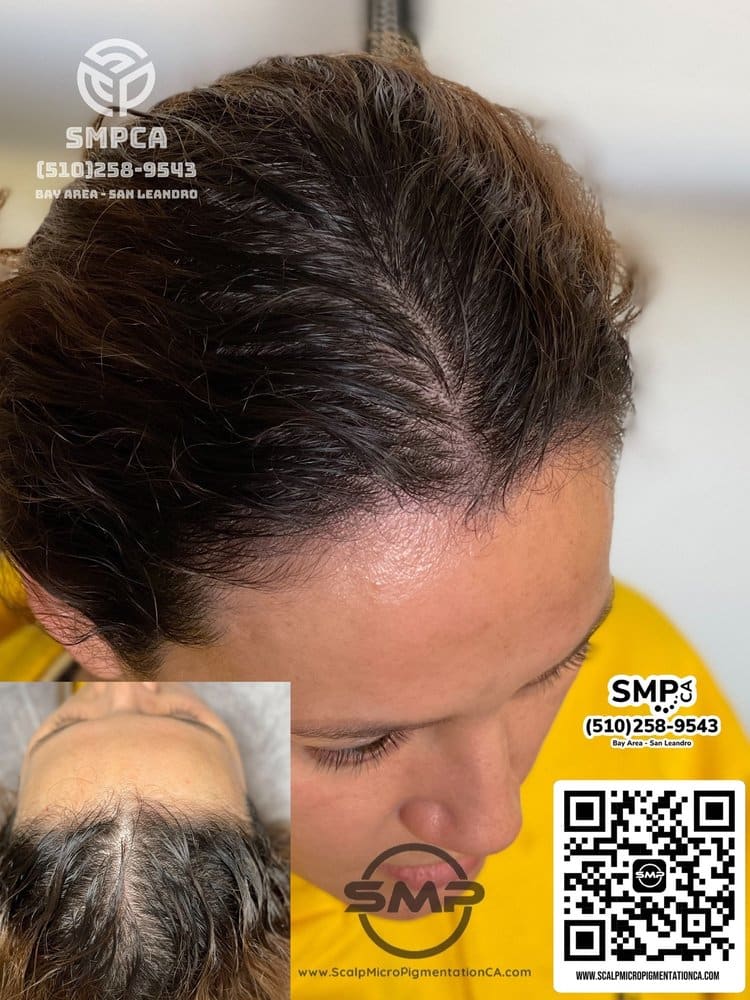
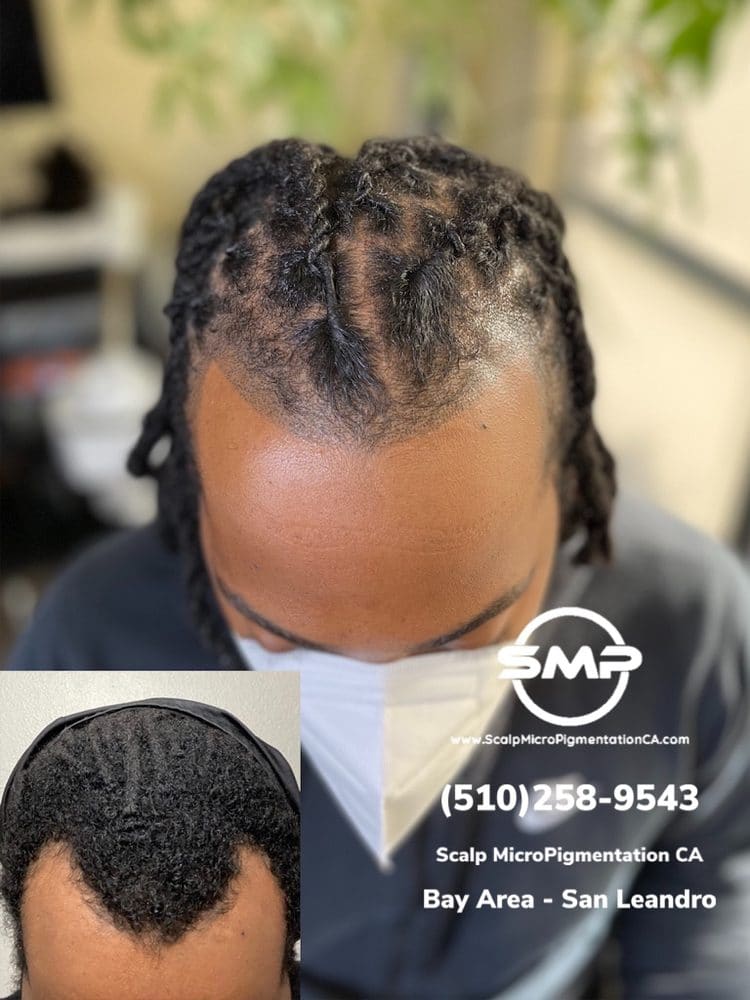
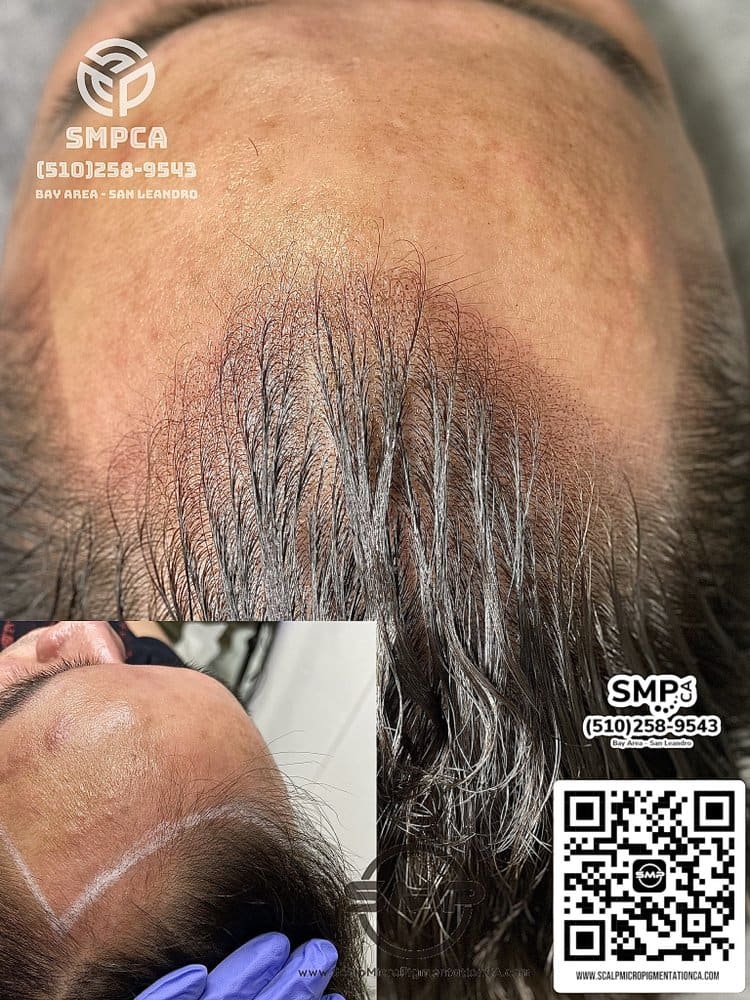
The reality — The shaved-head look is the most recognizable application, but it is not the only one. SMP is also used to add apparent density among existing thinning hair, to soften the contrast of a widening part in diffuse thinning, to camouflage the appearance of transplant scars, and on crowns behind existing hair. Suitability depends on your pattern, hair color, skin tone, and the look you are after — which is what a consultation is for.

Why it persists — The dramatic bald-to-shaved-look transformation photographs best, so it dominates the marketing on every studio's feed, including ours.

SMP for women's thinning

8. Myth:You have to shave your head to get SMP.

The reality — For a full shaved-look result, yes — the illusion depends on the pigment matching the length of your actual stubble, so keeping hair long over that work breaks it. But density work performed among existing hair does not require shaving. What is required depends entirely on which result you are going for, and it is the first thing that gets settled at consultation.

Why it persists — The most-shown application genuinely does require it, so a real requirement for one result gets over-generalized to the whole category.

Am I a candidate for SMP?

9. Myth:SMP is cheap — it is just dots.

The reality — Quality SMP is a multi-session procedure priced on the extent of the area, the number of sessions needed, and the practitioner's experience. It is generally more than a tattoo and less than a hair transplant, and cost varies by market and by case. Be cautious with pricing that sits far below everything else in your area — correcting poor work is harder, slower, and often more expensive than doing it properly the first time.

Why it persists — It looks simple from the outside. Thousands of dots does not sound like skilled work until you have seen what happens when the size, depth, angle, and spacing are wrong.

What SMP costs in California

10. Myth:Any tattoo artist can do SMP.

The reality — They can legally tattoo, and some tattoo artists do become excellent SMP practitioners — but it is a specialization with its own pigments, needle configurations, depth control, scalp-specific anatomy, hairline design principles, and healed-result behavior. The skills that make someone great at body art do not automatically transfer, which is exactly why SMP-specific training exists. Ask any practitioner to show healed results, on scalps, on skin like yours.

Why it persists — Both use a tattoo machine, so the equipment overlap reasonably implies a skill overlap.

Questions to ask before booking

11. Myth:SMP cures alopecia.

The reality — No. SMP does not cure, treat, or affect any hair loss condition. It changes appearance only, and whatever is causing the hair loss continues unaffected. For alopecia areata specifically, the condition's course is unpredictable, which affects planning and means results vary and future sessions may be needed. Diagnosis and treatment of any hair loss condition belong to a board-certified dermatologist, not to us.

Why it persists — SMP is often discussed within alopecia communities as a coping option, and the phrase solution for alopecia in marketing copy is easily read as treatment for alopecia.

SMP and alopecia, honestly

12. Myth:One session and I am done.

The reality — SMP is built over multiple sessions, typically spaced days to weeks apart. This is not upselling — the skin has to heal so we can see what pigment it actually retained before adding more. Building gradually is also the safeguard against over-saturation, which is one of the hardest outcomes to correct.

Why it persists — Before-and-after marketing rarely shows the intermediate stages, so the multi-session structure is invisible until you book.

Session by session, what happens

13. Myth:If I do not like it, I can just have it removed.

The reality — Removal is possible — typically via laser, over multiple sessions — but it is not simple, not quick, not cheap, and not guaranteed to return your scalp to its exact prior state. Some situations are better addressed by corrective SMP than by removal. The honest takeaway: choose your practitioner as if removal were not an option, because functionally it is a difficult fallback rather than an undo button.

Why it persists — Widespread awareness that tattoo removal exists, without much awareness of what the process actually involves.

Correction and repair work

Part 2 · Myths 14–25

General hair loss myths

Everything in this section is educational only. SMPCA is not a medical provider, every reality below defers to dermatology, and none of these is used as a pitch for SMP. They are here because they are the questions that come up in every conversation about hair loss, and because bad information keeps people from getting a proper assessment.

14. Myth:Wearing hats causes baldness.

The reality — Ordinary hat-wearing is not a recognized cause of pattern hair loss. Sustained, heavy mechanical tension on the hair — very tight headwear, tight braids, weaves, extensions — is associated with traction alopecia, which is a different mechanism entirely. For guidance on recognized causes, the American Academy of Dermatology is a reliable starting point.

Why it persists — People experiencing hair loss often start wearing hats to cover it, so the hat shows up right alongside the loss. It is a textbook case of a coping behavior being mistaken for the cause.

On living under a hat

15. Myth:Baldness comes from your mother's father only.

The reality — There is a real kernel here — an androgen receptor gene on the X chromosome, inherited maternally in men, is genuinely associated with pattern hair loss. But it is one factor among many. Hair loss inheritance is polygenic and both sides of the family contribute, so looking only at your maternal grandfather will mislead you as often as not.

Why it persists — It is a memorable rule with a genuine scientific basis behind it. The simplification stuck precisely because the underlying fact is partly true.

16. Myth:Stress made me go bald.

The reality — Significant stress is associated with telogen effluvium, a diffuse shedding that is typically temporary and often resolves once the trigger is addressed. That much is real. But stress is not the mechanism behind androgenetic alopecia, which is hereditary and progressive. The two get conflated because they can occur at the same time. A dermatologist can distinguish them, and that distinction genuinely matters for what you do next.

Why it persists — People often notice thinning during a hard period, and the timing is compelling. Sometimes stress genuinely was the trigger — for the shedding, not for the pattern loss.

17. Myth:The right shampoo can regrow my hair.

The reality — Shampoo cleans the scalp and hair. Some products can improve scalp condition or make hair look and feel fuller, which is a real benefit — but a cosmetic shampoo is not a hair regrowth treatment, and no shampoo reverses pattern hair loss. Medicated shampoos for specific scalp conditions are a separate matter and belong to a dermatologist.

Why it persists — It is the least invasive, cheapest, most available option on the shelf, and the packaging language — thickening, fuller, restore — is written to sit right at the line without crossing it.

18. Myth:Frequent washing makes your hair fall out.

The reality — Hair naturally sheds daily, and washing collects hairs that had already released — which makes the shower look alarming without being the cause. Washing frequency is not a recognized driver of pattern hair loss. If you are seeing a genuine sustained increase in shedding, that is worth a dermatologist's assessment rather than a change in wash schedule.

Why it persists — The visual evidence in the drain is vivid and immediate. It genuinely looks like proof.

19. Myth:Cutting or shaving your hair makes it grow back thicker.

The reality — Cutting affects the hair shaft above the skin, not the follicle below it. Shaved hair feels coarser because you are feeling a blunt cut end rather than a tapered tip — that is a texture change at the tip, not a change in thickness, density, or growth rate.

Why it persists — The tactile difference after shaving is real and easy to feel. The sensation is genuine; the conclusion drawn from it is not.

20. Myth:Massaging your scalp will regrow your hair.

The reality — Scalp massage is pleasant, may be relaxing, and is very unlikely to cause harm. It is not an established treatment for pattern hair loss. If you enjoy it there is no reason to stop — just do not rely on it as your plan. For evidence-based options, ask a dermatologist.

Why it persists — It is free, feels productive, and there is a plausible-sounding blood-flow rationale attached to it. Plausible mechanisms are very persuasive even without evidence behind them.

21. Myth:Only older men lose their hair.

The reality — Androgenetic alopecia can begin in a person's late teens or twenties. Onset age varies widely, and early onset is common enough that it should never be dismissed as impossible. Anyone noticing changes can see a dermatologist at any age.

Why it persists — Advanced, obvious hair loss is more visible in older men, so the early cases are simply harder to see. It is survivorship bias in what we happen to notice.

22. Myth:Hair loss only happens to men.

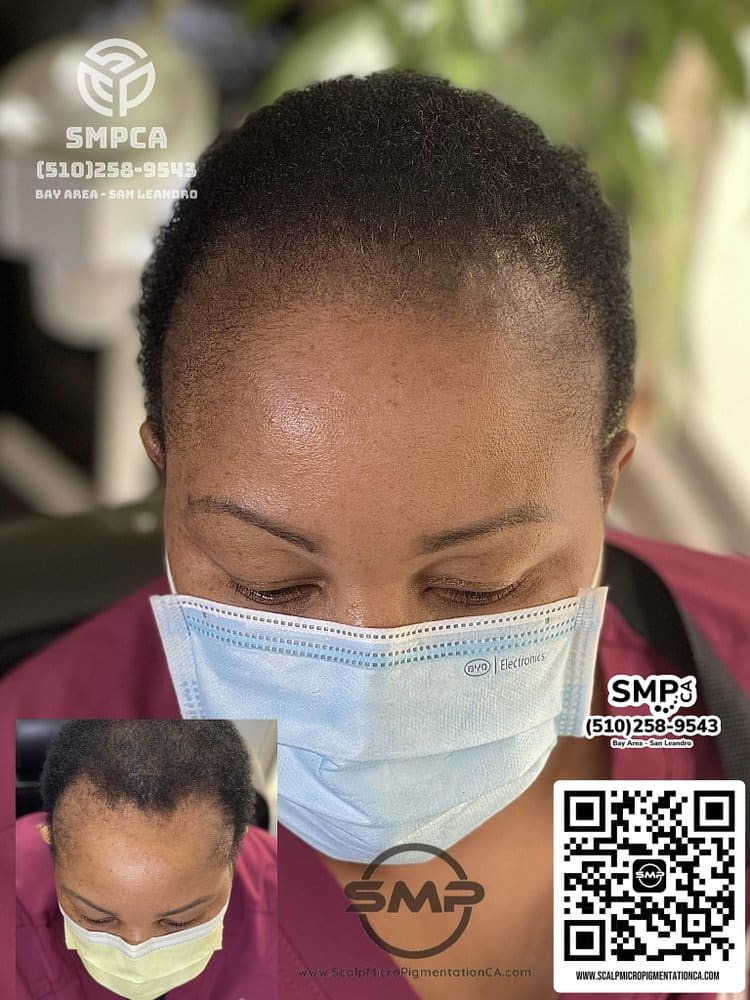
The reality — Women experience hair loss too, commonly as diffuse thinning and a widening part rather than the male recession pattern — which is what the Ludwig scale describes. It is frequently under-discussed, which can make women feel isolated when it happens. Causes vary and a dermatologist's diagnosis particularly matters here, since several treatable causes present similarly.

Why it persists — The entire hair loss category — marketing, media, product design — is overwhelmingly aimed at men, so women's hair loss is culturally invisible rather than actually rare.

Women's hair loss

23. Myth:Once it starts, nothing can be done.

The reality — There are medical options with real evidence behind them, and there are cosmetic options like SMP that change appearance without touching the underlying cause. Outcomes vary by individual, by cause, and by how early things are addressed — which is precisely why a dermatologist's assessment early is worth more than any product decision made alone. This is the one myth genuinely worth pushing back on, because it is the one that stops people from getting a diagnosis at all. We are not the ones to tell you which medical option is right; that is a physician's call.

Why it persists — Resignation is protective. If nothing can be done, there is nothing to fail at and no money to spend being disappointed. It is an emotionally reasonable place to land.

The full range of options

24. Myth:If I just take enough vitamins, my hair will come back.

The reality — Certain nutritional deficiencies are genuinely associated with hair loss, and correcting a real, diagnosed deficiency can matter. But supplementing without a deficiency is not established as a treatment for pattern hair loss, and some supplements at high doses carry their own risks. Get tested before you self-prescribe — that is a physician's call, not a shelf decision.

Why it persists — Supplements are accessible, feel safe and natural, and the deficiency-causes-hair-loss fact is real. It just does not generalize to everyone.

25. Myth:Sunlight or sun exposure causes baldness.

The reality — Sun exposure is not a recognized cause of pattern hair loss, though protecting your scalp from UV matters for skin health generally — and for anyone with SMP, sun exposure is one of the bigger contributors to how quickly pigment fades. So it is worth caring about, just not for the reason the myth suggests.

Why it persists — The scalp burns easily once hair thins, so people connect visible sun damage on a balding scalp with the balding itself. Cause and consequence get swapped.

Sun protection & aftercare

Ask the awkward one

The question you are slightly embarrassed to ask is usually the good one

Nobody arrives at hair loss with a clean information slate. You have read forums, watched ads, listened to a barber, a brother-in-law, and a stranger in a comment section, and somewhere in there are things that are true, things that used to be true, and things that were never true. Sorting that out is not a personal failing. It is just what happens with a subject this crowded.

So bring the awkward question. Ask whether it will look fake on your skin. Ask what happens in five years. Ask what it costs when the marketing brochure is closed. Ask how scalp micropigmentation differs from medication or from a hair transplant — noting that we do not perform transplants and cannot prescribe or advise on any medication. Ask whether you are even a candidate. If the honest answer is that SMP is a poor fit for your situation, that is the answer you will get.

More reading: what SMP actually is, whether it looks real, how long it lasts, or the full FAQ.

Hair loss & SMP myths — FAQ

Does scalp micropigmentation grow hair?+

No. SMP is a cosmetic tattoo procedure that places thousands of tiny pigment impressions into the scalp to replicate the appearance of natural shaved hair follicles. It does not grow hair, create hair strands, or affect follicles, and it does not treat the cause of hair loss. The underlying loss continues, which is why a responsible design plans for where your pattern is likely to go rather than only where it is today.

Does SMP turn blue over time?+

SMP uses carbon-based pigments formulated to soften toward a neutral grey rather than shift toward blue. Tonal shifts are still possible — pigment placed too deep, inappropriate pigment selection, or years of heavy sun exposure can all cause them, and outcomes vary by individual. It is a manageable risk, not an inevitability, and it is one of the strongest reasons to look at healed results from a practitioner before booking rather than day-one photos.

Is SMP permanent?+

Not permanently. SMP fades and softens over time as the body processes the pigment and sun exposure acts on it, and most people return for touch-ups. How long that takes varies substantially by skin type, sun exposure, immune response, aftercare, and how the work was placed. We will not quote you a guaranteed number, and we would be cautious of anyone who does. Treat touch-ups as part of the cost of owning the result.

Is scalp micropigmentation painful?+

We will not call it painless. Most clients describe it as manageable and comparable to or milder than a conventional tattoo, but needles are involved and sensation varies by person, by scalp region, and by session — the hairline and areas over bone tend to be sharper. Comfort options are discussed at consultation. Anyone promising a completely painless procedure is setting expectations badly.

Will SMP look fake on me?+

Well-executed SMP uses irregular placement, varied impression size, and a hairline softened and positioned for your face and age, and it goes unnoticed by design. Work that reads as fake usually has identifiable causes: impressions too large or too uniform, a hairline placed too low or too straight, over-saturation, or pigment placed too deep. The way to judge is healed results on skin like yours. Results vary from person to person, which is why a consultation looks at your specific pattern, hair color, and skin tone.

Can SMP cure or treat alopecia?+

No. SMP does not cure, treat, or affect alopecia or any other hair loss condition — it changes appearance only. Some clients with alopecia choose SMP as a cosmetic camouflage option, and because conditions like alopecia areata can change course unpredictably, results vary and future sessions may be needed. Diagnosis and treatment of any hair loss condition belong to a board-certified dermatologist. SMPCA is not a medical provider.

Does SMPCA offer PRP, laser therapy, transplants, or hair loss medication?+

No. SMPCA offers scalp micropigmentation and SMP training through SMPCA Academy — that is the complete list. We do not perform hair transplants, PRP, laser therapy, microneedling, exosome or stem cell treatments, and we do not sell hair systems or hair fibers or prescribe or advise on minoxidil, finasteride, or any medication. Those come up constantly at consultations, so we explain what they are, but for whether any of them is right for you, see a board-certified dermatologist or physician.

If I get SMP and hate it, can I just have it removed?+

Removal is possible, typically via laser over multiple sessions, but it is not quick, not cheap, and not guaranteed to return your scalp to its exact prior state. In some cases corrective SMP is a better route than removal. The practical advice is to choose your practitioner as though removal were not available — verify licensing, look at healed results on skin like yours, and take the consultation seriously before anything permanent-ish happens.

Get a straight answer about your own head

A consultation is free, takes about 20 minutes, and involves zero pressure. Bring every myth on this page and any others you have collected — I would rather spend the time correcting them than have you decide based on something you read at 1am.

Book a free consultation

San Lorenzo (East Bay) and Mountain View (Peninsula) studios. Or see all booking options.

Ready When You Are

Get your hairline — and your confidence — back.

Free, no-pressure quote. Tell me your situation and I'll show you exactly what's possible before you commit to anything.

Request a Free Quote