Reference · Hair Loss & SMP
Hair Loss & Scalp Micropigmentation Glossary
Plain-English definitions for the 72 terms you will actually hear — in a consultation, in a dermatologist's office, or in a forum thread at 2am. Written by a Master Barber and SMP artist, with honest notes on exactly what we do and do not offer.
Who this glossary is for
Hair loss comes with a vocabulary nobody teaches you. Within a week of searching, you are expected to know what Norwood 4 means, why telogen effluvium is different from pattern loss, whether a blowout is something to worry about, and what a studio means when it says healed result. This glossary defines all of it in plain English — 72 terms across four sections.
It is written for the person researching before a first consultation, the client who just booked and wants to follow along, and anyone who got a diagnosis and needs the words explained without a sales pitch attached. Where a term describes something SMPCA does not offer — transplants, PRP, laser therapy, microneedling, exosomes, stem cells, hair systems, fibers, or any medication — it is marked clearly, every time. We define those terms because you will hear them; we do not provide them and we do not earn anything from them.
One standing note before you start: scalp micropigmentation is a cosmetic tattoo procedure. It places thousands of tiny pigment impressions into the scalp to replicate the appearance of natural shaved hair follicles. It does not grow hair, does not create hair strands, and does not treat the cause of hair loss. Results vary from person to person. Nothing on this page is medical advice — for a diagnosis, see a board-certified dermatologist.
Jump to a section
- SMP technique & craft terms (20)
- Hair loss conditions & scalp anatomy (29)
- Hair restoration treatments — including everything we do not offer (13)
- Your procedure, healing & aftercare (10)
Terms are alphabetical within each section. Every term has its own permanent anchor link, so you can share a single definition directly.
SMP technique & craft terms
The vocabulary of the procedure itself — what the artist is actually doing, the words that come up when you look at a portfolio, and the terms that separate work that heals well from work that needs correcting later.
- Blending
- The technique of transitioning SMP work smoothly into surrounding hair or bare scalp so no hard edge is visible. It is what keeps density work invisible where existing hair thins out, and it is one of the clearest markers of an experienced practitioner.
- Blowout
- An artifact where pigment spreads under the skin beyond the intended impression, producing a blurred or smudged dot instead of a crisp one. It is typically the result of needle depth, angle, or machine settings being wrong for that particular skin. Blowouts are a common reason clients seek corrections.See SMP correction work →
- Carbon-Based Pigment
- The pigment family typically used in scalp micropigmentation, formulated to fade toward a neutral grey rather than shift into unwanted tones. Pigment behavior still varies with skin type, sun exposure, immune response, and how it was deposited — no pigment is exempt from change over time.
- Corrective SMP
- Work performed to improve, soften, reshape, or partially conceal previous scalp micropigmentation — commonly addressing hairlines placed too low or too sharp, impressions that are too large, or pigment that has shifted in tone. Corrections are constrained by what already exists in the skin, so outcomes vary more than fresh work.SMP corrections →
- Density (Apparent Density)
- In SMP, the visual impression of fullness created by pigment impressions placed among or in place of existing hair. It is an appearance of density — SMP adds no hair and changes no follicle. The right density for a given client depends on hair color, skin tone, remaining hair, and the look they want.
- Fitzpatrick Scale
- A six-point classification of skin type based on how skin responds to sun exposure, from Type I (always burns) to Type VI (never burns). In SMP it informs pigment dilution, contrast, and depth choices, because the same application reads very differently across skin tones.
- Hairline Design
- The planning and placement of the front hairline — its height, shape, temple angles, and softness. It is the single most consequential decision in an SMP session, because a hairline that is too low, too straight, or too aggressive for a client's age and face reads as artificial no matter how good the pigment work is.Hairline design & repair →
- Hair Tattoo
- A colloquial term the public uses for scalp micropigmentation. It is broadly a synonym, though the word tattoo can imply traditional body-art ink and technique, which differ from SMP in pigment, needle configuration, depth, and intent.What is SMP, exactly →
- Impression (Pigment Impression)
- A single deposit of pigment placed in the dermis, sized and spaced to replicate the appearance of one shaved hair follicle. A full SMP treatment consists of thousands of these placed across multiple sessions. The impression is the fundamental unit of SMP — its size, depth, angle, and irregularity determine whether the overall result reads as natural.
- Ink Migration
- The spreading of pigment within the skin over time, causing what were once distinct impressions to blur together into a diffuse shadow. It is most commonly associated with pigment placed too deep, and it is a leading reason for correction work.
- Microblading
- A cosmetic tattooing technique using a hand tool to create fine hair-like strokes, most commonly on eyebrows. It is a different technique from SMP, which uses round pigment impressions rather than strokes — stroke-based work on a scalp does not replicate shaved follicles convincingly.
- Needle Configuration
- The number and arrangement of needle points in the cartridge being used. SMP typically uses very fine single or tightly grouped configurations to produce small, crisp impressions, rather than the larger groupings used in traditional tattooing.
- Needle Depth
- How far into the skin the needle deposits pigment during SMP. Too shallow and the pigment sheds; too deep and it spreads and shifts tone. Correct depth varies by scalp region, skin type, and skin condition — it is judgment, not a machine setting, and it is a core reason practitioner experience matters.
- Pigment
- The colorant deposited into the dermis during SMP, selected and diluted to match a client's natural shaved-hair appearance and skin tone. SMP pigment is formulated for this purpose and differs from traditional tattoo ink in composition and intended fade behavior.
- Saturation
- How much pigment has been deposited into an area, and how dark and dense it consequently reads. Under-saturation looks faint and washed out; over-saturation looks flat, heavy, and helmet-like, and is far harder to correct than under-saturation. Building saturation gradually across sessions is deliberate, not slow.
- Scalp Micropigmentation (SMP)
- A cosmetic tattoo procedure that places thousands of tiny pigment impressions into the scalp to replicate the appearance of natural shaved hair follicles. It does not grow hair, create hair strands, or treat the cause of hair loss — it changes appearance. Results vary from person to person.Full explanation of SMP →
- Scalp Shading
- A softer, lower-contrast application technique used within scalp micropigmentation to build the appearance of depth and density — commonly on crowns, under existing longer hair, and to soften transitions. It is a technique variation, not a separate service, and SMPCA does not sell it as a separate line item. Most real-world results combine shading with follicle impressions.
- Scar Camouflage
- The use of SMP to reduce the visual contrast of a scar against surrounding scalp — commonly FUT strip scars, FUE dot scarring, or injury and surgical scars. It changes appearance only; it does not remodel, heal, or remove scar tissue, and how well scarred skin holds pigment varies considerably between individuals.SMP for scars →
- Stippling / Pointillism
- The technique of building an image from many discrete points rather than continuous lines — the visual principle underlying SMP's follicle impressions, and the reason irregular, varied placement reads as natural while uniform placement reads as printed.
- Tricopigmentation
- A variation of scalp micropigmentation using pigments formulated to fade more quickly and intentionally, sometimes marketed as semi-permanent or temporary SMP.Not offered by SMPCA — SMPCA does not market a separate tricopigmentation service. All SMP fades over time; the difference is a matter of degree and pigment formulation, and any provider offering it should explain precisely what differs.
Hair loss conditions & scalp anatomy
The medical and anatomical vocabulary you will meet in a dermatologist's office, in a hair loss forum, or on an intake form. SMPCA is a cosmetic SMP studio, not a medical provider — these definitions are educational, and diagnosis of any condition belongs to a board-certified dermatologist.
- Alopecia
- A general medical term for hair loss of any type or cause; it is a category, not a single diagnosis. Because it covers everything from temporary shedding to permanent scarring loss, an accurate diagnosis from a dermatologist matters before choosing any treatment.
- Alopecia Areata
- An autoimmune condition in which the immune system attacks hair follicles, typically producing round or oval patches of loss on the scalp or body. Its course is unpredictable — hair may regrow, and patches may appear elsewhere.Not offered by SMPCA — SMPCA does not diagnose or treat alopecia areata. SMP is a cosmetic camouflage option some clients choose for the appearance of patches; because the condition can change, results vary and future sessions may be needed. Diagnosis and treatment belong to a dermatologist.SMP and alopecia →
- Alopecia Totalis
- A form of alopecia areata involving complete loss of scalp hair.Not offered by SMPCA — Not a condition SMPCA treats. Some clients pursue SMP for the appearance of a hairline and shaved-look density; suitability, design, and expectations must be discussed individually, and results vary.
- Alopecia Universalis
- The most extensive form of alopecia areata, involving loss of hair across the entire body, including eyebrows and eyelashes.Not offered by SMPCA — Not treated by SMPCA. Diagnosis and any medical management belong to a board-certified dermatologist.
- Anagen Phase
- The active growing phase of the hair cycle, during which the follicle is producing a hair shaft. It is the longest phase, which is why scalp hair can reach considerable length.
- Androgenetic Alopecia (Male & Female Pattern Hair Loss)
- The most common form of hereditary, progressive hair loss, driven by genetics and androgen sensitivity of the follicles. It typically follows recognizable patterns — recession and crown loss in men, diffuse widening of the part in women.Not offered by SMPCA — SMP does not treat, stop, or slow androgenetic alopecia. It addresses appearance only, and the underlying loss continues. For clinical detail, see the American Academy of Dermatology or Mayo Clinic.Hair restoration options compared →
- Catagen Phase
- The brief transitional phase of the hair cycle between active growth and rest, during which the follicle shrinks and detaches from its blood supply.
- Cicatricial Alopecia (Scarring Alopecia)
- A group of conditions in which inflammation permanently destroys hair follicles and replaces them with scar tissue, meaning hair cannot regrow in the affected area. It requires prompt dermatological diagnosis — delay can widen the permanent loss.Not offered by SMPCA — SMPCA does not diagnose or treat scarring alopecia. Whether scarred skin will hold pigment predictably varies considerably, and any SMP over affected areas should only be considered after a dermatologist has assessed and stabilized the condition.
- Crown (Vertex)
- The whorl area at the top-back of the scalp. It is a common early site of pattern loss and, because of its curvature and hair-growth direction, one of the more technically demanding areas to make look natural.Crown hair loss →
- Dermis
- The layer of skin beneath the epidermis where SMP pigment is deposited. Depositing too shallow risks the pigment shedding away quickly; too deep risks spreading and tonal change — which is why needle depth control is central to the craft.
- DHT (Dihydrotestosterone)
- An androgen hormone derived from testosterone; sensitivity to it at the follicle is a central factor in androgenetic alopecia.Not offered by SMPCA — SMPCA cannot advise on hormones or any treatment targeting them. That is a physician's domain.
- Diffuse Thinning
- Hair loss spread evenly across the scalp rather than concentrated in a pattern, producing a general reduction in density and more visible scalp under light. It is common in women and occurs in men as diffuse unpatterned loss. Because hair remains, SMP in these cases leans on shading to reduce scalp-to-hair contrast rather than on shaved-look impressions.Women's hair loss →
- Donor Area
- The region of the scalp — typically the back and sides, where hair is generally less affected by pattern loss — from which follicles are harvested during a hair transplant. A person's donor supply is finite, and its density is a major factor in whether they are a surgical candidate.Not offered by SMPCA — SMPCA does not perform hair transplants. Donor assessment is a surgeon's evaluation.
- Epidermis
- The outermost layer of skin. SMP pigment is deposited beneath it, into the dermis — pigment placed too shallowly in the epidermis tends to shed as skin naturally turns over.
- Follicle (Hair Follicle)
- The structure in the skin from which a hair grows. SMP places pigment in the skin to replicate the appearance of shaved follicles; it does not create, restore, or affect actual follicles.
- Follicular Unit
- A naturally occurring grouping of one to about four hairs that emerge together — the unit hair transplant surgeons work with. Understanding that hair grows in irregular clusters rather than an even grid is also why realistic SMP avoids uniform spacing.
- Hypertrophic Scar
- A raised scar that stays within the boundaries of the original wound. Raised or textured scar tissue takes pigment differently than flat skin, so camouflage outcomes over such scars vary and may need adjusted expectations.Scar camouflage →
- Keloid
- A raised scar that grows beyond the boundaries of the original wound, more common in some skin types than others.Not offered by SMPCA — A keloid tendency is a meaningful consideration for any procedure that breaks the skin, including SMP. Anyone with a history of keloids should consult a dermatologist before booking, and disclose it at consultation.
- Ludwig Scale
- A three-stage classification used to describe female pattern hair loss, based on progressive widening of the central part and thinning across the crown while the frontal hairline is generally preserved. It is the female-pattern counterpart to the Norwood scale.Female pattern thinning →
- Norwood Scale (Hamilton-Norwood)
- A seven-stage classification of male pattern hair loss, from minimal recession at Stage 1 to 2, through crown and frontal loss, to extensive baldness leaving only a rim of hair at Stage 6 to 7. It is the standard shorthand used by surgeons, dermatologists, and SMP practitioners to describe where someone is and where they may be heading.
- Pattern Progression
- The tendency of androgenetic hair loss to continue advancing over time. This is why responsible SMP design accounts for where the loss is likely to go, not only where it is today — and why a design that looks right at 30 can look wrong at 45 if progression was not planned for.
- Recession (Receding Hairline)
- The backward movement of the frontal hairline, most commonly at the temples, typically an early visible sign of male pattern hair loss.Hairline restoration →
- Sebaceous Gland
- An oil-producing gland associated with hair follicles. Oily skin can influence how pigment settles and how it reads over time, which is one of the individual variables that makes SMP outcomes differ between clients.
- Seborrheic Dermatitis
- A common inflammatory skin condition causing flaking, redness, and irritation of the scalp.Not offered by SMPCA — SMPCA does not treat skin conditions. Active irritation should be assessed and settled by a dermatologist before any SMP session, because working over inflamed skin affects both comfort and retention.
- Shedding (Post-Treatment)
- A temporary increase in hair fall reported with the initiation of some hair loss medications as follicles shift cycle phase.Not offered by SMPCA — This is a medication topic, not an SMP one — ask your prescribing physician. SMP does not cause hair shedding.
- Telogen Effluvium
- A form of diffuse, usually temporary shedding in which a large proportion of hairs shift into the resting phase at once, commonly following illness, surgery, major stress, childbirth, rapid weight loss, or certain medications. It often resolves once the trigger is addressed.Not offered by SMPCA — SMPCA does not treat telogen effluvium. Because it is frequently temporary, cosmetic work is generally not the first thing to consider — see a dermatologist first.
- Telogen Phase
- The resting phase of the hair cycle, at the end of which the hair sheds and the follicle re-enters growth. A normal proportion of scalp hair is in telogen at any given time.
- Traction Alopecia
- Hair loss caused by sustained mechanical tension on the follicles — from tight braids, weaves, ponytails, extensions, or headwear. Caught early it may improve when the tension is removed; sustained long enough it can become permanent.Not offered by SMPCA — SMPCA does not treat traction alopecia. If the tension source is still in place, address that with a dermatologist first — cosmetic work over an ongoing cause is treating the symptom.
- Trichologist
- A specialist in hair and scalp health. Scope of practice, training, and licensing vary considerably by region, and a trichologist is not necessarily a physician. For diagnosis of a medical condition, a board-certified dermatologist is the appropriate referral.
Hair restoration treatments — including everything we do not offer
These come up at nearly every consultation, so they are defined here for your reference. Read the scope note on each one carefully: SMPCA offers scalp micropigmentation and SMPCA Academy training only. We do not perform, prescribe, sell, or earn commission on a single treatment in this section, and we have no first-hand experience with most of them.
- Dutasteride
- A prescription medication in the same class as finasteride, sometimes used off-label for hair loss depending on region and prescriber.Not offered by SMPCA — SMPCA does not prescribe or advise on dutasteride and has no first-hand experience with it. Consult a physician; see AAD or Mayo Clinic for clinical information.
- Exosomes
- Cell-derived vesicles being explored in aesthetic and regenerative medicine, including for hair loss.Not offered by SMPCA — SMPCA does not offer exosome treatments and has no first-hand experience with them. Their use for hair loss is not an established, FDA-approved treatment; discuss with a board-certified dermatologist.
- Finasteride
- A prescription oral medication used for male pattern hair loss that acts on the conversion of testosterone to DHT. It has a documented side-effect profile that varies between individuals.Not offered by SMPCA — SMPCA cannot prescribe, recommend, or advise on finasteride. This is a conversation for a physician or dermatologist.How SMP differs from medication →
- FUE (Follicular Unit Extraction)
- A hair transplant technique in which individual follicular units are extracted one at a time from the donor area and implanted into thinning areas. It typically leaves small, scattered dot scarring across the donor region.Not offered by SMPCA — SMPCA does not perform hair transplants. SMP is sometimes used cosmetically to reduce the visible contrast of FUE dot scarring; results vary with scar tissue quality.
- FUT (Follicular Unit Transplantation / Strip)
- A hair transplant technique in which a strip of scalp is removed from the donor area and dissected into follicular units. It typically leaves a linear scar across the back of the head.Not offered by SMPCA — SMPCA does not perform transplants. Camouflaging the appearance of a strip scar is one of the most common reasons clients come to us — that is cosmetic camouflage only, not surgery.Strip scar camouflage →
- Hair Fibers
- Cosmetic keratin or cotton-derived powders that cling to existing hair to make thinning areas look denser. They wash out, must be reapplied, and need remaining hair to hold onto.Not offered by SMPCA — SMPCA does not sell or retail hair fibers and earns no commission on them.Hair fibers vs SMP →
- Hair System (Hairpiece / Topper / Unit)
- A wearable hair prosthetic attached to the scalp with adhesive, tape, or clips, providing hair with real length and volume. Systems require ongoing maintenance, periodic reattachment, and eventual replacement.Not offered by SMPCA — SMPCA does not sell, fit, install, or service hair systems.Hair systems vs SMP →
- Hair Transplant
- A surgical procedure in which hair follicles are moved from a donor area to thinning or bald areas, performed by a physician or surgical team. It is the only mainstream option that relocates actual growing hair.Not offered by SMPCA — SMPCA does not perform hair transplants or any surgical procedure, and cannot assess whether you are a surgical candidate. That is a hair restoration surgeon's evaluation.Hair transplant vs SMP, compared honestly →
- LLLT (Low-Level Laser Therapy)
- The use of low-level light, delivered by caps, helmets, or combs, marketed for hair loss; some devices carry FDA clearance. Clearance is a regulatory status, not a promise of a result for any individual.Not offered by SMPCA — SMPCA does not offer laser therapy, sell devices, or earn affiliate commission. We have no first-hand experience with it — see a dermatologist.
- Microneedling
- A procedure using fine needles to create controlled micro-injury in the skin, studied in dermatology for scar remodeling and, for hair loss, largely as an adjunct to topical treatment. It deposits nothing — that is the distinction from SMP, which deposits pigment.Not offered by SMPCA — SMPCA does not perform microneedling or dermarolling. Do not needle or roll over healing SMP work, and tell your practitioner about any scalp treatments you are doing.
- Minoxidil
- A topical, and by prescription oral, medication used for hair loss. Results vary between individuals and gains typically depend on continued use.Not offered by SMPCA — SMPCA cannot advise on minoxidil, including formulation, strength, or suitability. Consult a physician or dermatologist.Medication vs SMP →
- PRP (Platelet-Rich Plasma)
- A treatment in which a concentrate derived from a patient's own blood is injected into the scalp, used in some clinics for hair loss. Protocols vary between providers and the evidence base is still developing.Not offered by SMPCA — SMPCA does not offer PRP or any injection, has no first-hand experience with it, and is not a medical provider. See a board-certified dermatologist.
- Stem Cell Therapy (for Hair Loss)
- An experimental category of regenerative treatment marketed by some clinics for hair loss.Not offered by SMPCA — SMPCA does not offer stem cell treatments and has no first-hand experience with them. This is not an FDA-approved treatment for hair loss; approach marketing claims cautiously and consult a board-certified dermatologist.
Your procedure, healing & aftercare
The words that show up on your intake form, in your session, and on your aftercare sheet. If you are booked or considering booking, this is the section to read twice — most of the variables genuinely within your control live here.
- Aftercare
- The set of instructions followed after an SMP session — commonly covering washing, moisturizing, sun exposure, sweating, and shaving — to protect healing skin and support how the pigment settles. Following aftercare is one of the few variables genuinely within the client's control.The full aftercare guide →
- Consultation
- The no-cost, no-pressure conversation before any work happens, where your pattern, skin, hair color, goals, and medical history are discussed and a plan is designed. It is also where you find out whether SMP is a poor fit for you — which is an answer we give when it is the honest one.Book a free consultation →
- Fading
- The gradual lightening and softening of SMP pigment over time as the body processes it and sun exposure acts on it. Fading is normal and expected — SMP is not permanent forever. How quickly it happens varies substantially by skin type, sun exposure, immune response, aftercare, and how the work was placed.How long SMP lasts →
- Healed Result
- How SMP looks after the skin has fully settled — typically noticeably softer and lighter than immediately post-session. Judging work by its day-one appearance is one of the most common client mistakes; the healed result is the real result, and it is the only thing worth judging an artist's portfolio on.
- Retention
- How well pigment stays in the skin after healing. Retention varies with skin type, skin condition, immune response, sun exposure, aftercare compliance, and placement — which is why SMP is delivered across multiple sessions rather than one, with each session building on what the skin actually kept.
- Scabbing
- Light crusting that can form over pigment impressions as the skin closes in the days after a session. It is a normal part of healing for many clients and varies from barely visible to noticeable. Picking, scratching, or scrubbing it off can lift pigment with it, which is why aftercare instructions are firm on leaving it alone.
- Session
- One appointment within an SMP treatment. A full result is typically built over multiple sessions spaced days to weeks apart, allowing the skin to heal and revealing what pigment was actually retained before more is added.What happens in a session →
- Session Spacing
- The deliberate gap left between SMP sessions, usually measured in days to weeks, so the skin can settle and the retained result can be assessed before more pigment is layered in. Rushing the spacing removes the information the next session depends on.
- SPF (Sun Protection for SMP)
- Sunscreen applied to the scalp once healing is complete. UV exposure is one of the larger contributors to how quickly SMP pigment fades, so consistent protection is the single most effective habit for stretching the time between touch-ups — and it protects the skin itself regardless.
- Touch-Up
- A follow-up session to refresh pigment that has softened or faded over time. Because SMP fades, touch-ups are an expected part of the cost of ownership, not a sign that something went wrong. Timing varies considerably between individuals.Fading & touch-up timing →
Terms we are asked about constantly but cannot advise on
PRP, low-level laser therapy, exosomes, stem cell treatments, microneedling, minoxidil, finasteride, dutasteride, hair systems, hair fibers, and hair transplant surgery come up at nearly every consultation. We are an SMP studio. We do not perform any of them, we have no first-hand experience with most of them, we earn nothing from any of them, and we are not going to pretend otherwise. What you read above is definitional only.
For anything about whether one of those is right for you — including anything involving a diagnosis, a prescription, a hormone, or an active skin condition — see a board-certified dermatologist or physician. Reliable starting points include the American Academy of Dermatology, Mayo Clinic, Cleveland Clinic, and NIH / PubMed.
What we can tell you about, in detail and from thousands of hours of hands-on work since 2016, is scalp micropigmentation: what it does, what it does not do, who it suits, how it heals, and how it ages. Start here, compare it honestly against a hair transplant, or read the full FAQ.
Glossary FAQ
What is the difference between scalp micropigmentation and a hair tattoo?+
They describe the same thing in everyday speech. Scalp micropigmentation is the technical name for a cosmetic tattoo procedure that places thousands of tiny pigment impressions into the scalp to replicate the appearance of natural shaved hair follicles. The colloquial phrase hair tattoo is broadly a synonym, but the word tattoo can imply traditional body-art ink, needles, and depth — all of which differ from SMP. Same family, different specialization.
What does the Norwood scale actually measure?+
The Norwood scale, sometimes called the Hamilton-Norwood scale, is a seven-stage classification of male pattern hair loss. Stage 1 to 2 is minimal recession at the temples, the middle stages add crown loss and a deepening frontal pattern, and Stage 6 to 7 describes extensive loss leaving a rim of hair around the sides and back. Surgeons, dermatologists, and SMP artists all use it as shorthand for where someone is now and where the pattern may be heading. The Ludwig scale is the three-stage female-pattern equivalent.
Does SMP grow hair or treat the cause of my hair loss?+
No. SMP is cosmetic. It places pigment in the skin to replicate the appearance of shaved follicles — it does not grow hair, create hair strands, affect follicles, or treat, slow, or cure any hair loss condition. Whatever is causing your loss continues unaffected, which is why responsible SMP design plans for pattern progression. If your goal is actual regrowth, that is a conversation for a dermatologist or a hair restoration surgeon, not for us.
Which treatments in this glossary does SMPCA actually offer?+
Scalp micropigmentation, and SMP training through SMPCA Academy. That is the complete list. We do not offer hair transplants, PRP, laser therapy, microneedling, exosomes, stem cell treatments, hair systems, or hair fibers, and we cannot prescribe or advise on minoxidil, finasteride, dutasteride, or any medication. Those terms are defined here because clients ask about them constantly — not because we provide them.
Is SMP permanent?+
Not permanently permanent, no. SMP pigment fades and softens over time as the body processes it and sun exposure acts on it, and most people return for touch-ups. How long that takes varies substantially by skin type, sun exposure, immune response, aftercare, and how the work was placed, so anyone quoting you a guaranteed number should be treated with caution. Plan for touch-ups as part of the cost of owning the result.
Why does a glossary term say a dermatologist should be consulted?+
Because diagnosing a hair loss condition is medical practice and SMPCA is a cosmetic studio, not a medical provider. We are an SMP studio run by a Master Barber, and we are specific about where our expertise ends. For anything involving a diagnosis, a medication, a hormone, or an active skin condition, a board-certified dermatologist is the right person — and getting that assessment before booking cosmetic work is genuinely in your interest.
Still not sure which words apply to you?
That is exactly what a consultation is for. Bring your questions, your photos, and any term on this page you want explained properly. It is free, it takes about 20 minutes, and if SMP is a poor fit for your situation you will hear that from me directly.
San Lorenzo (East Bay) and Mountain View (Peninsula) studios. Or see whether you are a candidate first.
A decade of SMP experience.
Every result you see is a real client — built dot by dot in San Lorenzo.
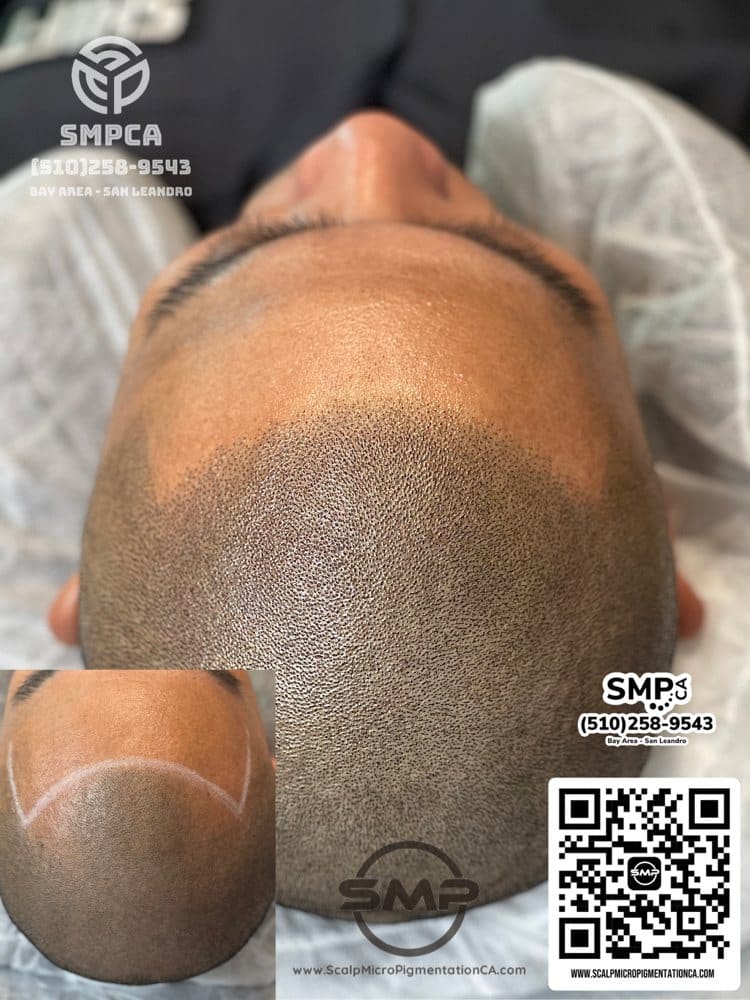
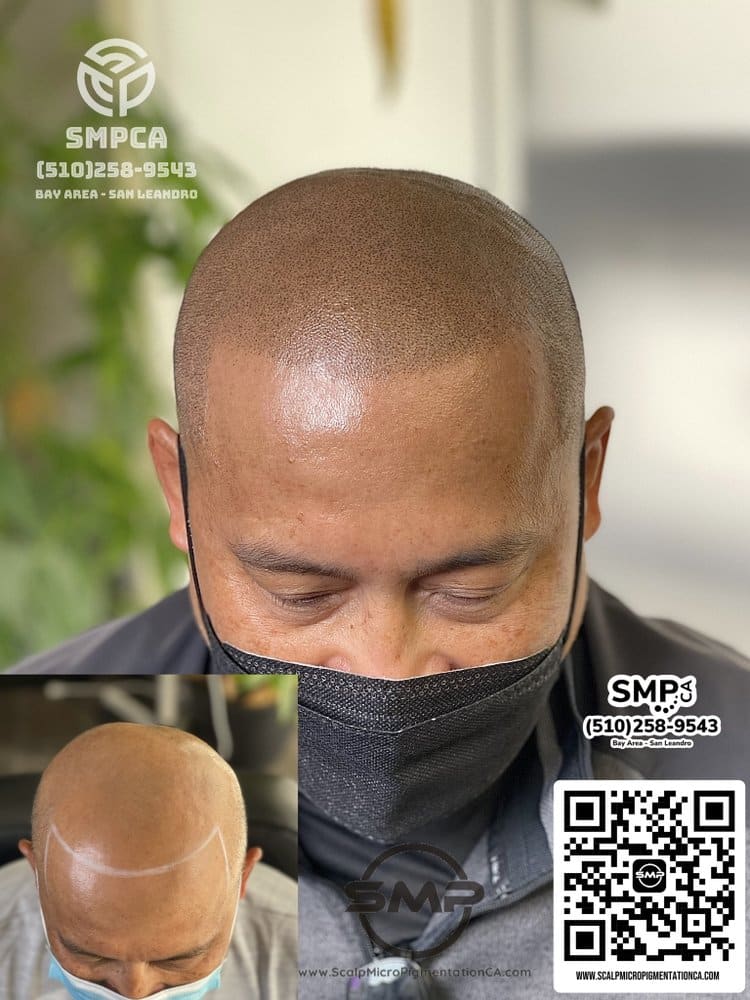
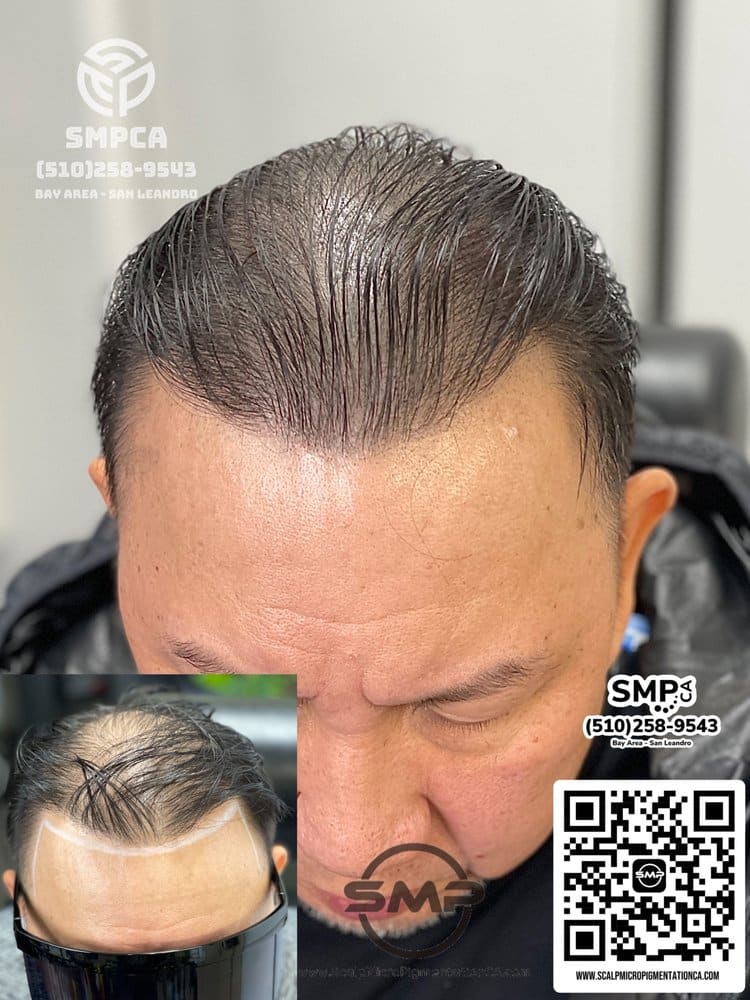
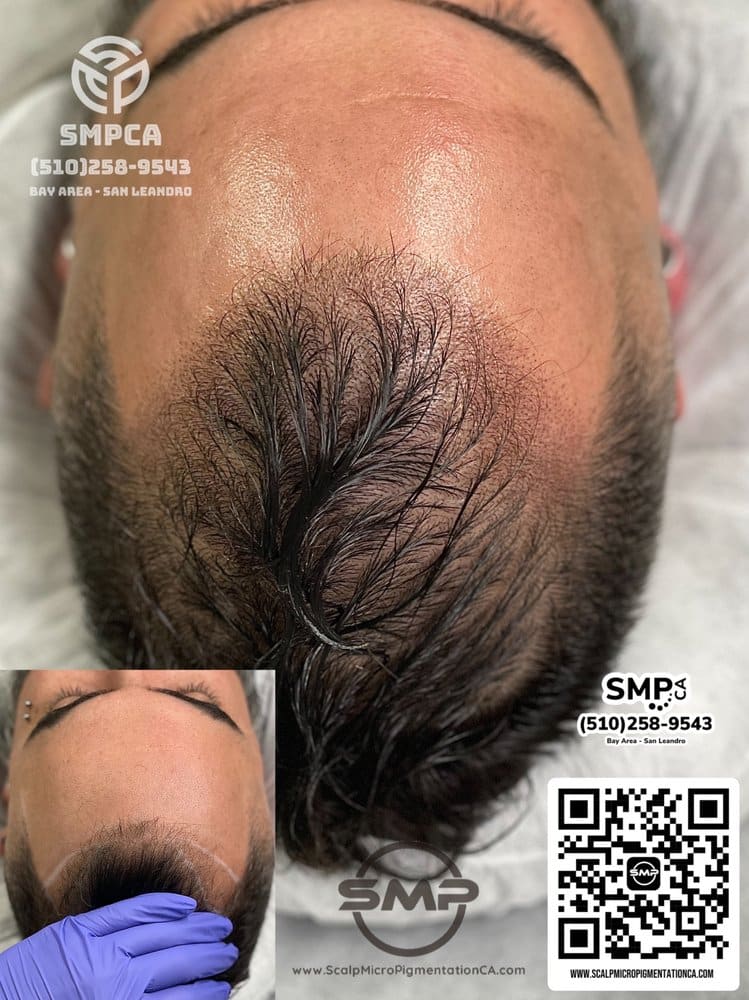
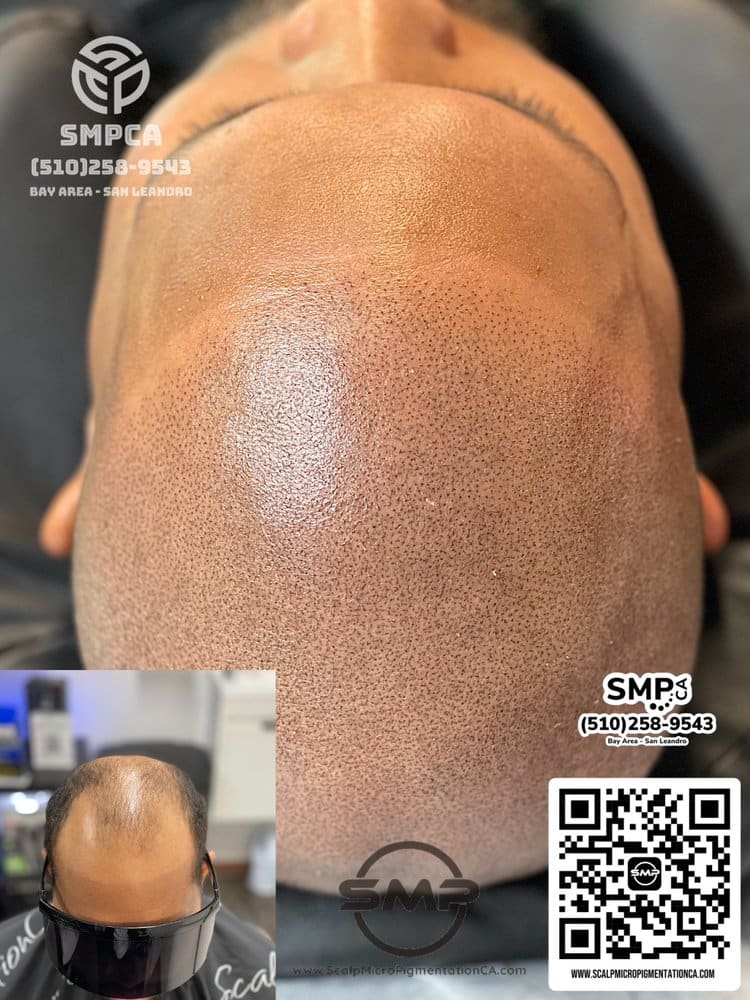
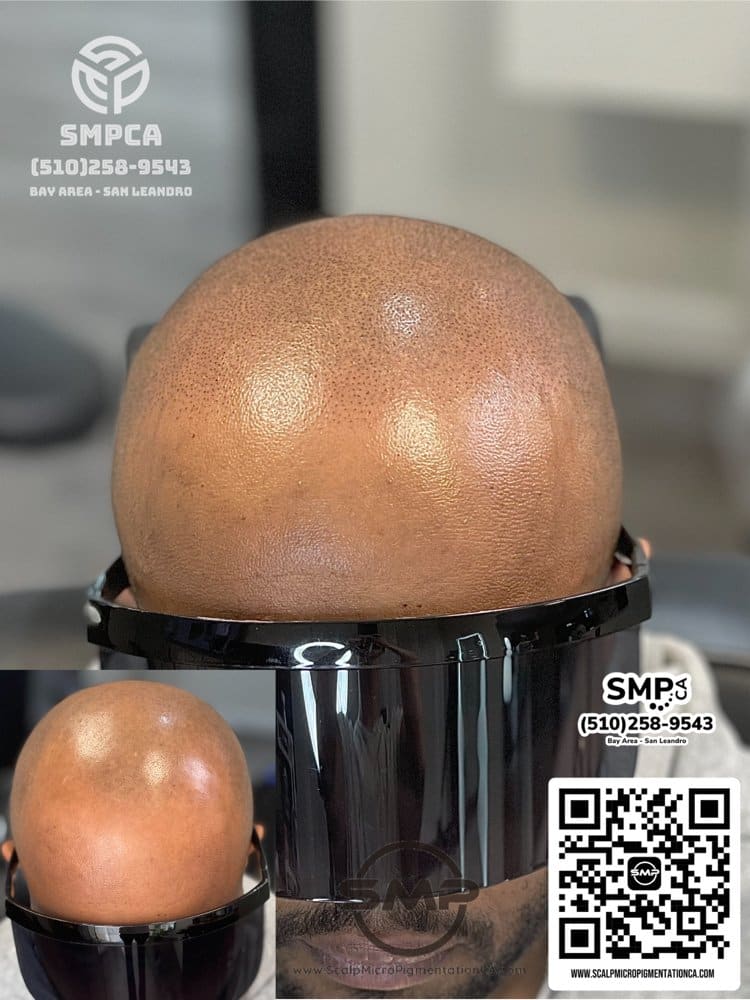
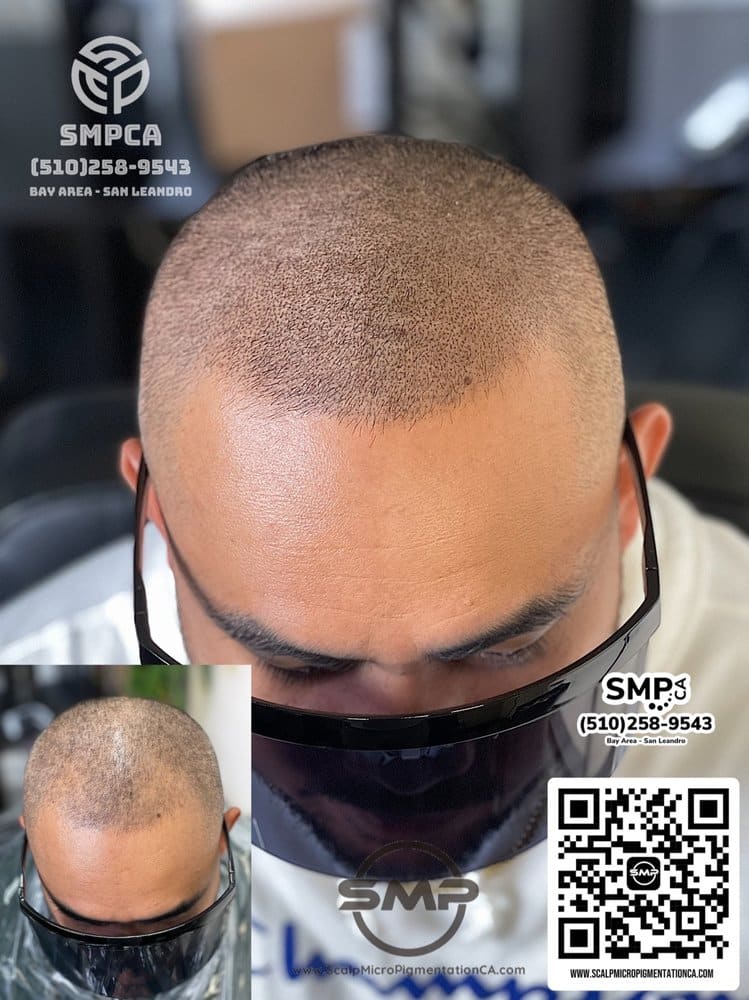
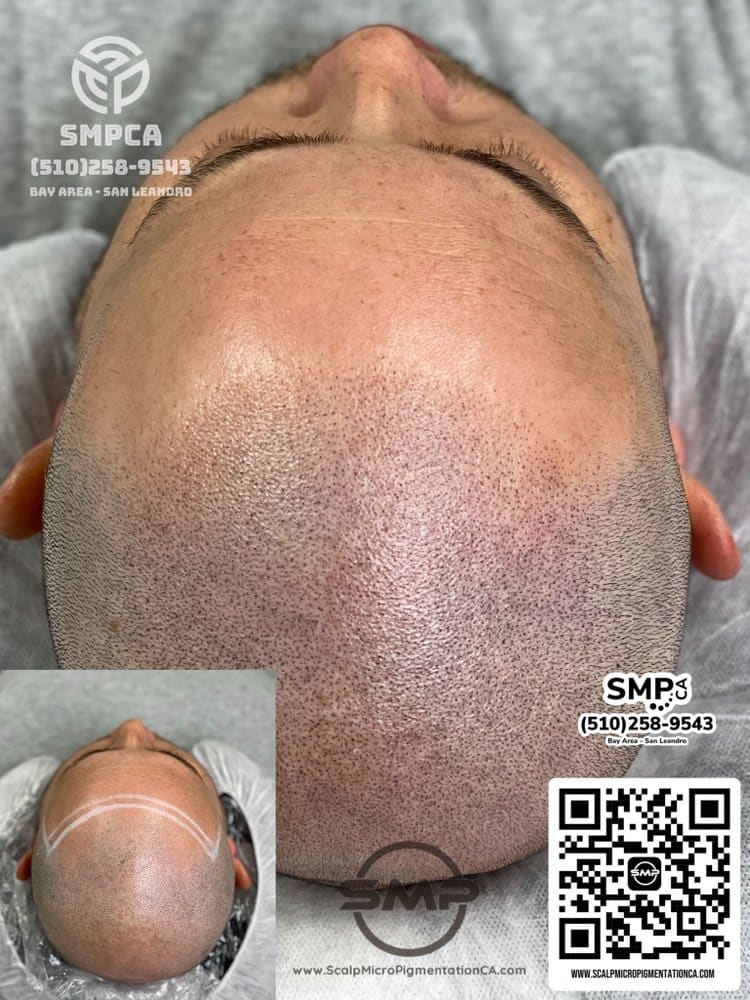
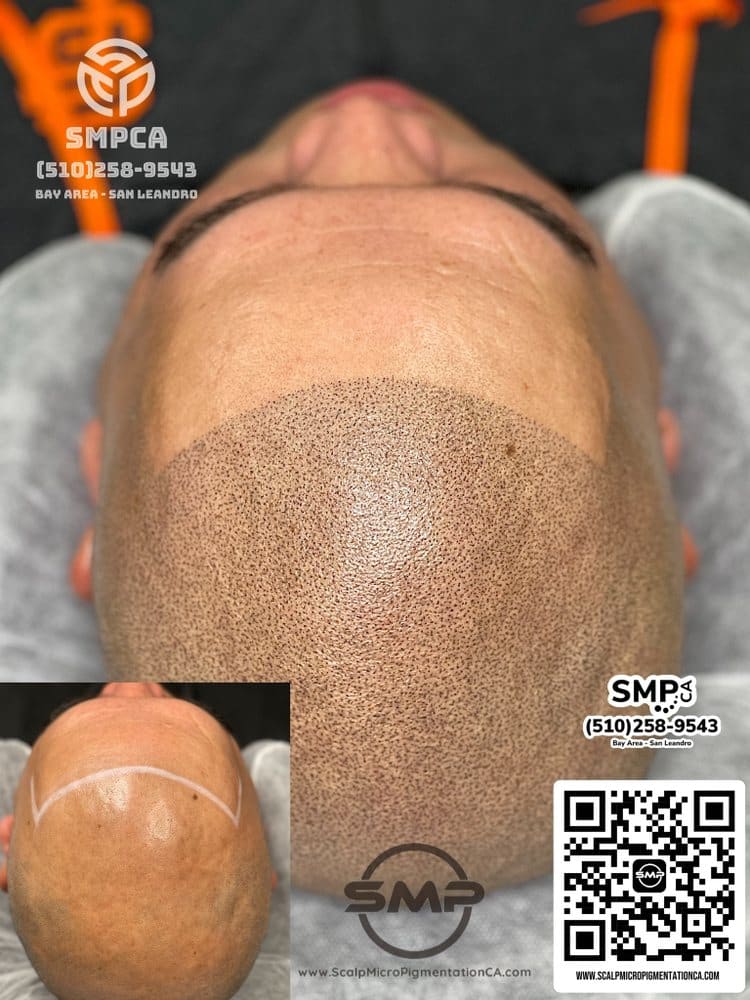
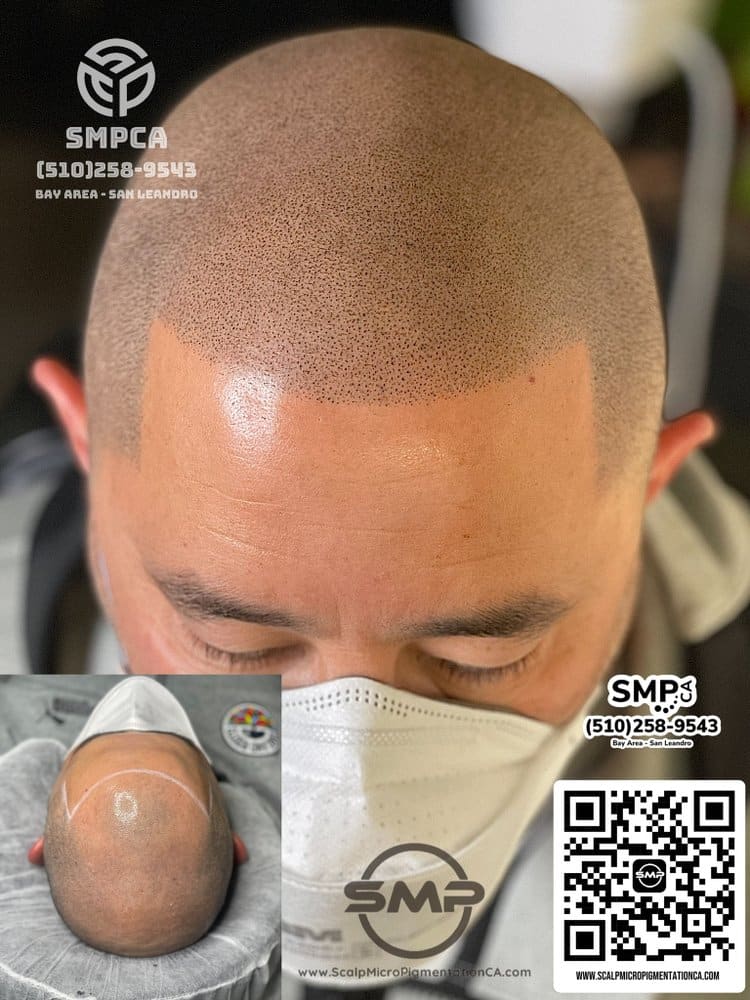
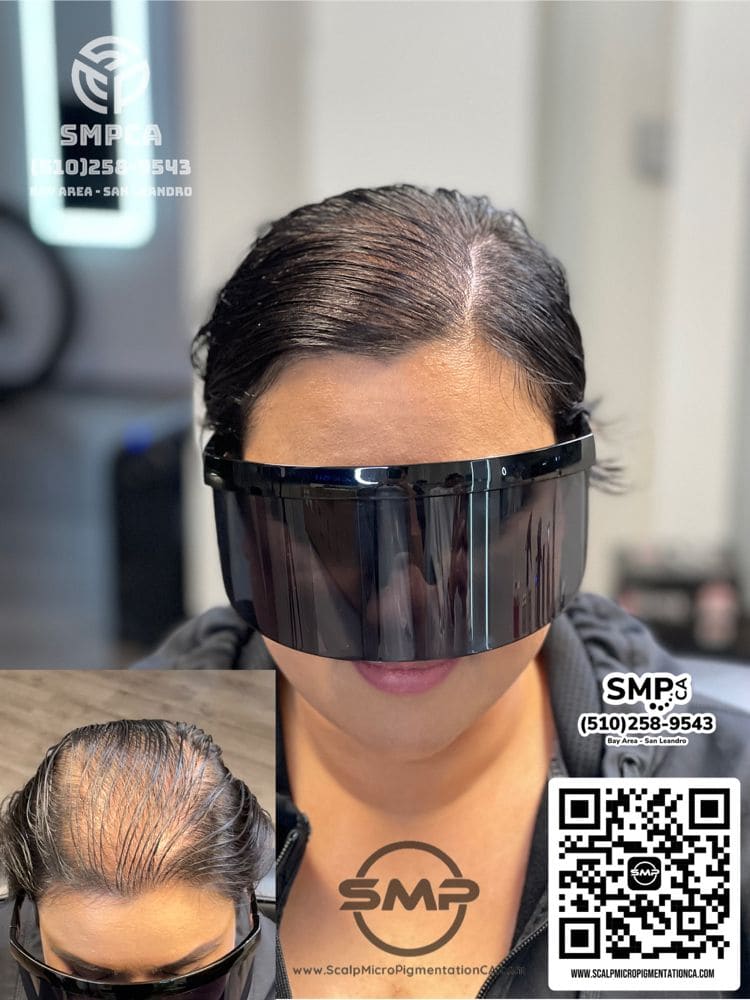
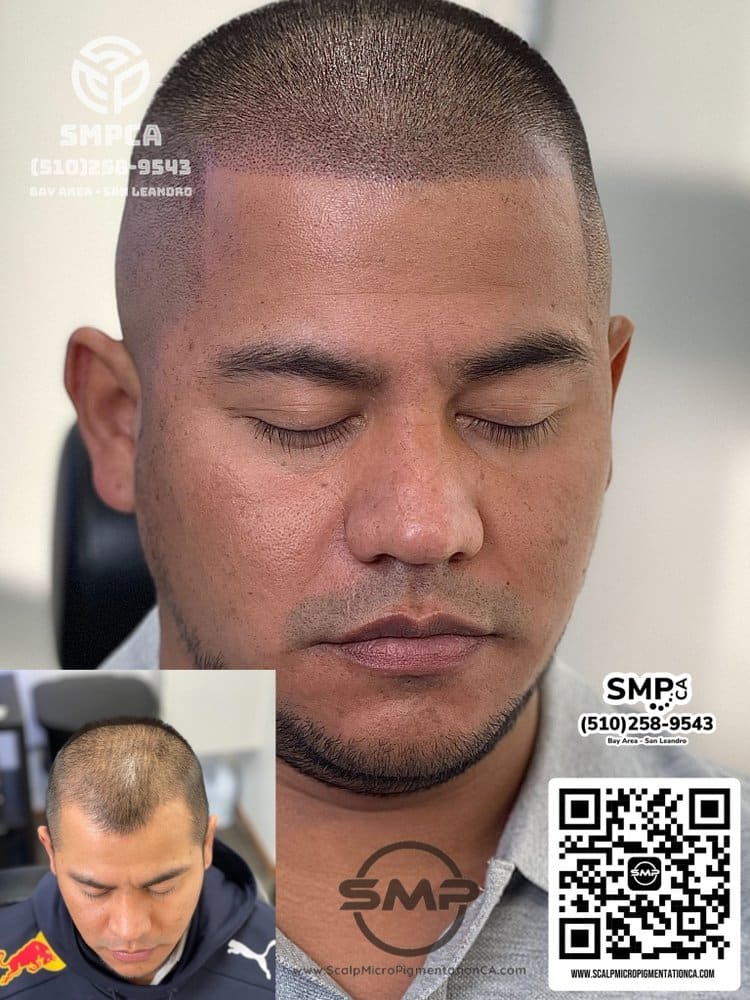
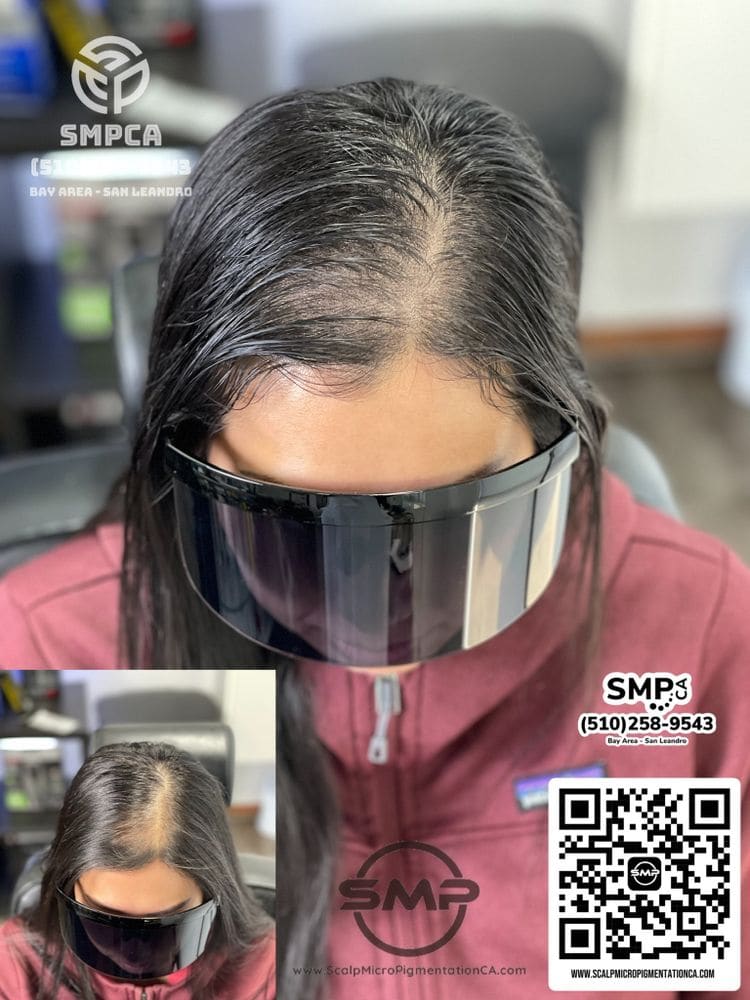
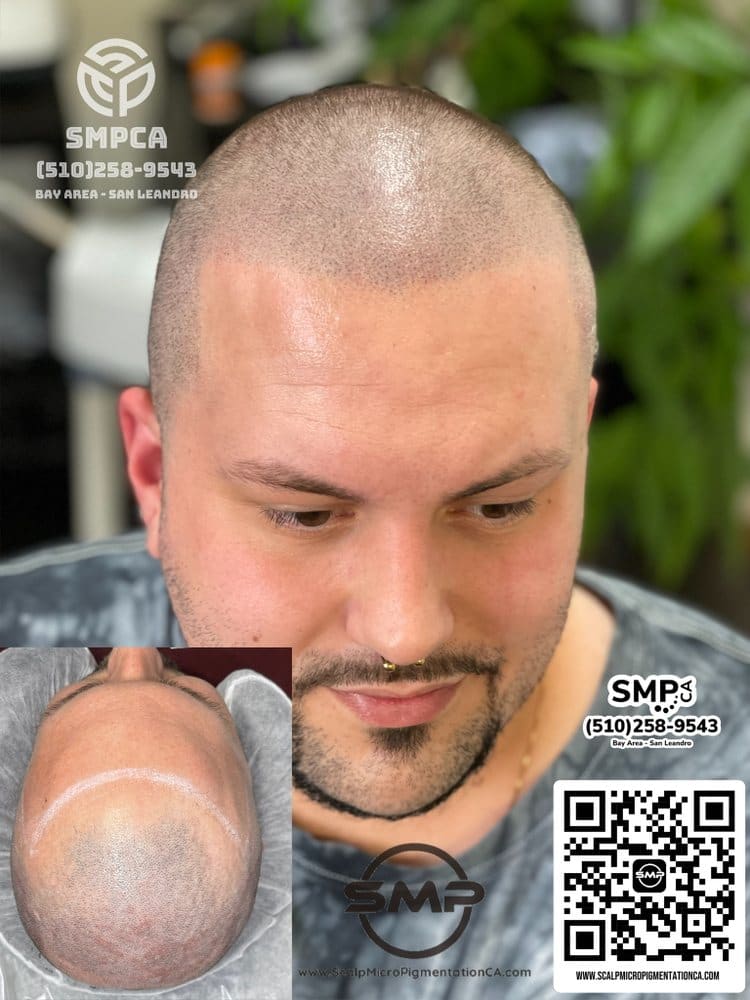
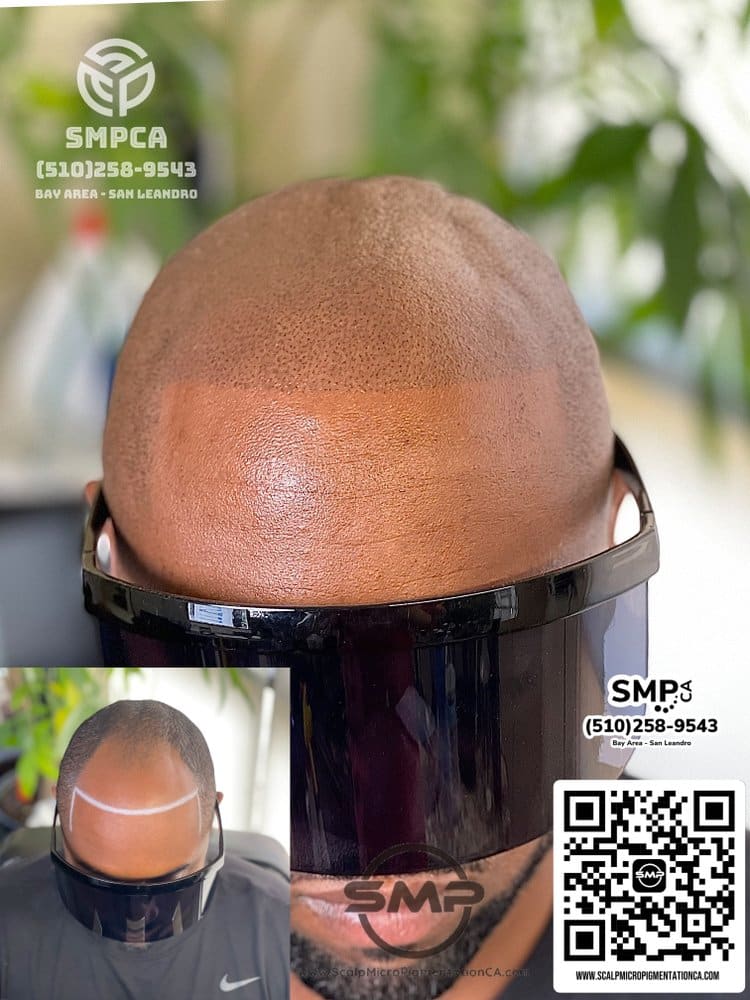
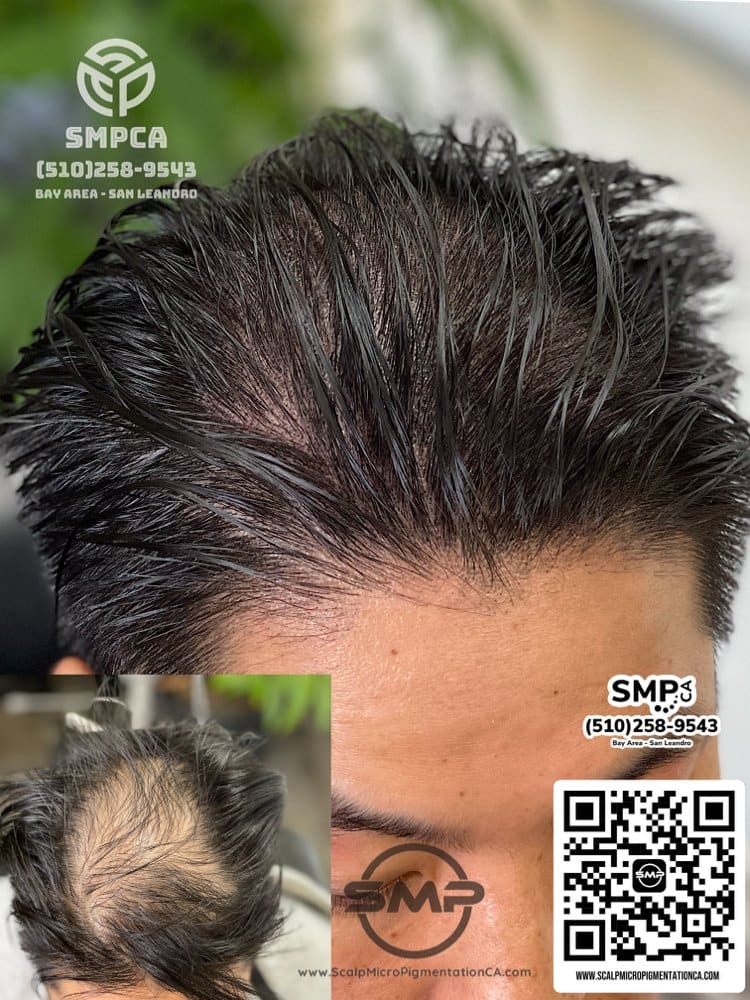
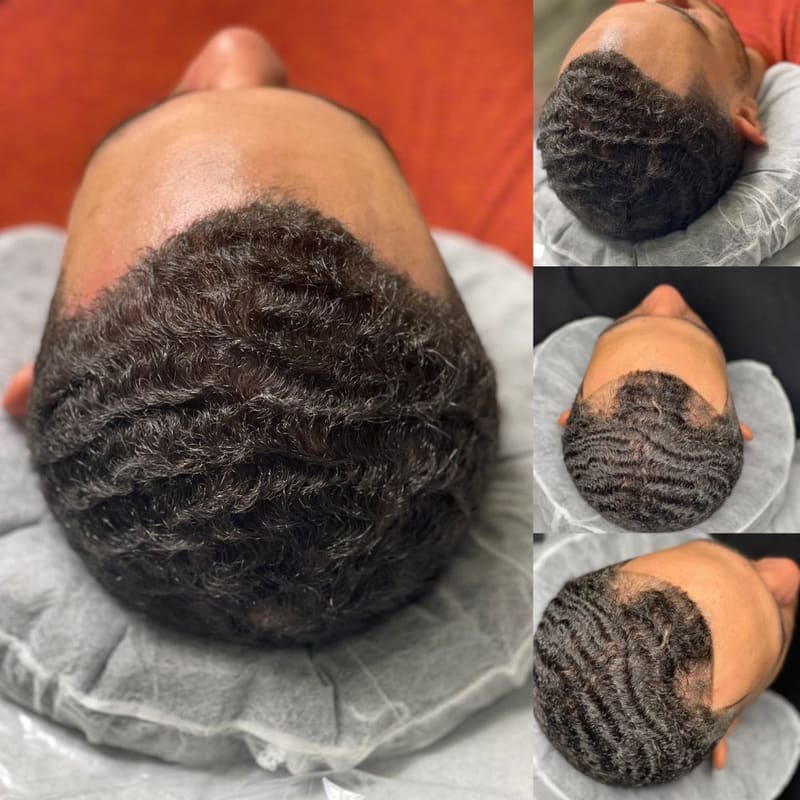
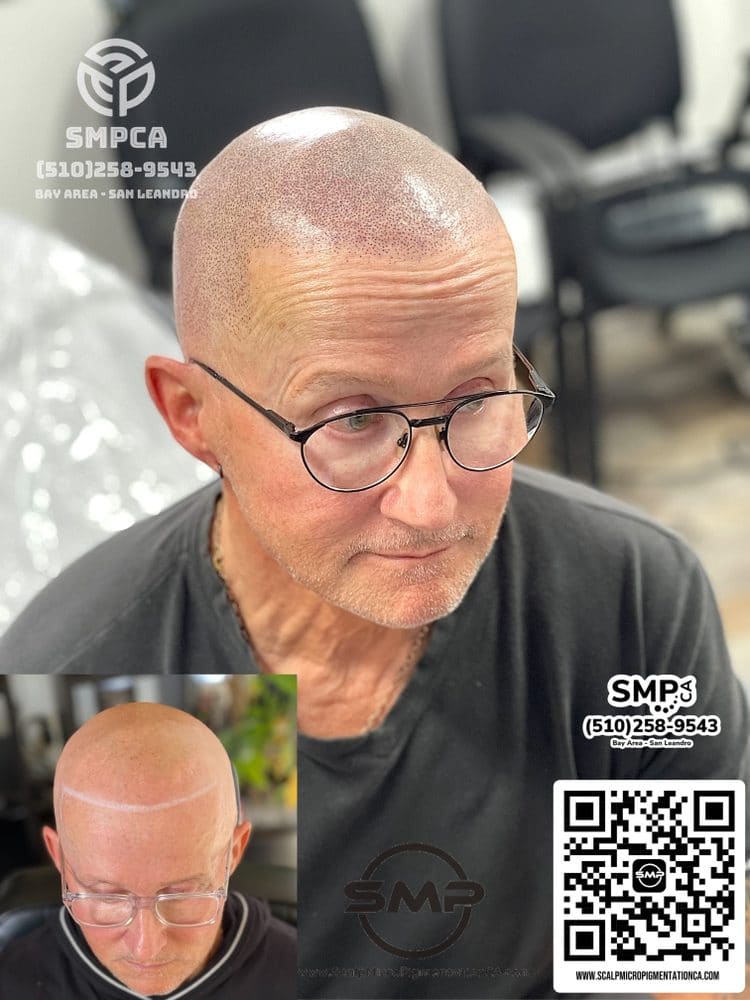
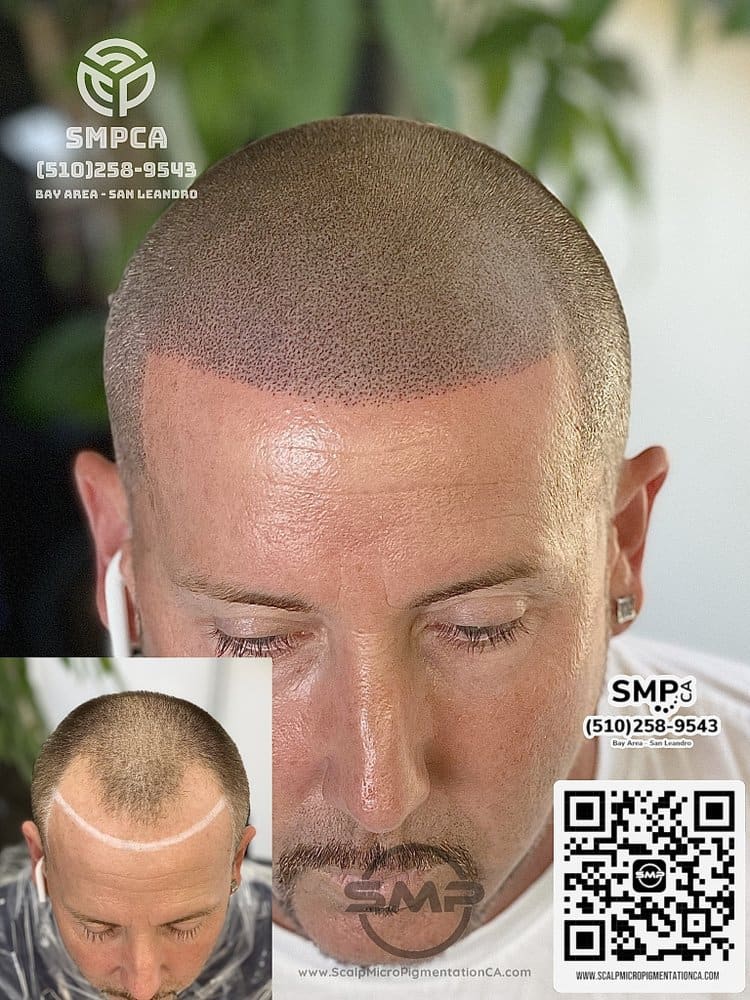
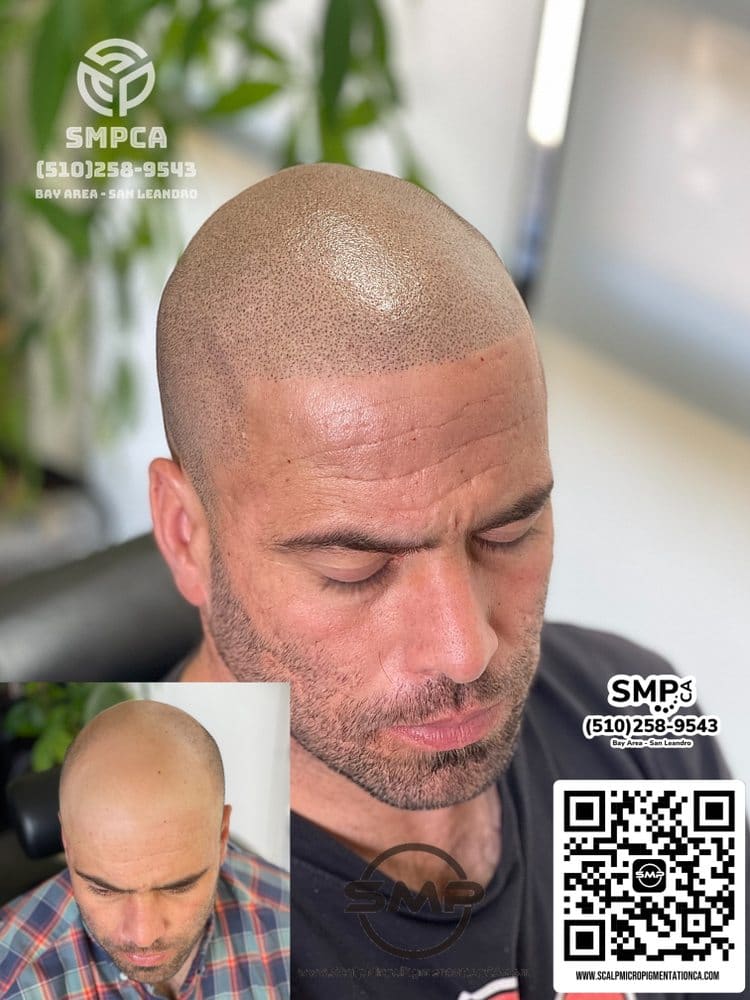
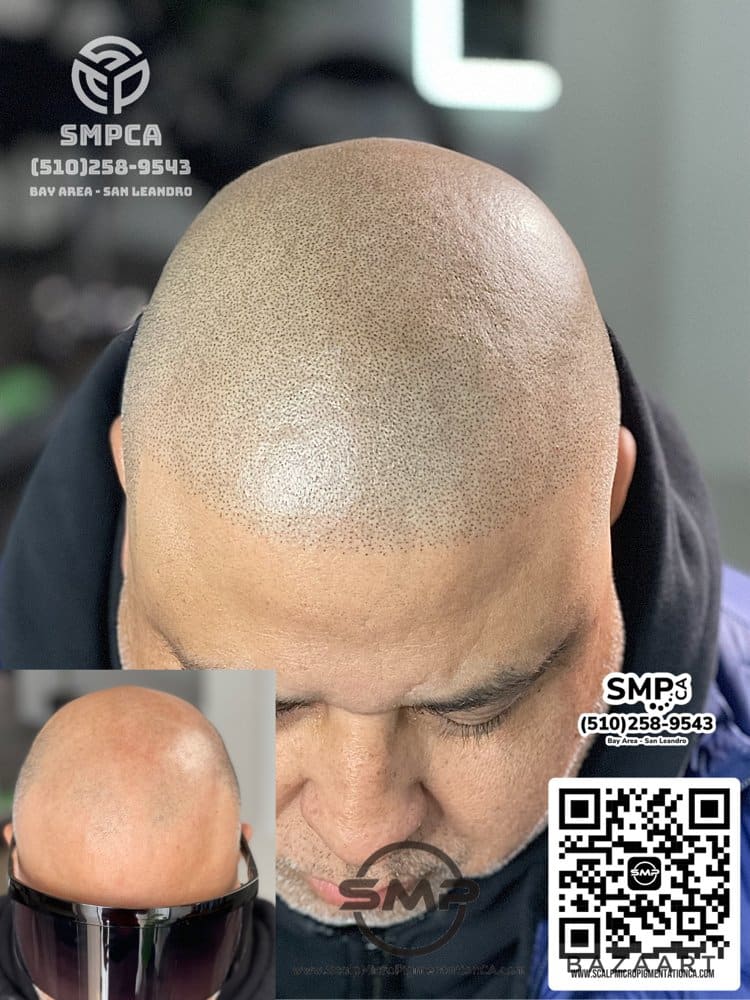
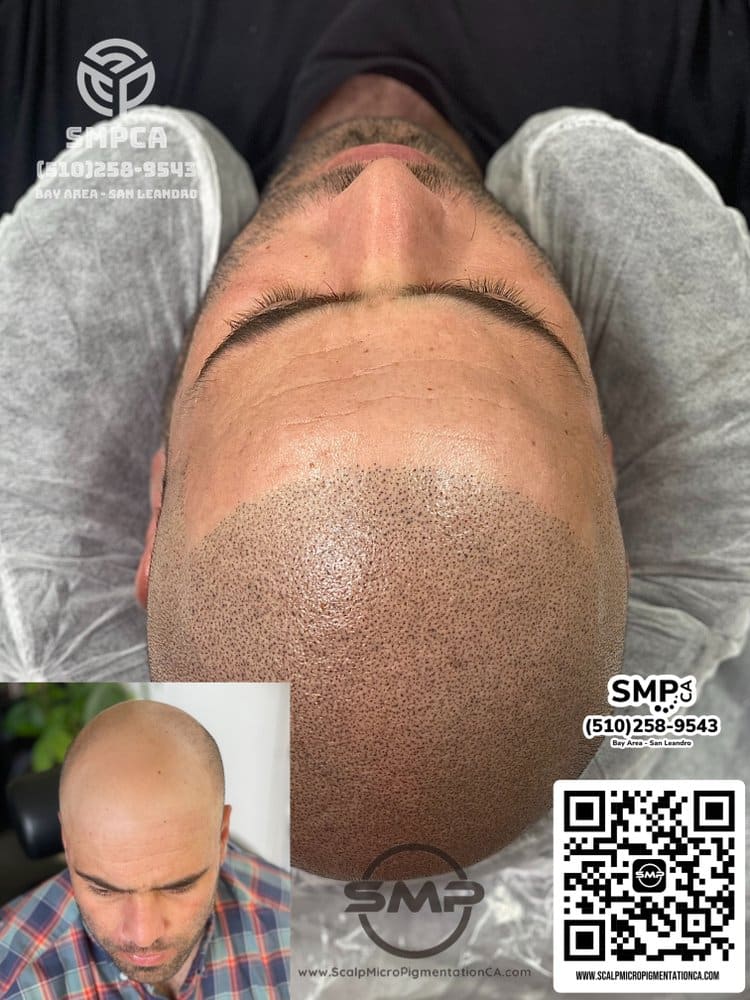
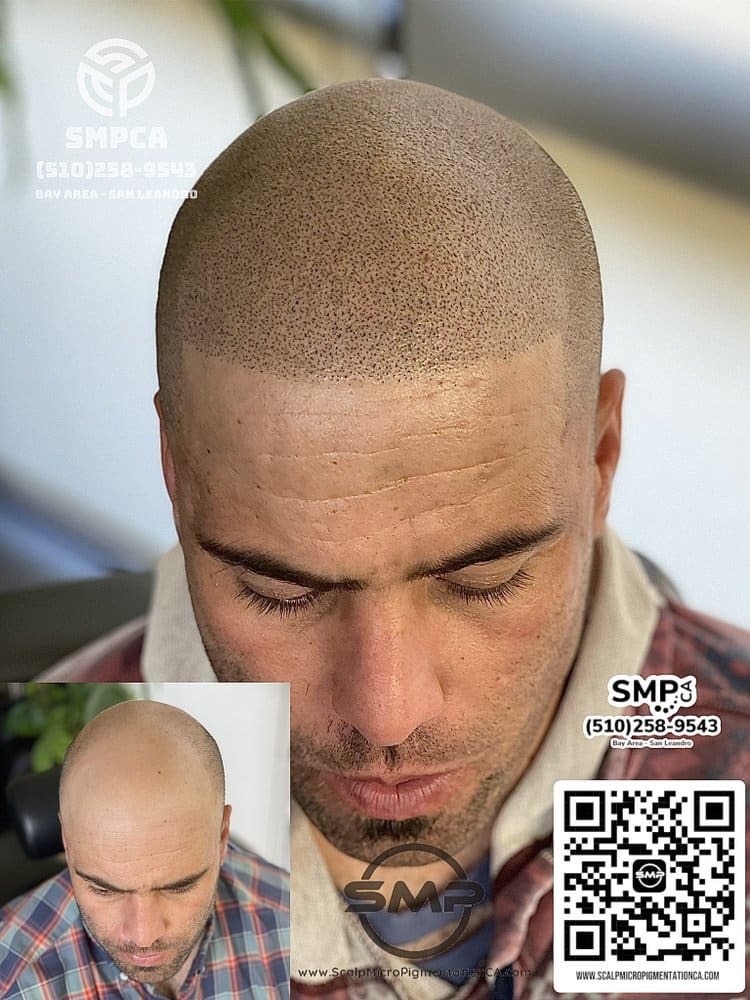
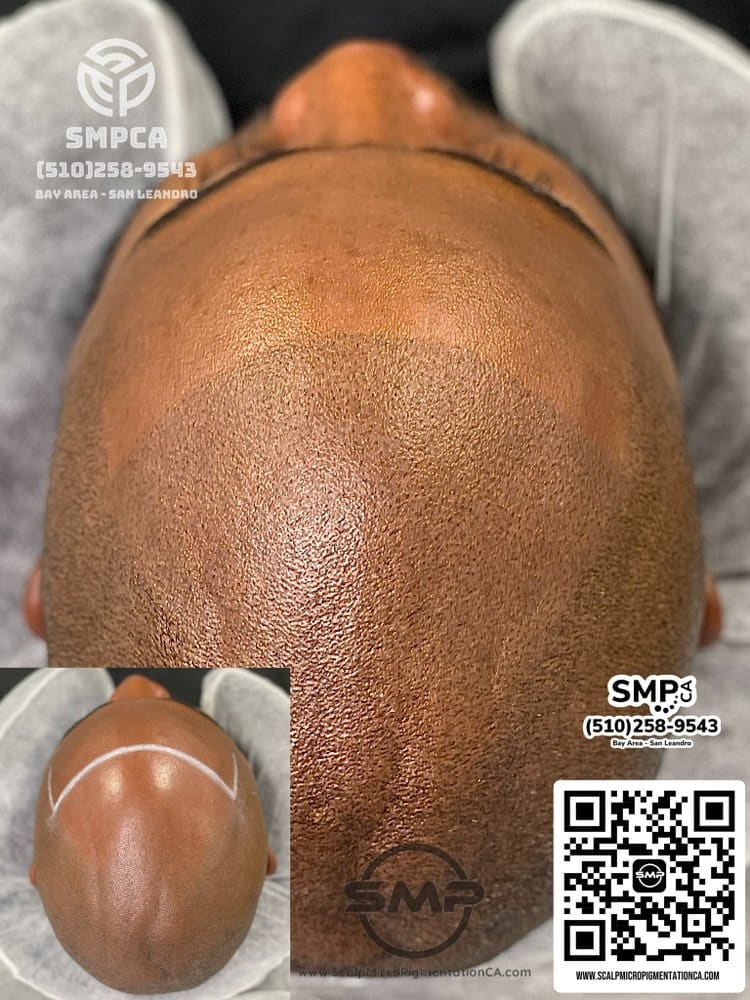
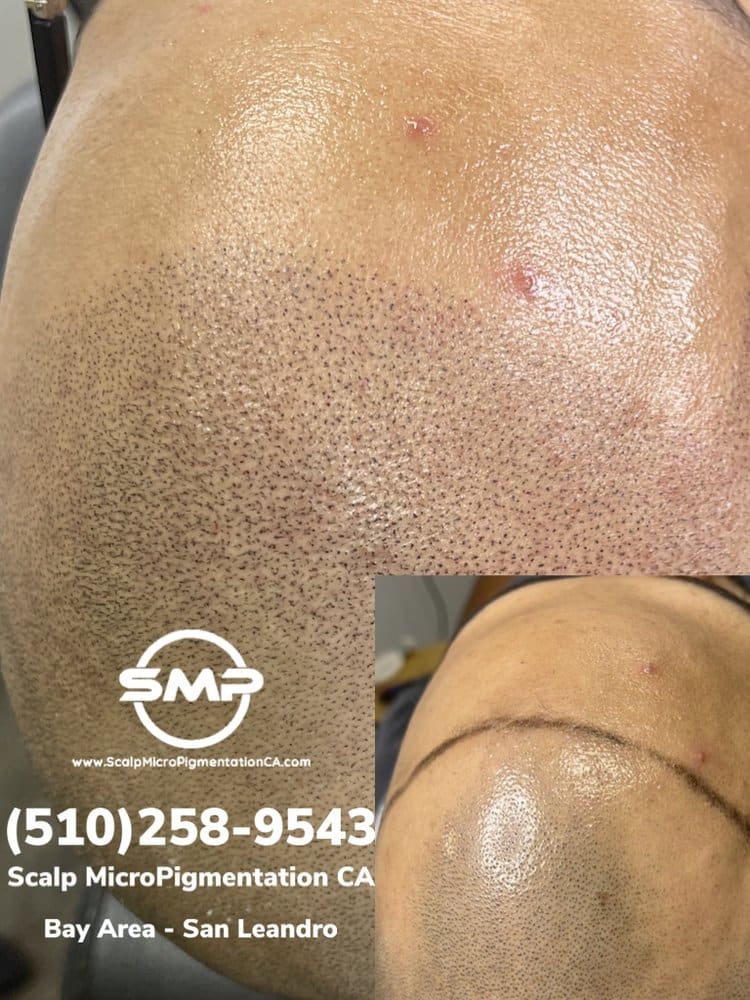
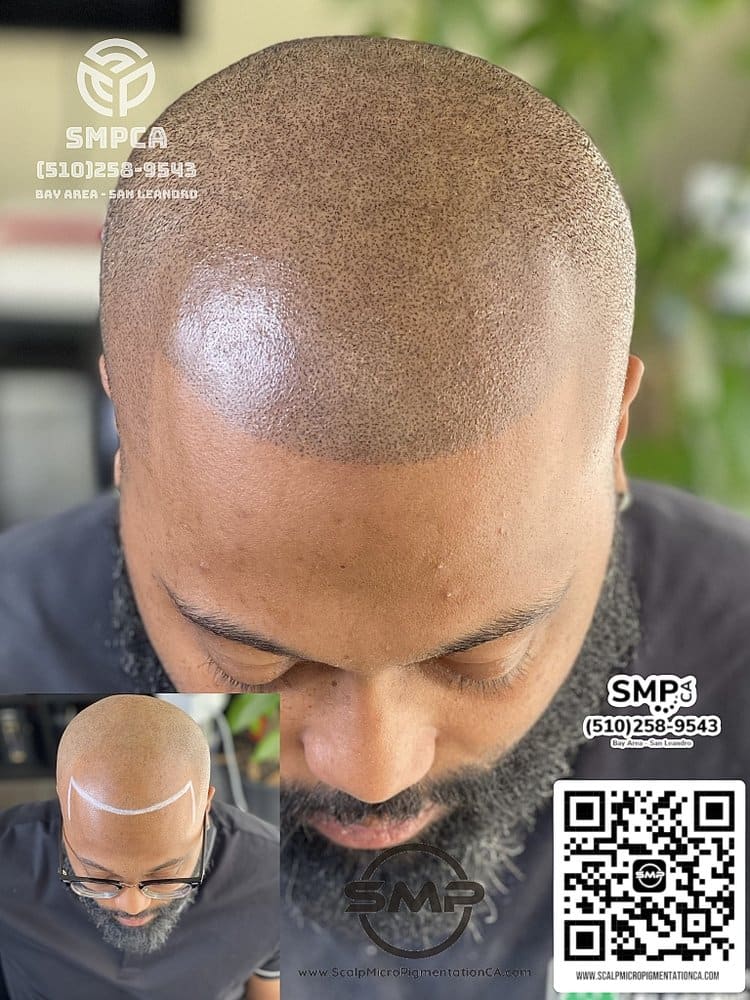
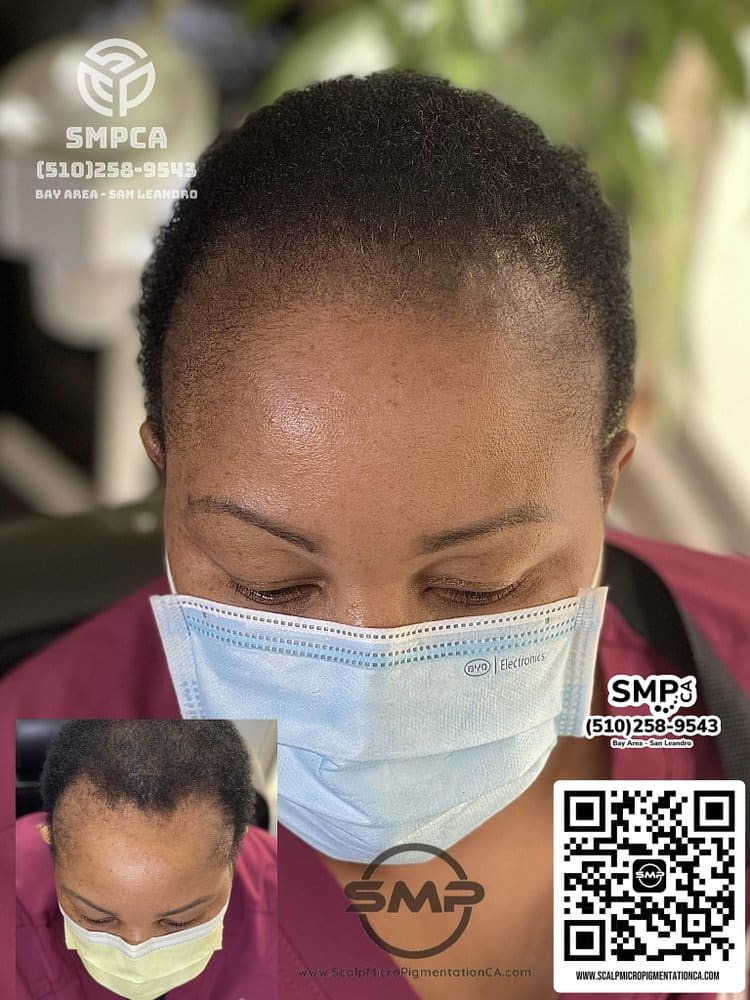
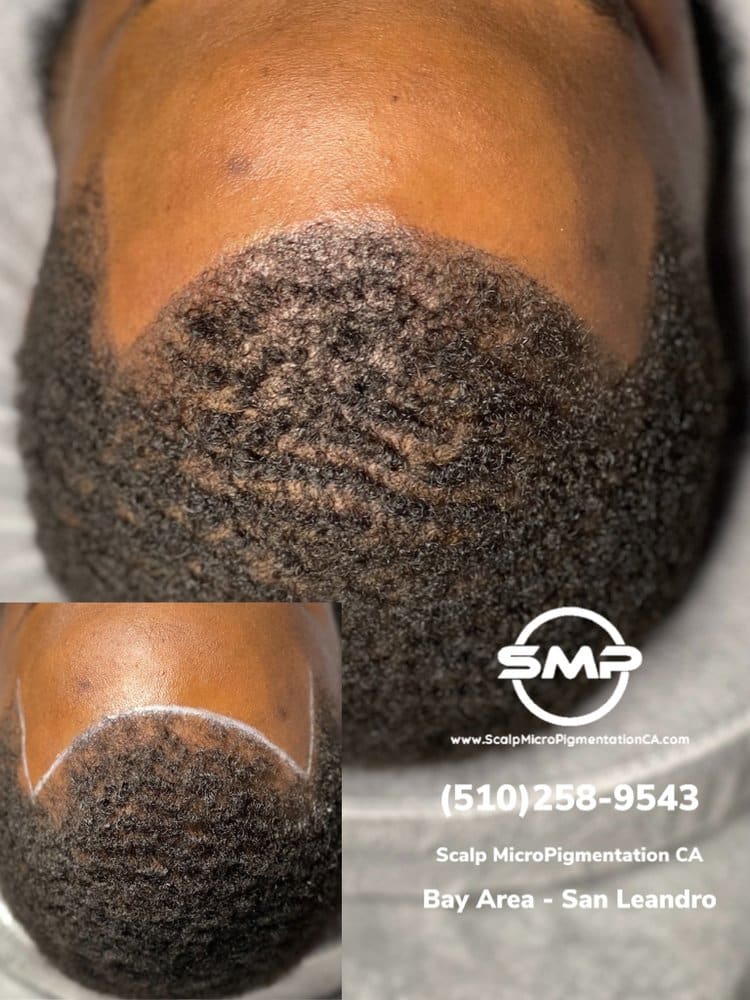
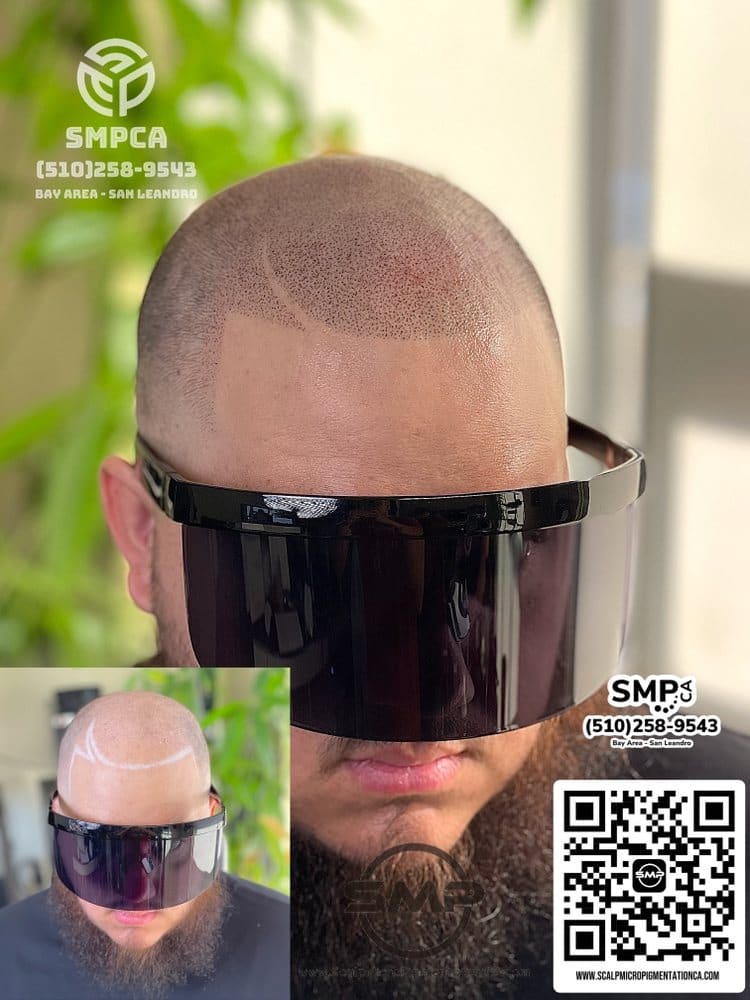
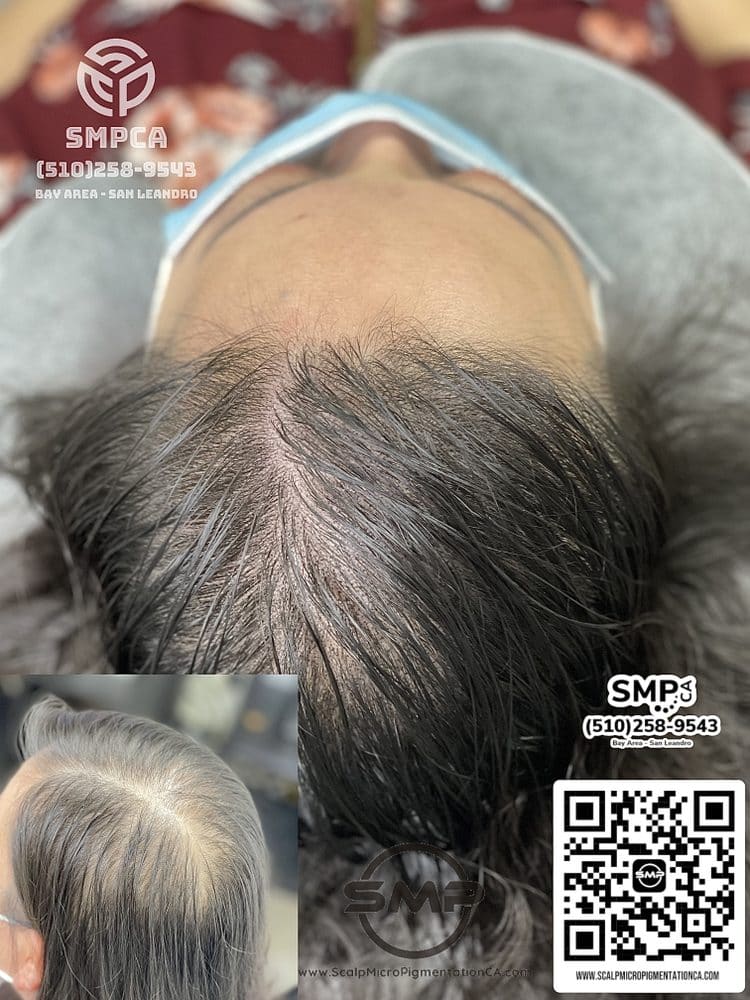
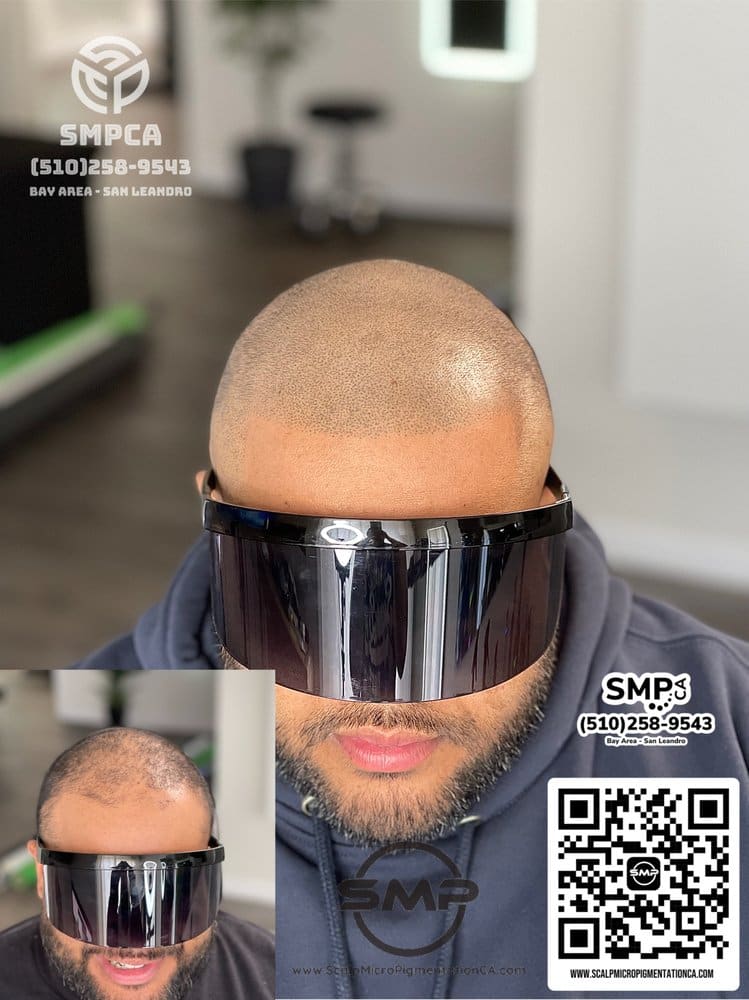
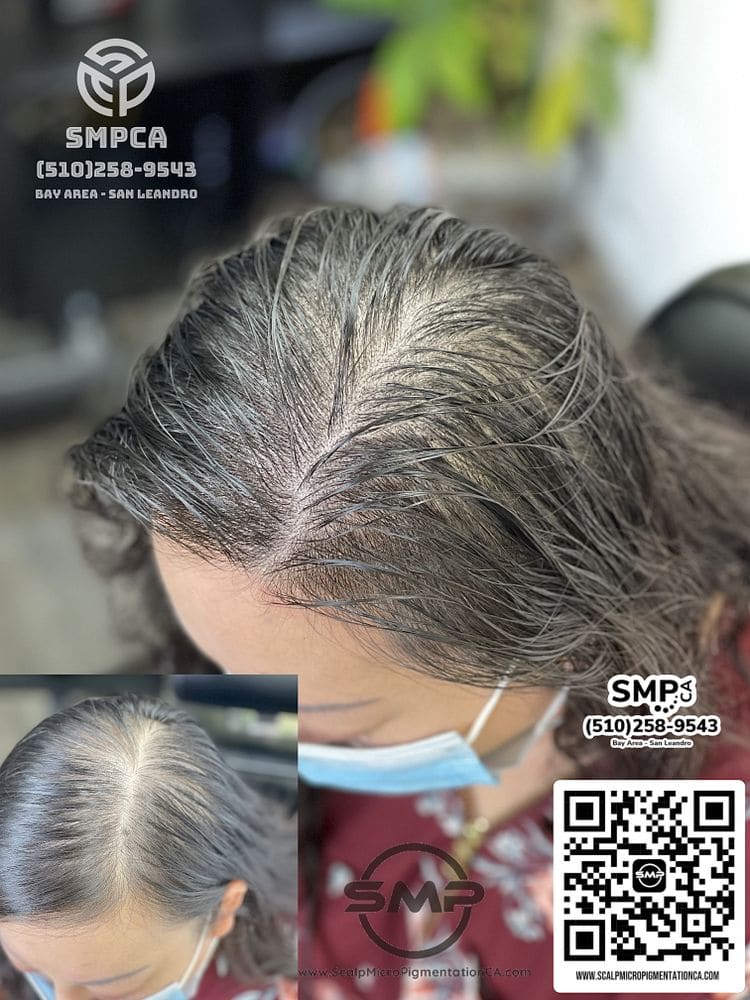
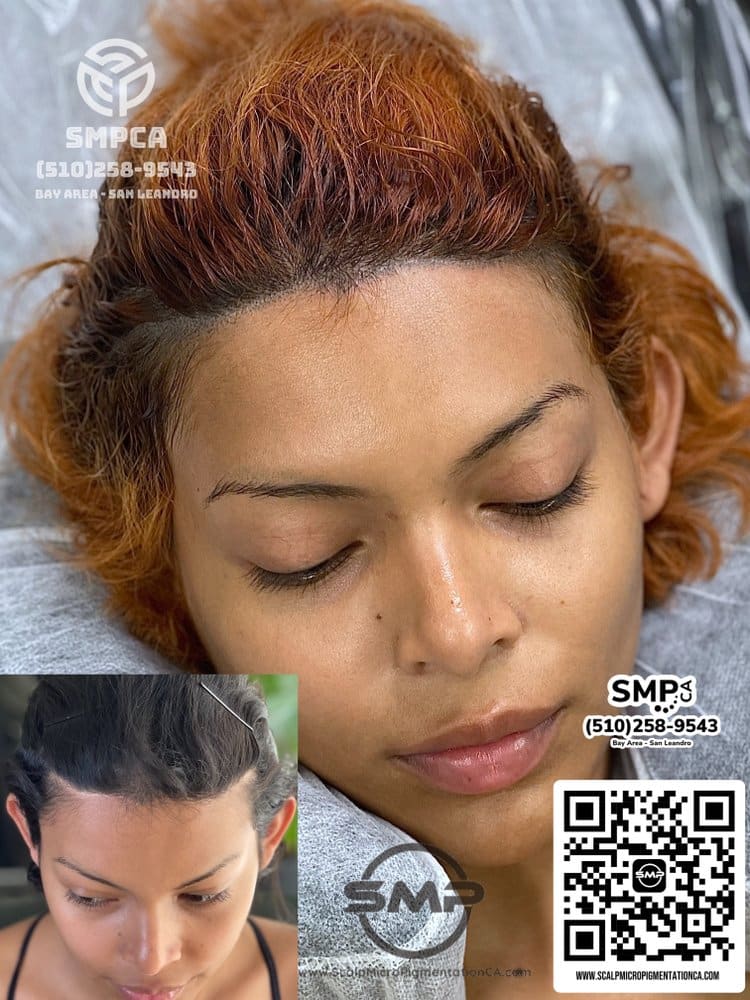
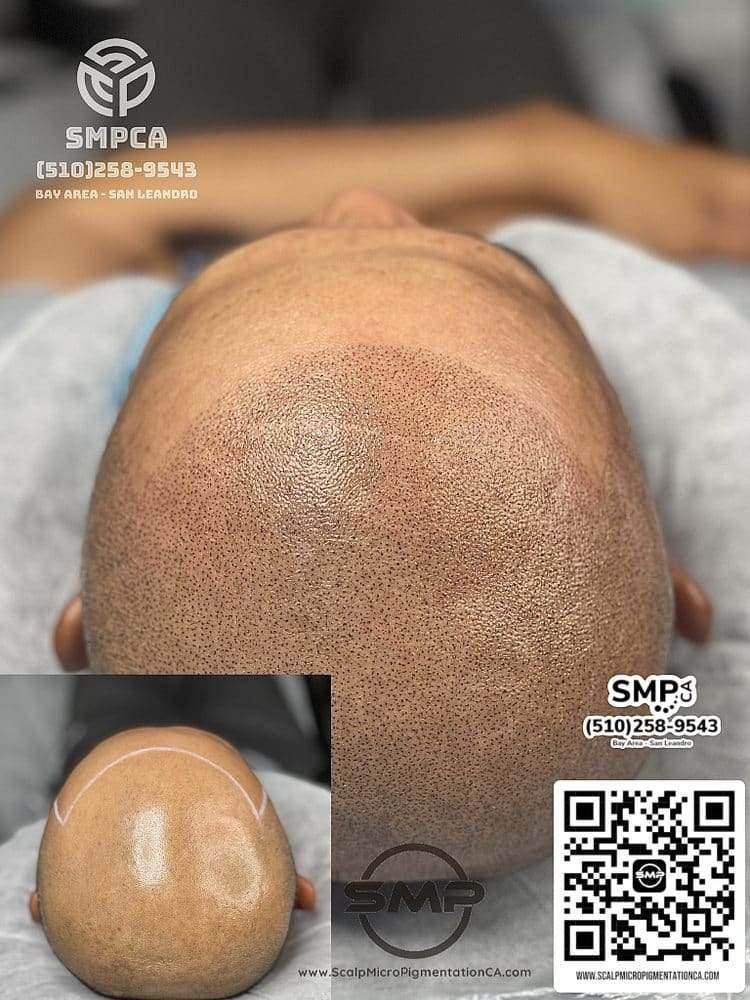
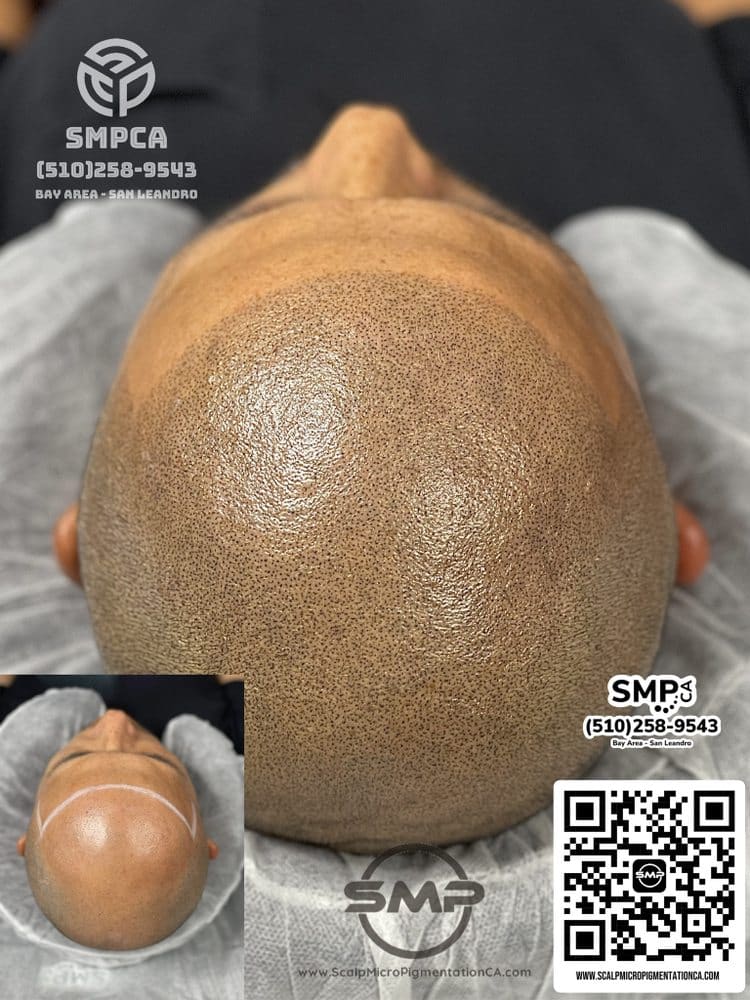
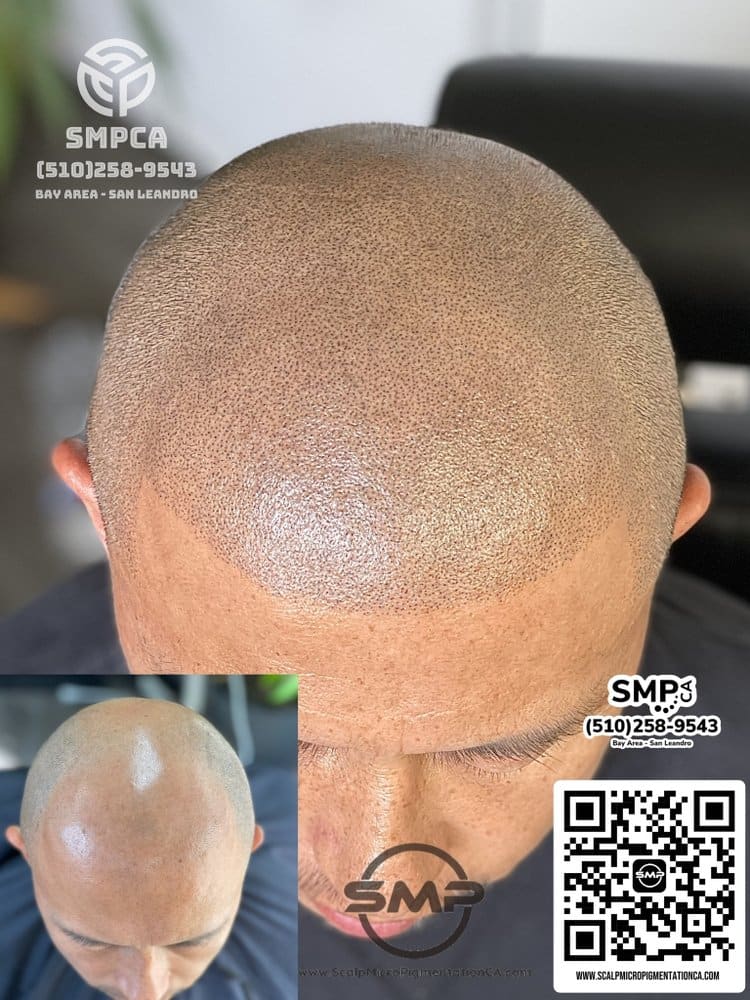
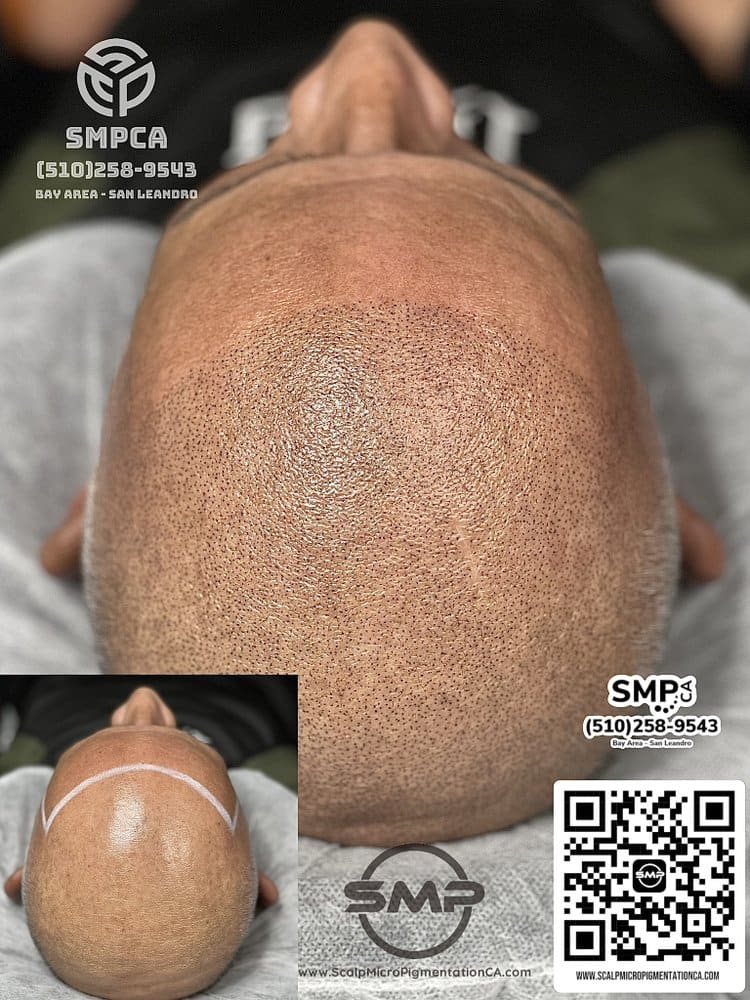
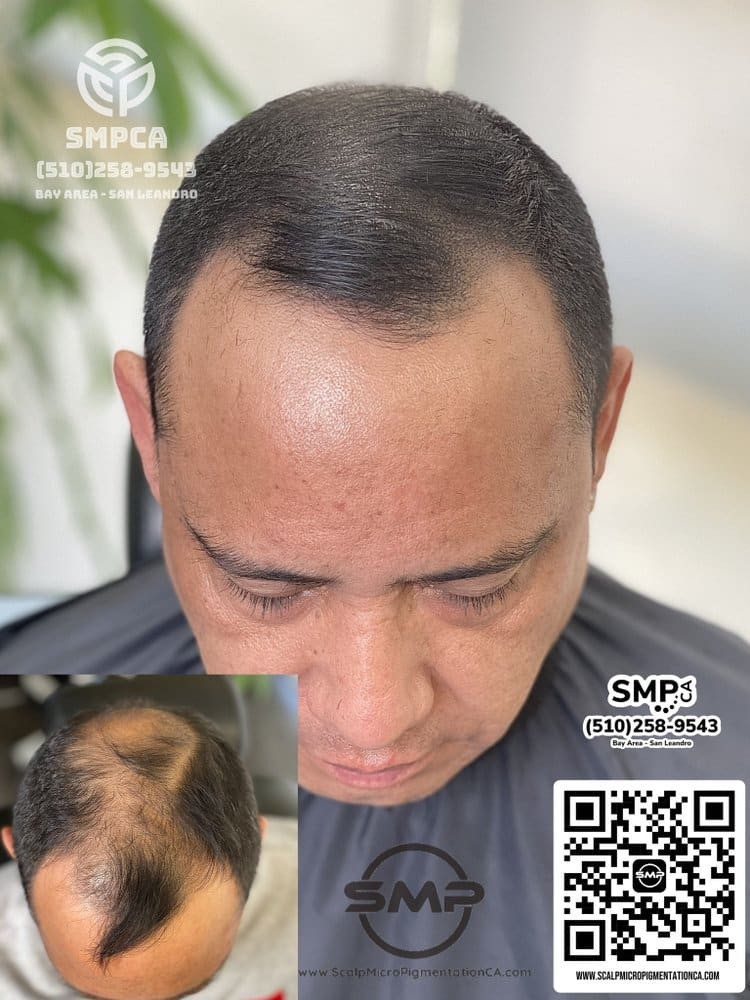
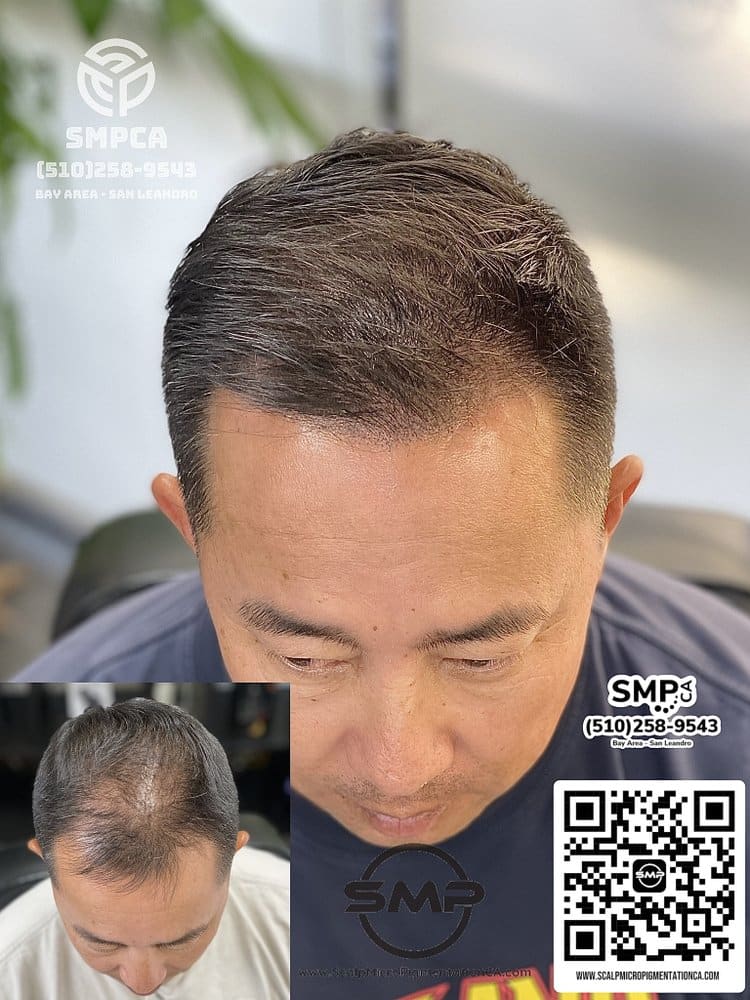
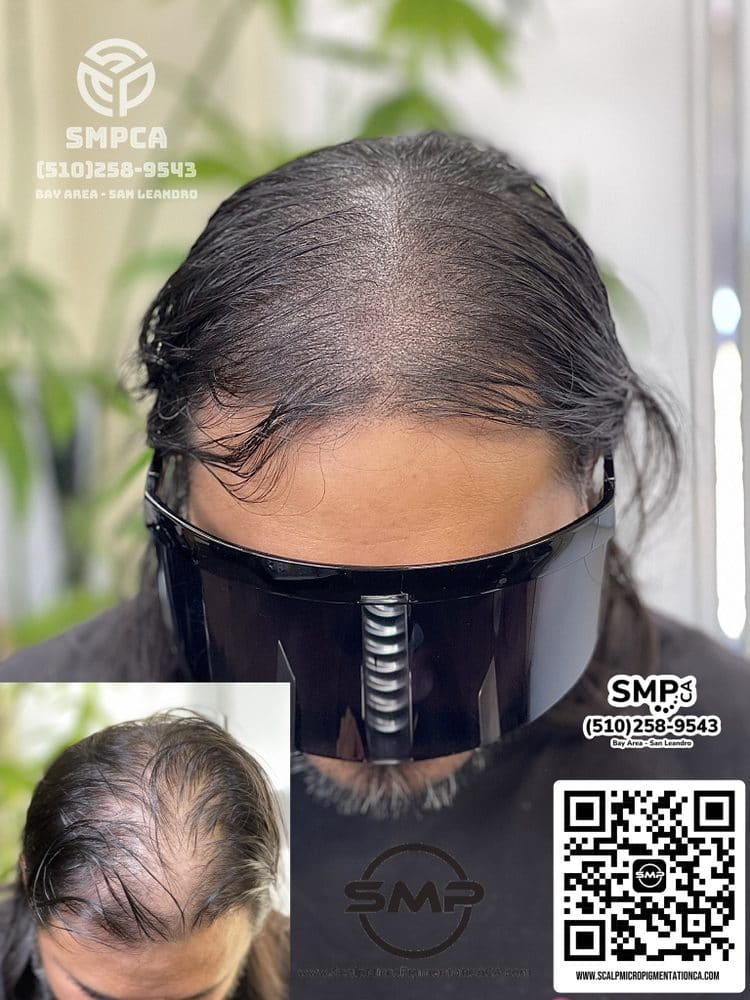
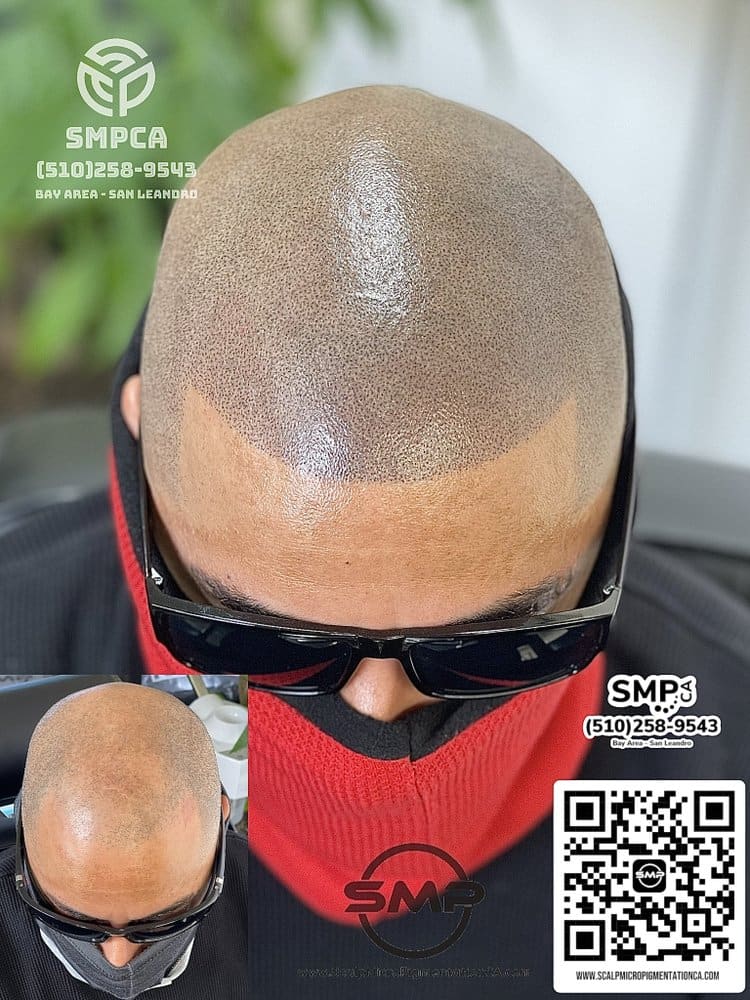
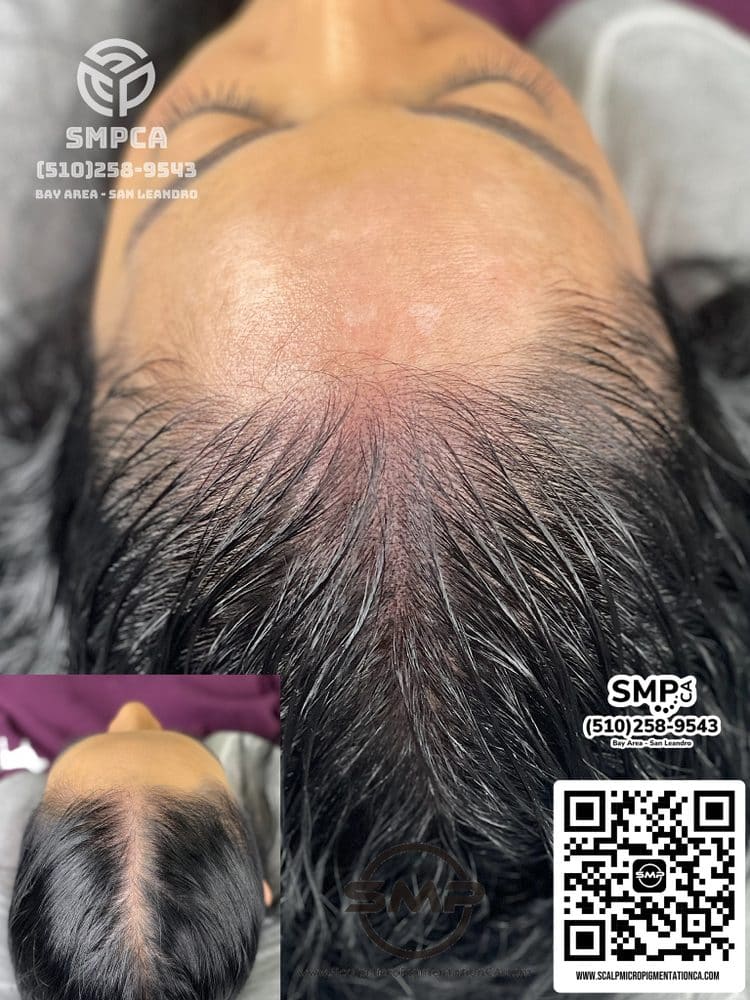
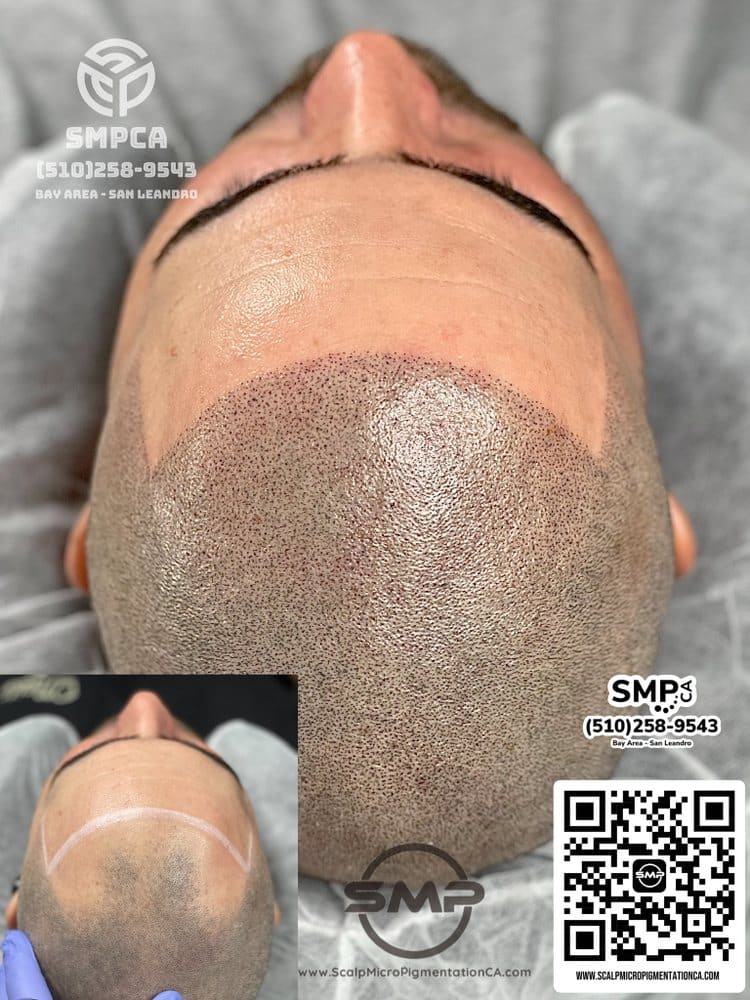
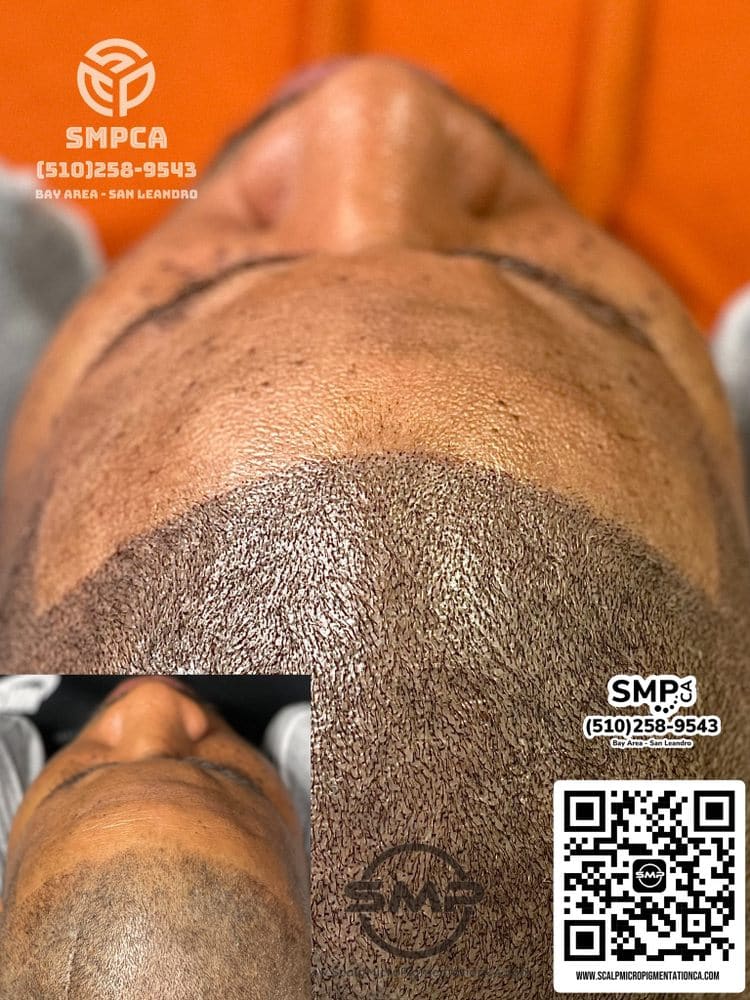
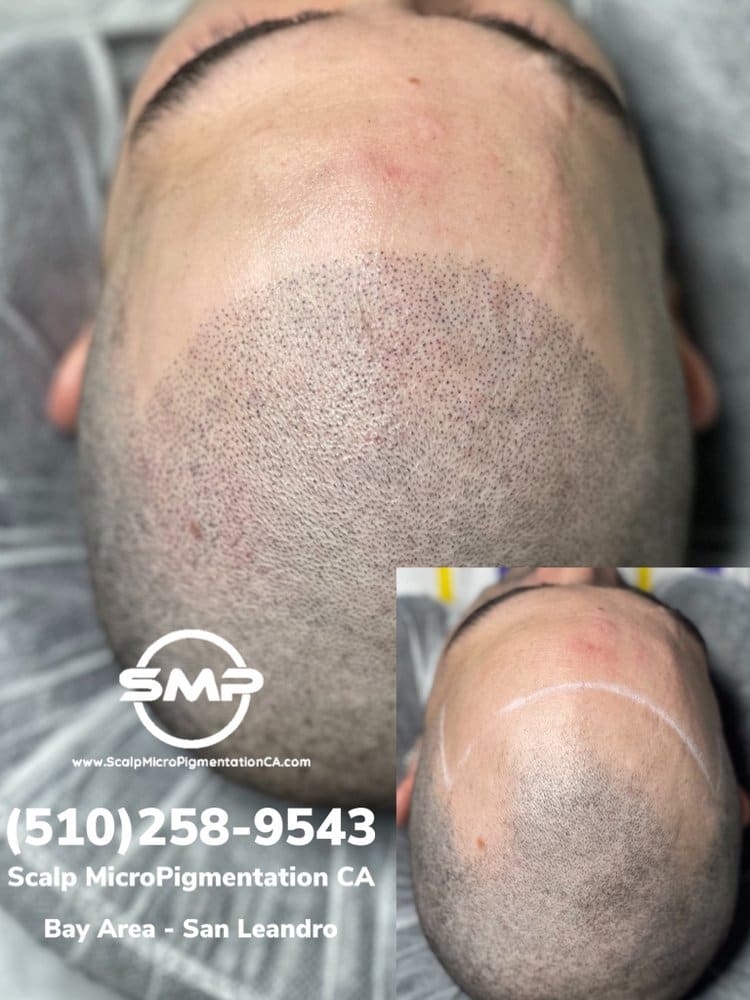
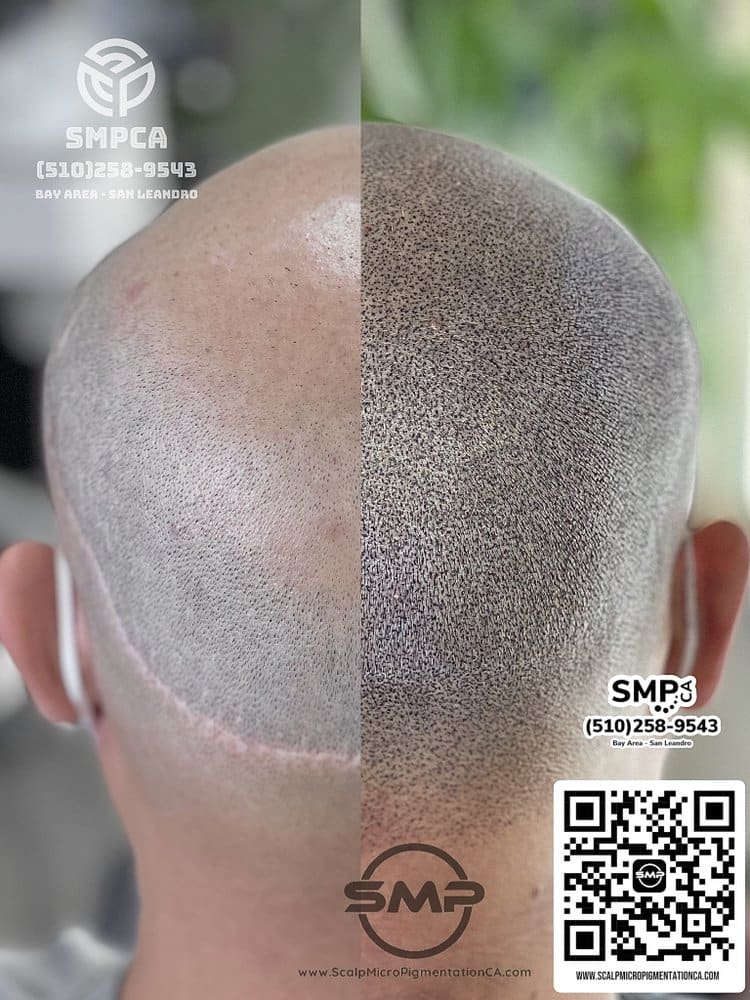
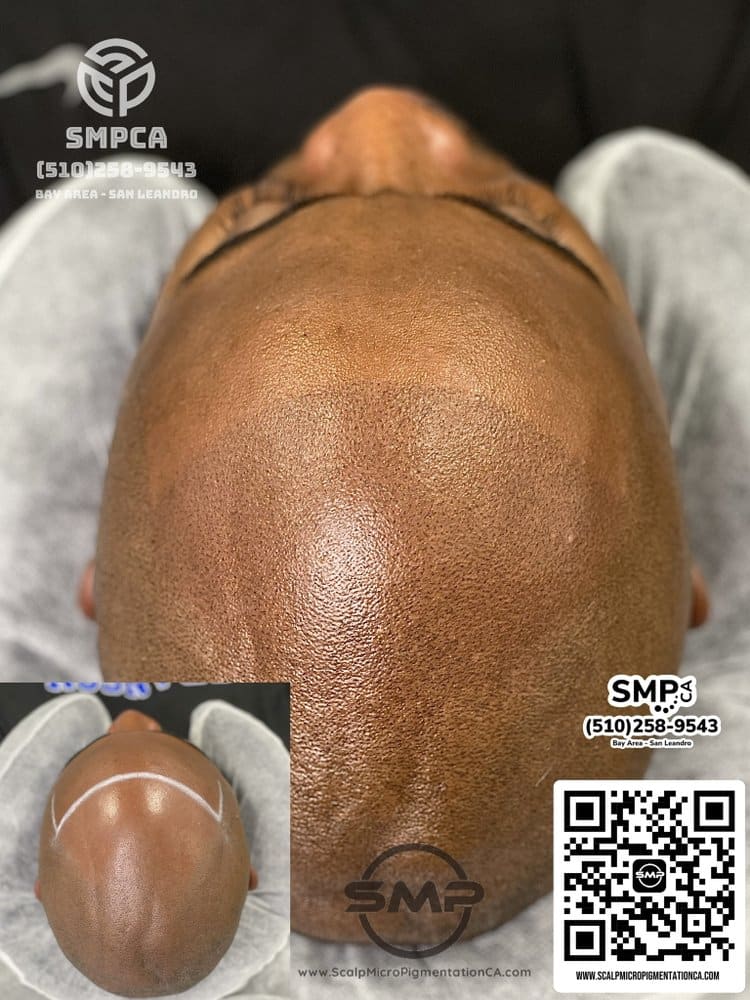
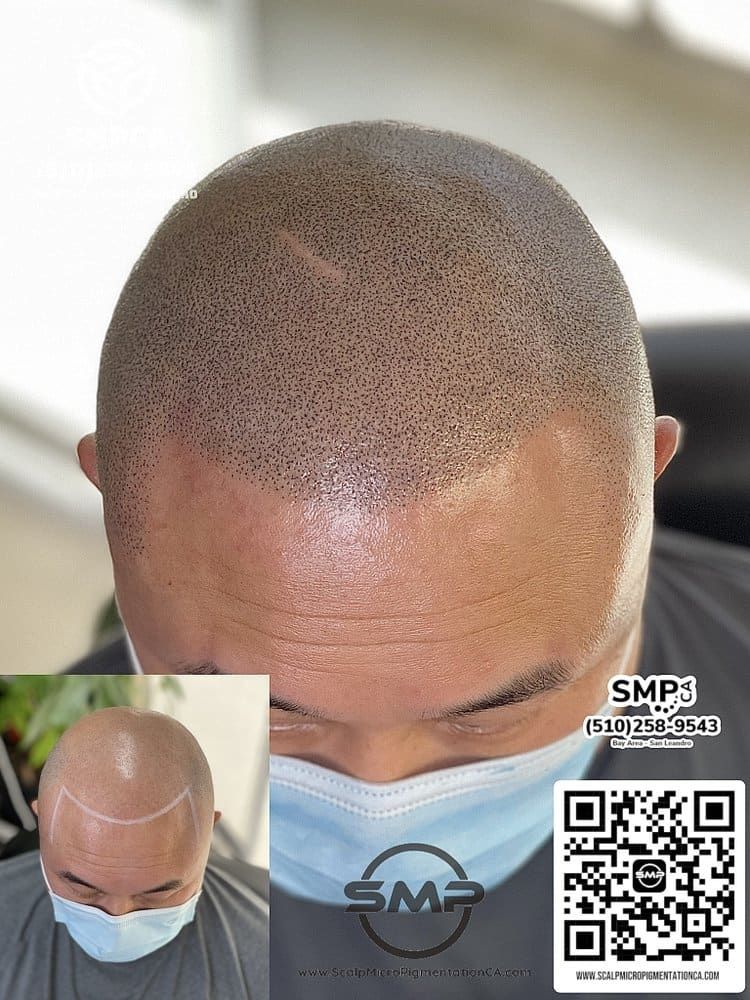
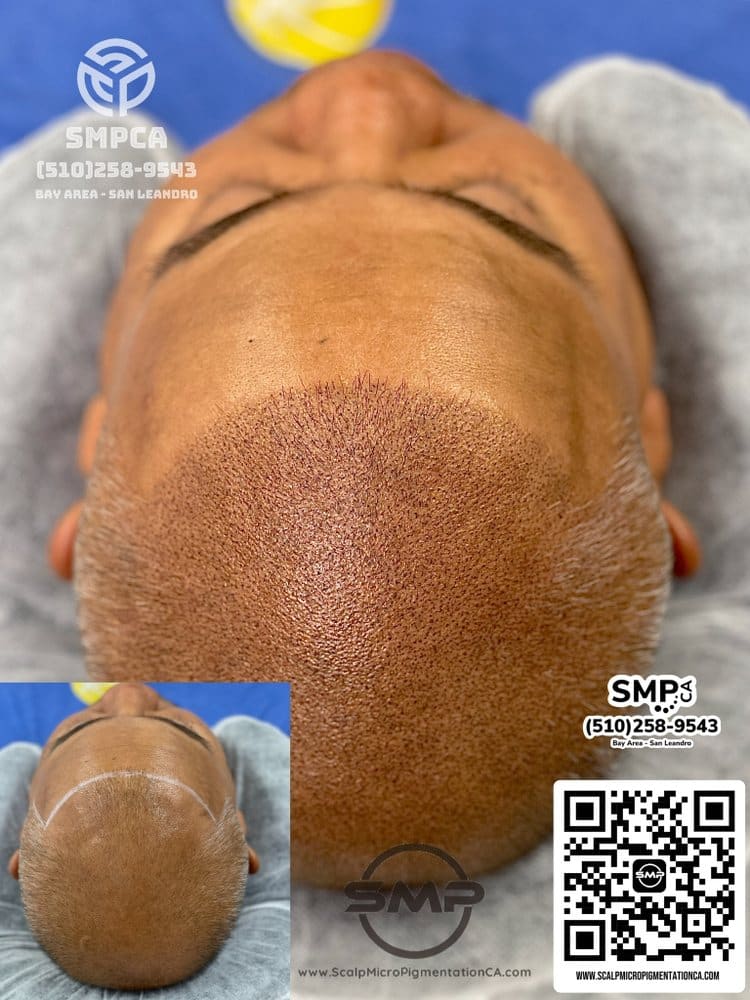
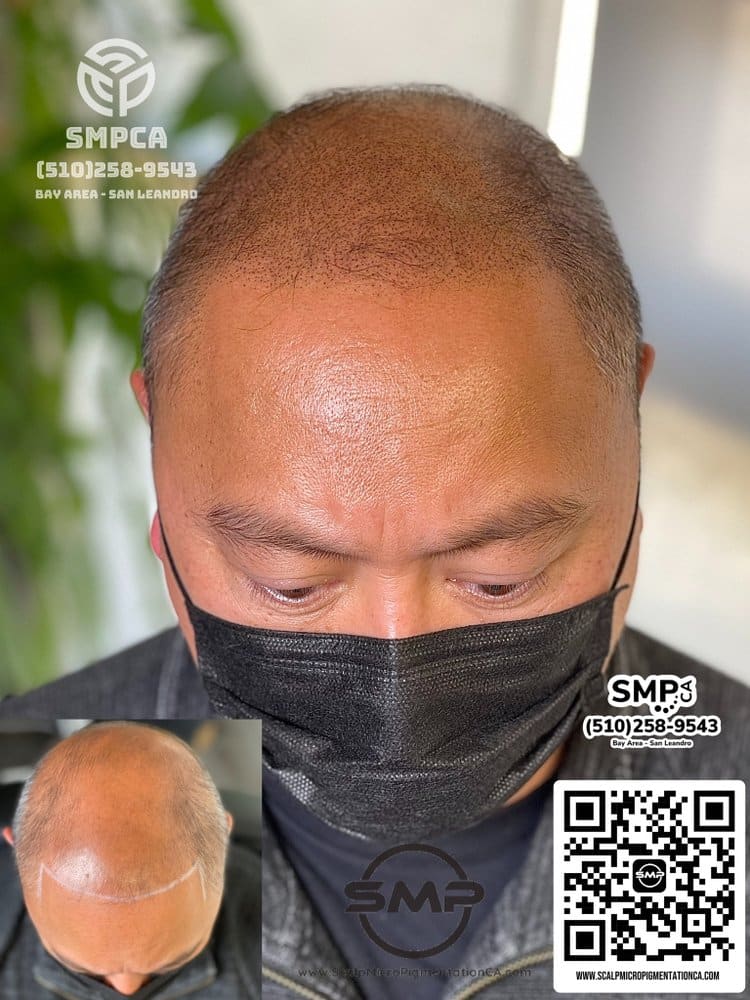
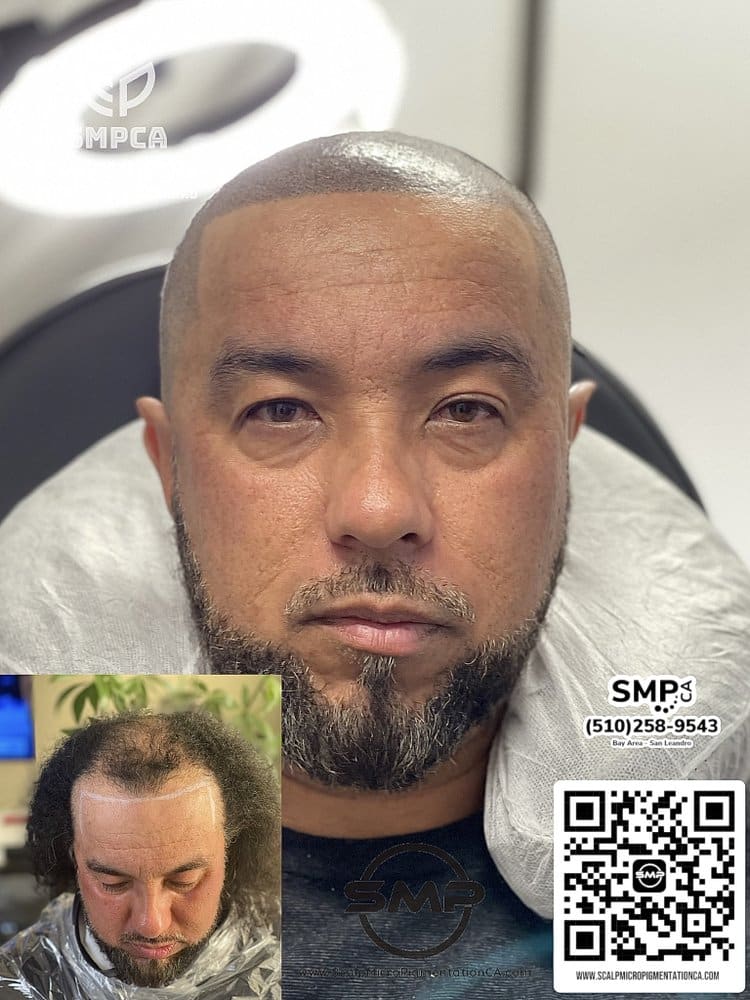
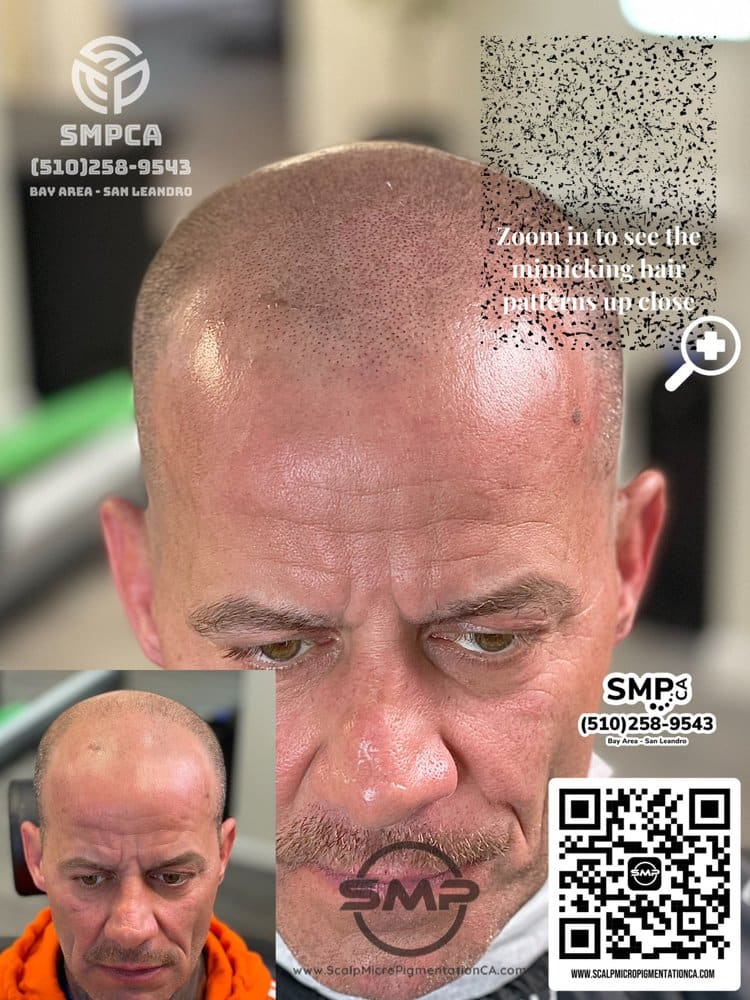
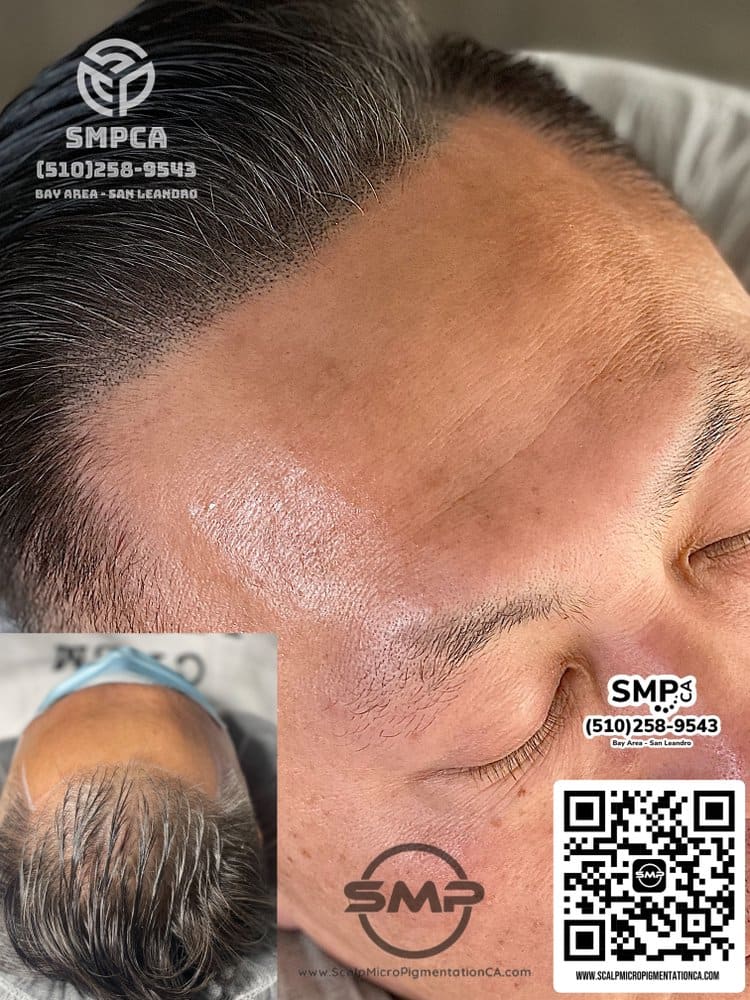
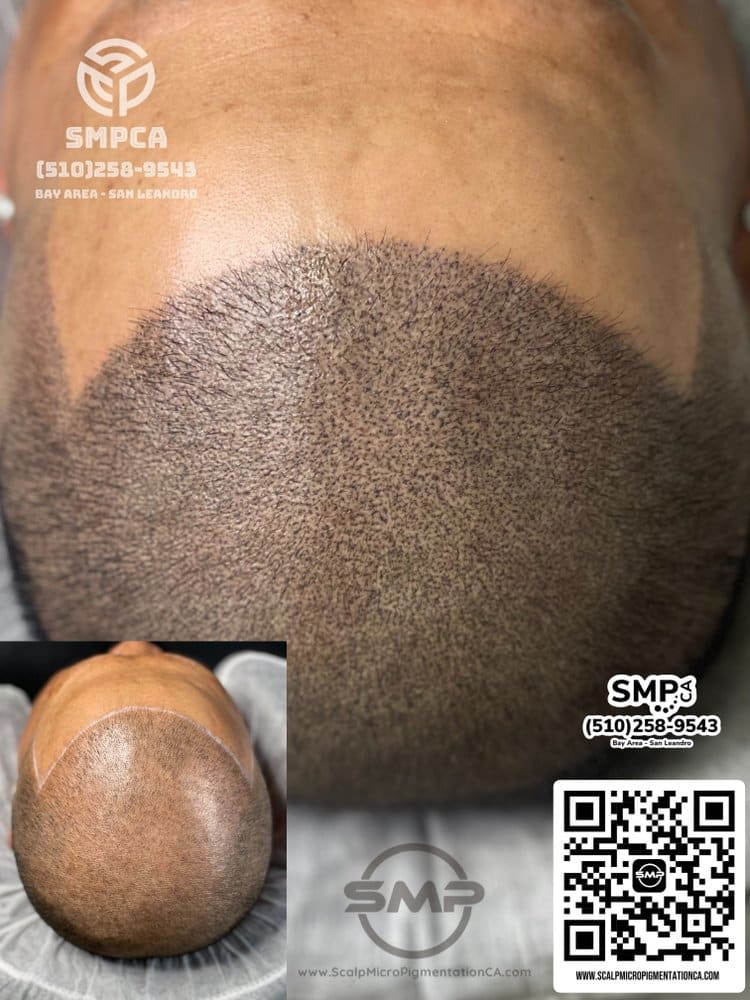
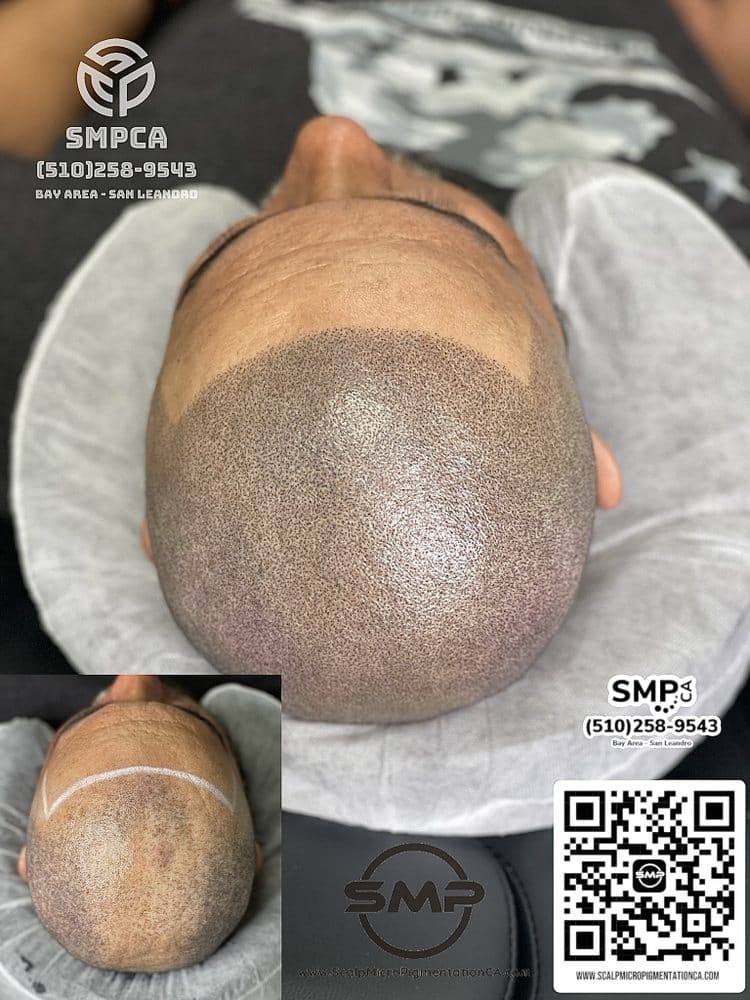
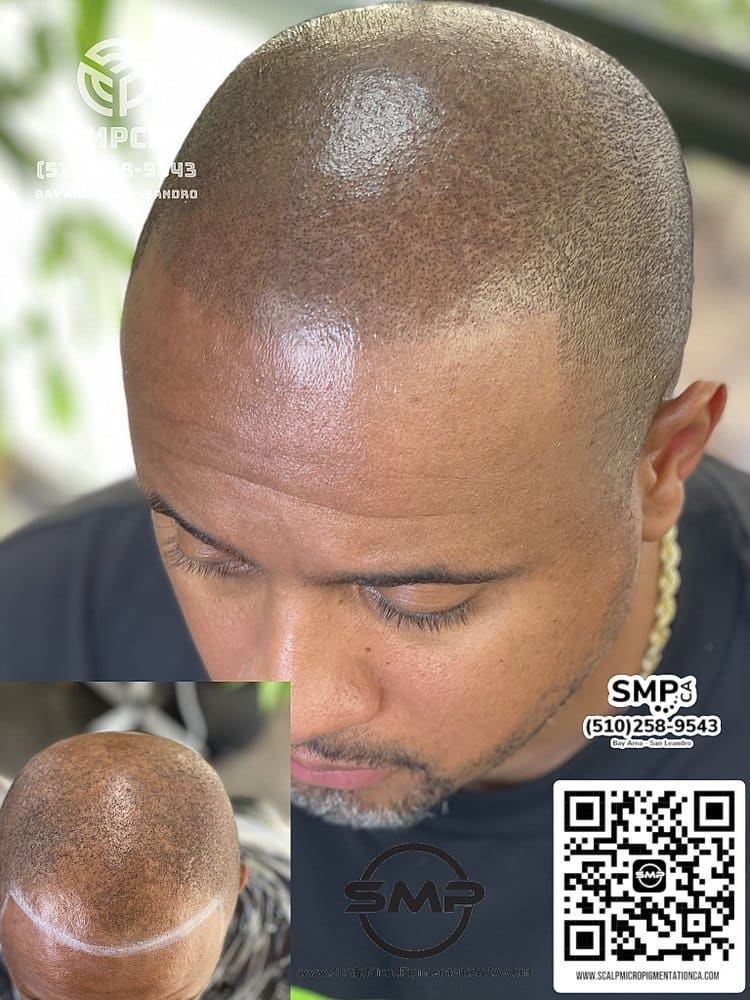
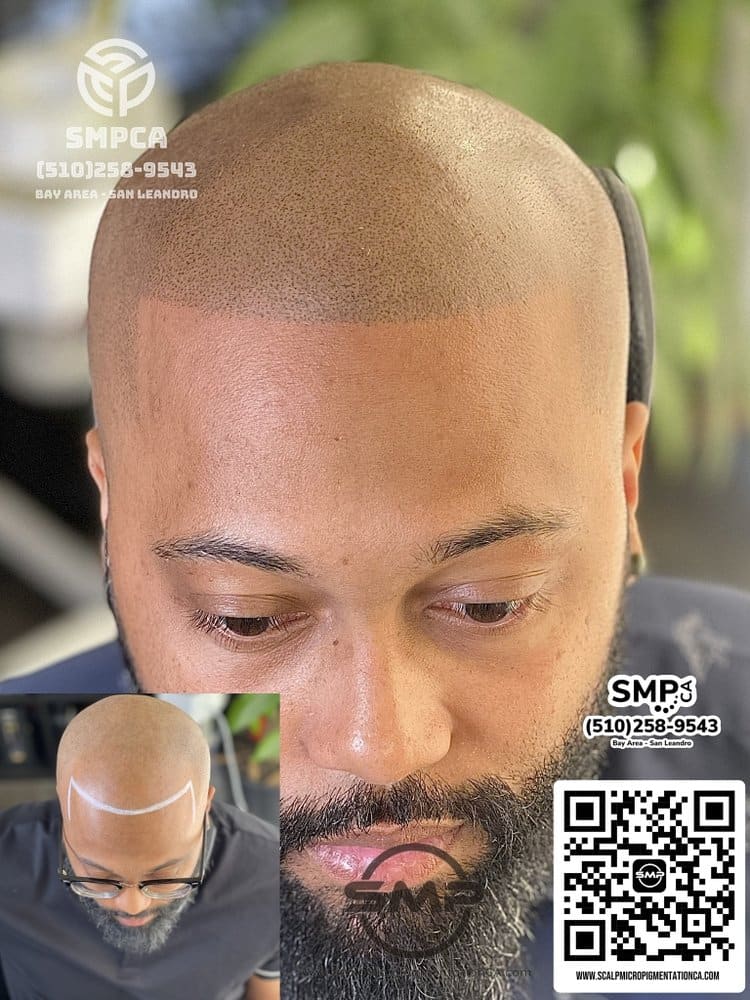
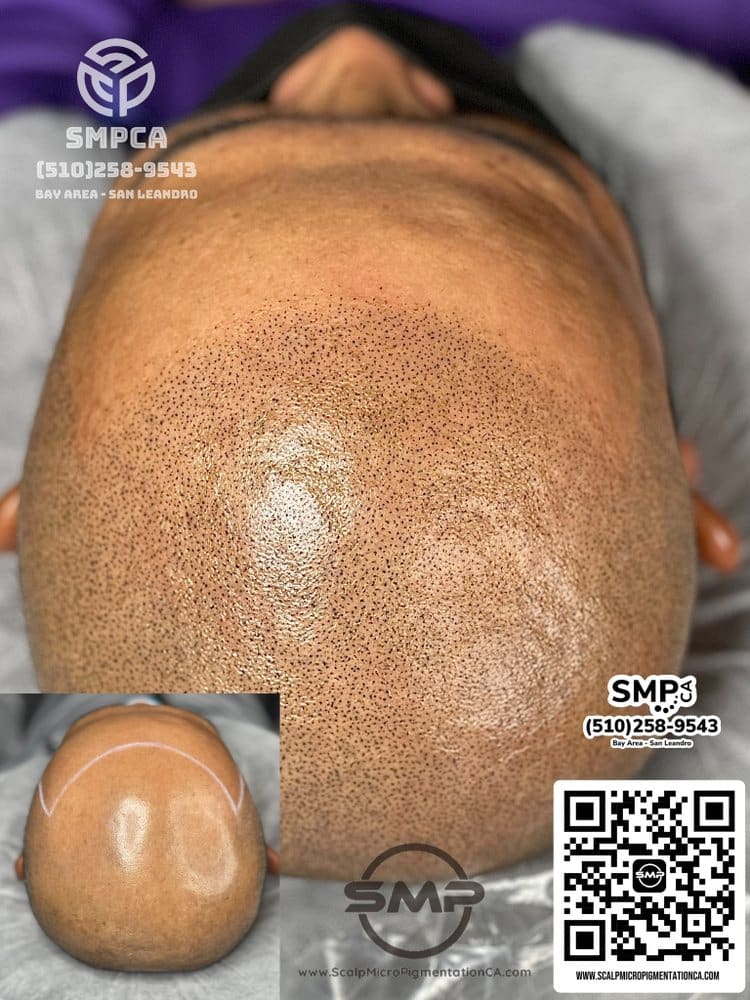
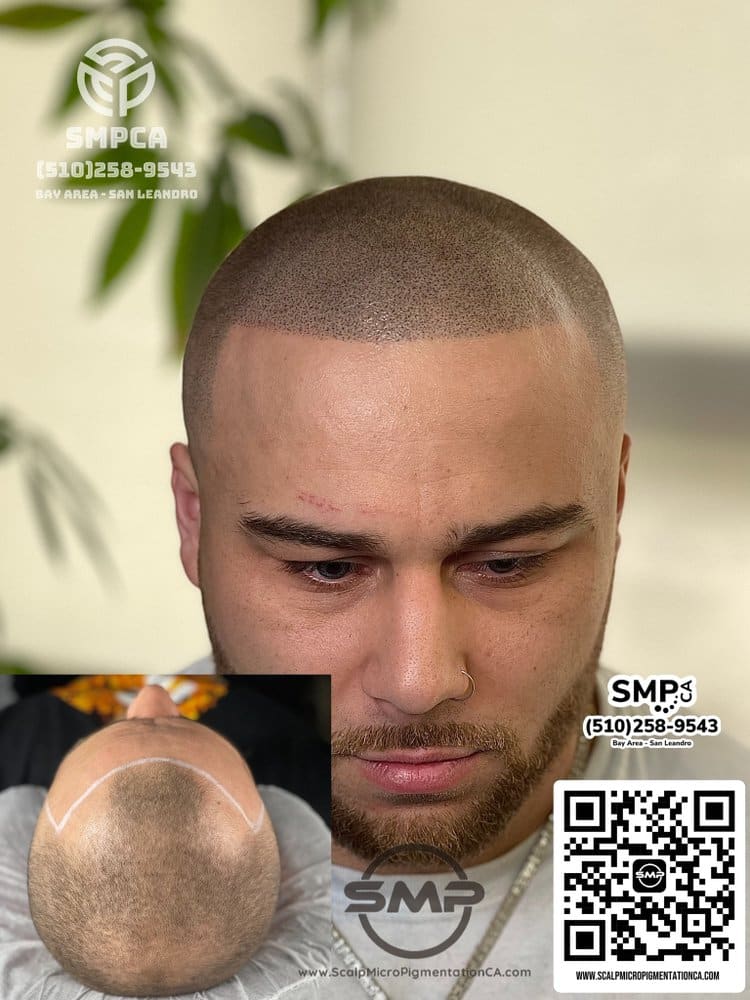
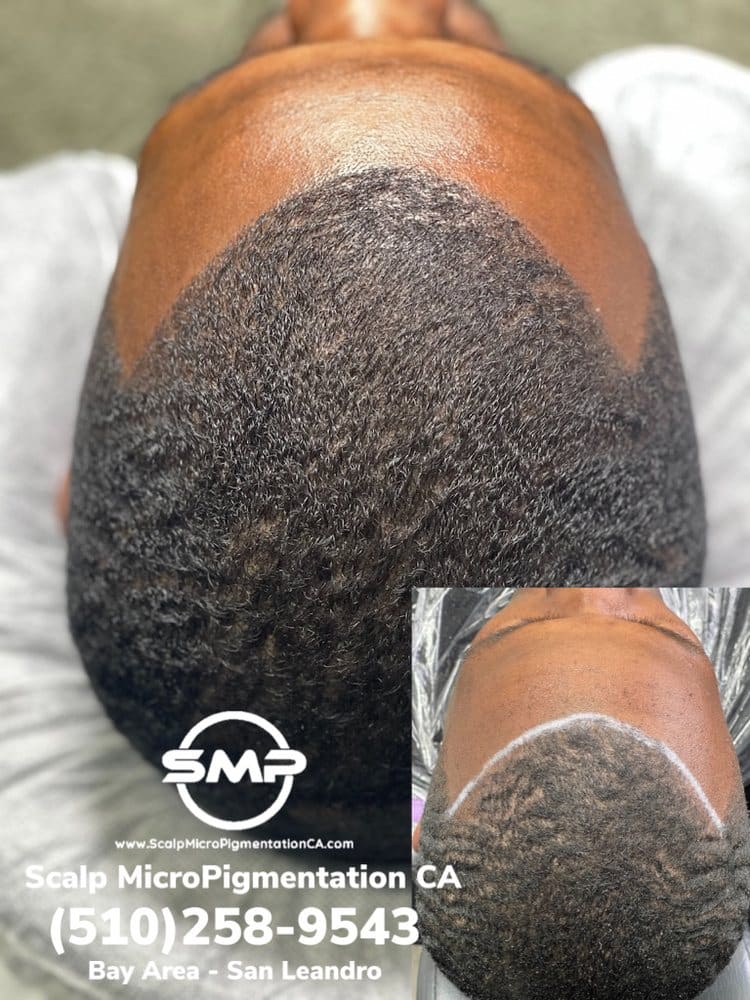
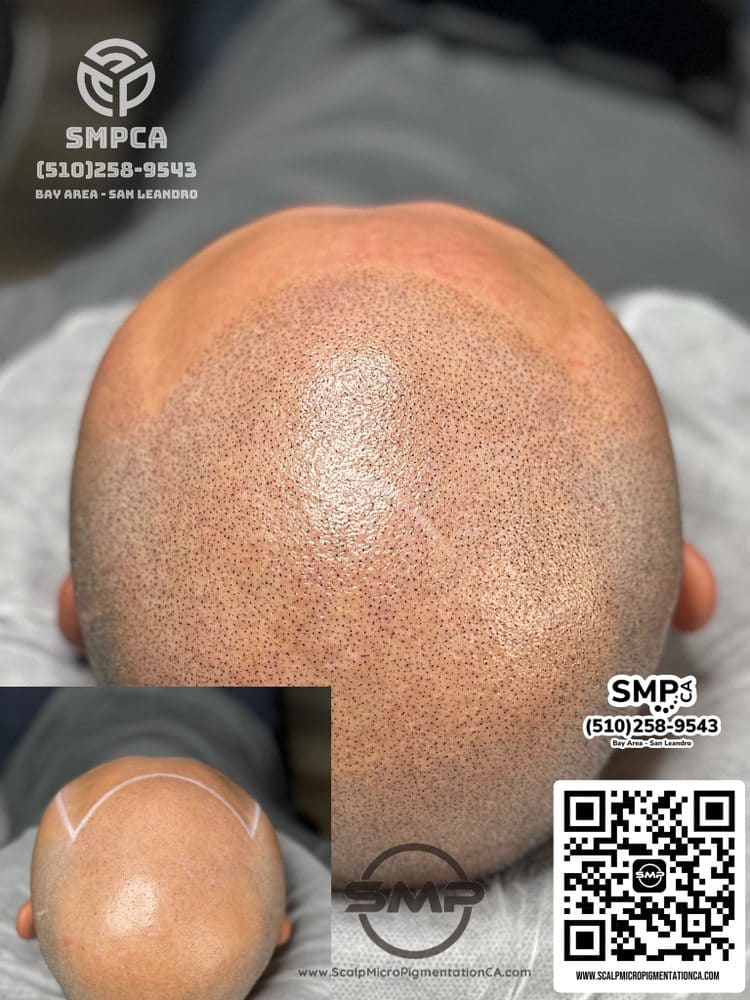
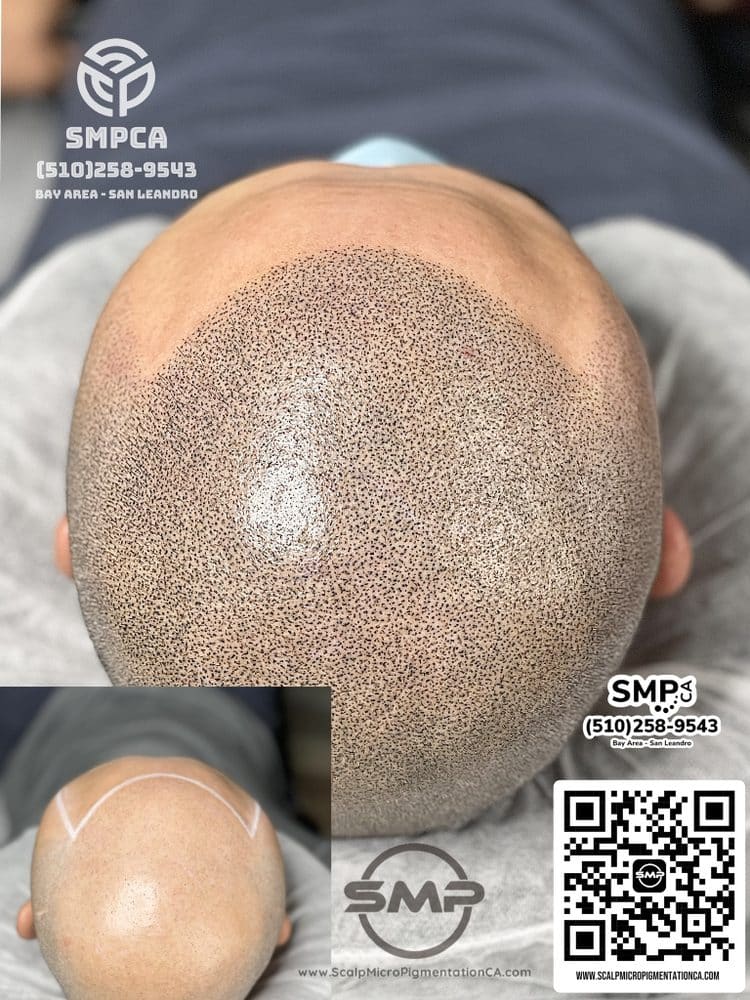
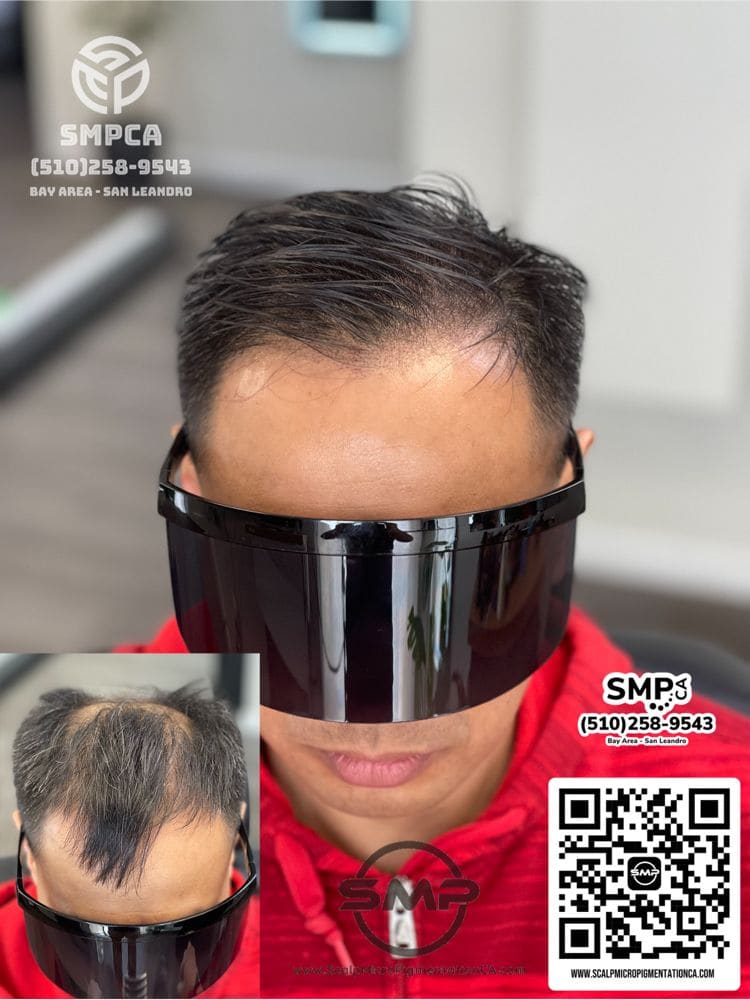
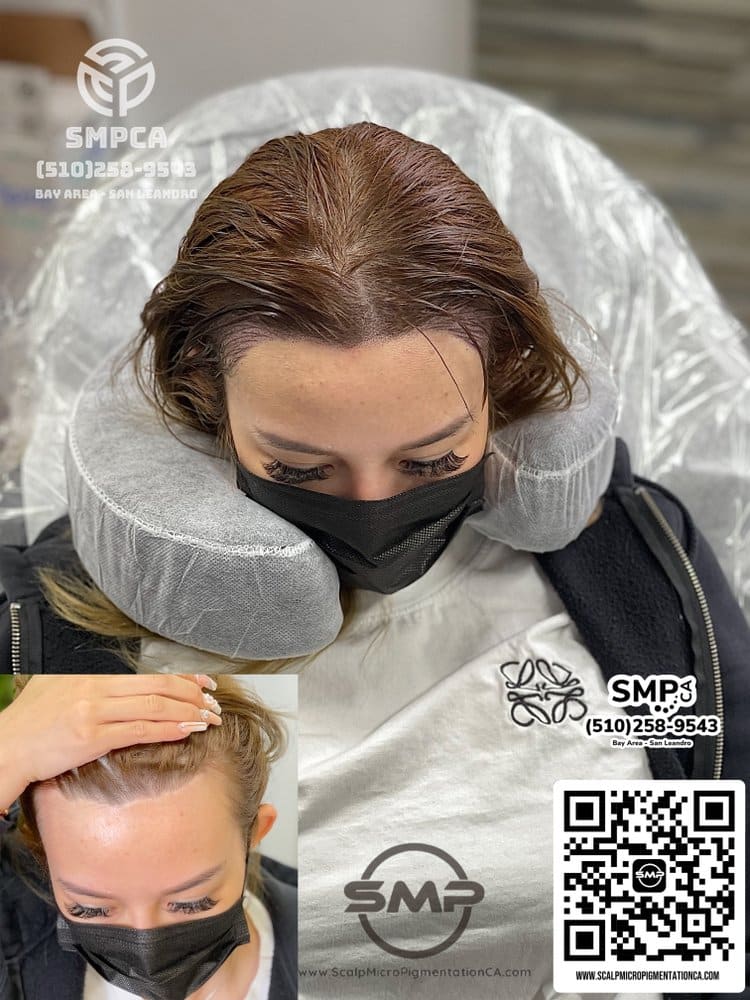
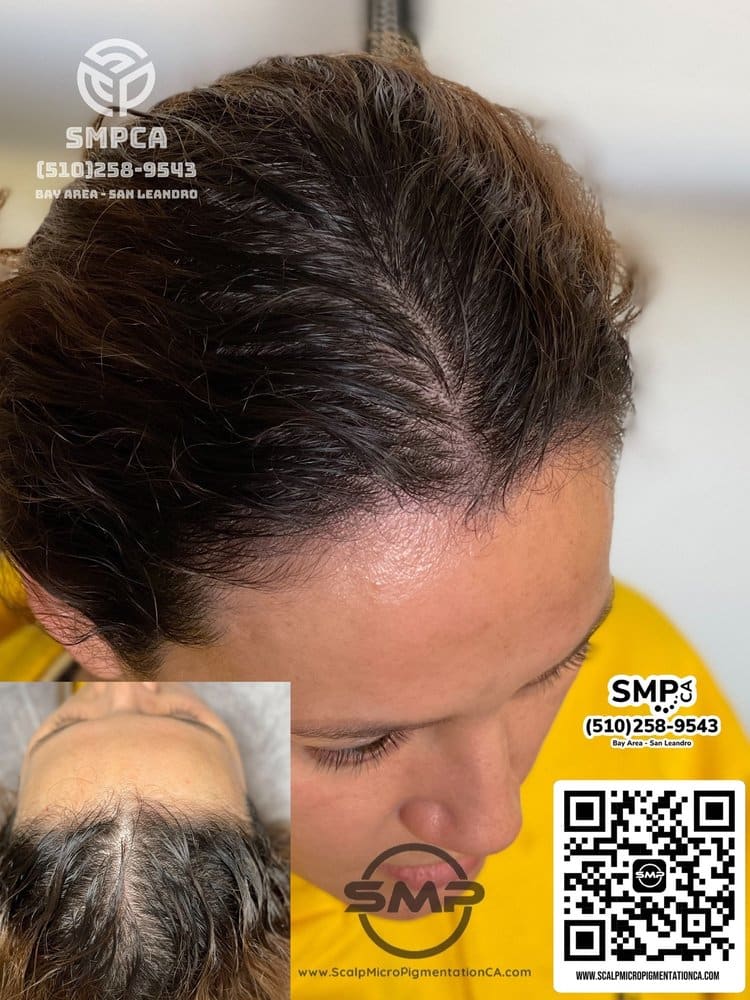
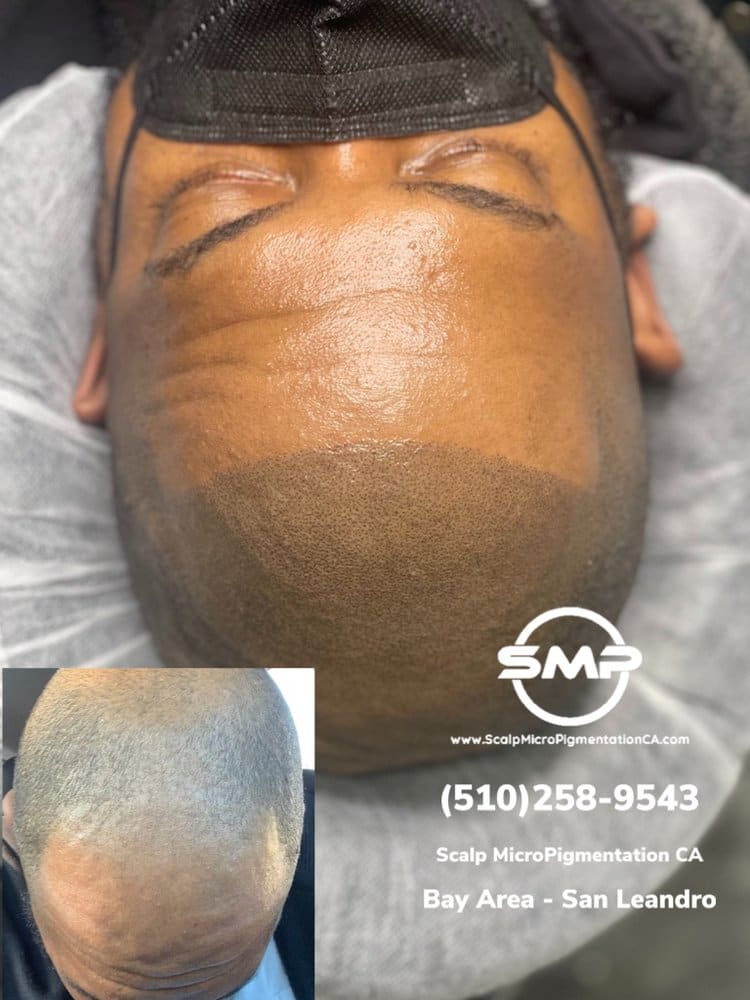
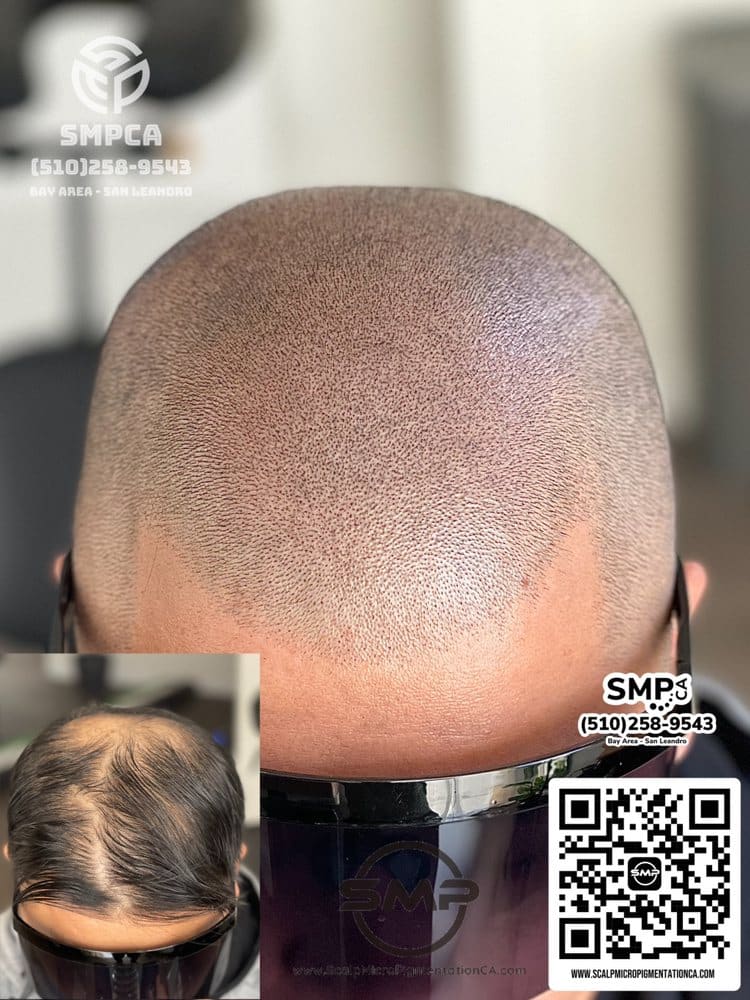
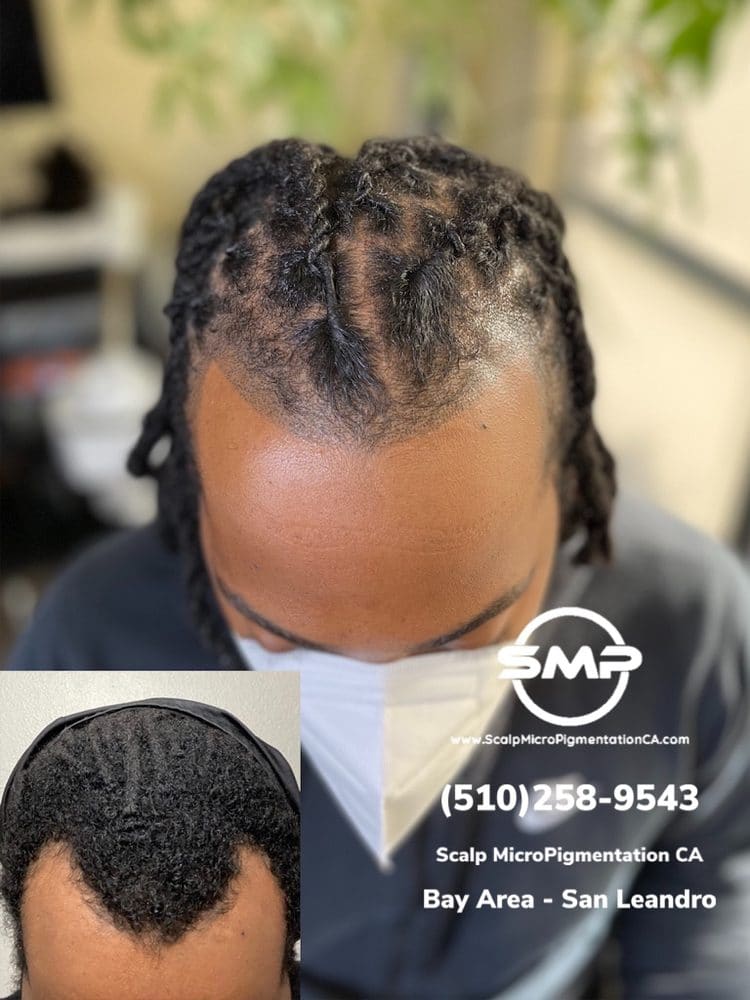
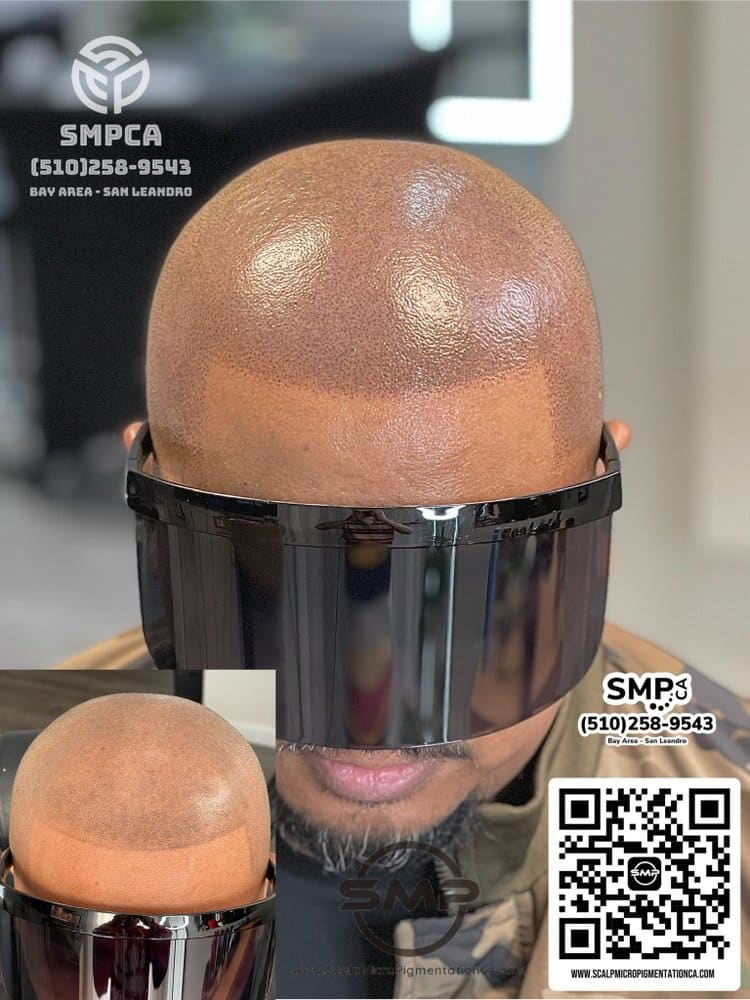
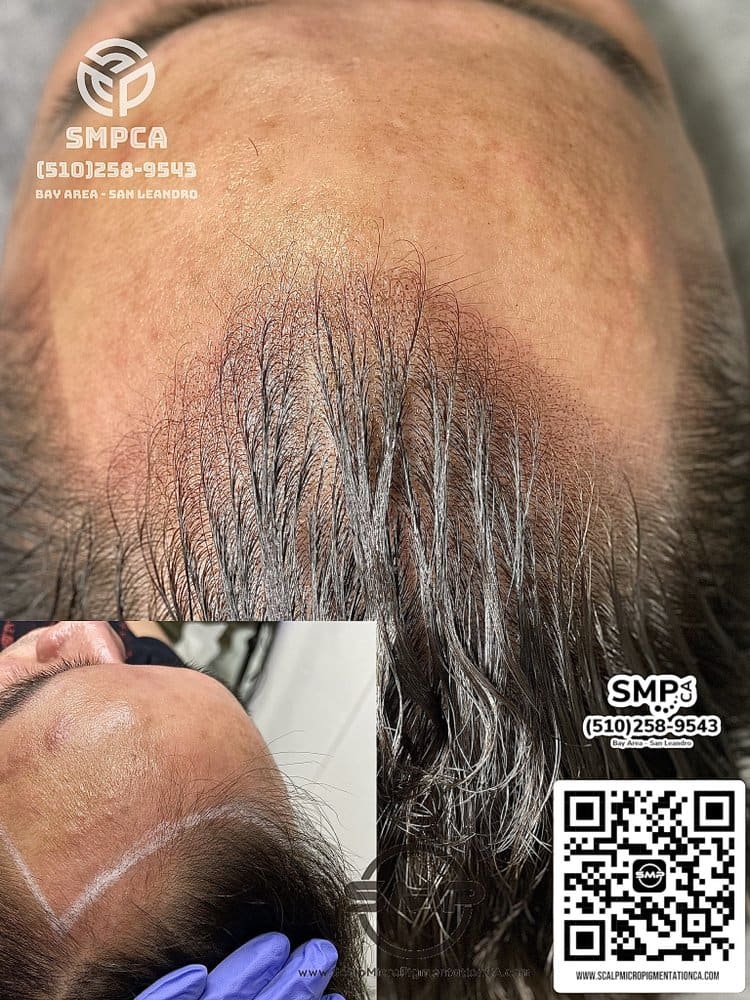
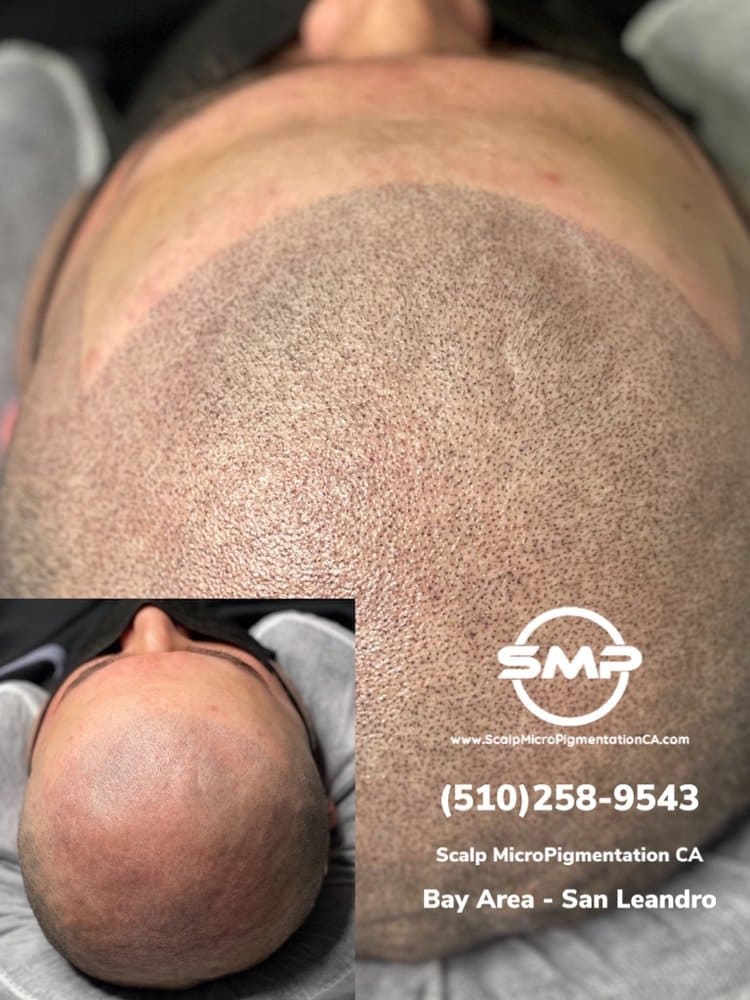
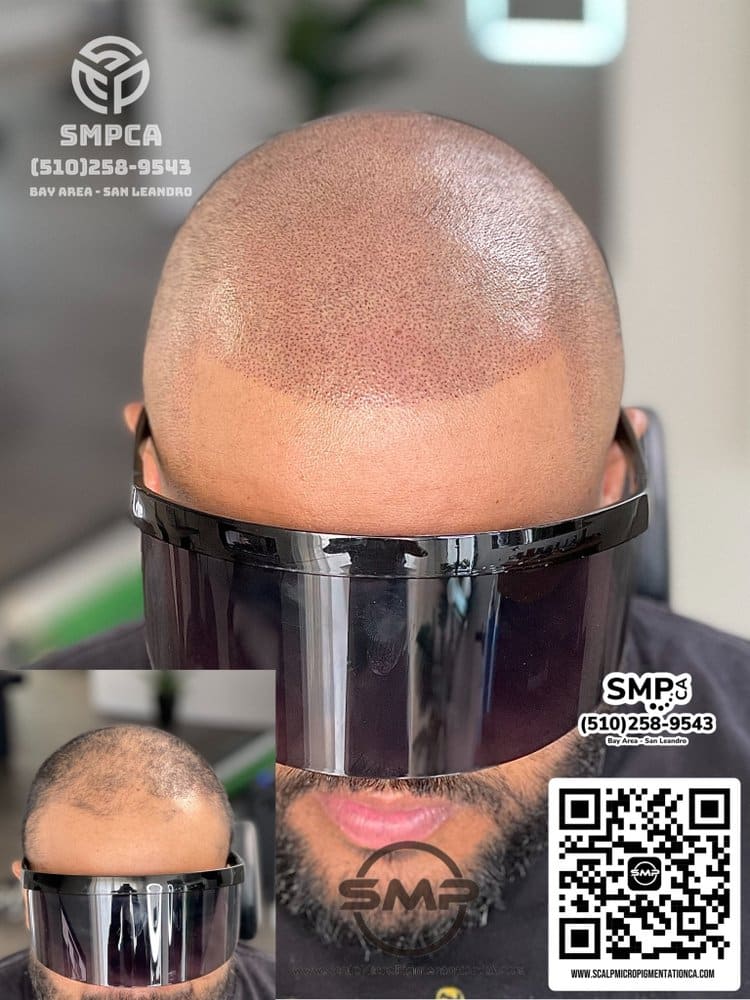
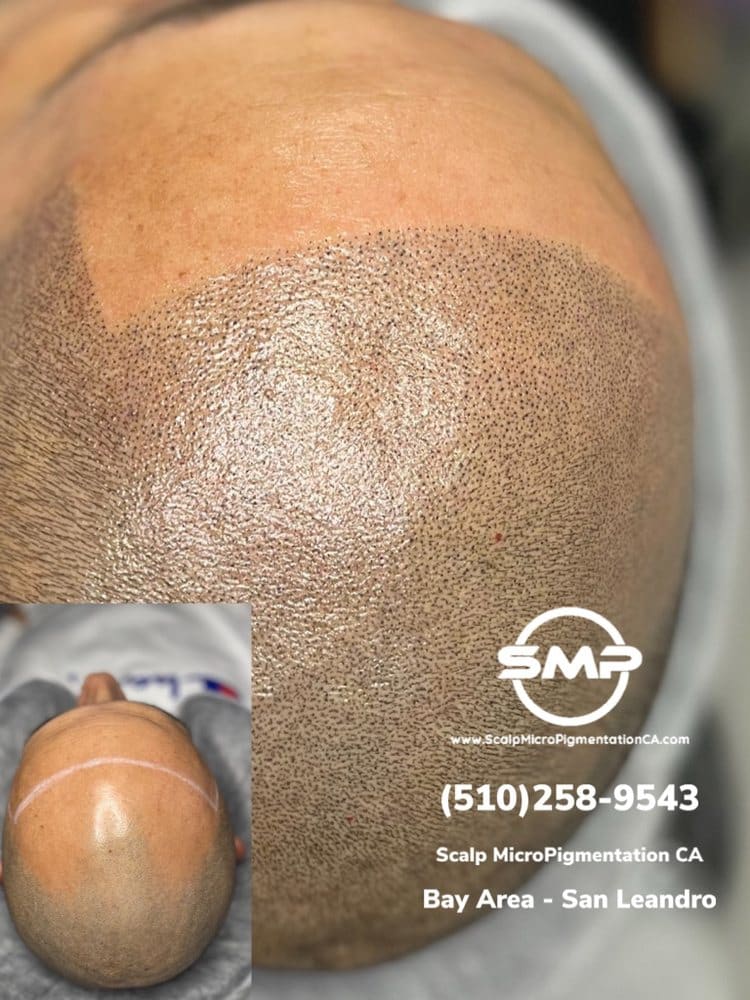
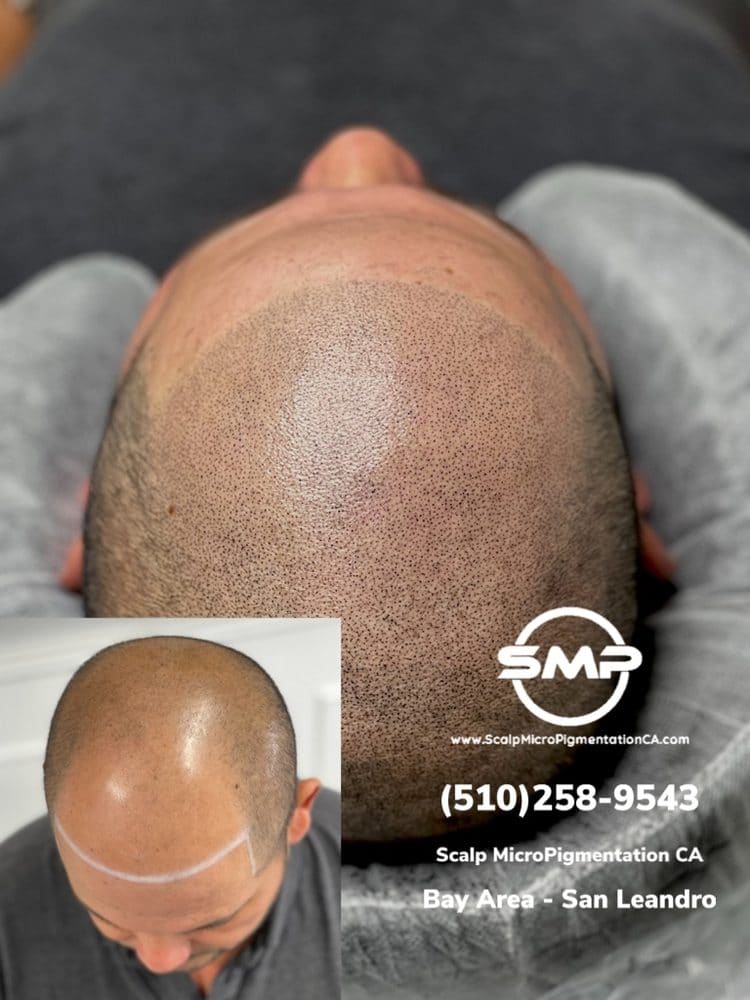
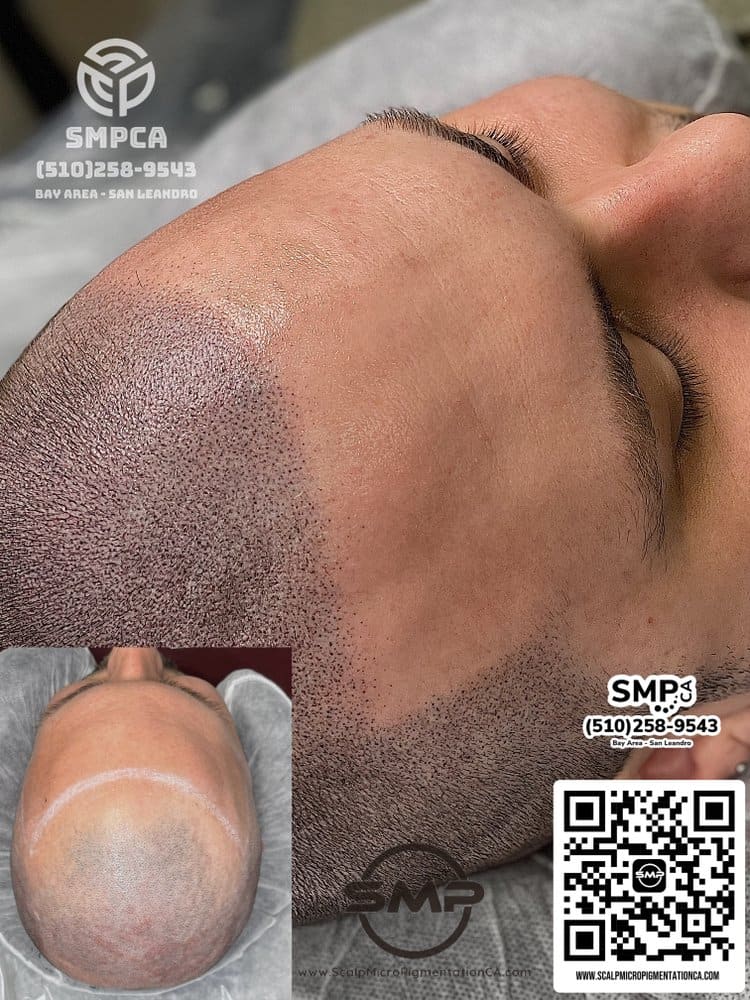
Thousands of sessions · hundreds of clients · one artist
Get your hairline — and your confidence — back.
Free, no-pressure quote. Tell me your situation and I'll show you exactly what's possible before you commit to anything.