
Hair Loss Education
Diffuse Thinning: Thinning All Over, Explained
No receding hairline, no bald spot — just less hair everywhere and a scalp that shows through under bright light. What diffuse thinning is, why it needs a doctor more often than pattern loss does, and the honest answer on whether SMP can help.
The short answer
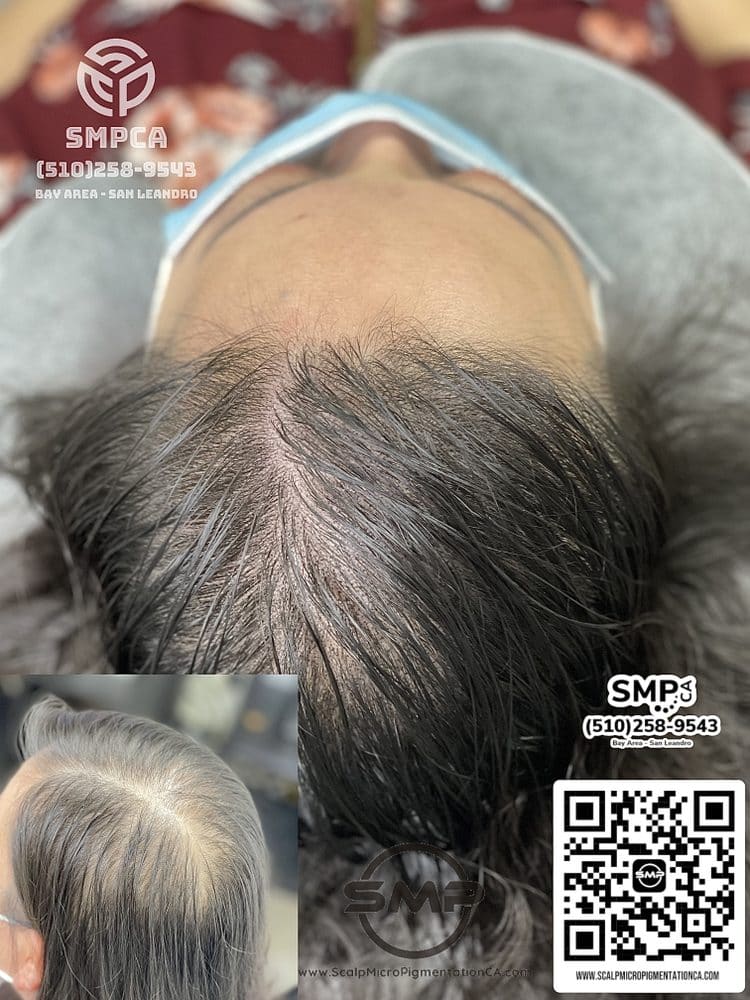
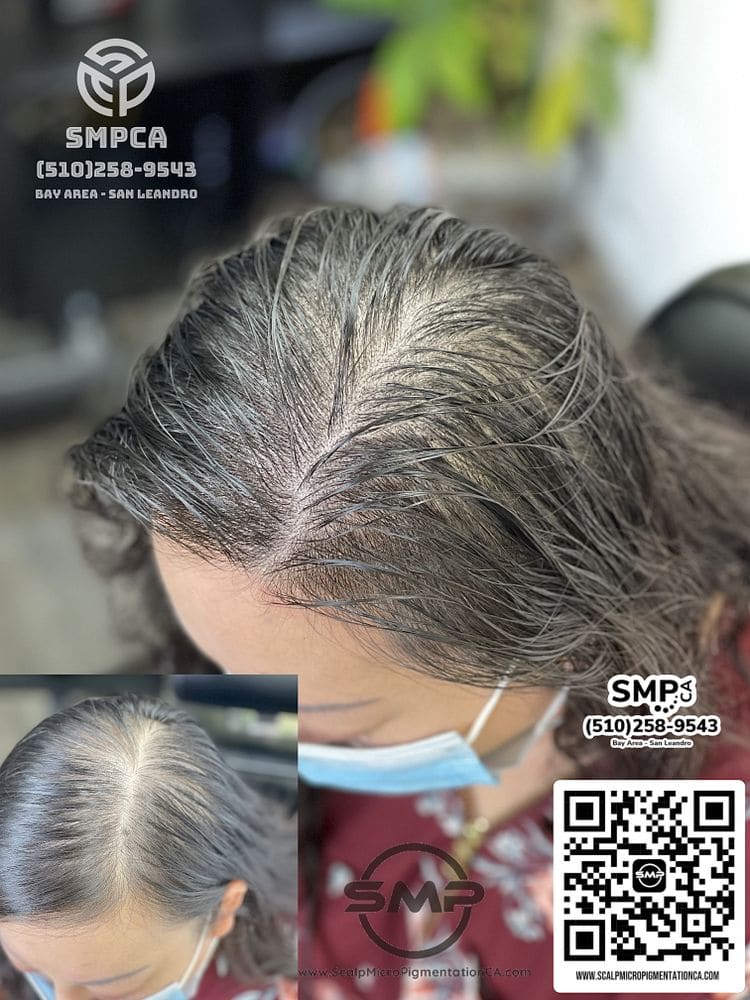
Diffuse thinning is hair loss spread evenly across the scalp instead of following the receding-and- crown pattern most people picture. The hairline often stays put; what changes is density behind it — finer hairs, a wider part, and a scalp that shows through under overhead light. Because it has no distinctive shape, it is much harder to work out than pattern loss, and it genuinely warrants a board-certified dermatologist. On the cosmetic side: density SMP can reduce the contrast between hair and scalp, but it depends on having enough remaining hair to blend into. Some diffuse thinners are excellent candidates. Some are not. We would rather tell you which at a free consultation than take a deposit and find out later. Results vary from person to person.
We do not diagnose
SMPCA performs scalp micropigmentation only, plus SMPCA Academy training. We are not medical providers. We do not offer PRP, laser therapy, microneedling, exosomes, stem cell treatments, hair transplants, hair systems, hair fibers, or any prescription treatment, and we cannot prescribe or advise on medication. Diffuse thinning has several possible causes that look alike from the outside — identifying yours is a board-certified dermatologist’s job, not ours, and this page will not attempt it.
Diffuse thinning vs. pattern baldness
Pattern loss has a map. Diffuse loss does not. That one difference drives nearly everything else — how you notice it, how hard it is to identify, and what can honestly be done about it.
| Diffuse thinning | Pattern baldness | |
|---|---|---|
| Shape of the loss | No clear shape — thinner more or less everywhere on top | A recognisable map: temples, then crown, then the two merging |
| Hairline | Often still intact, just sparser behind it | Recedes into the familiar M shape early |
| How you notice it | Scalp showing through under bright light; ponytail or part looks thinner | You can point at the spot that has gone |
| Hair calibre | Individual hairs often finer and softer across the whole scalp | Miniaturisation concentrated in the affected zones |
| Fits the Norwood scale? | Poorly — the scale describes a pattern this does not follow | Yes, that is exactly what the scale was built for |
| Who it affects | Very common in women; also affects men | Predominantly men; the Ludwig scale describes the female version |
| How easy it is to work out | Genuinely difficult — several different causes look alike | Usually recognisable on sight |
If your loss does follow a map, the Norwood scale will describe it better than this page will. Crown-only loss is covered in crown hair loss.
“It looks fine until I stand under a light”
Almost everybody who books a consultation for diffuse thinning describes the same thing, in almost the same words. The bathroom mirror is fine. Then you sit down in a restaurant with downlights, or somebody takes a photo with the flash on, or you catch the top of your head in a lift ceiling mirror — and there it is.
There is a straightforward reason for it. Front-lit mirrors light your hair; overhead light passes through it and hits the scalp. When hair is thinner, more of that light reaches pale skin and bounces back, and the contrast between dark hair and bright scalp is what your eye reads as “thin.” Nothing changed about your hair between the two rooms.
That matters practically, because it tells you what a cosmetic approach is actually solving. It is not adding hair. It is reducing the contrast. Which is also why the same person can be delighted with a result in daily life and still see thinning in a direct overhead photo — and why we show people that limit honestly before they start, rather than after.
The other thing worth naming: the hat habit, the avoiding of group photos, the mental map of which rooms in a building are lit badly. That part is real and it is the reason most people are on this page. It does not mean the answer is a procedure — but it does mean the concern is legitimate, and you are not being vain about it.
Why diffuse thinning needs a doctor more than pattern loss does
Pattern loss announces itself. Diffuse loss does not — several very different causes produce a scalp that simply looks less dense all over, and from the outside they can be hard to tell apart even for people qualified to try. Broadly, the possibilities a dermatologist weighs include:
- Androgenetic loss presenting diffusely — genetic pattern loss that spreads across the top rather than carving out the usual shape. Common, and it does not always look like the chart.
- Telogen effluvium — a shedding response that typically follows some trigger by a matter of months. It is one of the more common reasons hair suddenly comes out in the shower, and notably, it is not always permanent. A doctor can talk you through it; we cannot.
- Thyroid, systemic and nutritional causes — a category best summarised as “things a blood test finds and a mirror does not.”
- Medication effects — some medications list hair changes among their effects. That is a conversation with whoever prescribed it, never with us.
- Conditions that need examining properly — anything involving scalp pain, itching, burning, scaling, redness, patchy loss, or smooth shiny areas needs a board-certified dermatologist promptly. Some conditions affect the follicle in ways that make later cosmetic work behave differently, and some need treating in their own right.
I want to be exact about my own limits here. I am a Master Barber and an SMP artist working since 2016 — I can tell you what I see on a scalp and what pigment can and cannot do with it. I cannot tell you which of the above is happening to you, and I will not offer an opinion dressed up as one. If your thinning is recent, accelerating, or has never been looked at, that appointment comes first.
Can SMP help? The honest answer depends on what’s left
For pattern baldness the SMP answer is usually simple. For diffuse thinning it is not, and this is the part of the conversation the industry tends to skip.
Density SMP works by placing pigment in the scalp between and behind your existing hairs, so the pale scalp stops acting as a bright background. It borrows from the hair you still have. That means the approach has a genuine prerequisite: there has to be sufficient remaining hair for the pigment to blend into. If there is, the effect can be significant. If there is not, a density approach may not deliver what you are picturing — and the honest alternative is the full shaved-look result, which only suits you if you are genuinely willing to wear your hair that short.
Some diffuse thinners are excellent candidates. Some are not. Nobody can tell which from a photo on a phone, and any studio that promises you a result before looking at your scalp in person is selling rather than assessing.
| Your situation | Honest read | Why |
|---|---|---|
| Mild to moderate thinning, hair still covering the scalp at rest | Often a good density case | There is enough remaining hair for pigment to sit between and behind, which is what reduces the contrast between hair and scalp. This is the classic density SMP scenario. |
| Thinning that only shows under bright or overhead light | Often a good density case | This is the presentation density SMP was really made for — closing the gap in contrast so the scalp stops reading as a bright surface behind the hair. |
| Advanced diffuse thinning with very little hair left on top | Honestly, it depends | As remaining hair drops away, a density approach has less to blend into and the result can start reading as coverage rather than density. Sometimes the better answer is a full shaved-look approach — which only suits you if you are willing to wear your hair that short. |
| You want to keep wearing your hair long | Sets a real ceiling | Density work is designed to be seen through hair. The longer and more mobile your hair, the more the scalp moves and parts, and there is a limit to how much apparent density pigment can add at length. We would rather set that expectation now than at your second session. |
| Active shedding, or loss that started in the last few months | Not yet — see a doctor first | Working over a scalp that is actively changing means designing against a moving target. Some causes of sudden diffuse shedding settle on their own. Get it looked at, let things stabilise, then talk to us. |
| Patchy loss, scalp symptoms, or any visible scarring | Dermatologist, not us | Pain, itching, burning, scaling, redness, or smooth shiny patches are medical findings. That is a board-certified dermatologist's territory and it needs to be looked at before anyone considers anything cosmetic. |
To be explicit about what SMP is not: it is a cosmetic tattoo. It does not grow hair, thicken individual hairs, create hair strands, or address the cause of your thinning. It changes contrast, which changes how dense your hair looks. Results vary from person to person. See am I a candidate for SMP for the fuller version.
What actually helps, in the order that makes sense
1. Get an answer before you buy a solution
See a board-certified dermatologist, particularly if the thinning is recent, accelerating, or has never been examined. Diffuse causes differ in what can be done about them, and some settle on their own. Spending money on appearance before anyone has established what is happening is the wrong order of operations.
2. Let an actively changing scalp settle
If you are shedding heavily right now, cosmetic work is designing against a moving target. Waiting is not a lost cause — it is how you avoid paying twice.
3. Take control of contrast and lighting
Free and immediate: a shorter cut reduces the contrast between hair and scalp far more than most people expect, and a matte finish scatters overhead light instead of reflecting it. Good barbering genuinely moves the needle on how thin hair reads before any procedure enters the conversation.
4. Then consider the cosmetic options honestly
Density SMP if there is enough remaining hair to work with. Fibers if you want something reversible and cheap to try first — we do not sell them and earn nothing on them, and for a diffuse thinner not ready to commit, they are a reasonable place to start. A full shaved-look approach if the thinning is advanced and you are comfortable going short. Weigh all of it in our hair loss treatment comparison or the wider hair restoration overview.
Background reading depending on who you are: women’s hair loss (diffuse thinning is the most common presentation in women) or men’s hair loss.
Diffuse thinning — FAQ
What is diffuse thinning?+
Diffuse thinning is hair loss spread more or less evenly across the scalp rather than concentrated into a receding hairline or a bald crown. The hairline is often still there; what changes is density behind it. Individual hairs tend to become finer, the part or ponytail looks thinner, and the scalp starts showing through under bright light. Because it has no distinctive shape, it does not map onto the Norwood scale well and it is much harder to self-assess than pattern loss.
How is diffuse thinning different from male pattern baldness?+
Pattern baldness has a map — temples first, crown second, the two eventually merging — and you can point at the areas that have gone. Diffuse thinning has no map. Everything on top is simply less dense than it used to be, often with the hairline still intact. That difference matters practically, because a pattern you can predict can be designed around, whereas diffuse loss requires knowing what is causing it before anyone plans anything.
Why does my scalp show through under bright light but look fine in the mirror?+
This is the single most common description we hear, and it is not your imagination. Bathroom mirrors are usually lit softly and from the front; overhead office lighting, sunlight, and phone camera flash come from above and behind, hitting the scalp directly. When hair is thinner the scalp reflects more light through the gaps, so the contrast between dark hair and pale scalp jumps. Nothing about your hair changed between the two rooms — the lighting did.
What causes diffuse thinning?+
There are several possibilities and they can look nearly identical from the outside — androgenetic (genetic pattern) loss presenting diffusely, telogen effluvium (a shedding response often triggered weeks or months after an event), thyroid and other systemic conditions, nutritional issues, medication effects, and less common conditions that need proper examination. We are not qualified to tell you which one you have and we will not guess. That is what a board-certified dermatologist is for, and diffuse loss is the presentation where seeing one matters most.
Can SMP help with diffuse thinning?+
Sometimes, and this is where honesty matters more than salesmanship. Density SMP places pigment between and behind your existing hairs so the scalp stops showing through as a bright background — but it depends on having sufficient remaining hair to blend into. If you still have reasonable coverage that thins out under light, it is often a very good case. If very little hair remains on top, a density approach may not deliver what you are picturing, and the honest alternative is a full shaved-look result that only suits someone willing to wear their hair that short. Results vary from person to person.
Will SMP make my thinning hair thicker?+
No. SMP is a cosmetic tattoo — thousands of tiny pigment impressions replicating the appearance of natural shaved hair follicles. It does not grow hair, thicken individual hairs, create hair strands, or affect the cause of your thinning. What it changes is contrast: a darker scalp behind thin hair reads as fuller than a pale scalp behind the same hair. That is a visual effect, not a biological one, and anyone telling you otherwise is overselling.
Should I see a doctor before booking SMP for diffuse thinning?+
In most diffuse cases, yes — and we will say so at consultation if we think it applies to you. Diffuse loss has more possible causes than pattern loss, some of which are treatable and some of which resolve on their own. If your loss is recent, accelerating, accompanied by scalp symptoms, or has never been examined by anyone, start with a board-certified dermatologist. Cosmetic work does not go anywhere; getting an answer first costs you nothing but time.
Can I have SMP done while keeping my hair long?+
Density work is specifically designed to be worn under existing hair, so yes in principle. The honest caveat is that longer hair moves, parts, and lifts, which exposes scalp in ways a close crop does not — so there is a ceiling on how much apparent density pigment can add at length. Bring a photo of the look you are aiming for to the consultation and we will tell you plainly whether it is reachable.
A free consultation — including the answer you might not want
San Lorenzo or Mountain View. We’ll look at how much hair you’ve actually got left to work with and tell you honestly whether density SMP suits your case — and if a dermatologist should see you first, we’ll say that instead. Results vary from person to person.
Book a free consultationA decade of SMP experience.
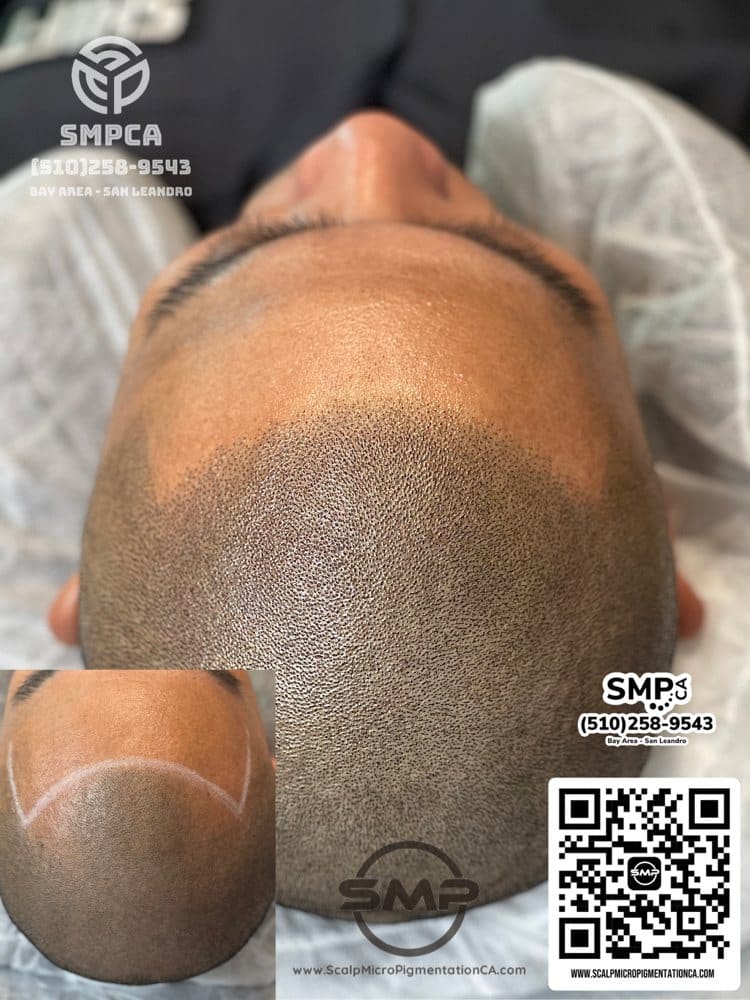
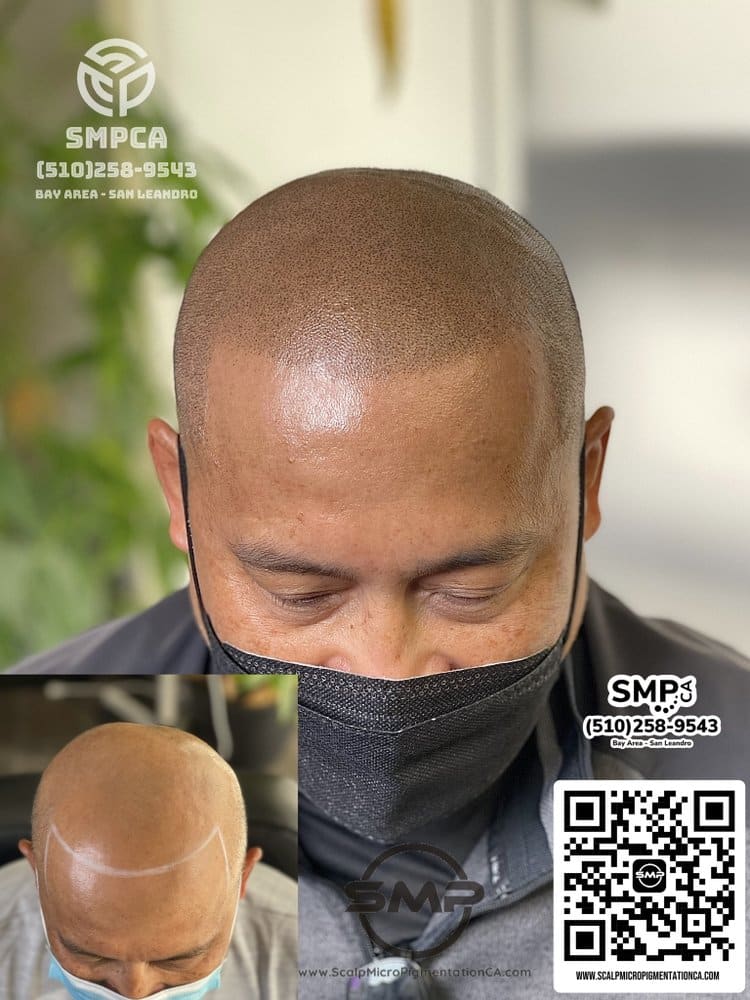
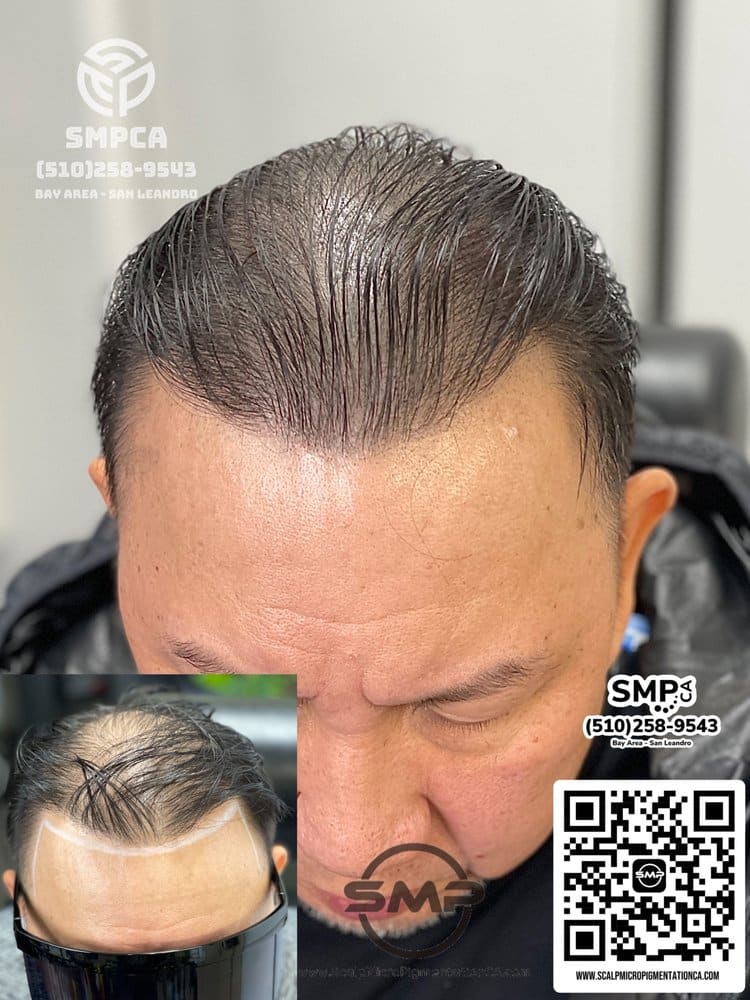
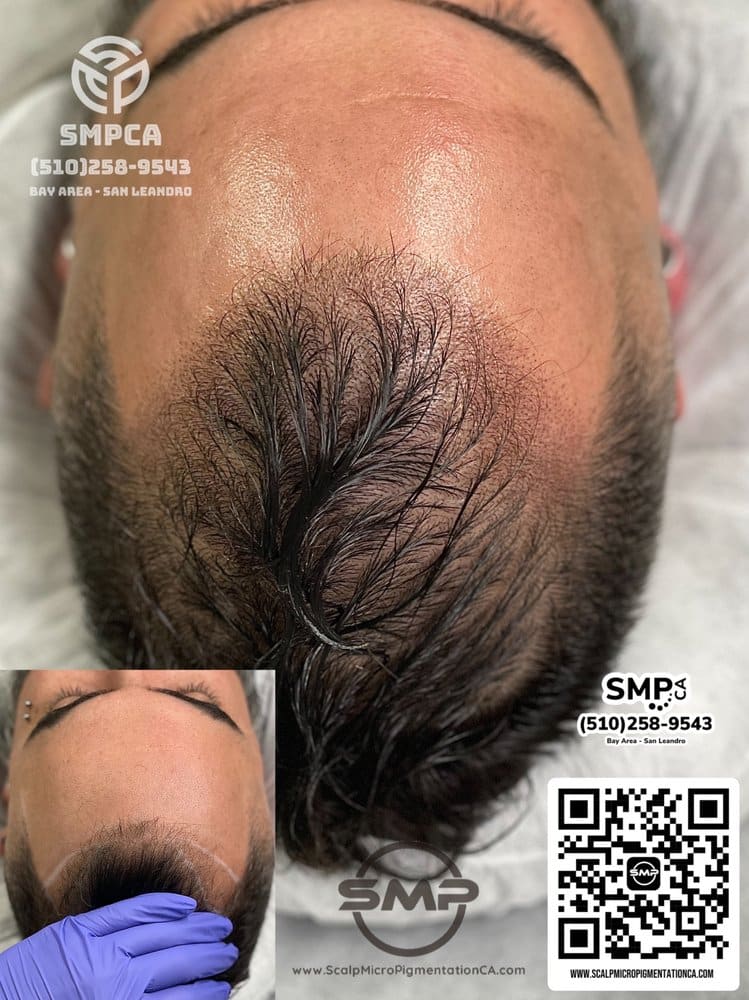
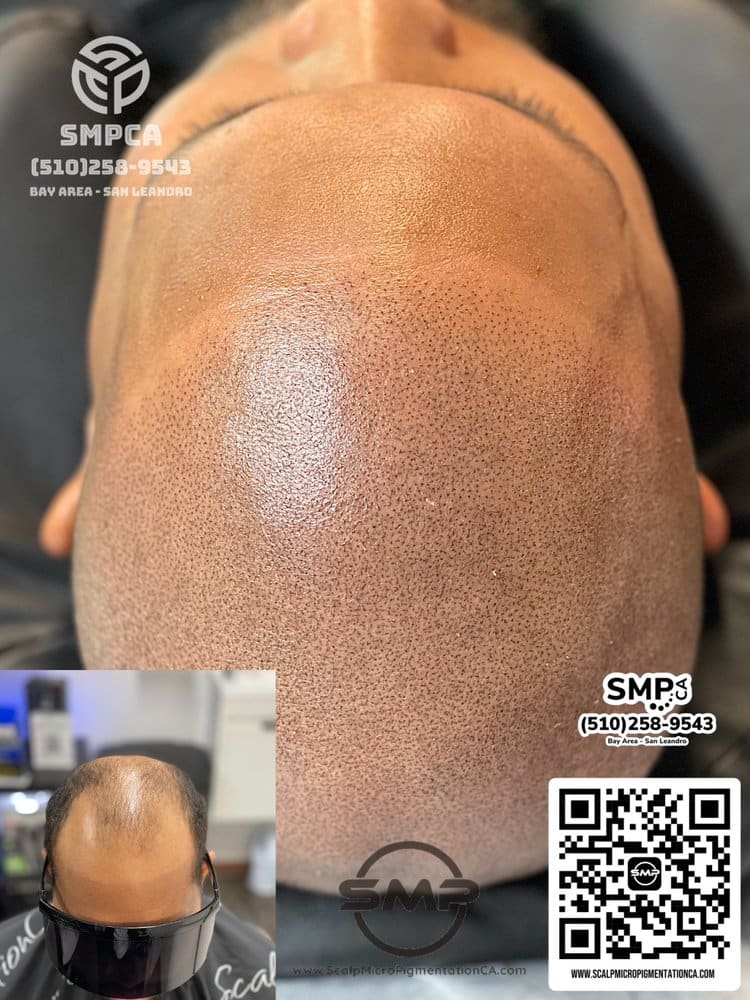
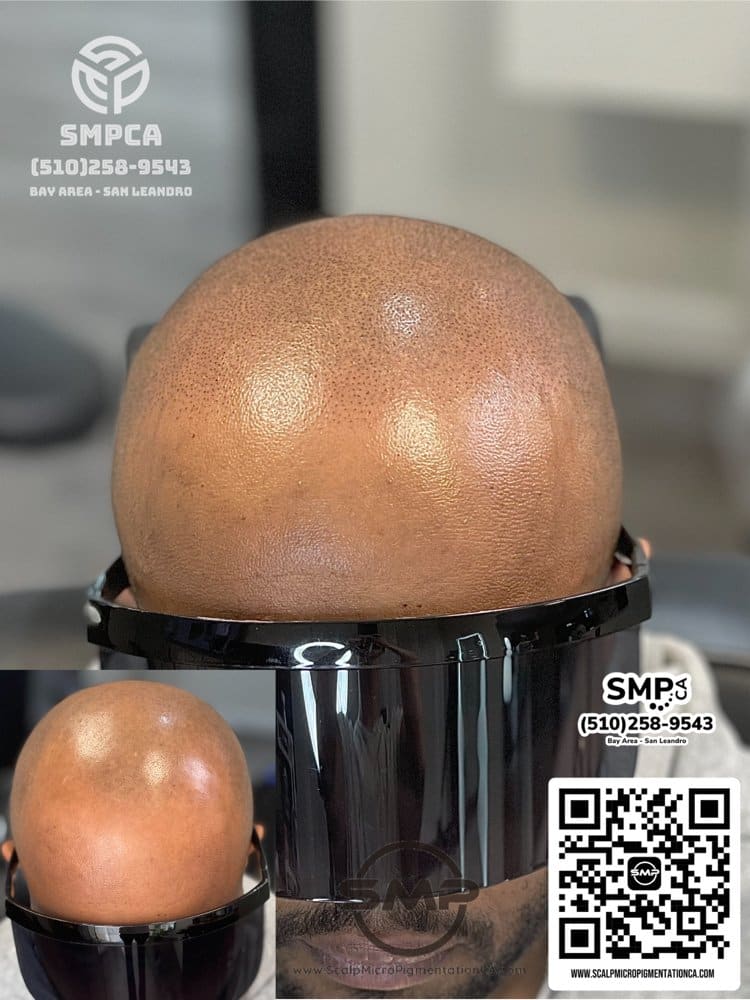
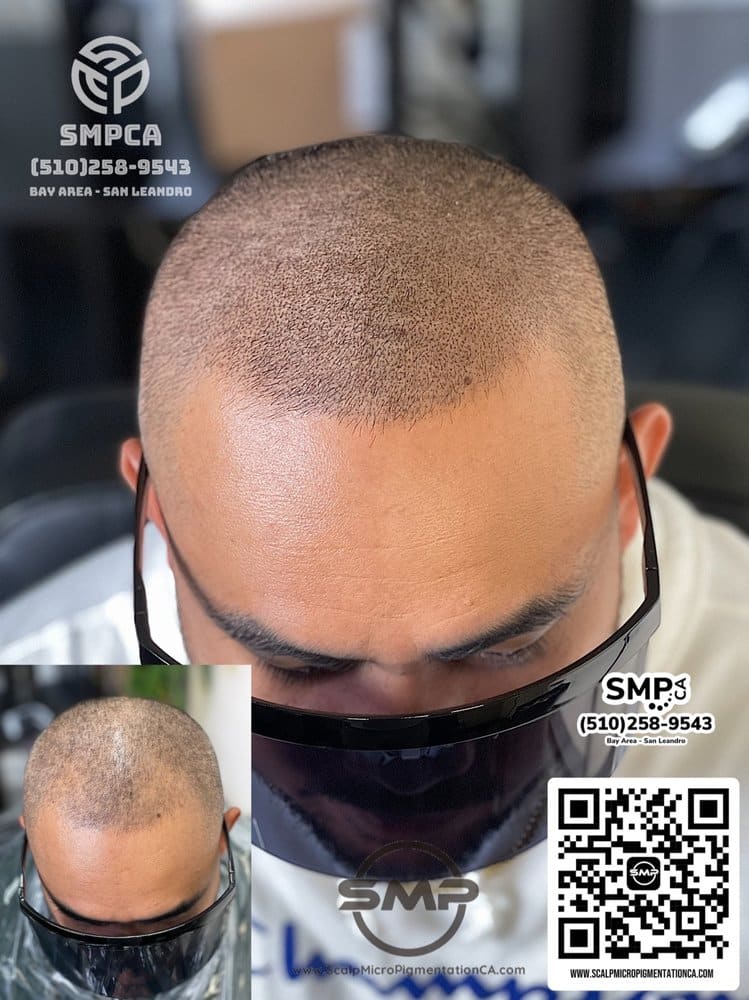
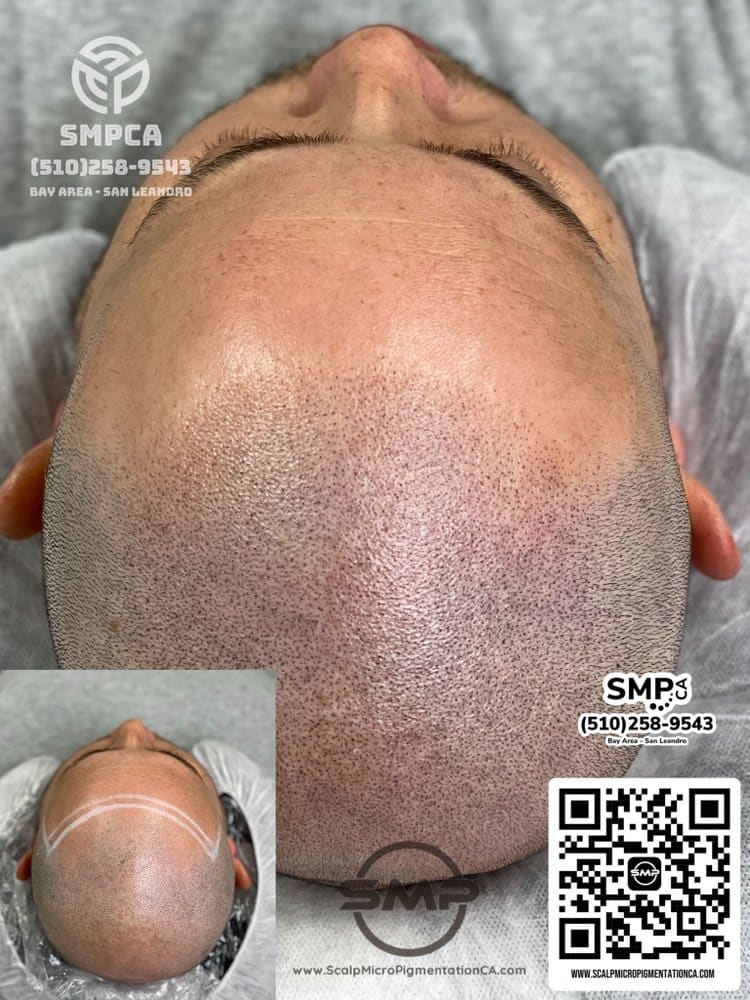
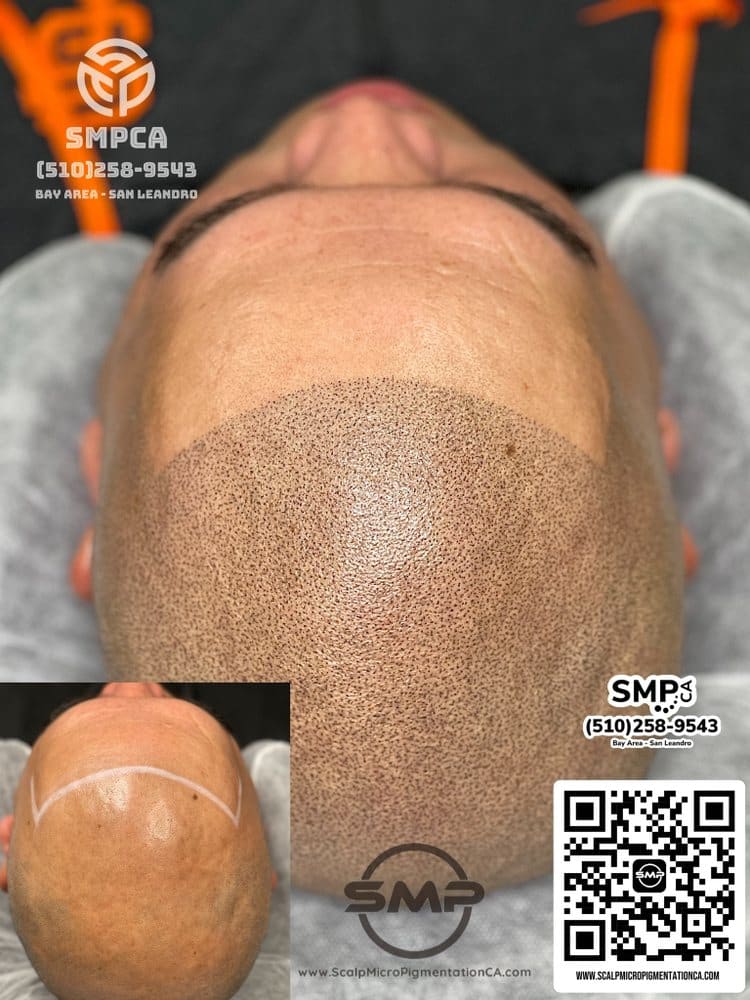
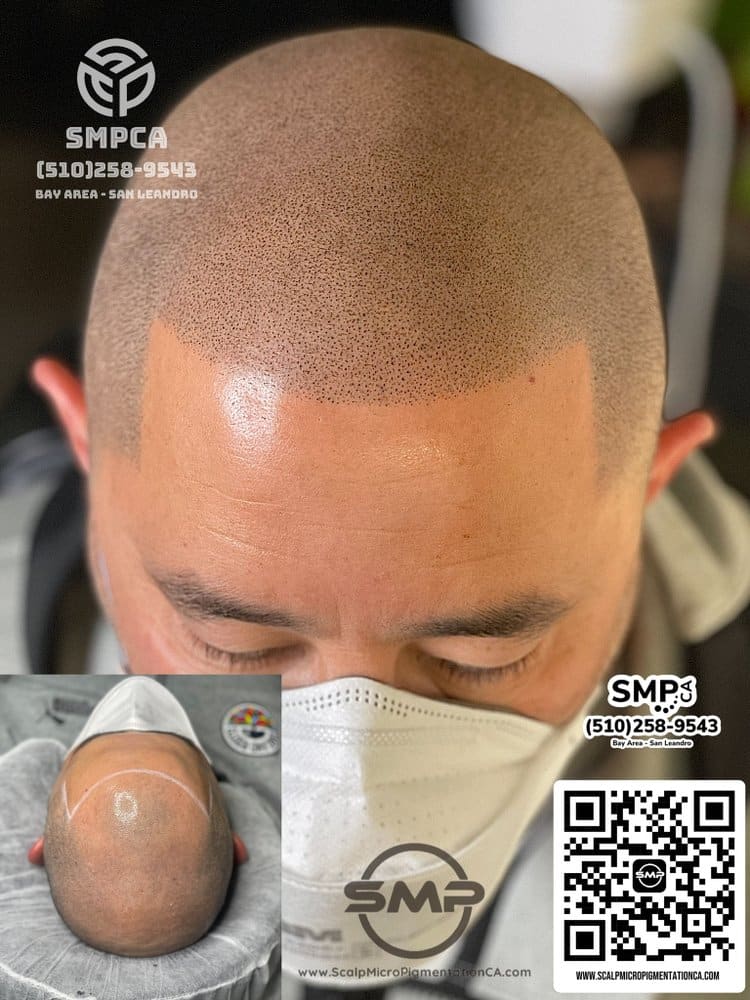
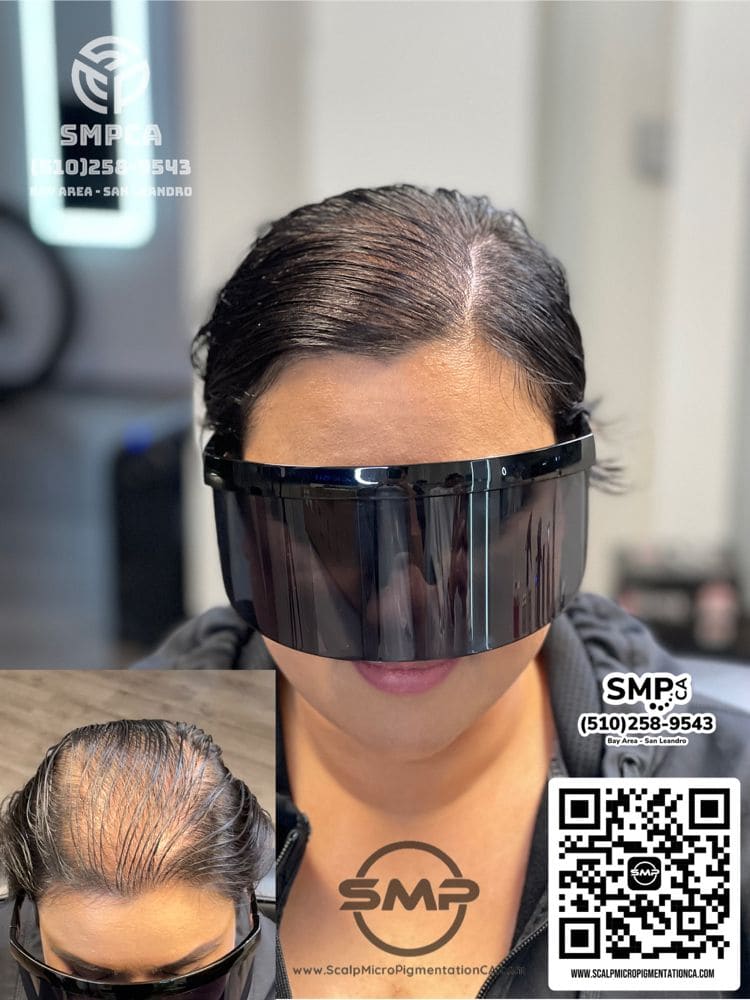
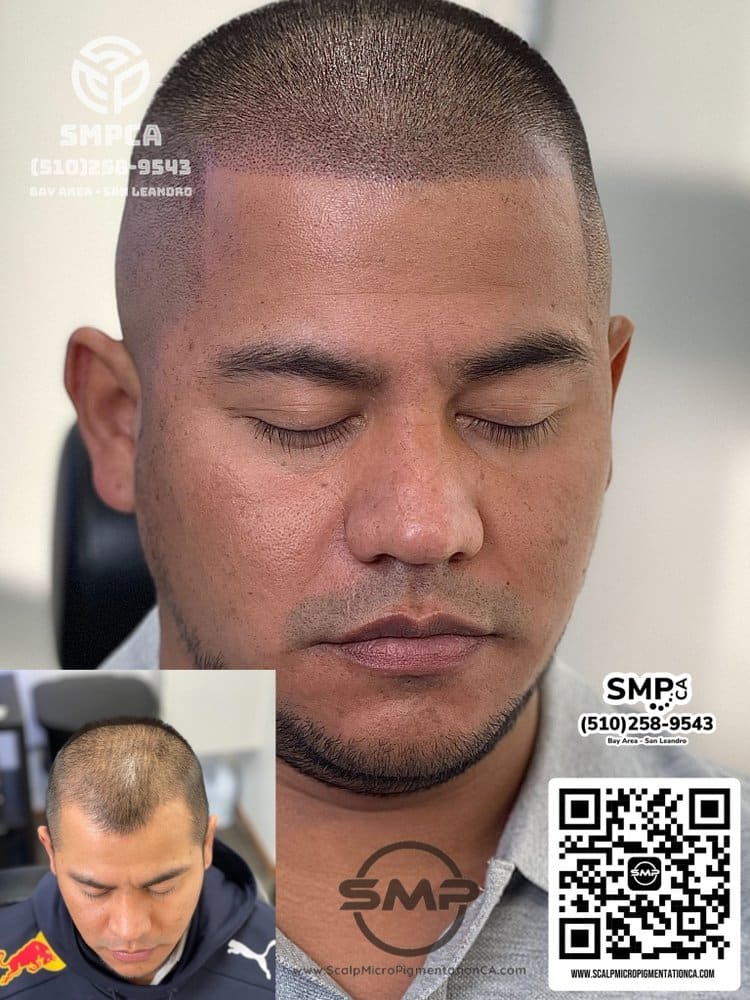
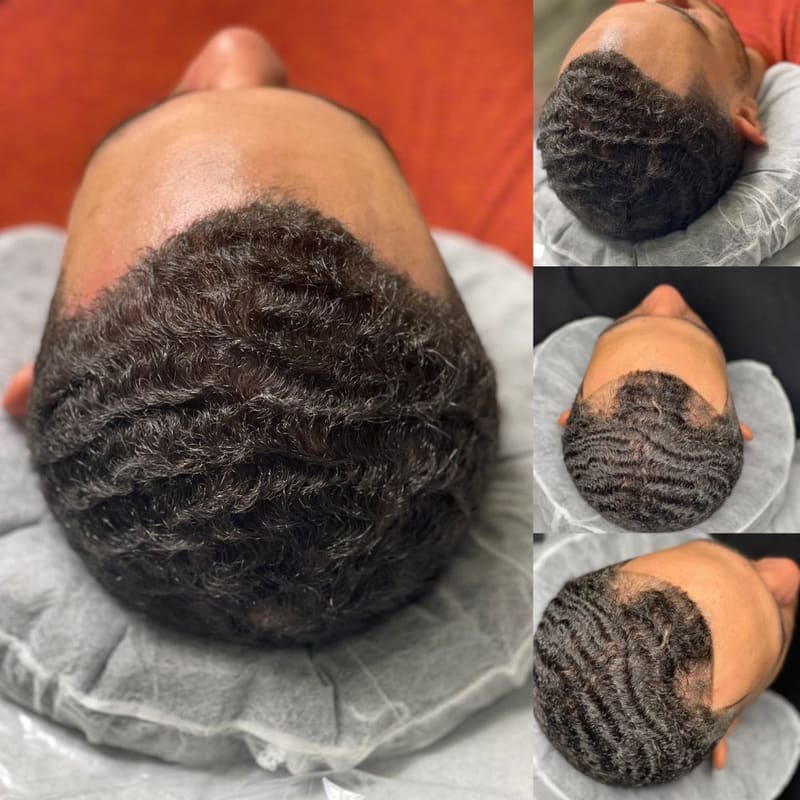
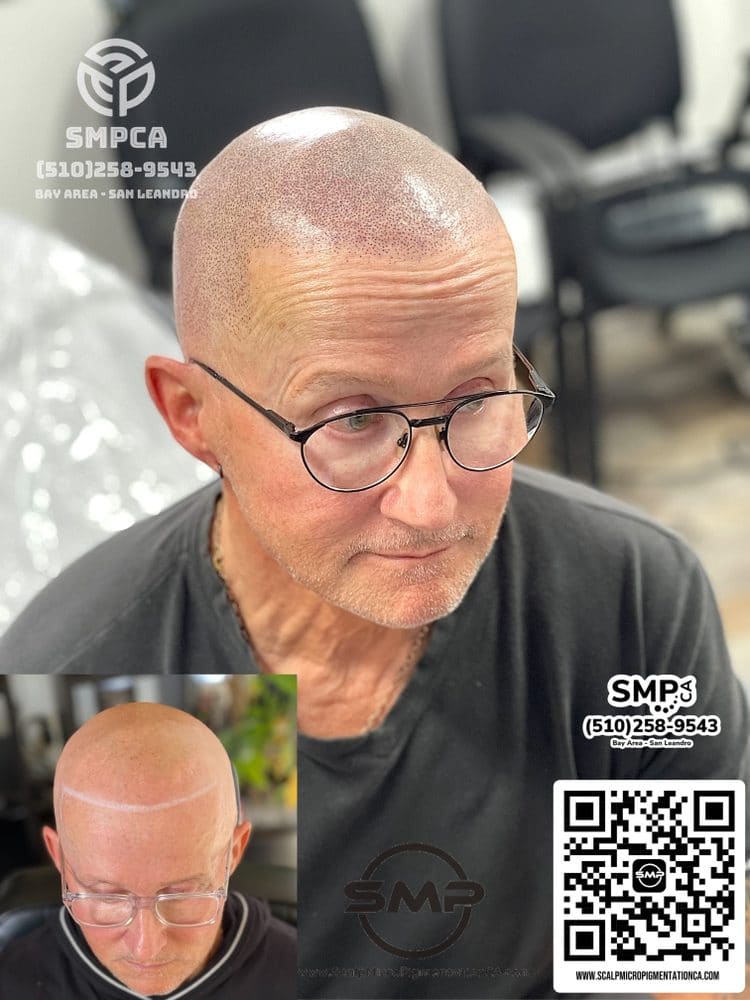
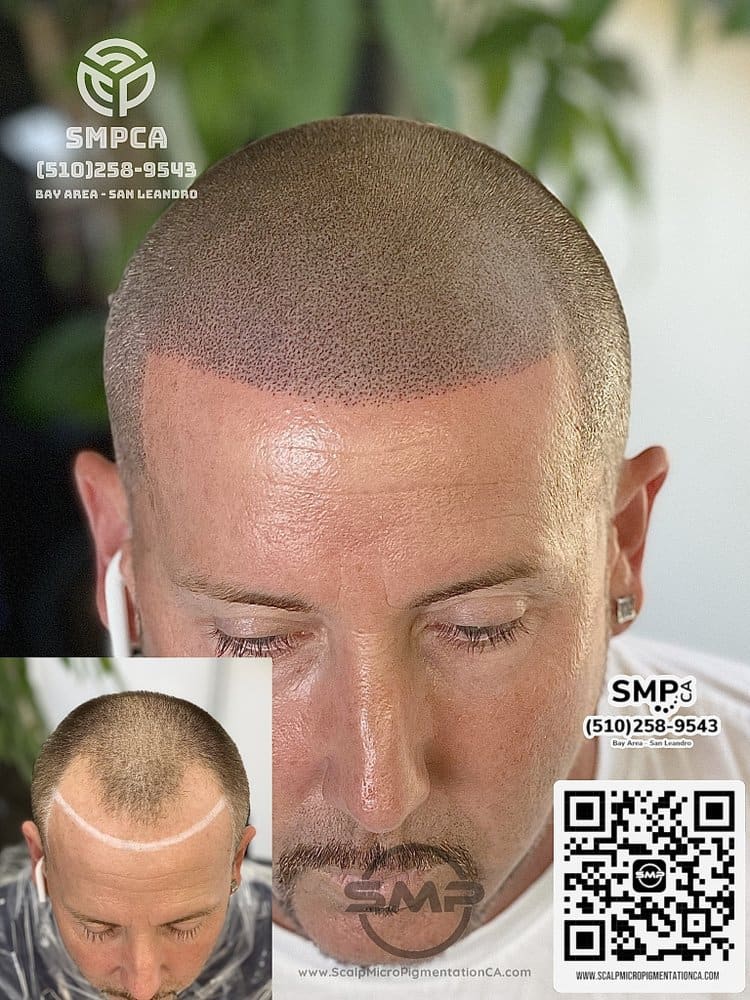
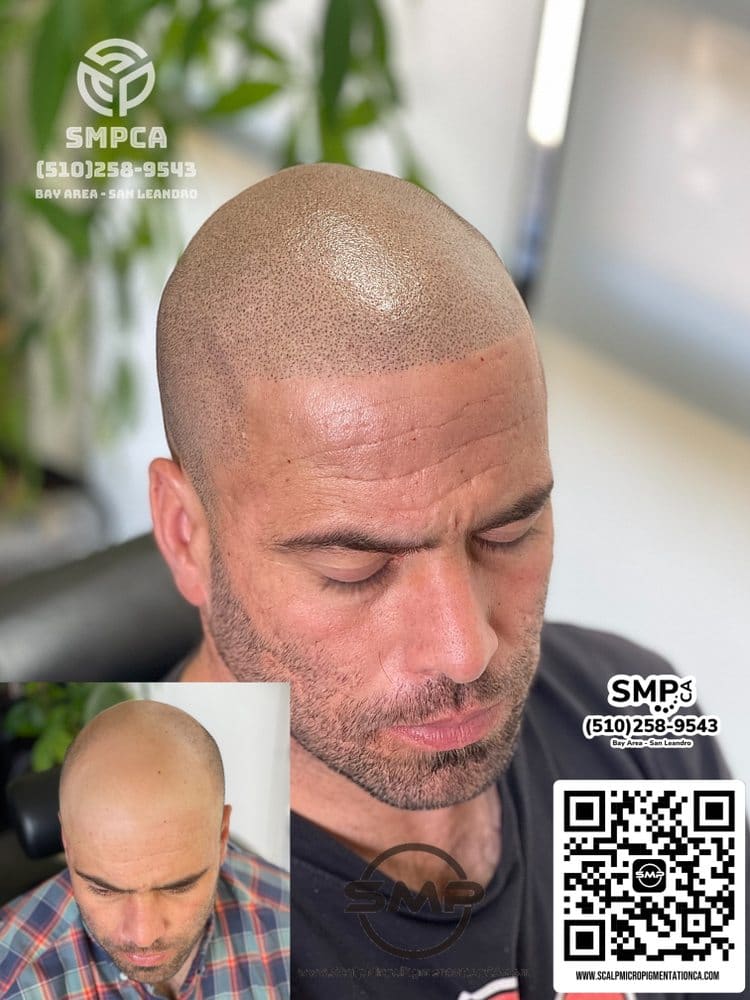
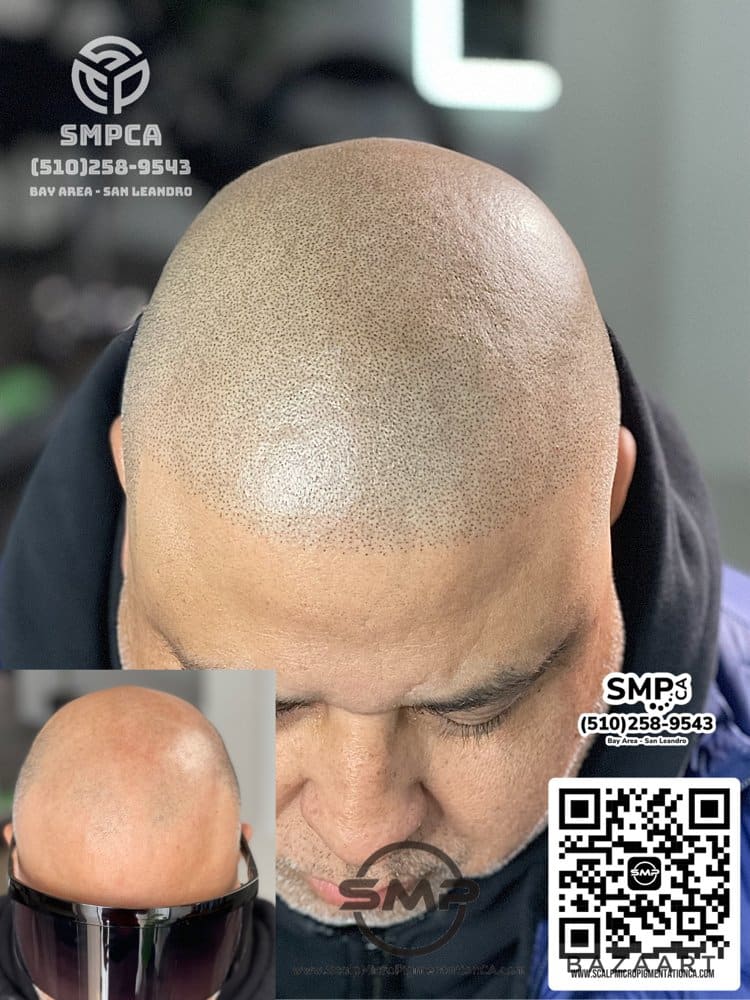
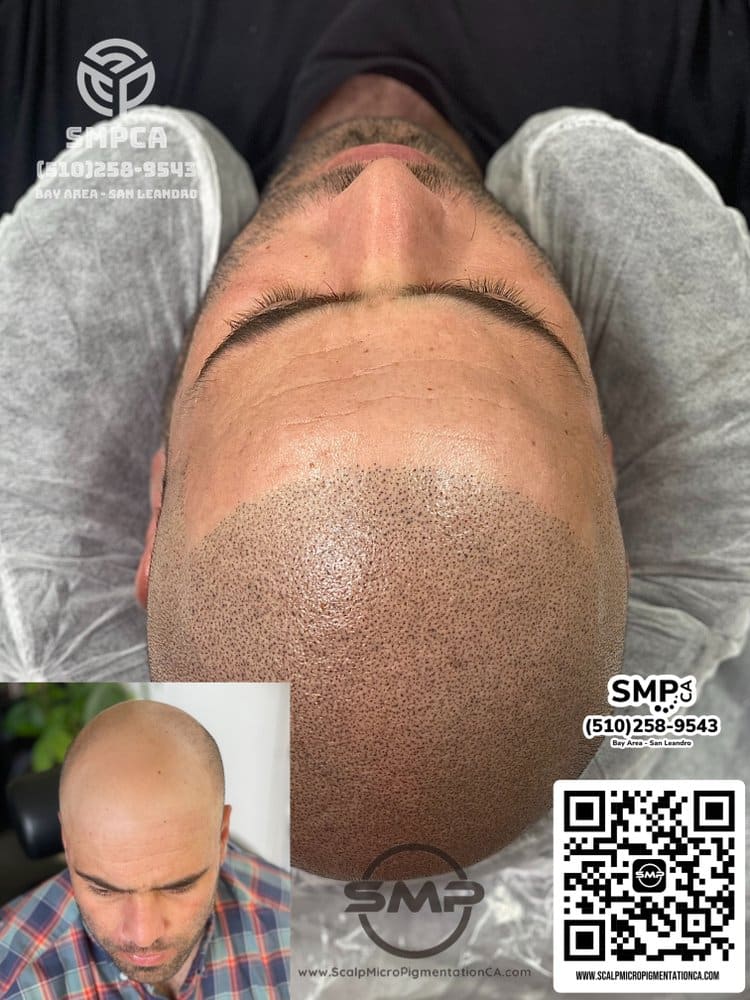
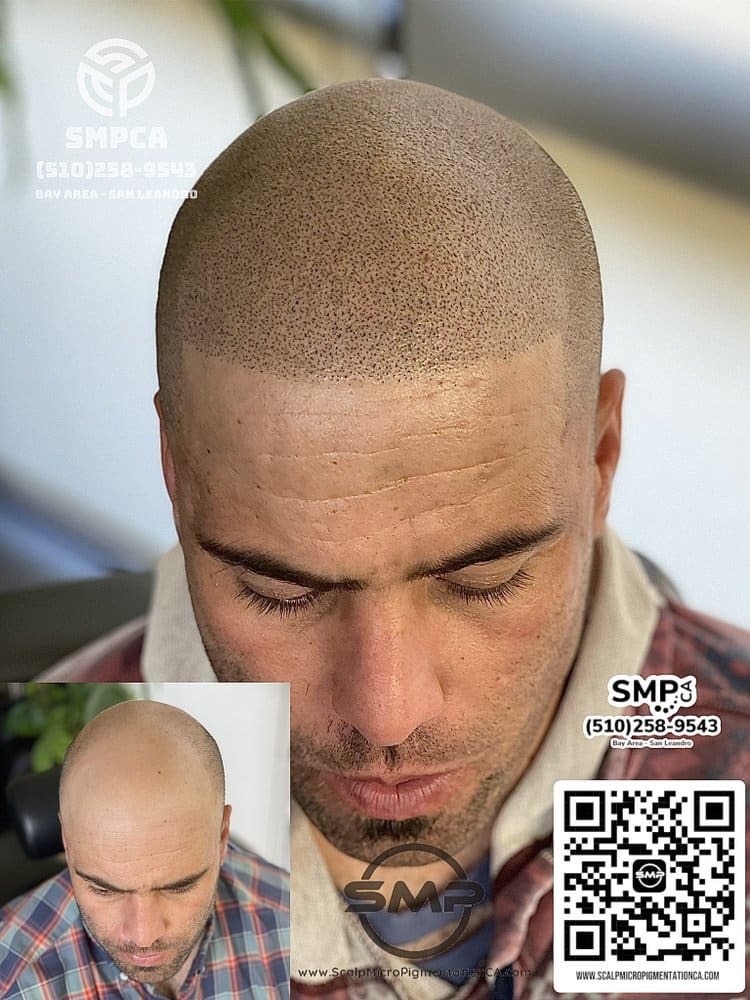
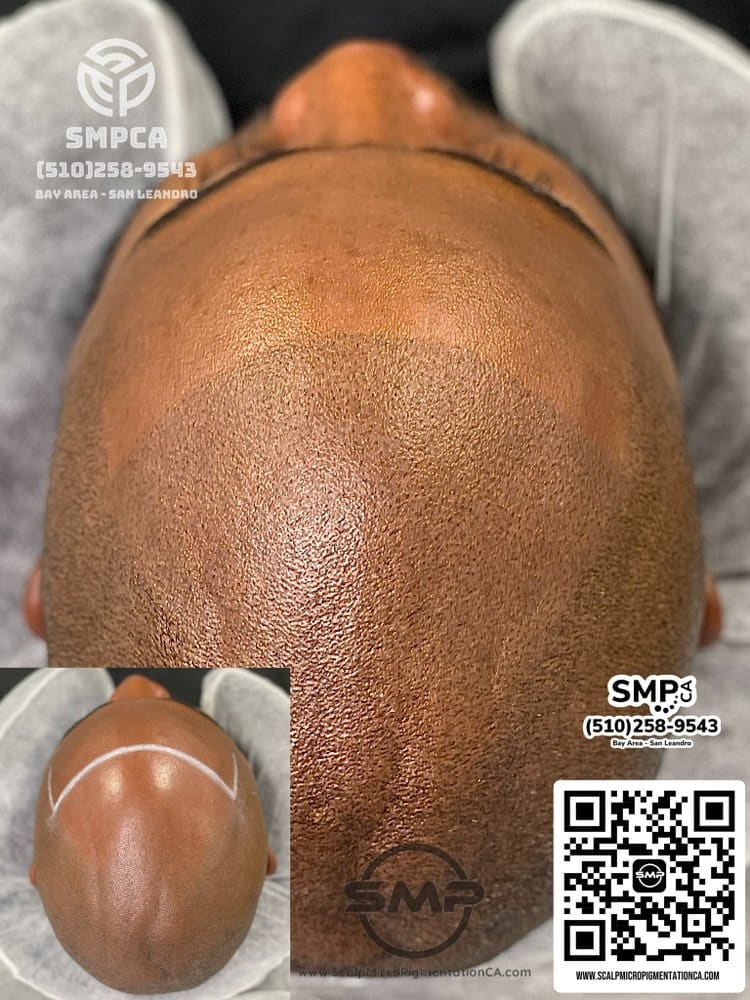
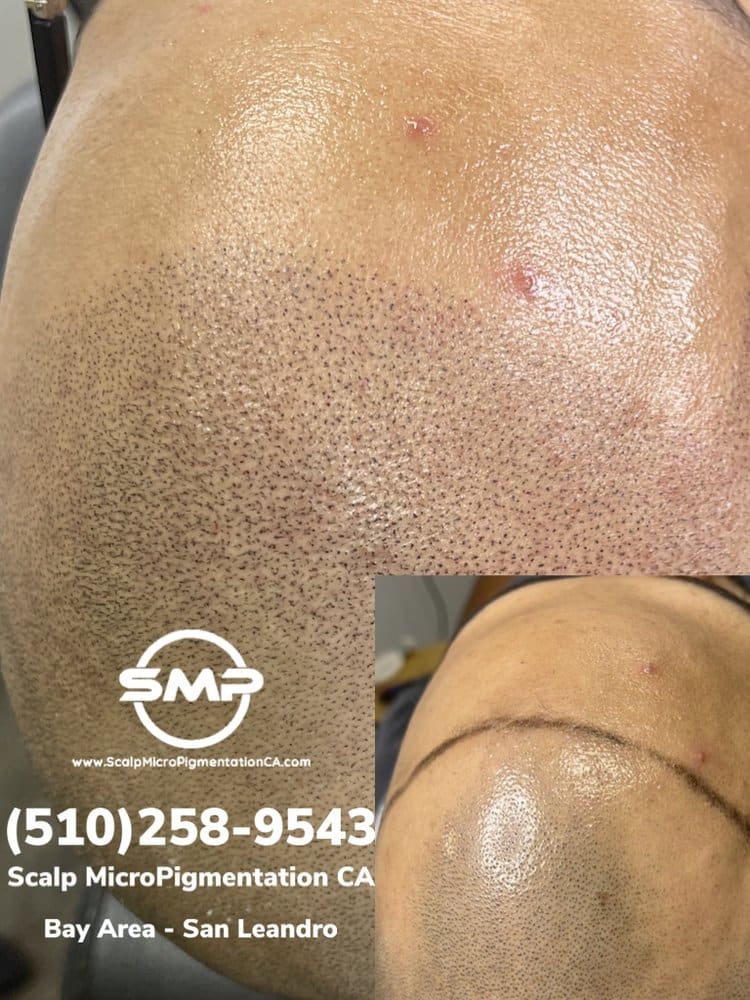
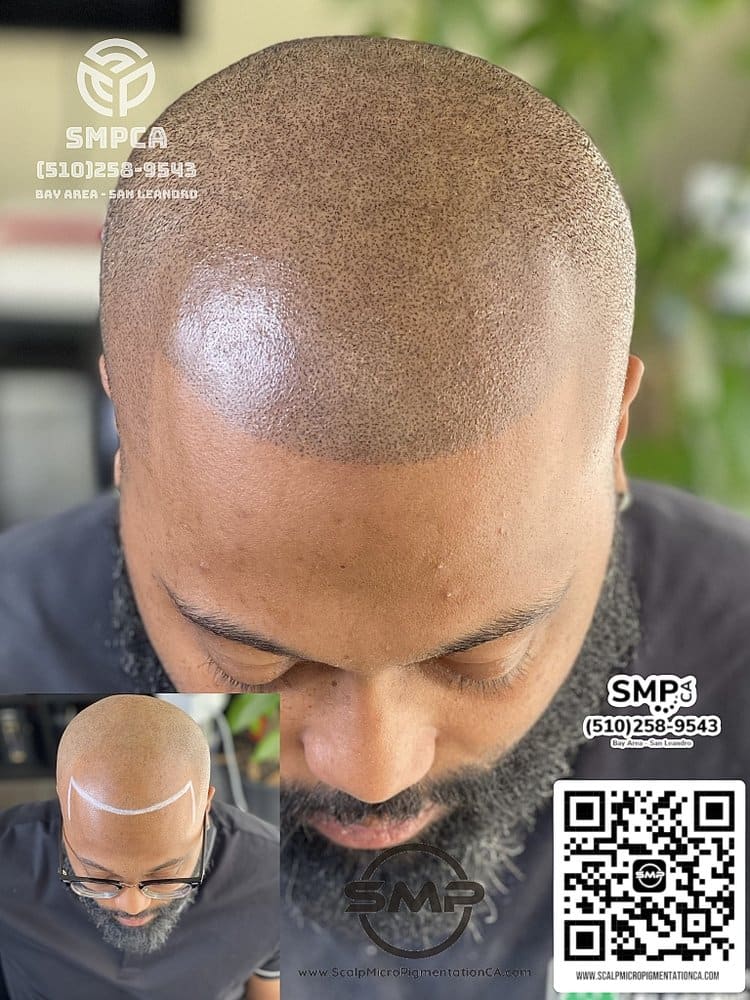
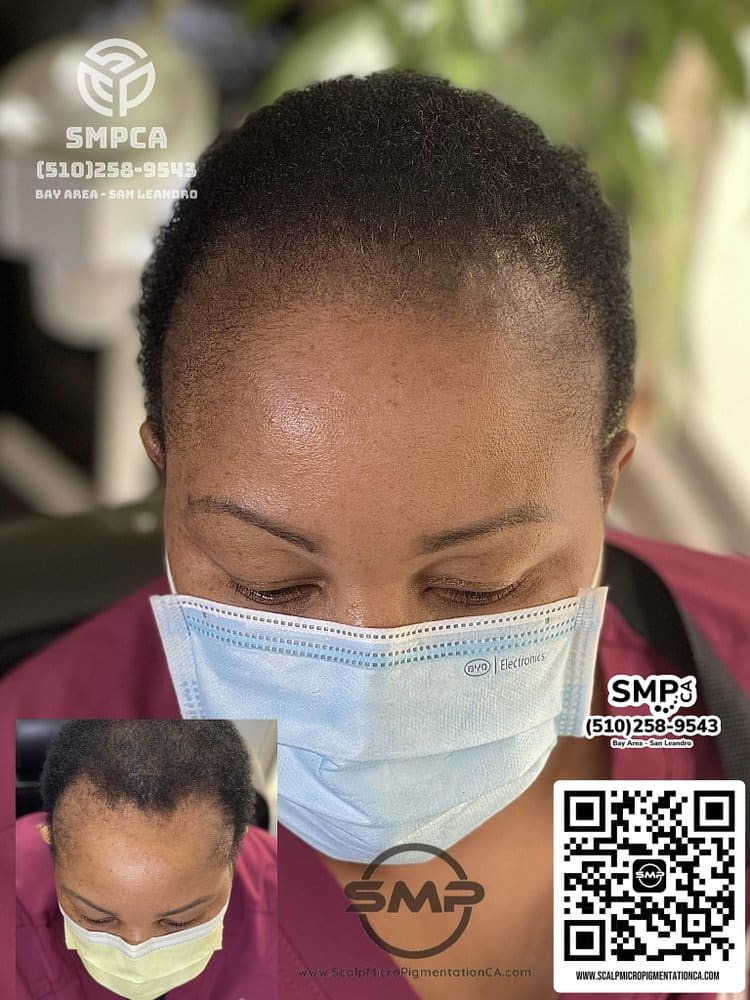
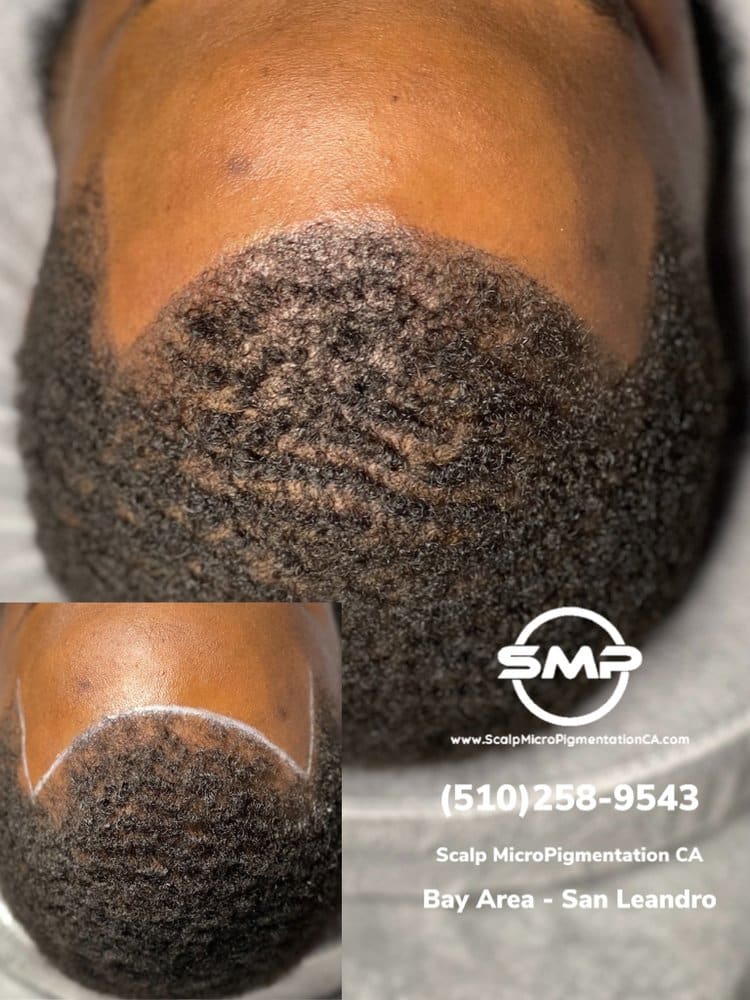
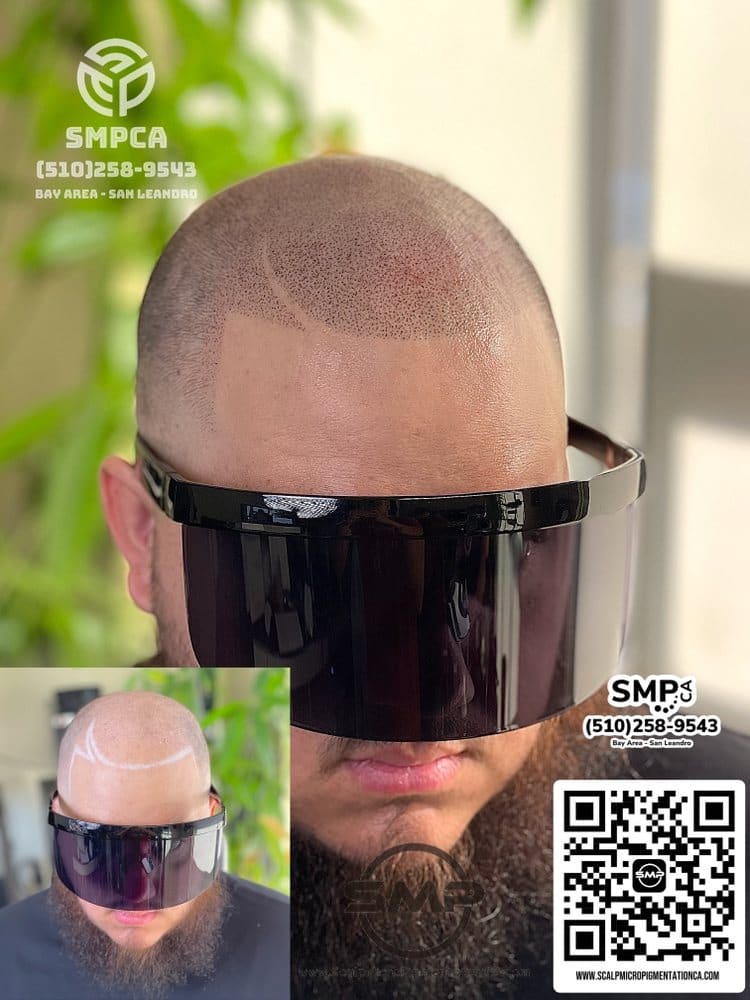
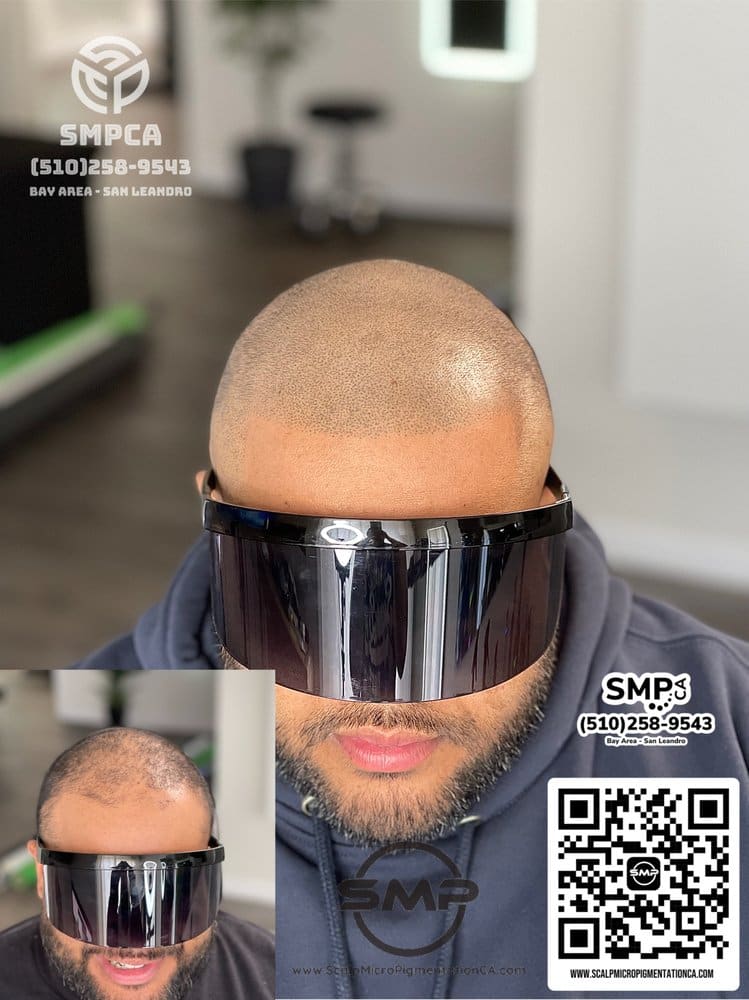
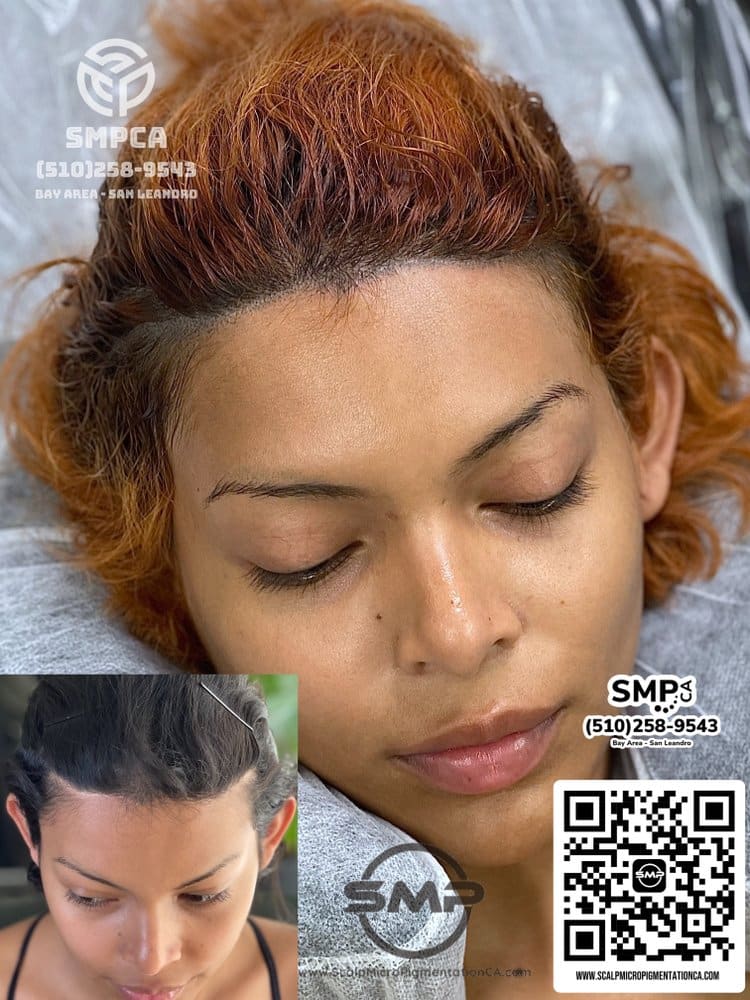
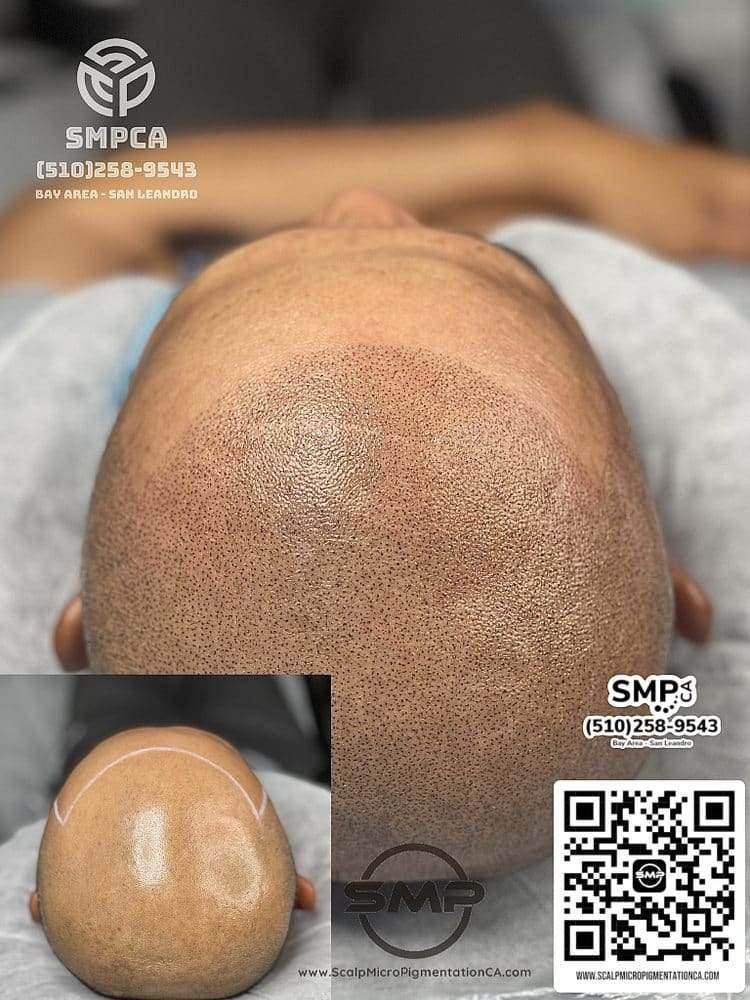
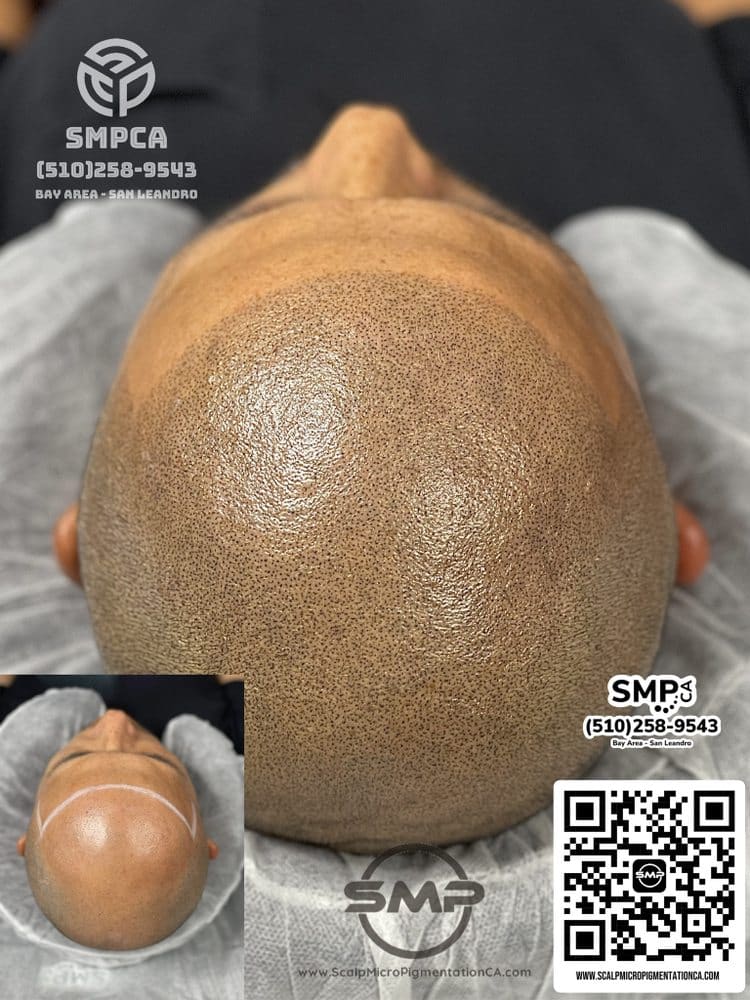
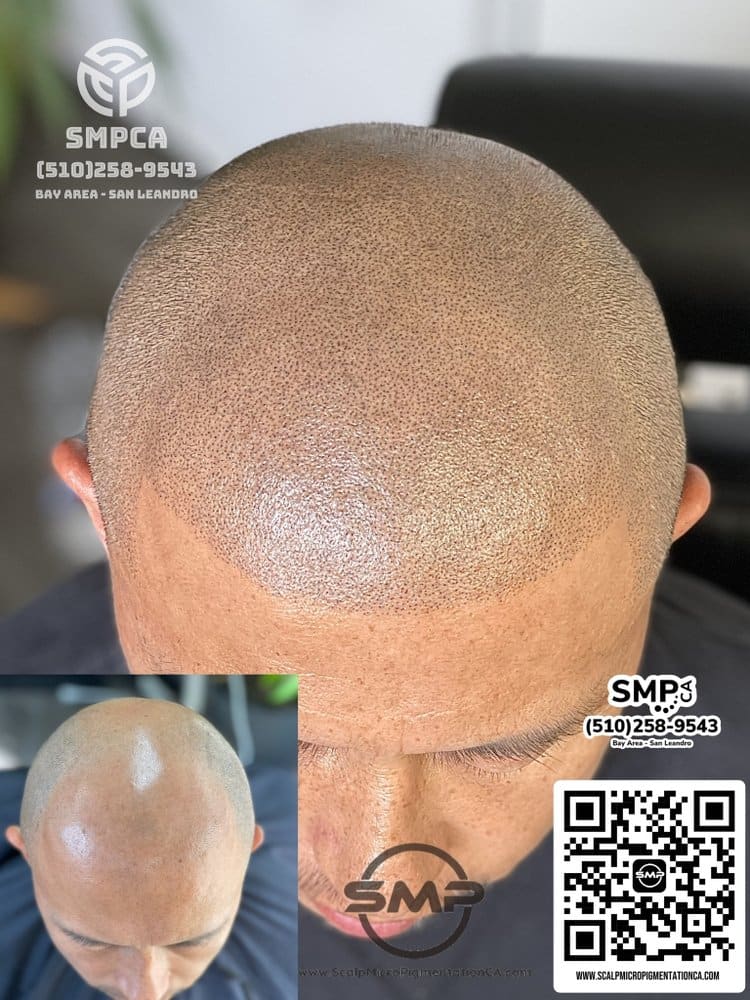
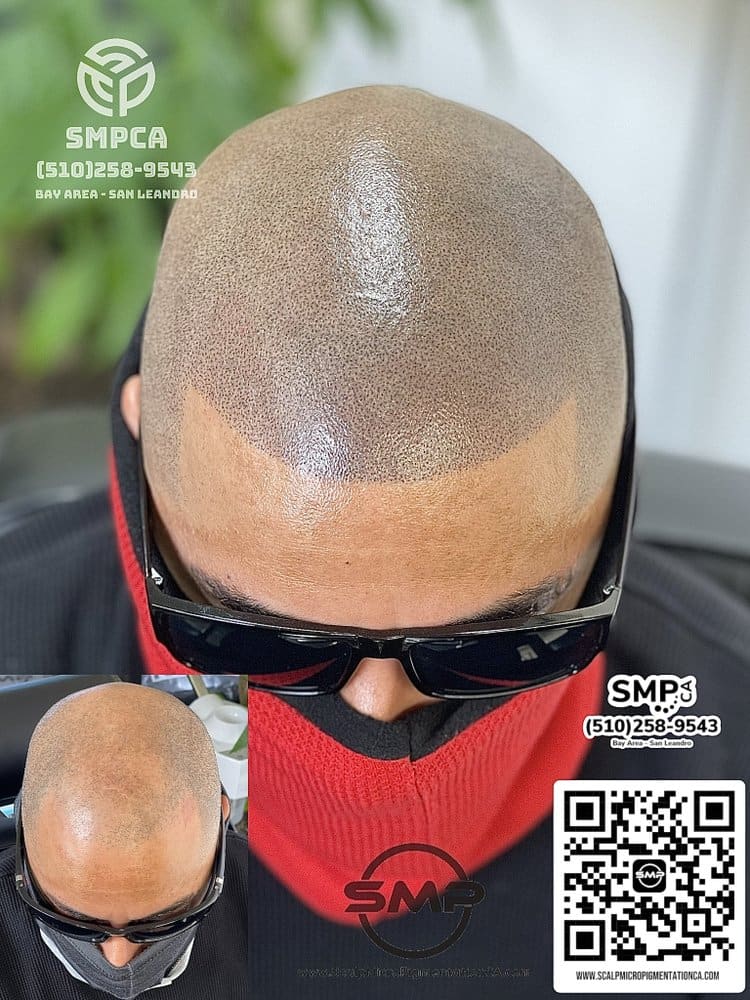
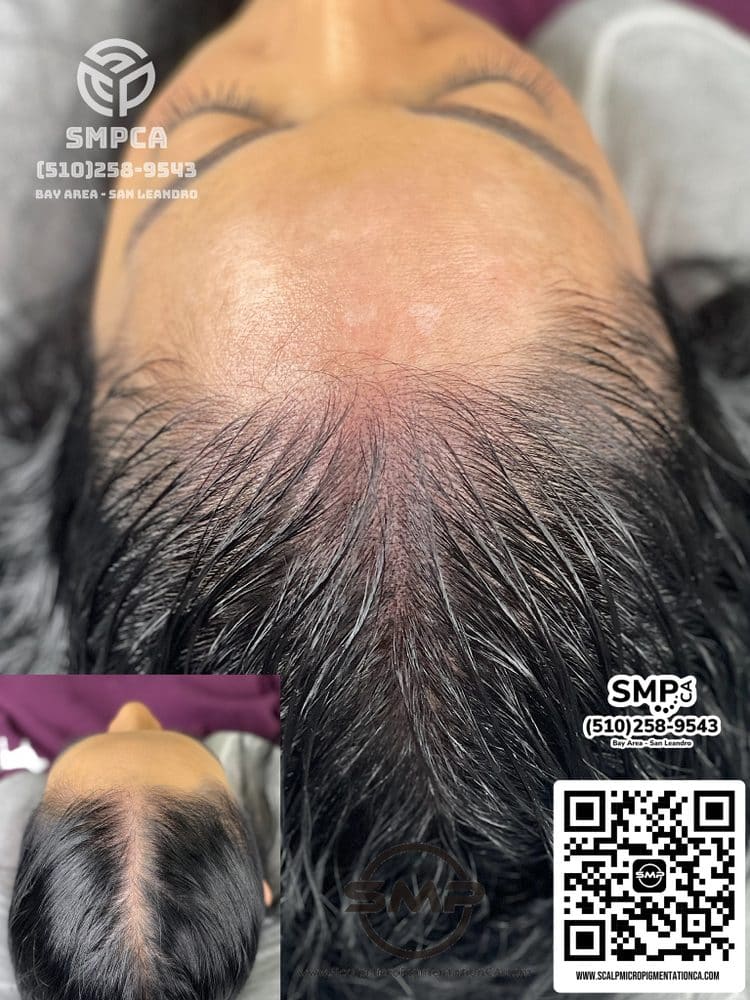
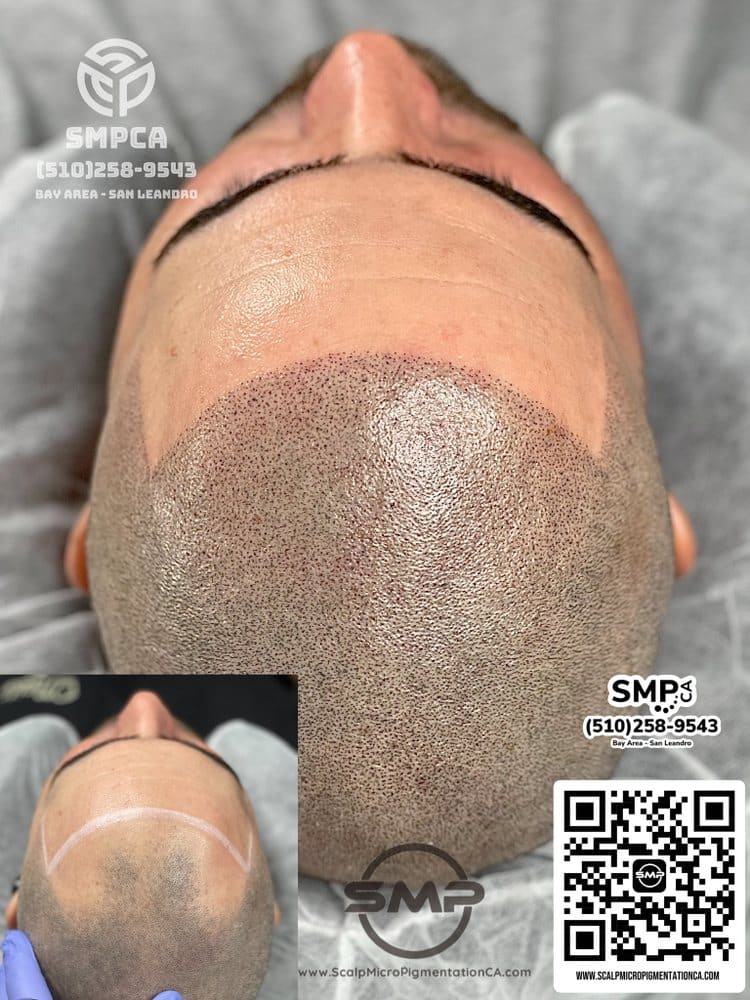
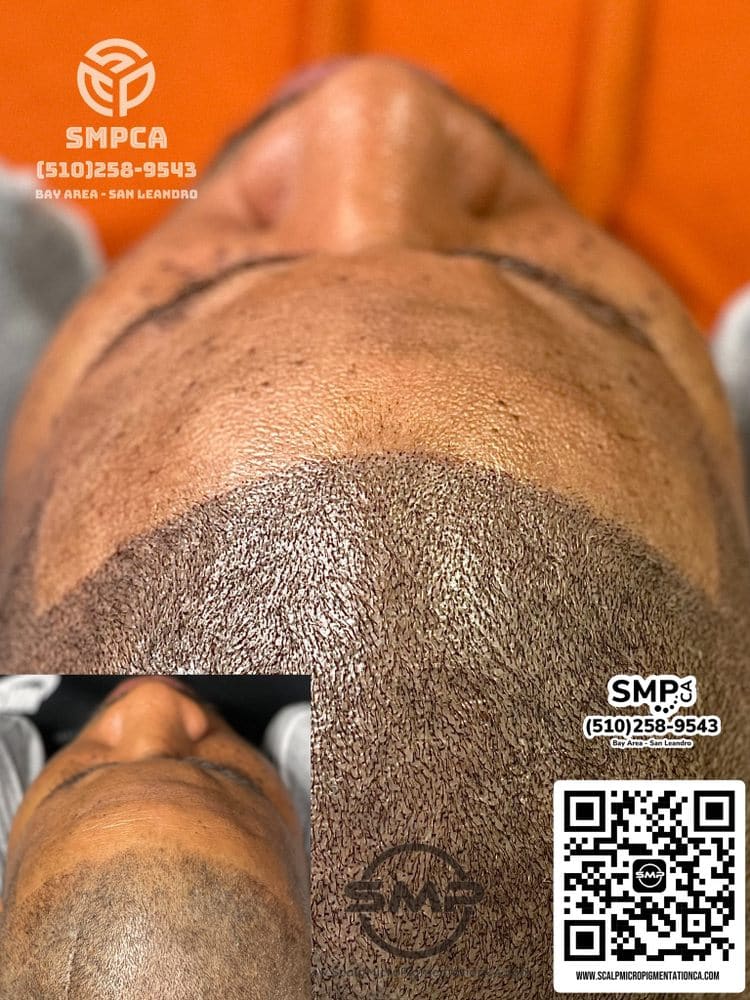
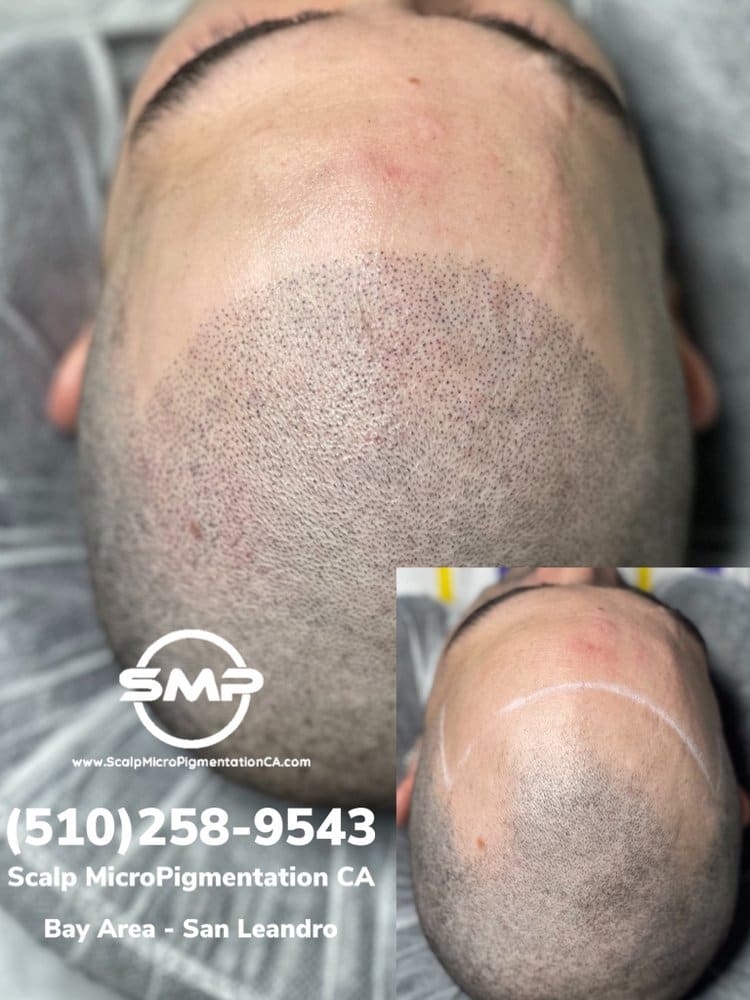
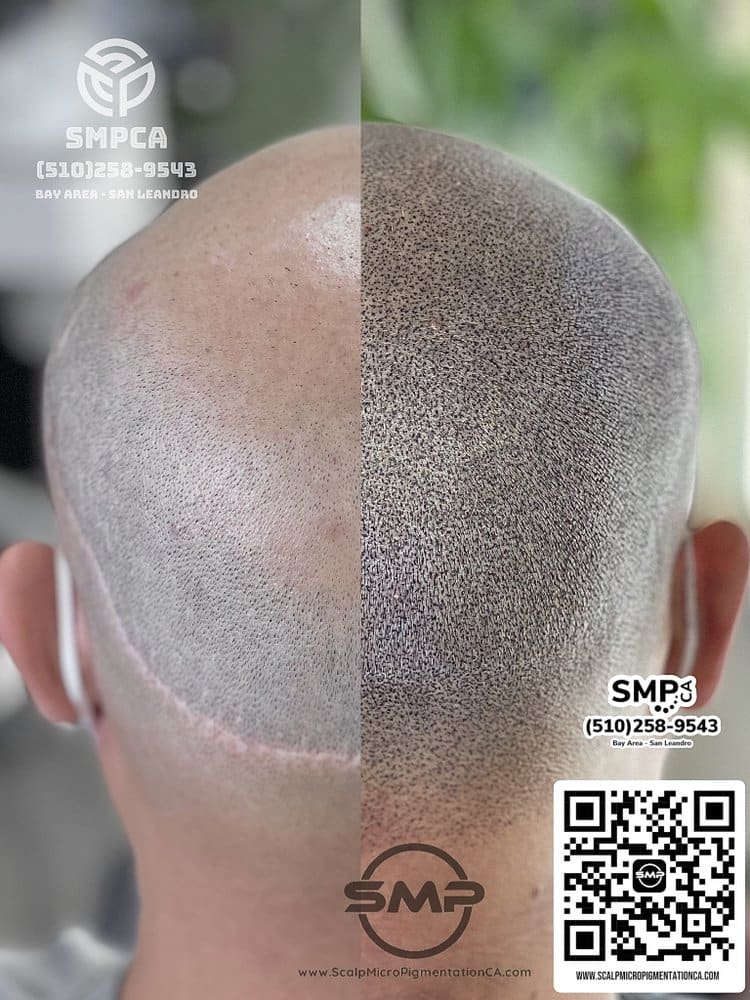
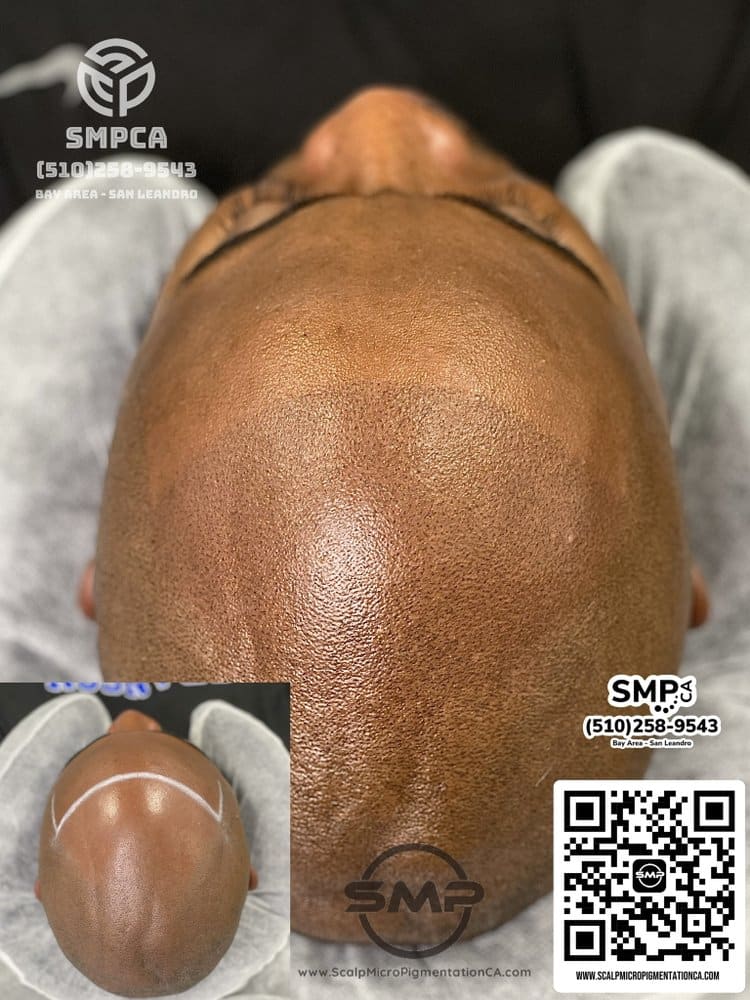
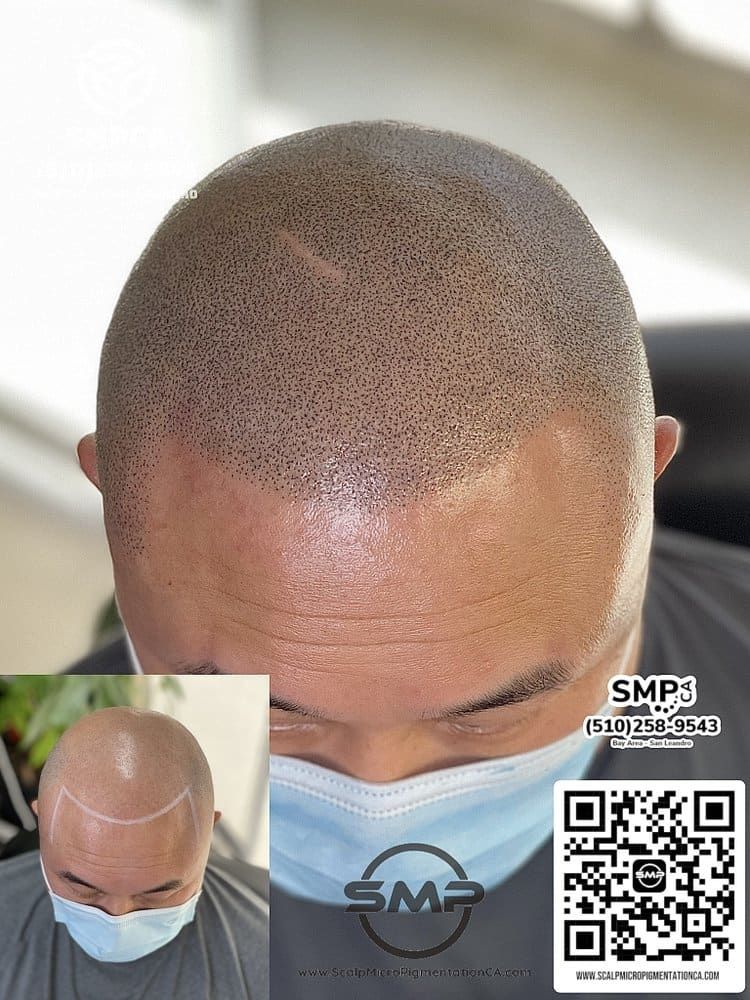
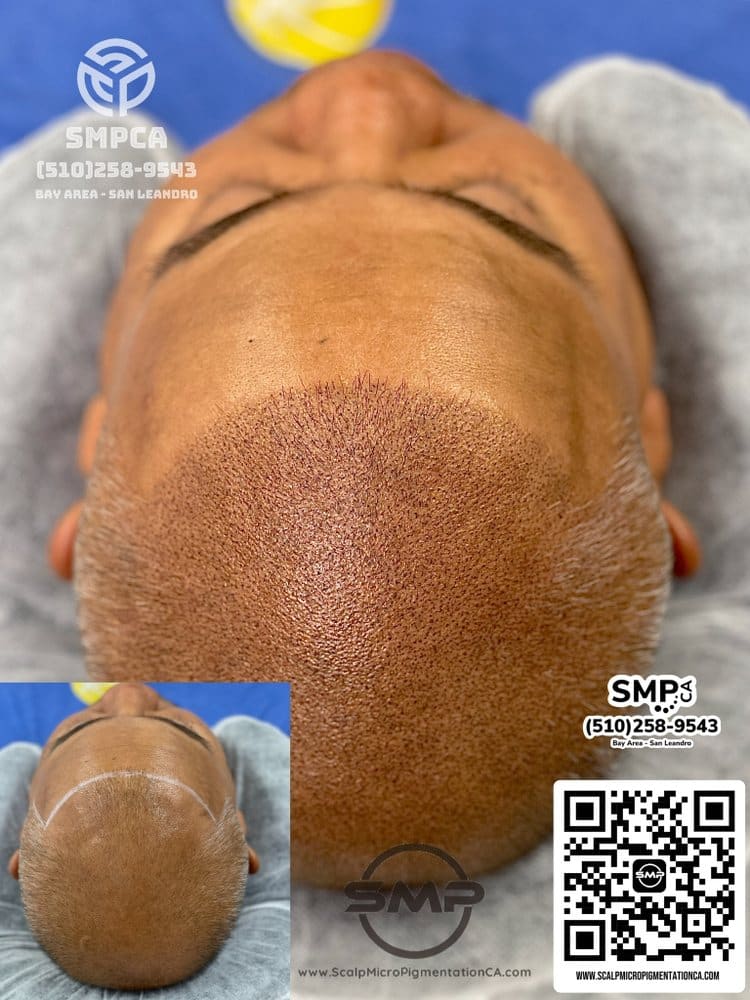
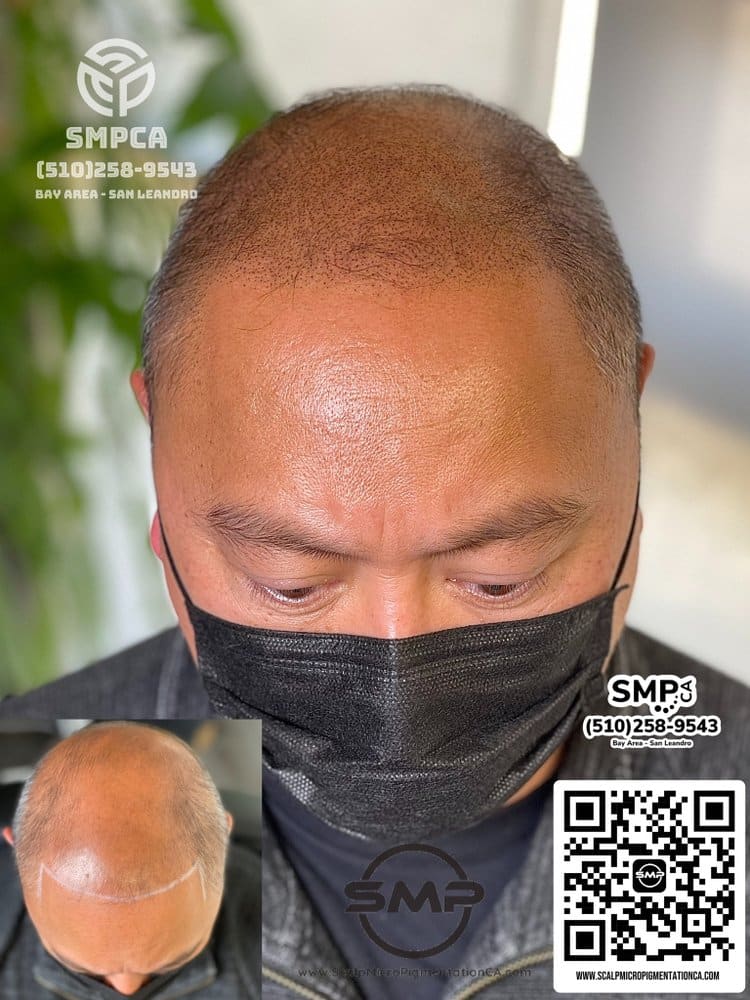
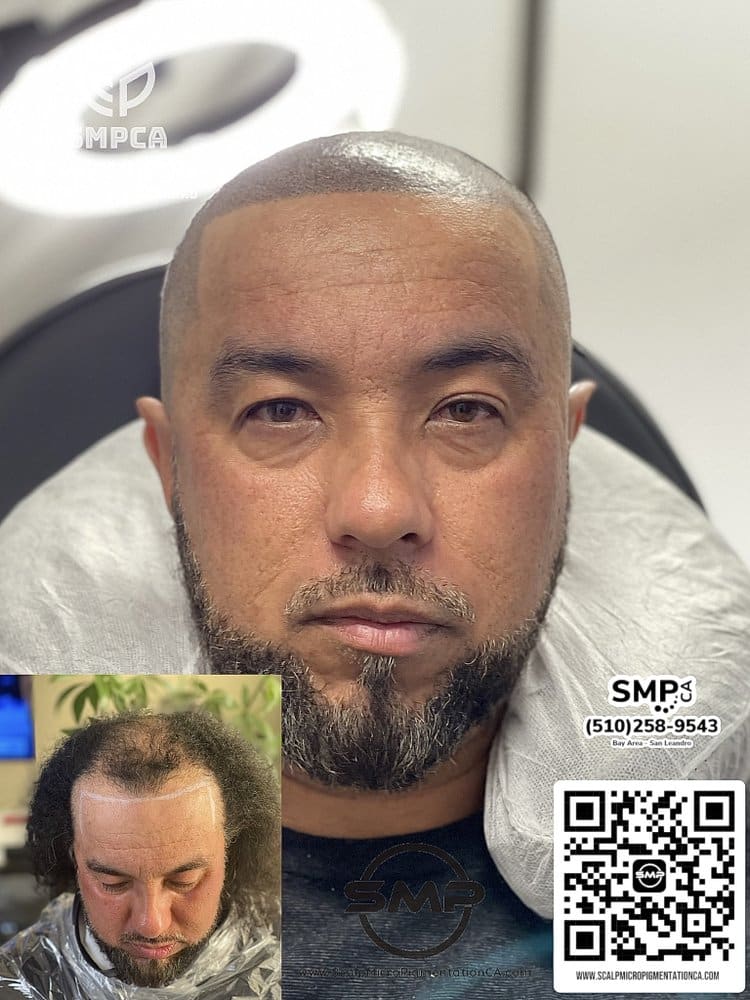
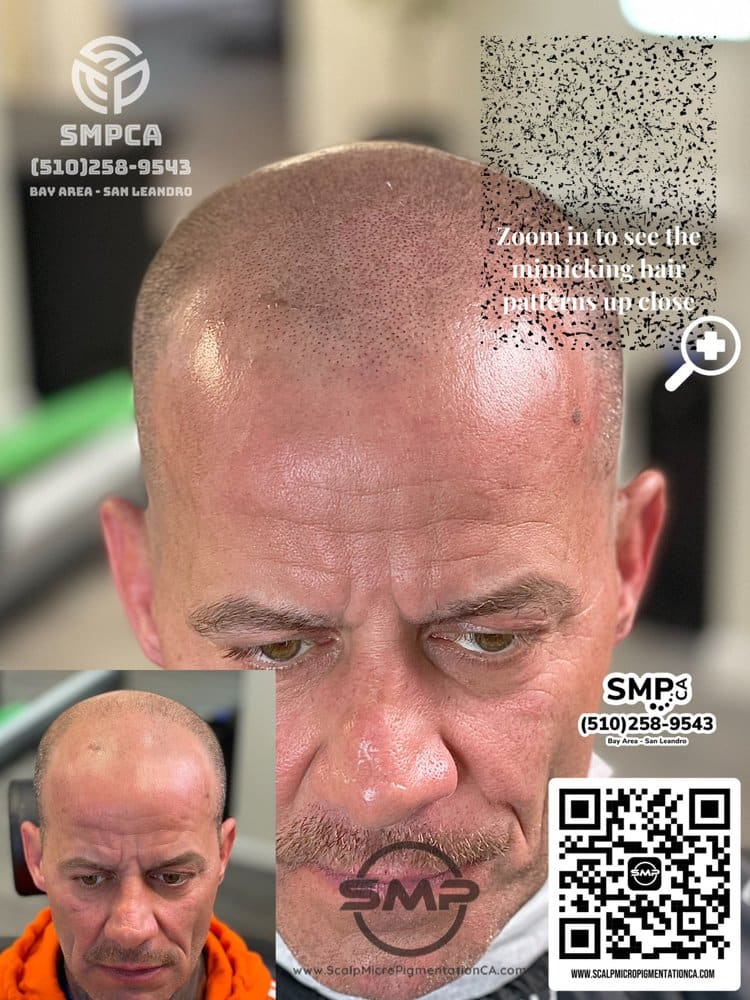
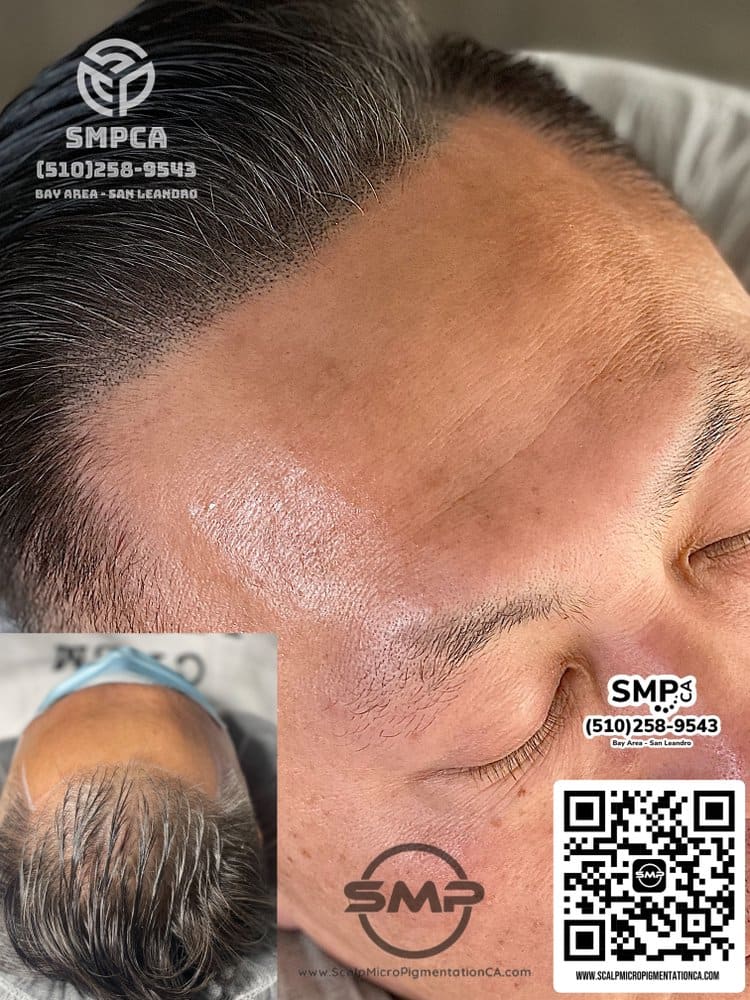
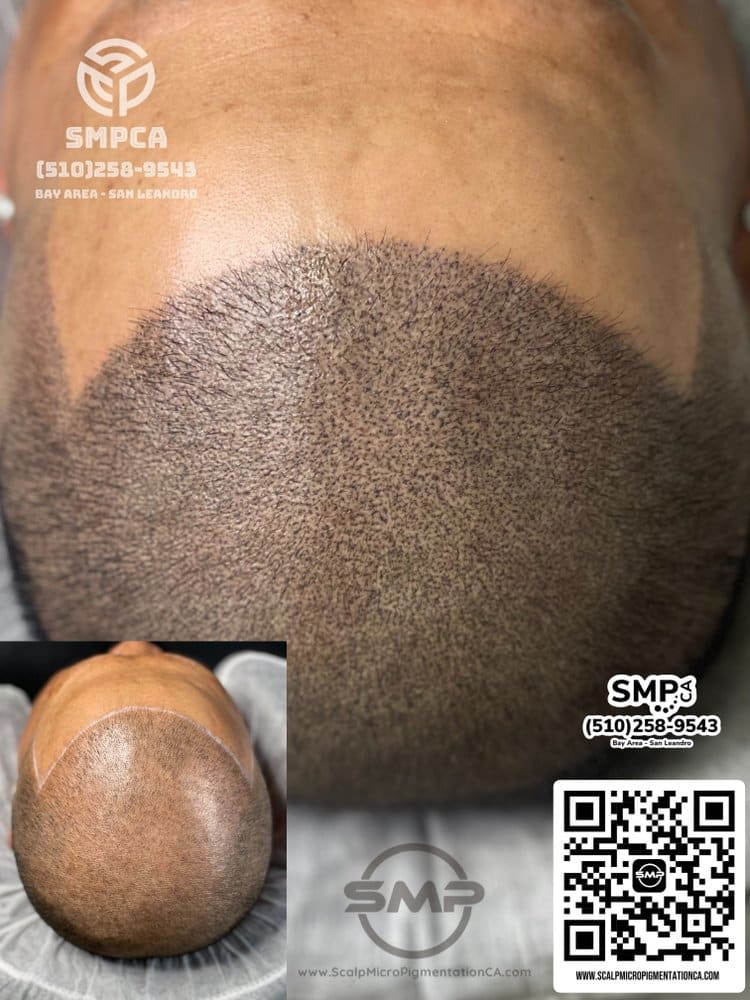
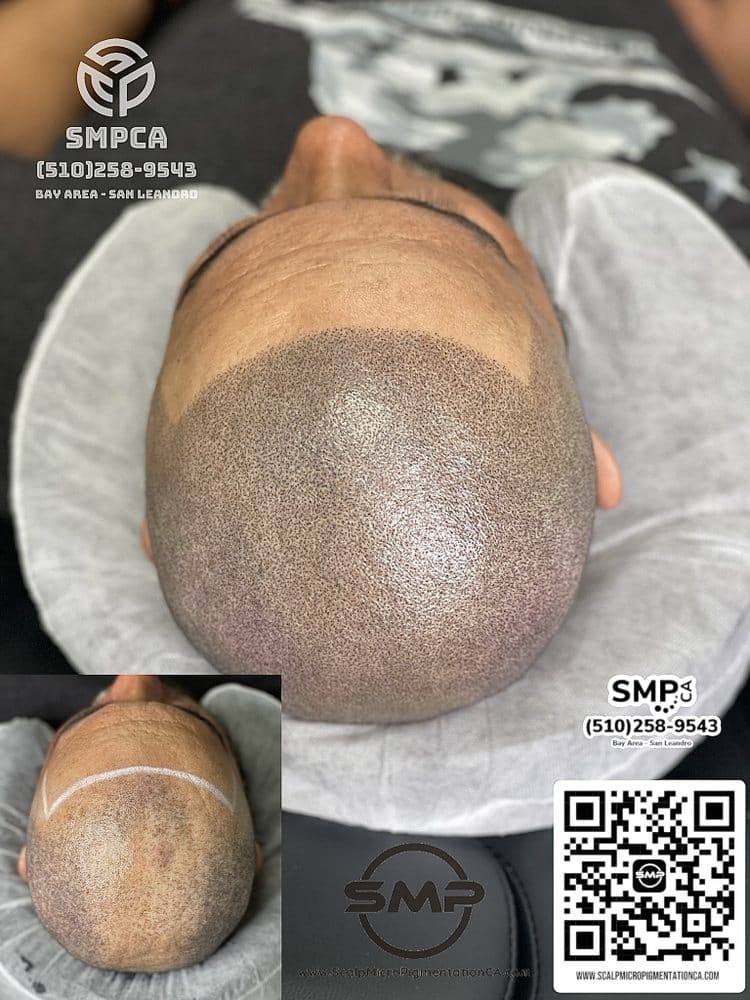
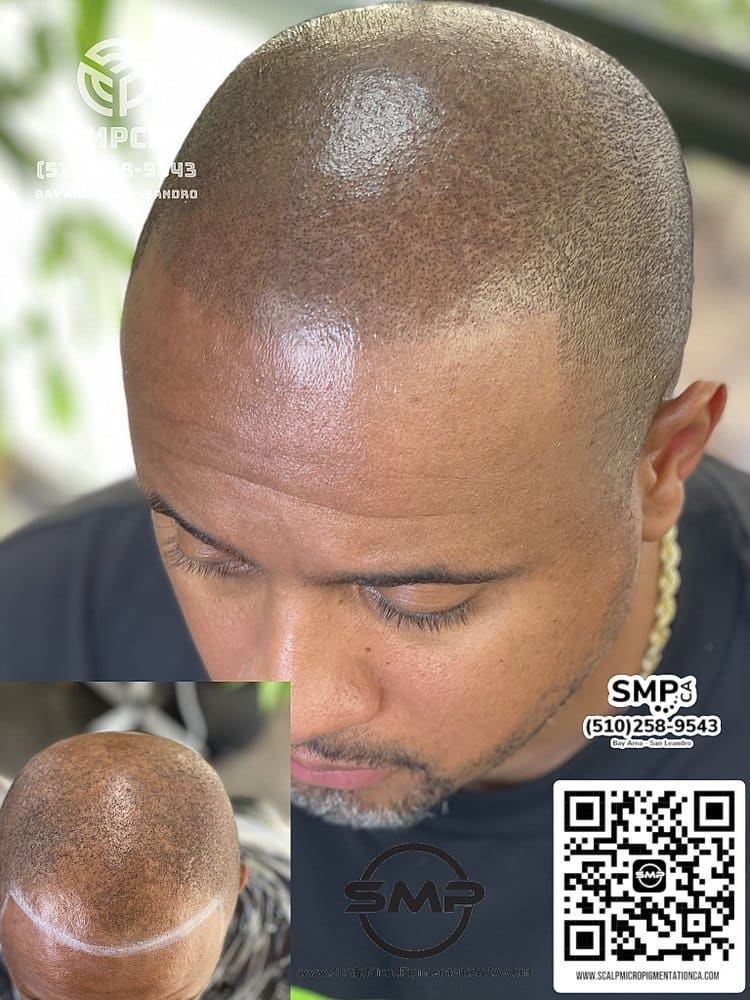
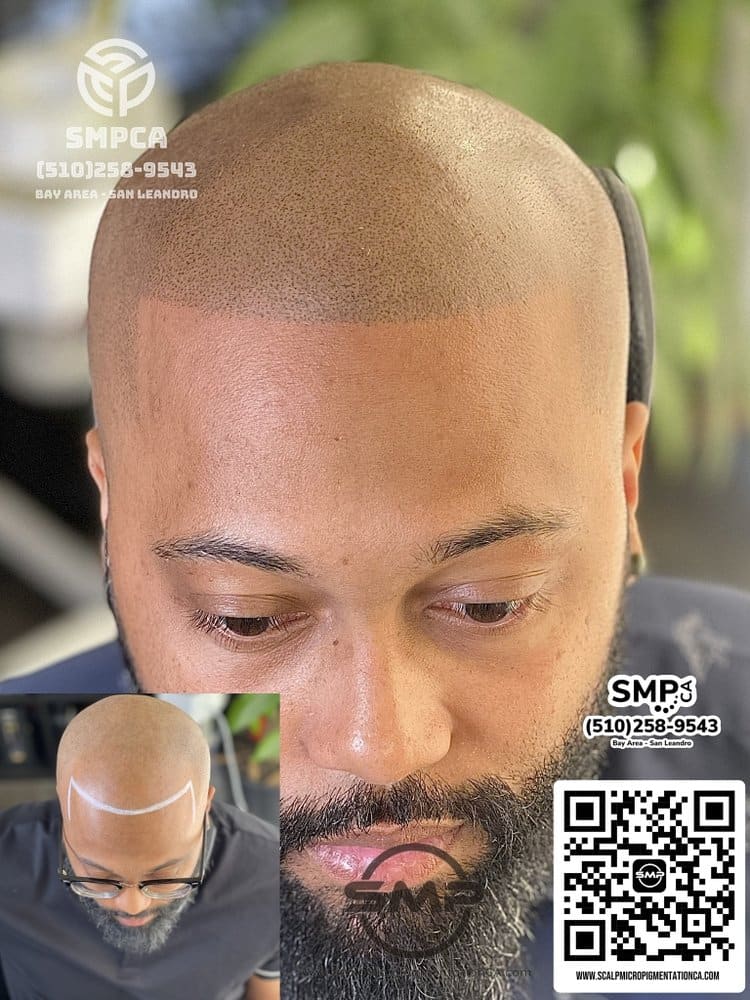
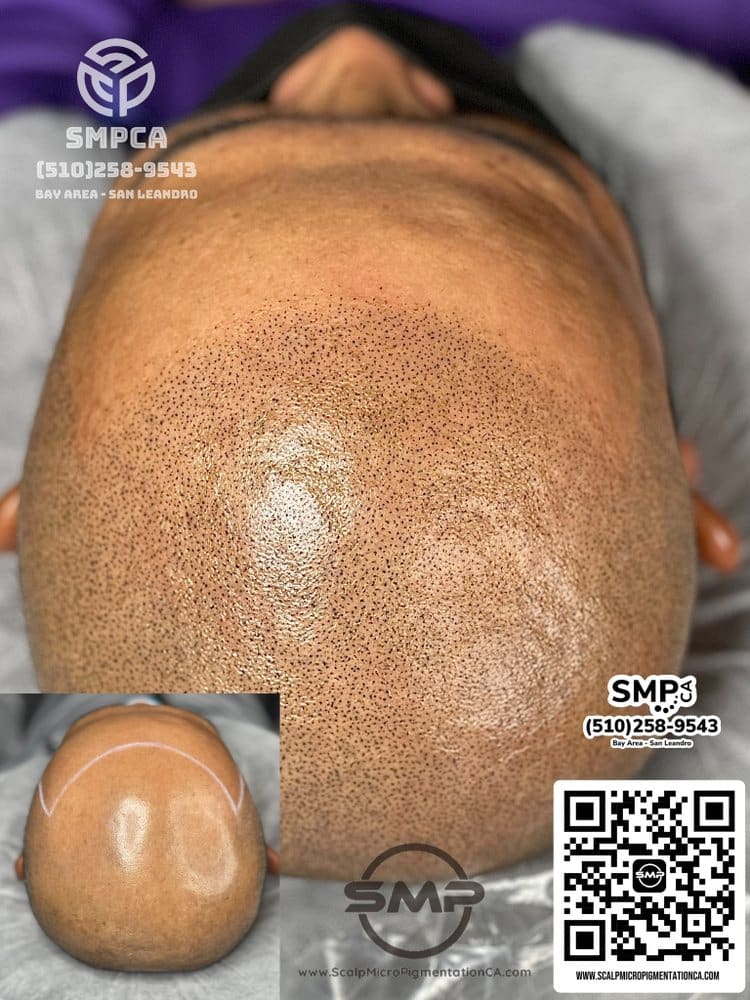
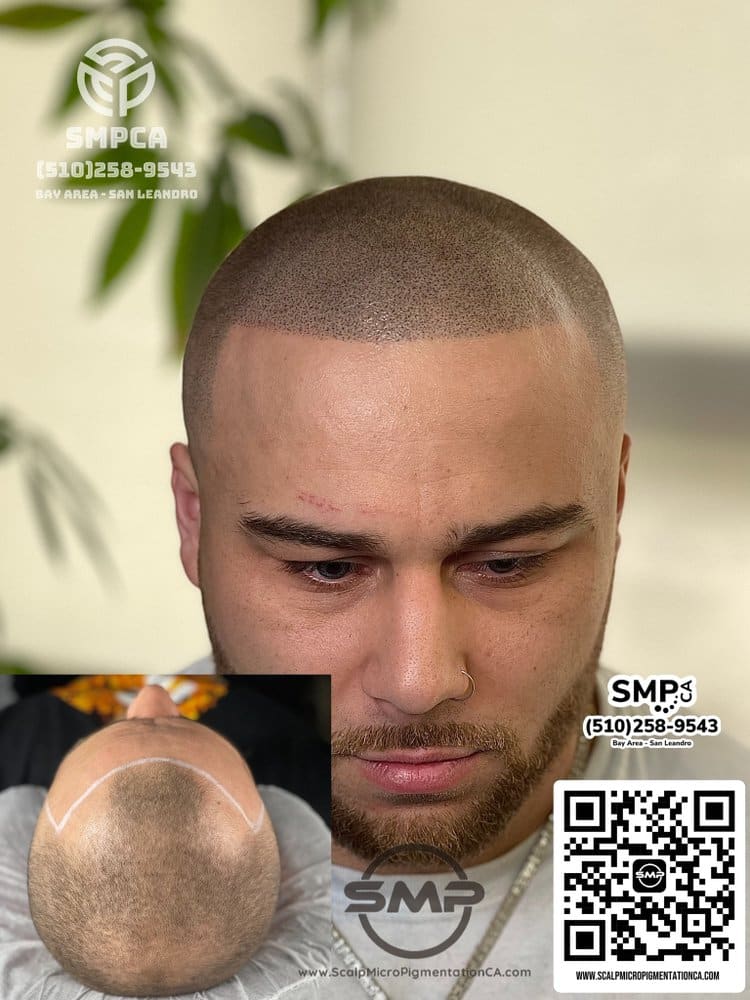
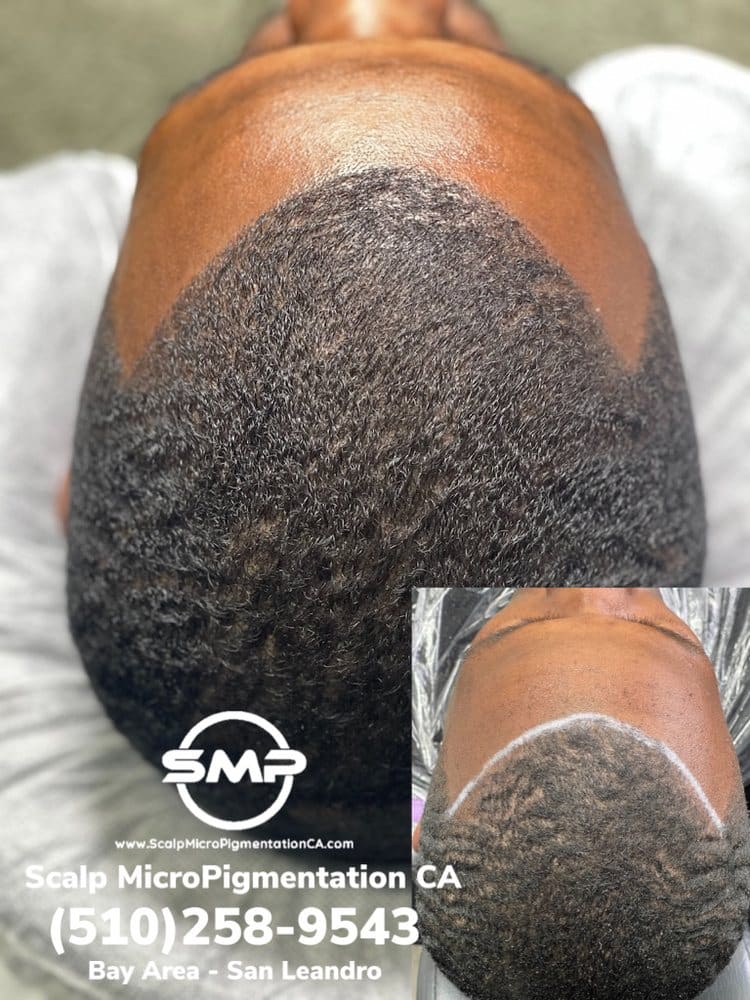
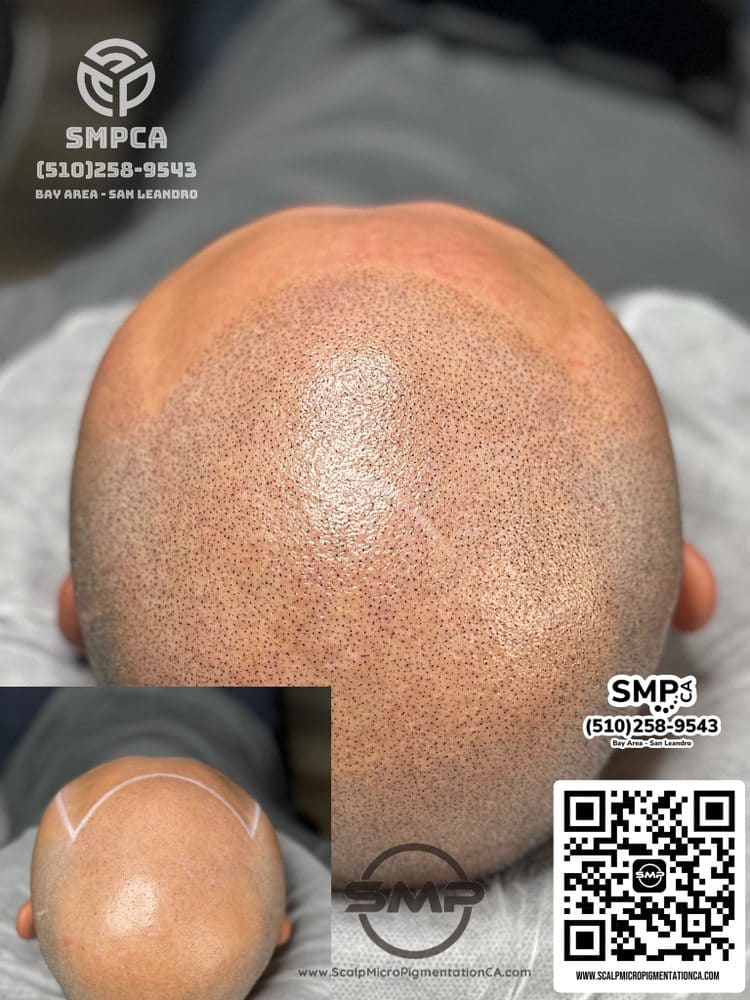
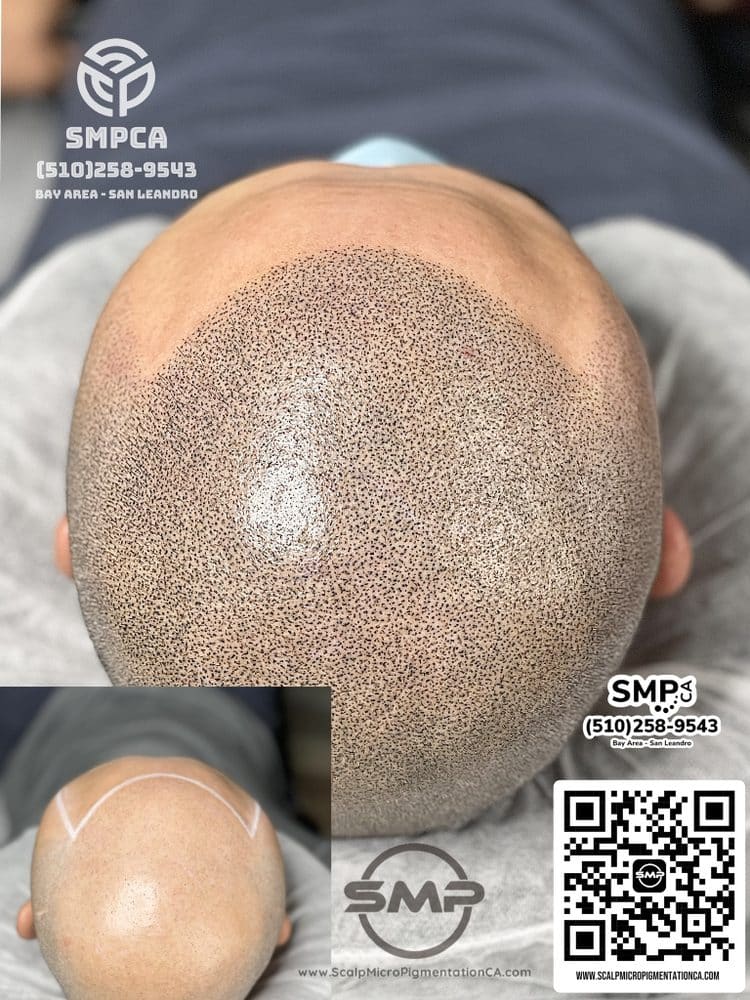
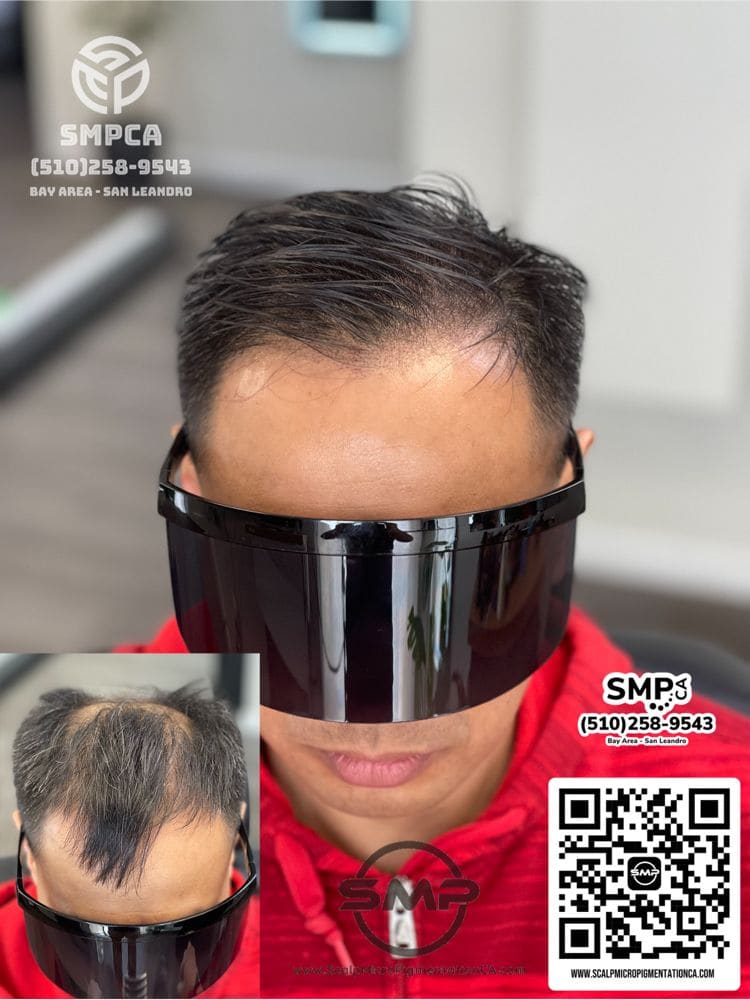
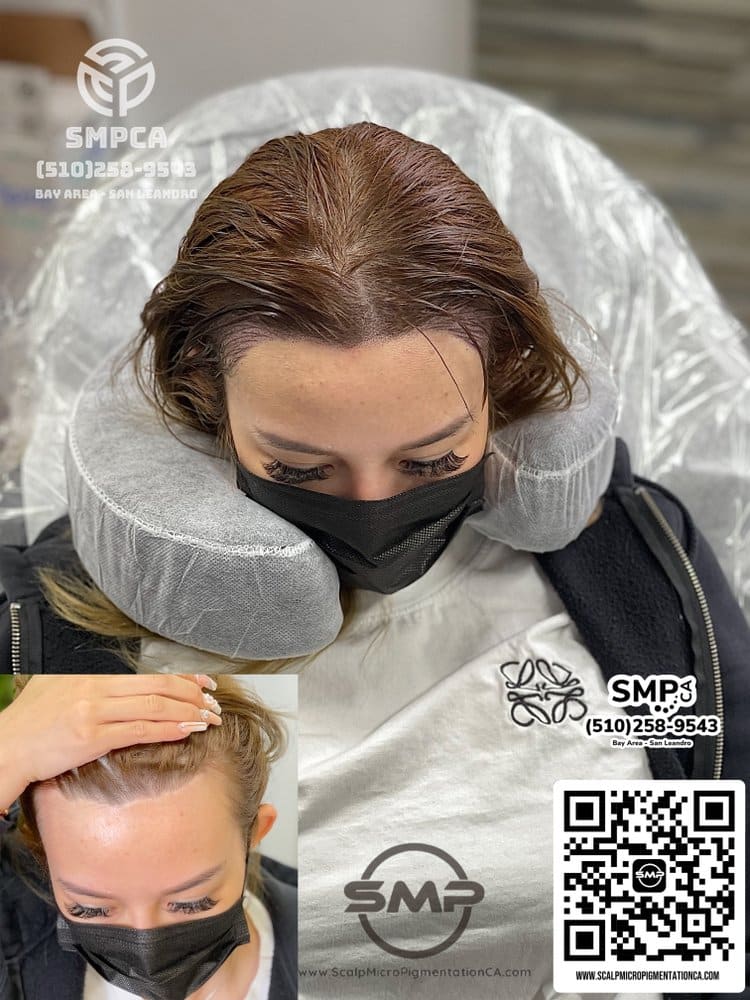
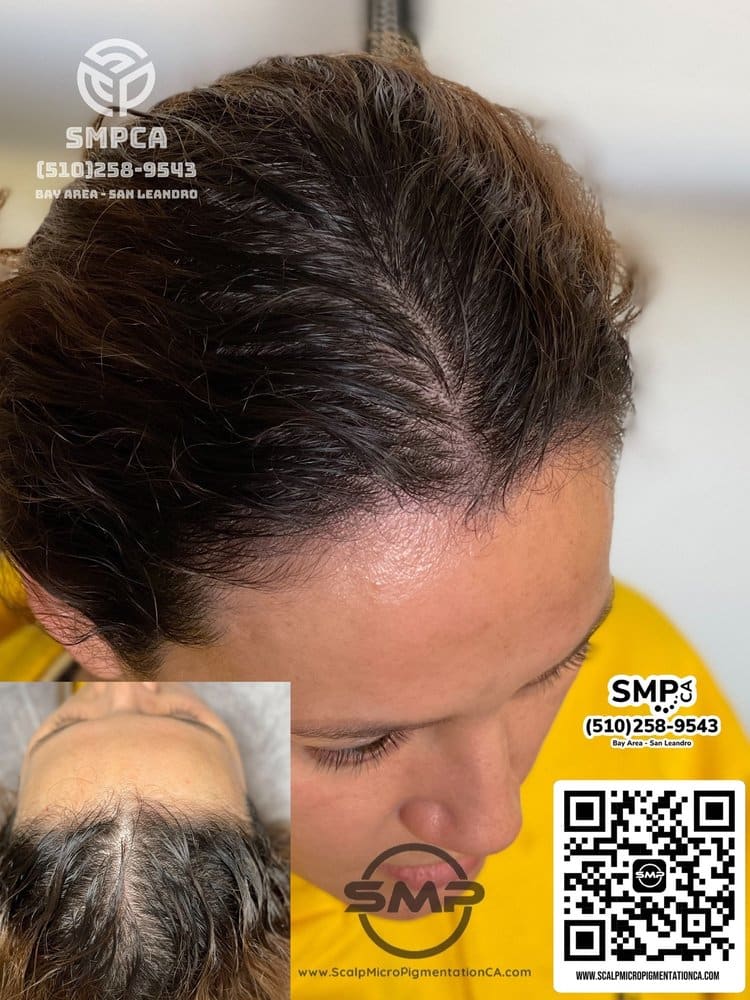
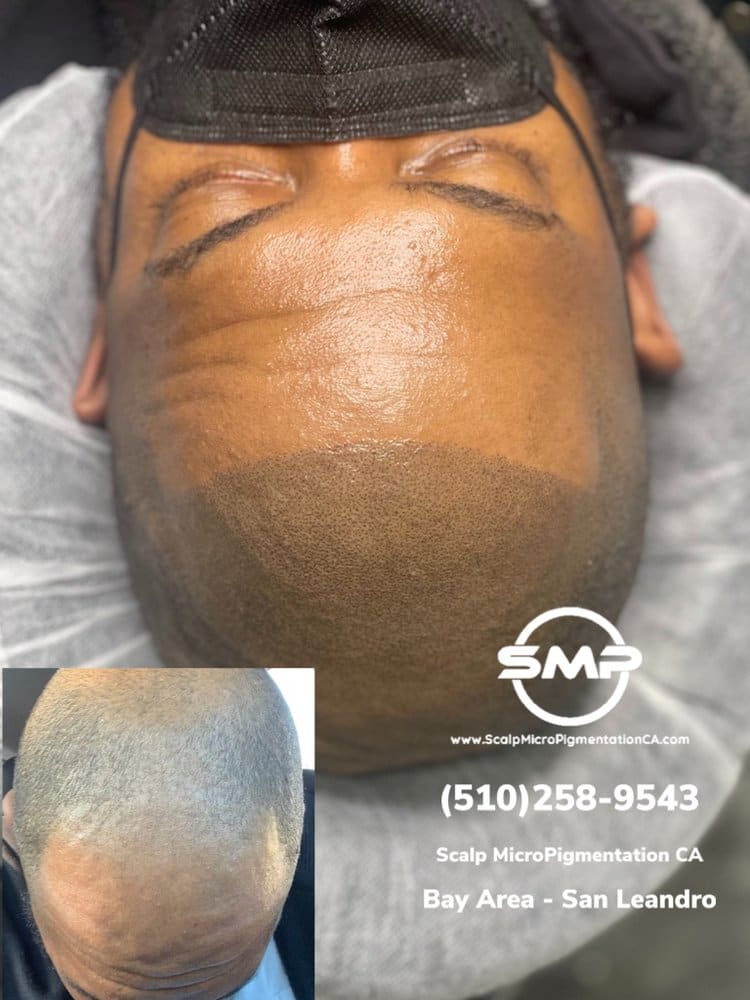
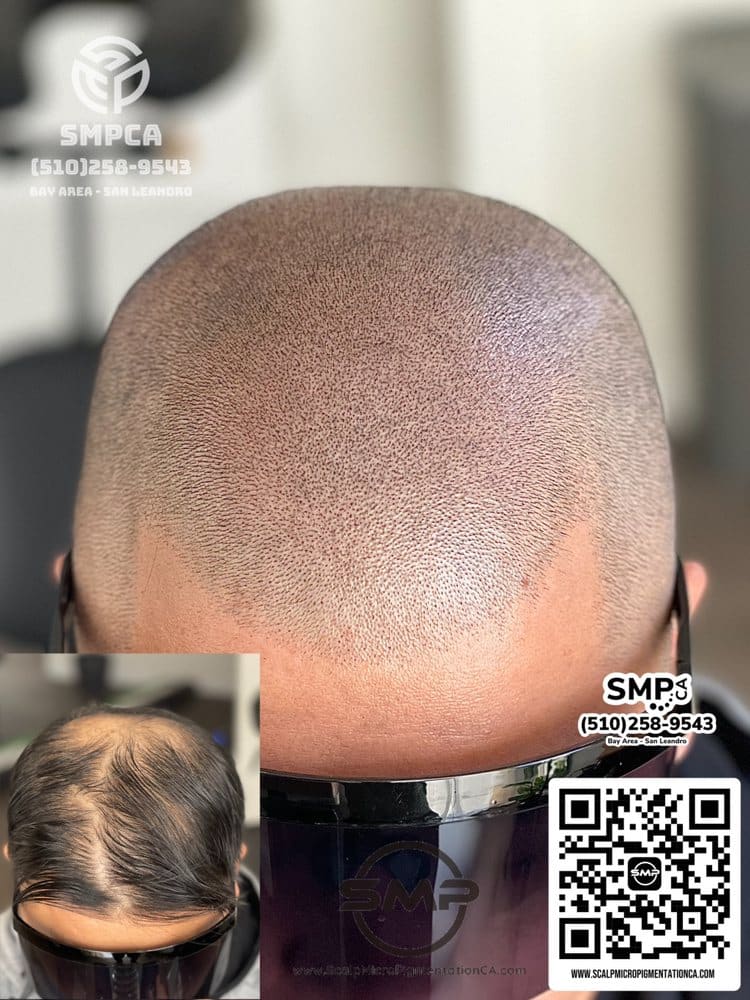
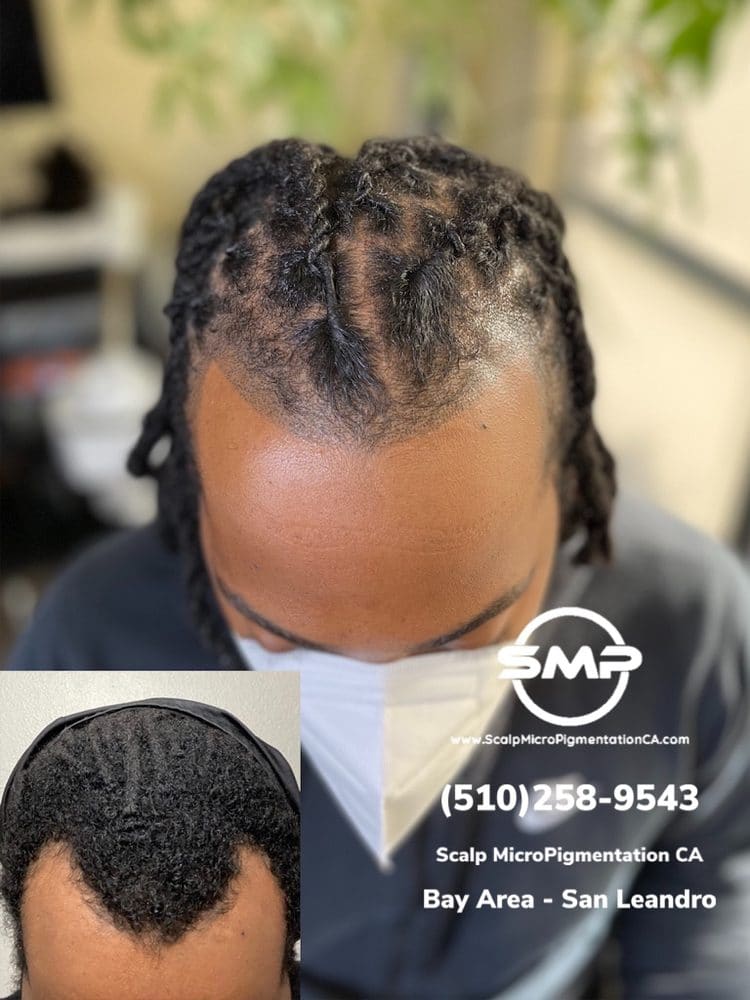
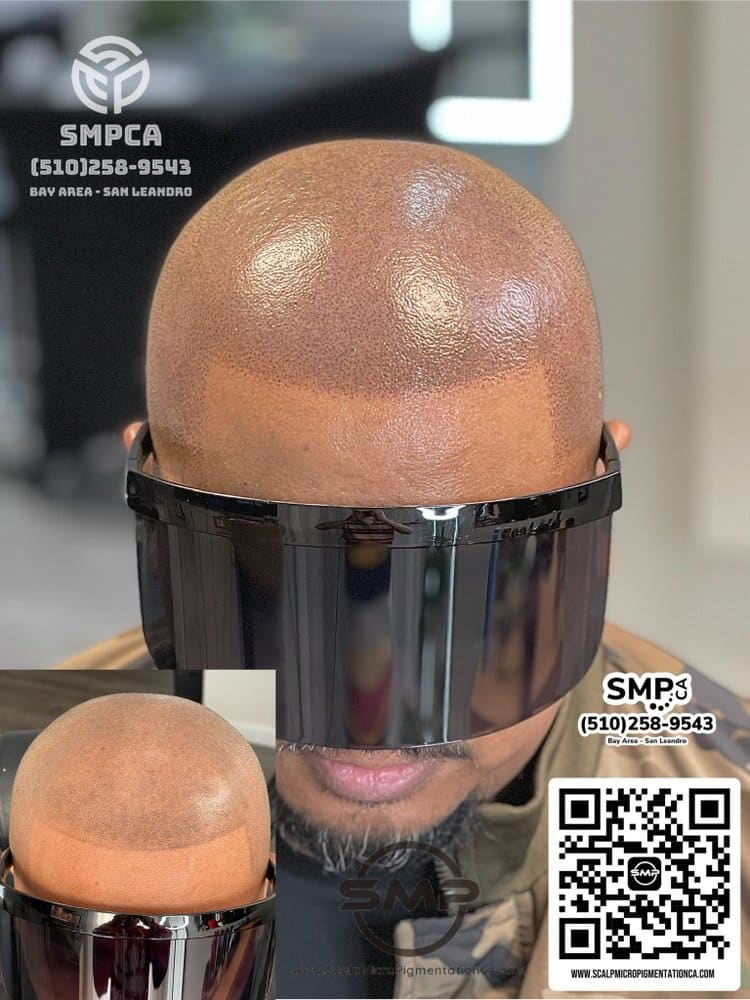
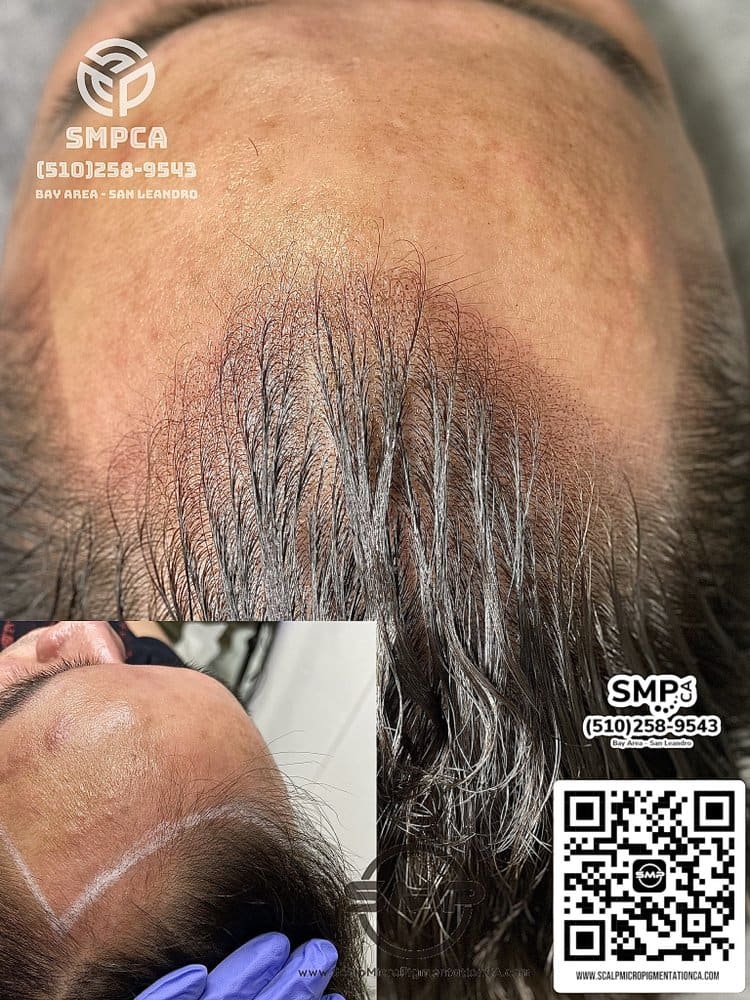
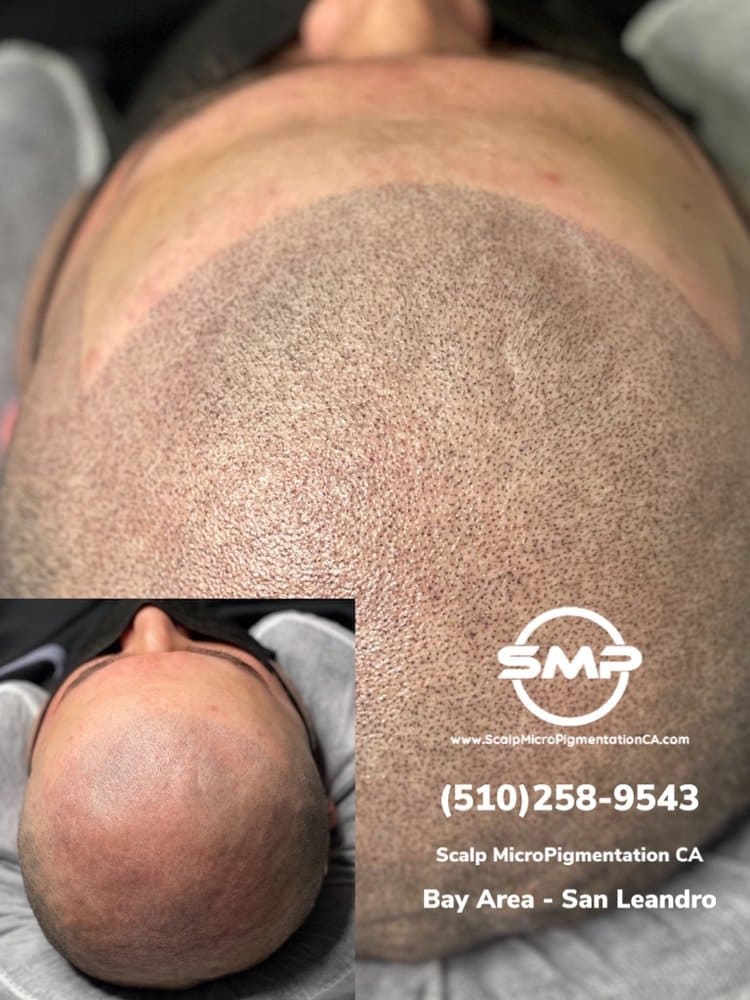
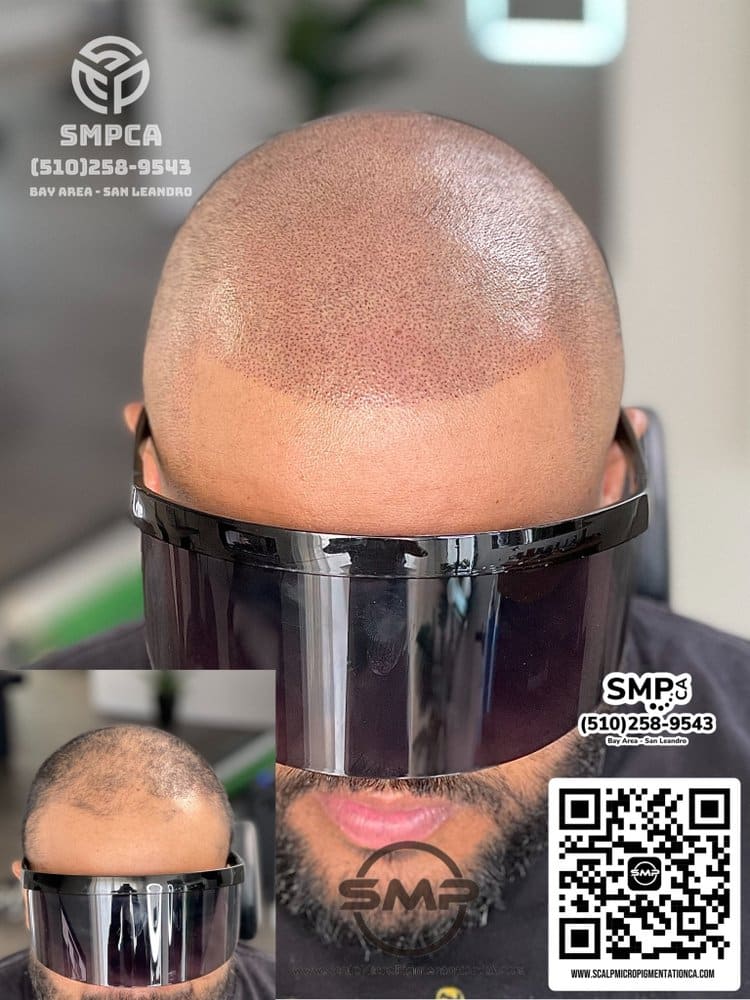
Every result you see is a real client — built dot by dot in San Lorenzo.
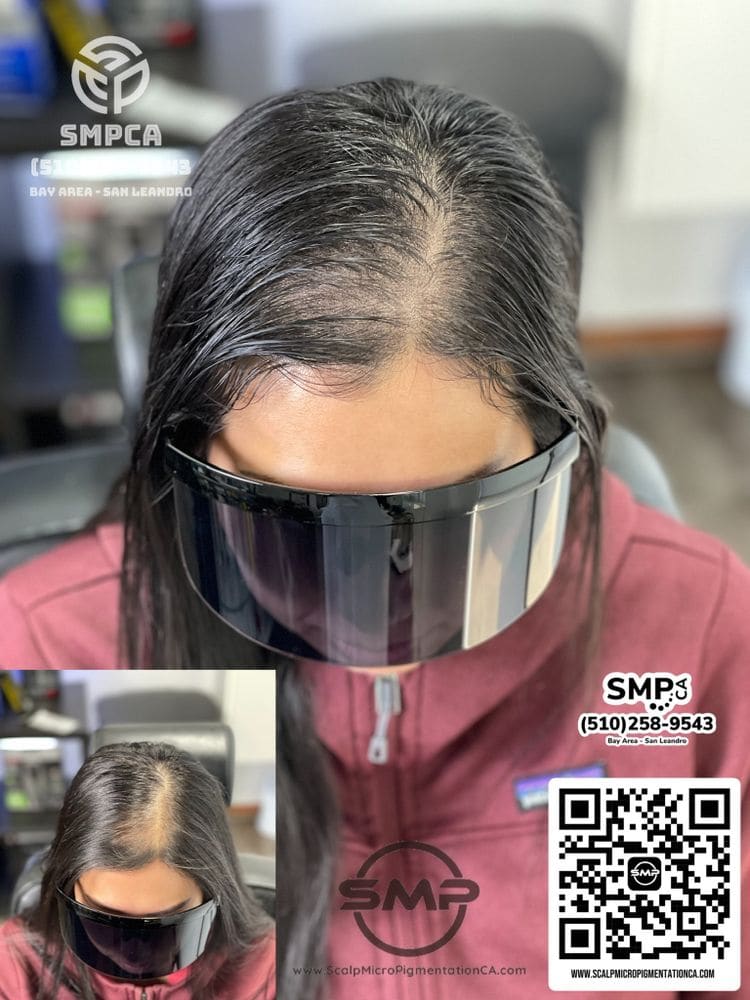
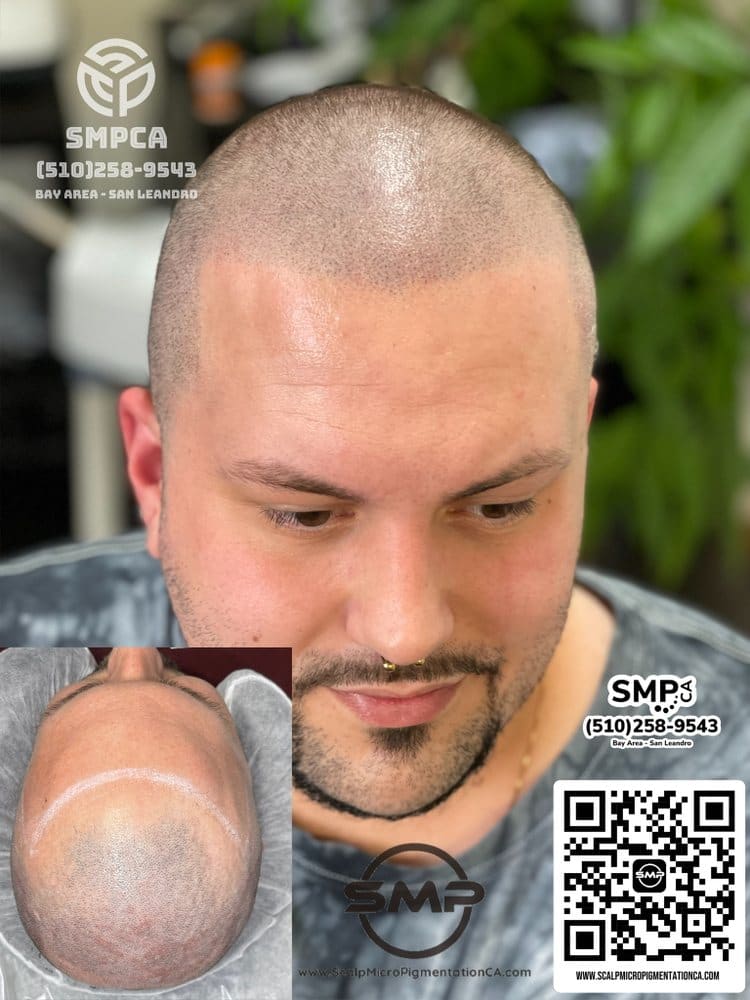
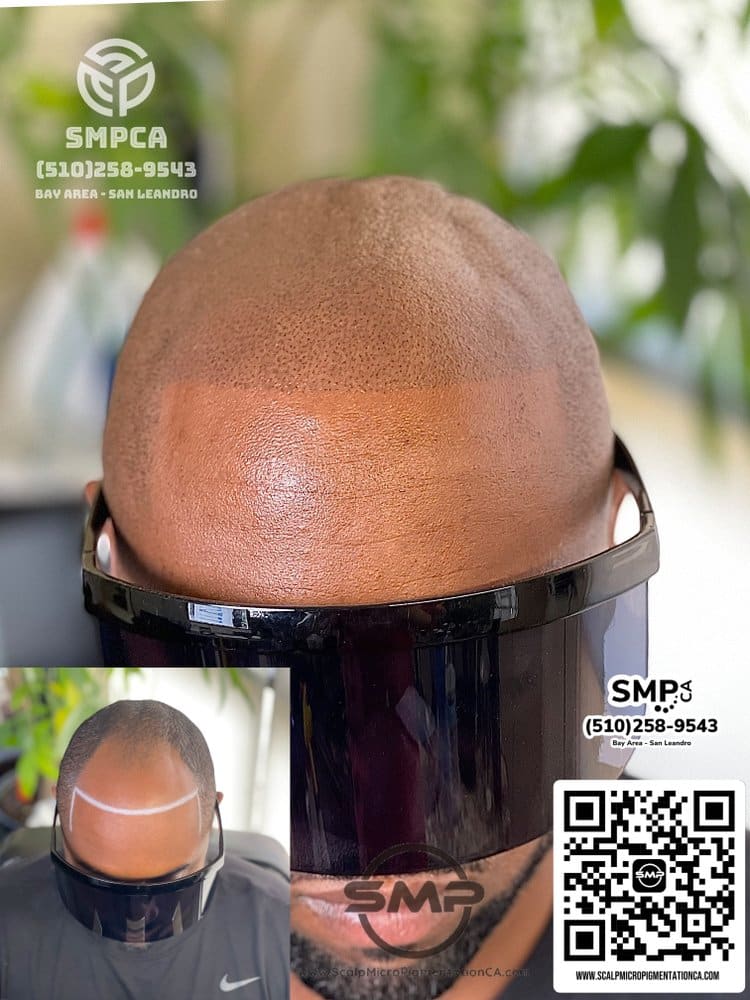
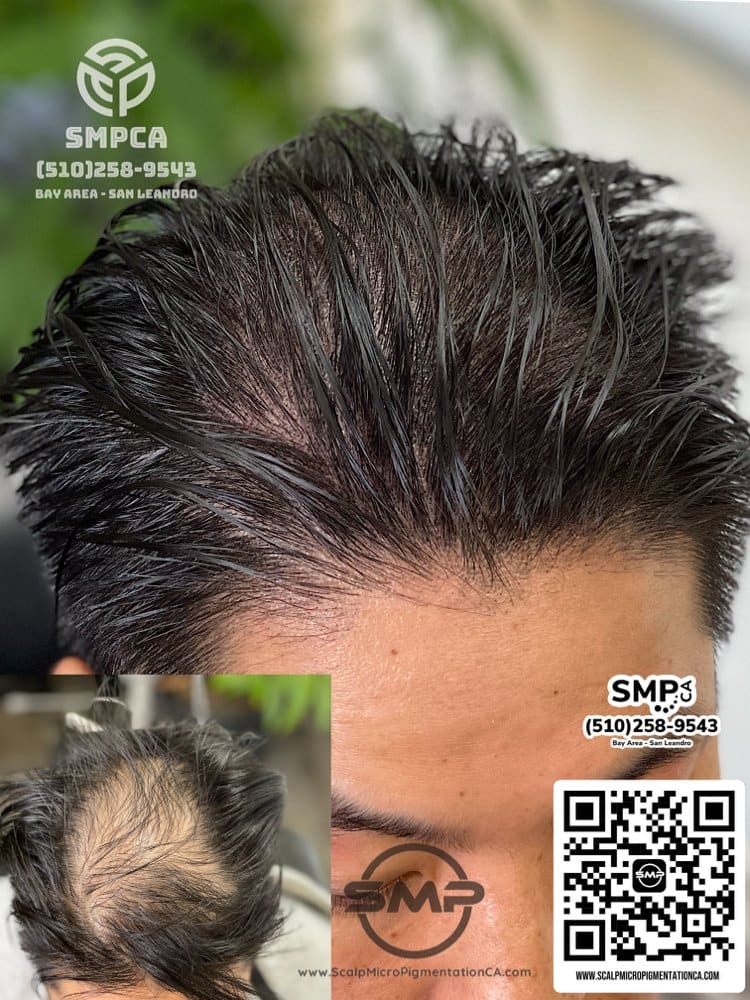
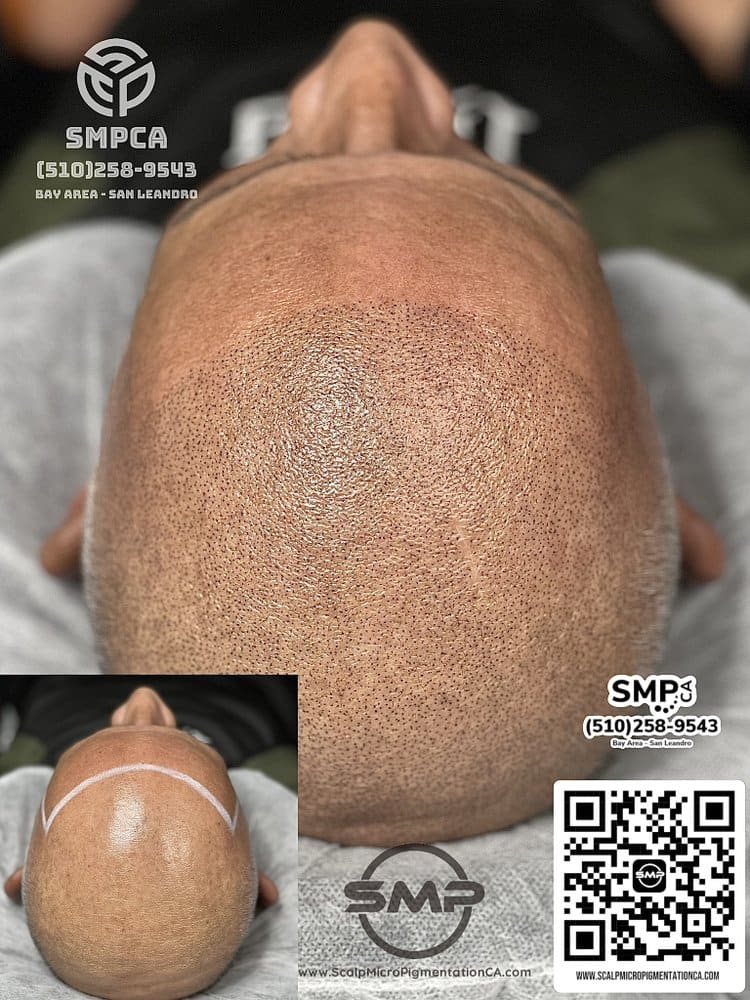
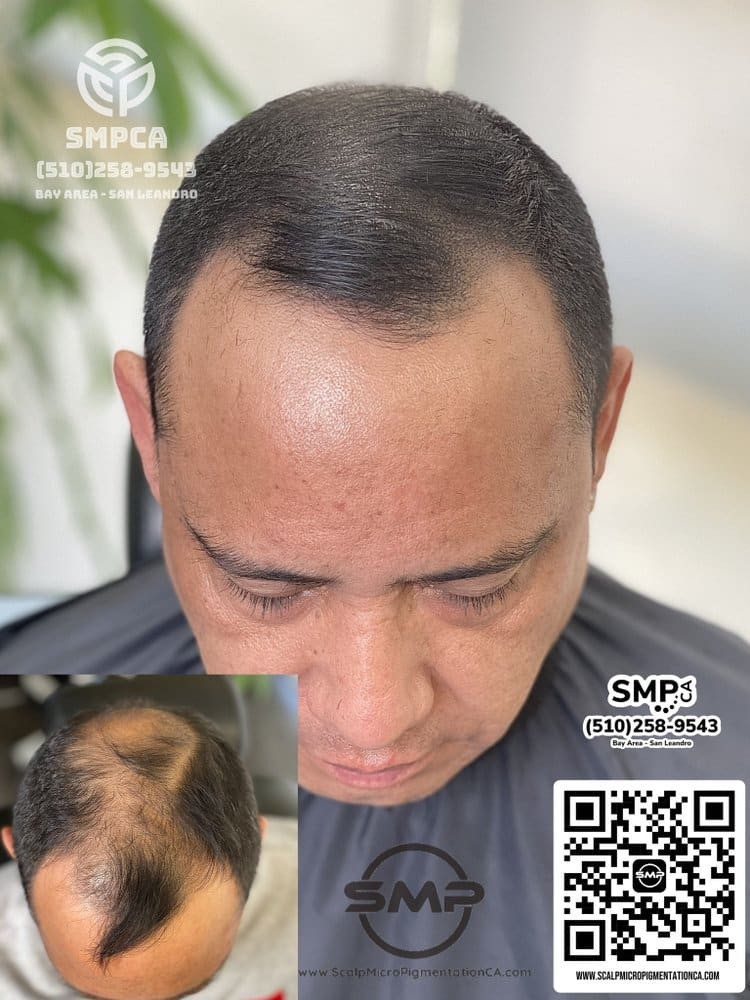
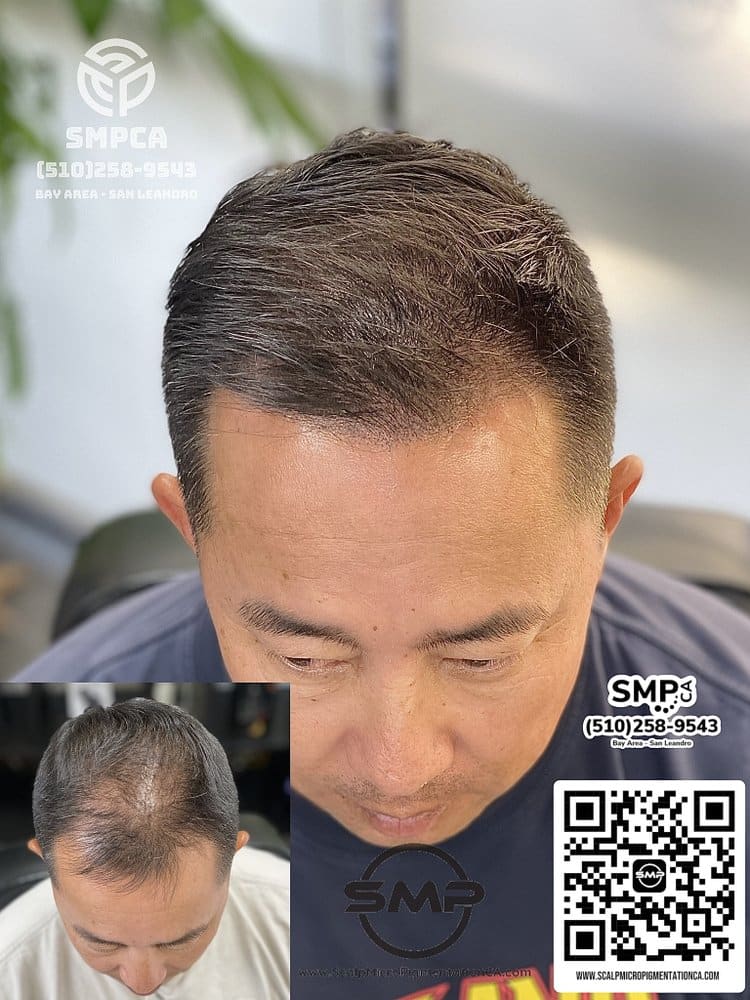
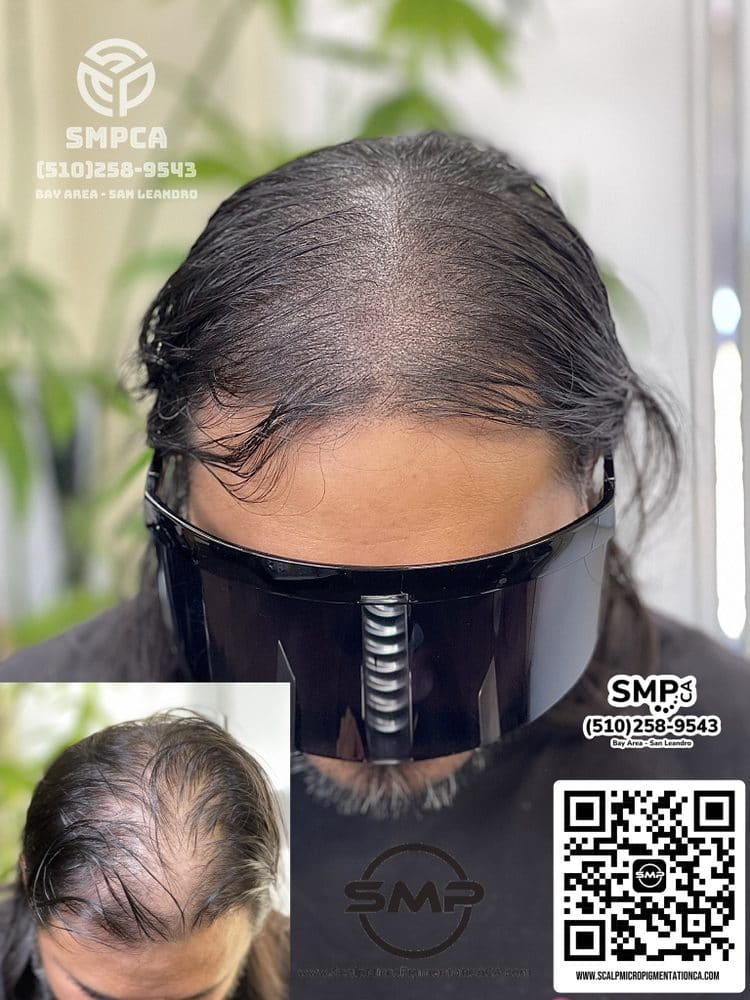
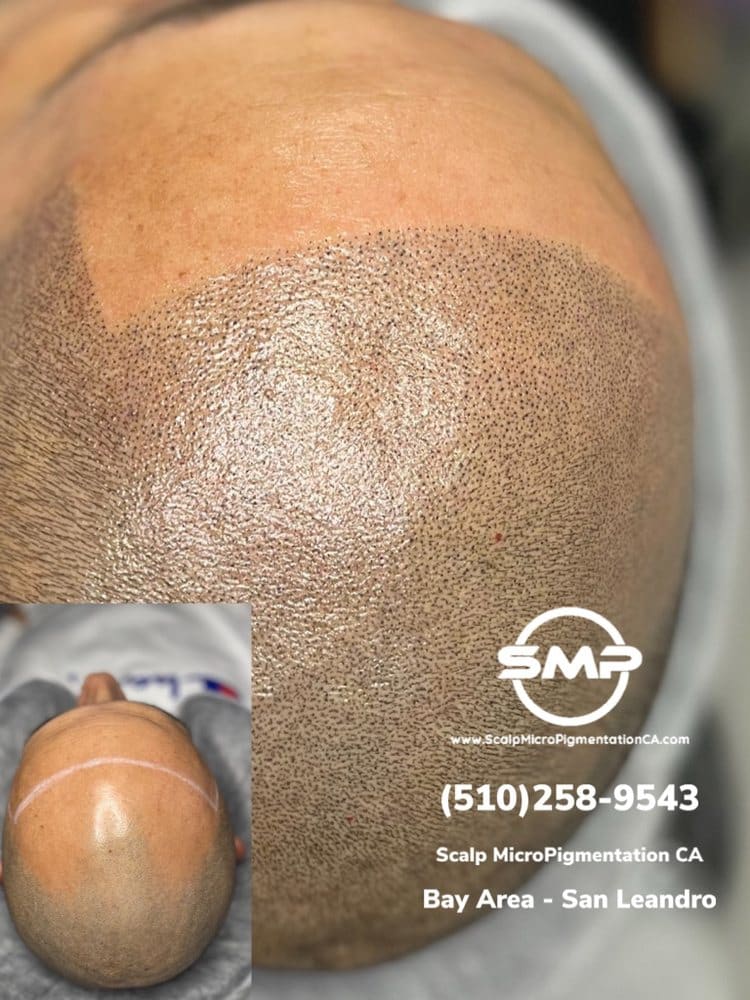
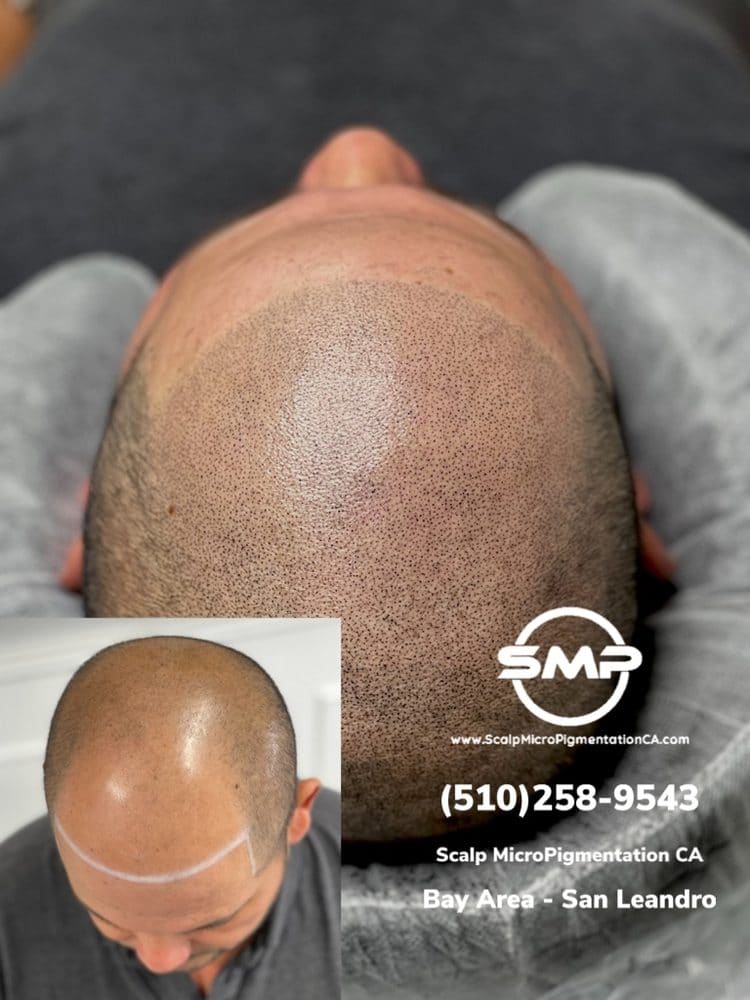
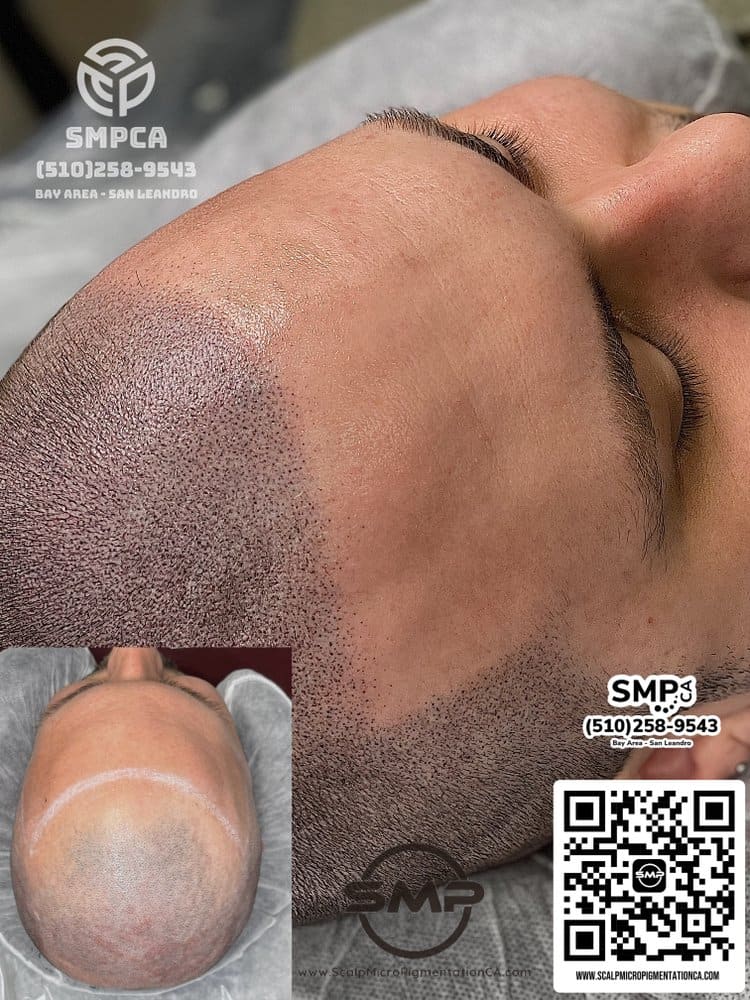
Thousands of sessions · hundreds of clients · one artist
Get your hairline — and your confidence — back.
Free, no-pressure quote. Tell me your situation and I'll show you exactly what's possible before you commit to anything.