
Hair Loss Education
The Norwood Scale: All 7 Stages Explained
The standard chart for male pattern hair loss, in plain English — what every stage actually looks like, what it honestly means for your options, and why it is a classification tool rather than a diagnosis.
The short answer
The Norwood scale (properly the Hamilton–Norwood scale) is a seven-stage classification of male pattern hair loss. Stage 1 is a full juvenile hairline. Stages 2 and 3 describe temple recession into the familiar M shape. The 3 Vertex variant adds a separate bald patch at the crown. Stages 4 and 5 describe both areas enlarging while a thinning bridge of hair still connects them. At Stage 6 that bridge is gone, and at Stage 7 only a narrow horseshoe around the sides and back remains. It describes pattern and extent — it does not diagnose a cause, and it cannot tell you where your own loss will stop.
A classification tool, not a diagnosis
The Norwood scale gives barbers, surgeons, dermatologists and SMP artists a shared vocabulary so we are all describing the same head. It says nothing about why you are losing hair. If your loss came on suddenly, is patchy, does not follow this pattern, or comes with scalp pain, itching, burning, scaling or scarring, see a board-certified dermatologist — that is a medical question and we are not medical providers. SMPCA performs scalp micropigmentation and Academy training only.
The stages, one by one
Most people land on this page holding a phone camera up to the back of their head. So these descriptions are written for what you can actually see in a mirror, not for a textbook.
Stage 1 — No meaningful recession
A full, juvenile hairline that runs straight across the forehead.
This is the baseline the rest of the scale is measured against, not a stage of hair loss. If you are here and worried, what you are usually noticing is a maturing hairline — the small, normal backward shift most men see in their late teens and twenties. It is not the same thing as pattern loss, and no treatment is called for.
Stage 2 — The mature hairline
Slight recession at both temples, forming shallow triangles either side of a still-solid centre.
Stage 2 is where a mature hairline and the earliest true recession look identical, which is exactly why the internet argues about it endlessly. The temples pull back a finger's width or so; the forehead looks marginally taller in photographs. Most men at Stage 2 need reassurance and a baseline photo far more than they need a procedure.
Stage 3 — The first stage recognised as balding
Deep, clearly receded temples — the recognisable M shape starting to form.
Norwood classed Stage 3 as the earliest stage that is genuinely cosmetically significant. The temporal recession is deep enough that a barber notices it and hats start becoming a habit. This is the point at which a lot of men see a doctor for the first time, and honestly, this is the stage where a medical conversation has the most to offer you.
Stage 3 Vertex — The variant — recession plus a crown spot
Stage 3 temples, plus a distinct thinning or bald patch at the crown (the vertex, the swirl at the back).
The 3-Vertex is the scale's most important variant because it introduces the second front of male pattern loss. The hairline recession is Stage 3, but there is now a separate circle of loss at the crown that you usually discover in a fitting-room mirror or a photo somebody else took. Frontal and crown loss progress on their own timelines, and later they meet in the middle — which is what drives the jump to Stage 5 and beyond.
Stage 4 — Bridge still intact
Severe frontal recession and a visibly enlarged crown, separated by a band of hair across the mid-scalp.
At Stage 4 both areas of loss are unmistakable, but a bridge of hair still runs across the top of the head connecting the sides. The scalp shows through the front under overhead light. Styling around it stops working around here — the comb-forward that got you through Stage 3 no longer covers anything.
Stage 5 — The bridge is thinning out
The band between the front and the crown is narrower and noticeably sparser, though still present.
Stage 5 is a transitional stage: the two bald regions are still technically separate, but the hair dividing them has thinned to the point where you can see scalp through it. The horseshoe of hair around the sides and back is now the dominant shape of the head. Many men shave for the first time somewhere around here.
Stage 6 — The bridge is gone
The frontal and crown loss have joined into a single continuous bald area across the top.
At Stage 6 the connecting band has disappeared and the top of the head is one region rather than two. What remains is a band of hair around the sides and back, which is still fairly generous at this stage. This is one of the two most common stages I see in the studio for full-coverage work.
Stage 7 — The most advanced stage on the scale
Only a narrow horseshoe of hair remains around the sides and back, often finer and lower than before.
Stage 7 is the end of the scale. The remaining band is narrow, sits low on the sides and back, and the hair in it is frequently finer than the hair you had at Stage 1. This is where donor supply becomes the central conversation for anyone thinking about surgery — and where a cosmetic full-coverage approach tends to be at its most straightforward, because the whole top is a clean, uniform canvas.
Norwood stages at a glance
Scroll sideways on mobile. The options column is written honestly — which is why the early stages point at a doctor rather than at us.
| Stage | What it looks like | Typical concern | What your options honestly are |
|---|---|---|---|
| Norwood 1 | Full juvenile hairline | Usually none — this is the baseline | Nothing needed. Take a baseline photo so you can compare later. |
| Norwood 2 | Slight temple recession | Is this maturing or is this loss? | Watch and document. If it is moving fast, a doctor can tell you more than a mirror can. |
| Norwood 3 | Deep M-shaped temples | First stage widely read as balding | The widest set of options of any stage — including medical ones through a physician. Cosmetic work is possible but progression planning matters. |
| Norwood 3 Vertex | Stage 3 temples plus a crown patch | Two separate areas now losing | Same as Stage 3, plus crown-specific planning. Crown coverage is a common early SMP request. |
| Norwood 4 | Severe front, enlarged crown, bridge intact | Styling has stopped working | Partial or full cosmetic coverage. Surgical density across this much area starts stretching donor supply. |
| Norwood 5 | Bridge thinning, scalp showing through | The horseshoe shape is emerging | Full-coverage cosmetic approaches suit this well. Surgery is a donor-supply conversation with a surgeon. |
| Norwood 6 | Front and crown merged into one bald area | Deciding whether to shave | Full-coverage SMP is a very common choice here. Surgical density across the whole top is rarely realistic. |
| Norwood 7 | Narrow horseshoe of finer hair remaining | Donor supply is genuinely limited | Full-coverage SMP works well on a uniform canvas. A surgeon will be candid about what limited donor supply can and cannot do. |
What your stage honestly means for your options
Early stages (1–3): you have the most options, and most of them are not ours
This is the part of the page that costs us bookings, and it still belongs here. If you are Norwood 2 or 3 with active follicles across most of your scalp, the widest set of options is open to you — including medical ones that act on the biology of hair loss rather than on its appearance. Those are a conversation with a physician or dermatologist. We cannot prescribe, recommend, or advise on any medication, and we are not going to pretend otherwise. Keeping your own hair beats replicating its appearance, so if you have not had that conversation yet, have it first.
Cosmetic work is still perfectly reasonable at these stages — hairline restoration and crown density are common early requests — but it has to be designed with progression in mind, because a hairline drawn against an actively receding pattern can need rework later.
Mid stages (4–5): the trade-offs get real
By Stage 4 or 5 you are covering a genuinely large area, and every option starts showing its limits. Surgical density across that much scalp is a donor-supply conversation — a surgeon divides a finite number of grafts across an expanding area, and a good one will tell you plainly what that buys you. Styling has usually stopped working. This is where many men decide which look they actually want to live in: length, or a clean close crop. SMP suits the second answer and not the first.
Late stages (6–7): donor limits become the whole conversation
At Norwood 6 and 7 the honest picture flips. Surgical options narrow, because the area needing coverage is at its largest exactly when the donor band is at its smallest — that is not a criticism of transplants, it is arithmetic, and any reputable surgeon will say the same. Meanwhile full-coverage SMP is at its most straightforward: a uniform bald canvas is a good canvas, and blending pigment into the remaining horseshoe gives the appearance of a closely-shaved head rather than a bald one. Norwood 6–7 full coverage is built over 2–3 sessions. Results vary from person to person.
Compare the two routes properly in SMP vs hair transplant, which includes where surgery genuinely beats what we do.
The Ludwig scale: the women’s equivalent
Norwood was built to describe male pattern loss and it fits women poorly, because female pattern loss usually presents differently: the hairline is often preserved while the part widens and the hair thins diffusely across the top. The Ludwig scale captures that in three types — Type I is mild widening of the part, Type II is noticeable diffuse thinning with the part clearly broadened, and Type III is extensive thinning across the top where the scalp shows through under light.
The causes behind women’s thinning are broader than they are in men, which is why any woman noticing unexplained loss should start with a board-certified dermatologist rather than a chart. Our women’s hair loss page goes into it properly.
How I use the Norwood scale at a consultation
I use it for planning, never for diagnosis. In the studio the stage tells me four practical things: how much area we are covering and therefore how many sessions it will take, where a new hairline can sit so it still suits your face in ten years, how the work should blend into your remaining hair, and how conservative the design needs to be if your pattern is still moving.
That last one is the part men do not expect. A hairline that looks right today but ignores where you are heading is the most common correction I get asked to fix. So at Stage 3, I design differently than I would at Stage 6 — not because the technique changes, but because the plan has to survive your next decade.
What the scale does not do is tell me why you are losing hair, and I do not guess at that. I am a Master Barber and an SMP artist, working since 2016 out of San Lorenzo and Mountain View. If something about your pattern looks like it needs a doctor, I say so at the consultation. Read men’s hair loss for the background, or am I a candidate for SMP for the honest version of who this suits.
What the scale can’t tell you
- Why it is happening. The scale describes a pattern. Cause is a dermatologist’s question, and there are causes that mimic pattern loss.
- Where you will stop. Nobody can tell you which stage you will settle at. Progression varies, and plenty of men never move past Stage 3.
- How fast. There is no timetable built into the scale. Photograph yourself every six months under the same light — evidence beats memory.
- Diffuse thinning that has no pattern. Some men thin evenly all over rather than in the Norwood pattern, and the scale simply does not fit that.
- What price you will pay. Area is the biggest driver, so stage matters — but scar work, previous work, and skin all shift it. See the California SMP cost guide.
Norwood scale — FAQ
What Norwood stage am I?+
The quickest way to place yourself: look at your temples in a mirror, then take a photo of the back of your head under overhead light. If your temples have receded into a clear M shape, you are around Stage 3. If there is also a separate bald patch at the crown, that is Stage 3 Vertex. If both areas are large but a band of hair still connects front to back, that is Stage 4 to 5. If they have merged into one bald area, that is Stage 6, and if only a narrow horseshoe remains, that is Stage 7. Self-placing is approximate — the scale describes patterns, it does not diagnose why you are losing hair.
Is the Norwood scale a medical diagnosis?+
No. It is a classification tool — a shared vocabulary for describing the pattern and extent of male pattern hair loss so that barbers, surgeons, dermatologists and artists can talk about the same thing. It says nothing about the cause. Sudden loss, patchy loss, loss that does not follow the pattern, or loss with pain, itching, burning or scaling all need a board-certified dermatologist, not a chart.
Can SMP work at Norwood 7?+
Yes, and Norwood 6 and 7 are among the most common full-coverage cases we do. At those stages the top of the head is a uniform canvas, which is straightforward to work on — SMP replicates the appearance of natural shaved hair follicles across the bald area so it reads as a closely-cropped head rather than a bald one, blended into the remaining horseshoe. It is built across 2–3 sessions. It does not grow hair and it does not give you length. Results vary from person to person.
Does everyone reach Stage 7?+
No. Most men who experience male pattern hair loss stabilise somewhere in the middle of the scale and never reach Stage 7, and plenty never progress past Stage 3 at all. Progression varies enormously with genetics, age of onset, and whether anything medical is being done about it. Nobody — including us — can tell you where you will stop, and anybody who claims to is guessing.
How fast do you move between Norwood stages?+
There is no fixed timetable. Some men sit at the same stage for a decade; others move noticeably in a couple of years. Earlier onset tends to be associated with more progression over a lifetime, but that is a pattern rather than a rule about you. The practical advice is boring and useful: photograph your hairline and crown under the same lighting every six months, so you are comparing evidence rather than memory.
What is the Norwood 3 Vertex stage?+
It is a variant rather than a step between 3 and 4. You have Stage 3 temple recession at the front, plus a separate area of thinning or baldness at the crown. It matters because it tells you loss is happening on two fronts at once, on independent timelines. When they eventually meet, that is what carries you toward Stages 5 and 6.
Is there a Norwood scale for women?+
Women's pattern loss is usually described with the Ludwig scale instead, because it presents differently — typically a widening part and diffuse thinning across the top rather than a receding hairline and crown patch. Ludwig runs from Type I through Type III. Our women's hair loss page covers it, and any woman with unexplained thinning should see a dermatologist, since the possible causes are broader.
Does knowing my Norwood stage change what SMP costs?+
Yes, more than any other single factor. A Stage 2 to 3 hairline restoration covers a small area and costs far less than full coverage at Stage 6 or 7, which needs more pigment, more time, and typically 2–3 sessions. Our California SMP cost guide gives real ranges by case type, and your exact quote is free at consultation.
Bring your head, not a chart
A free consultation at our San Lorenzo or Mountain View studio. We’ll place your pattern properly, tell you honestly what SMP can and can’t do for it, and point you to a doctor if that’s the better first step. Results vary from person to person.
Book a free consultationA decade of SMP experience.
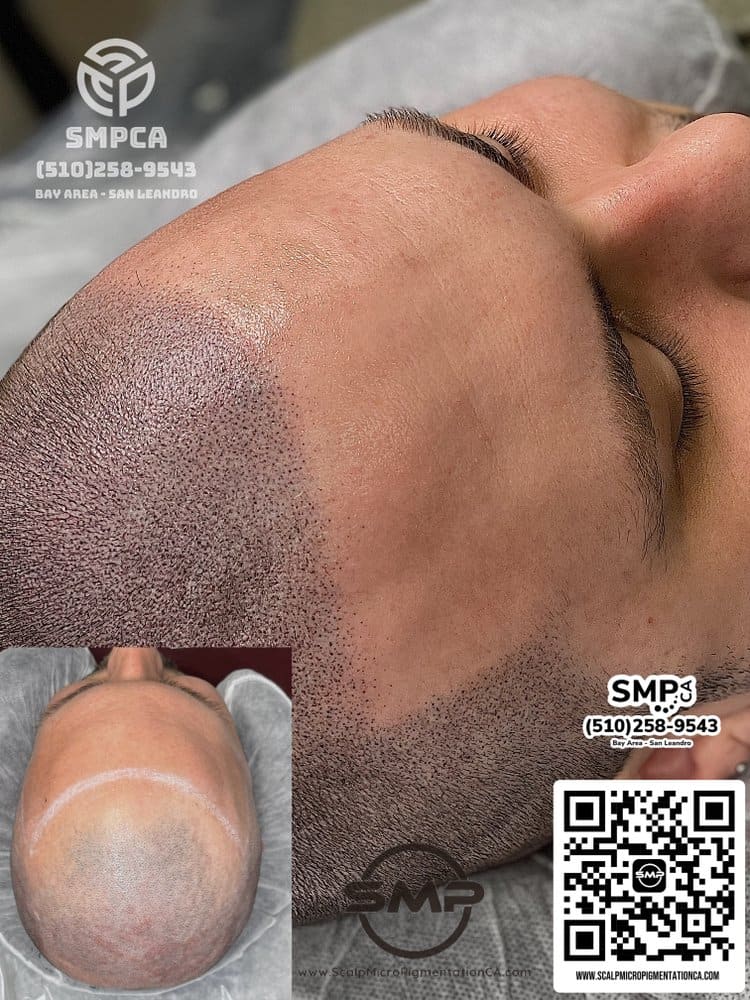
Every result you see is a real client — built dot by dot in San Lorenzo.
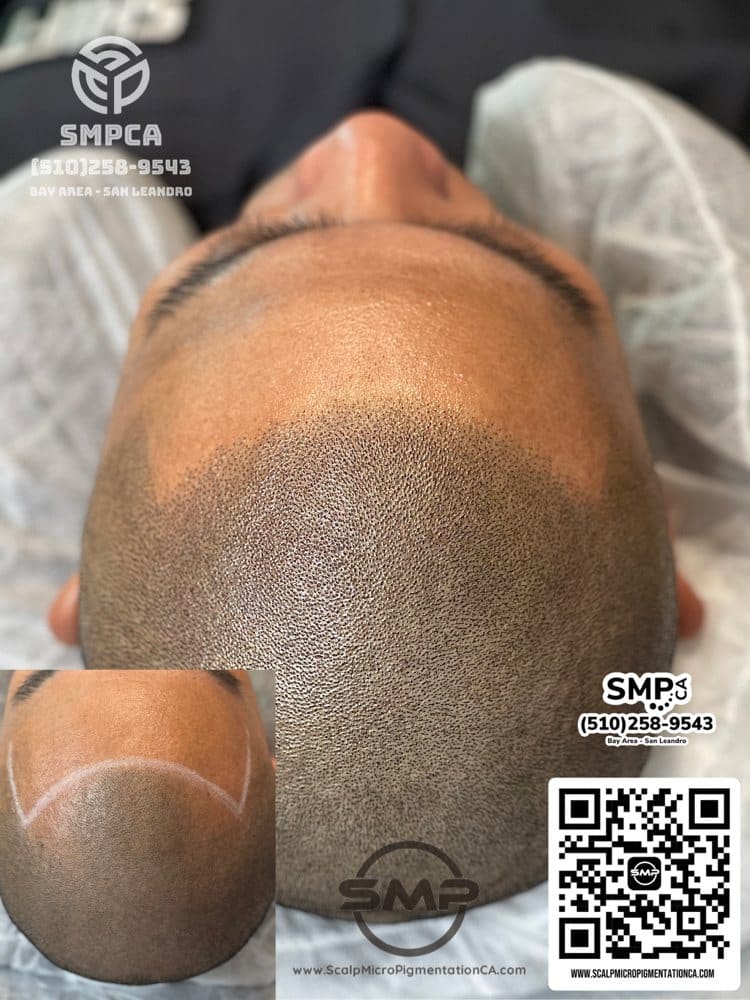
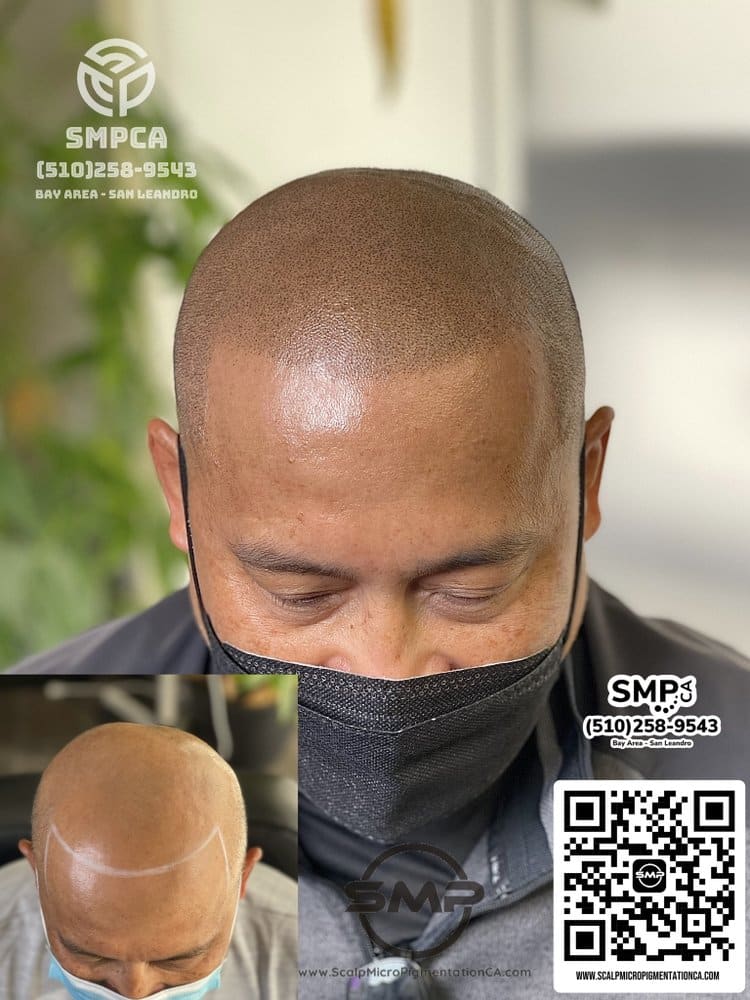
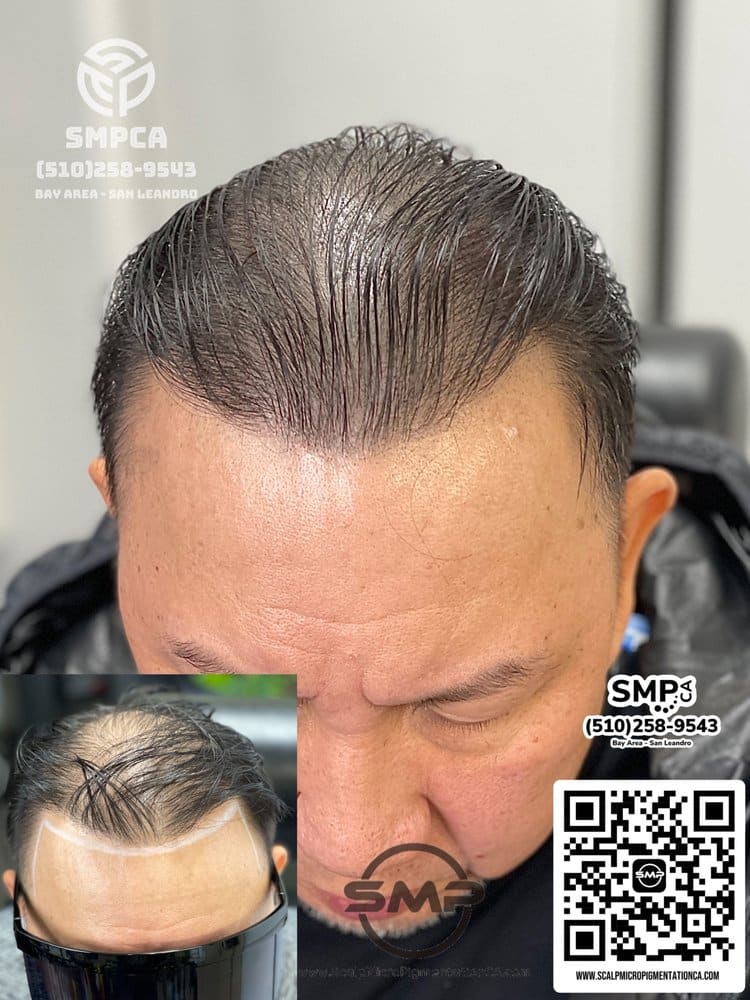
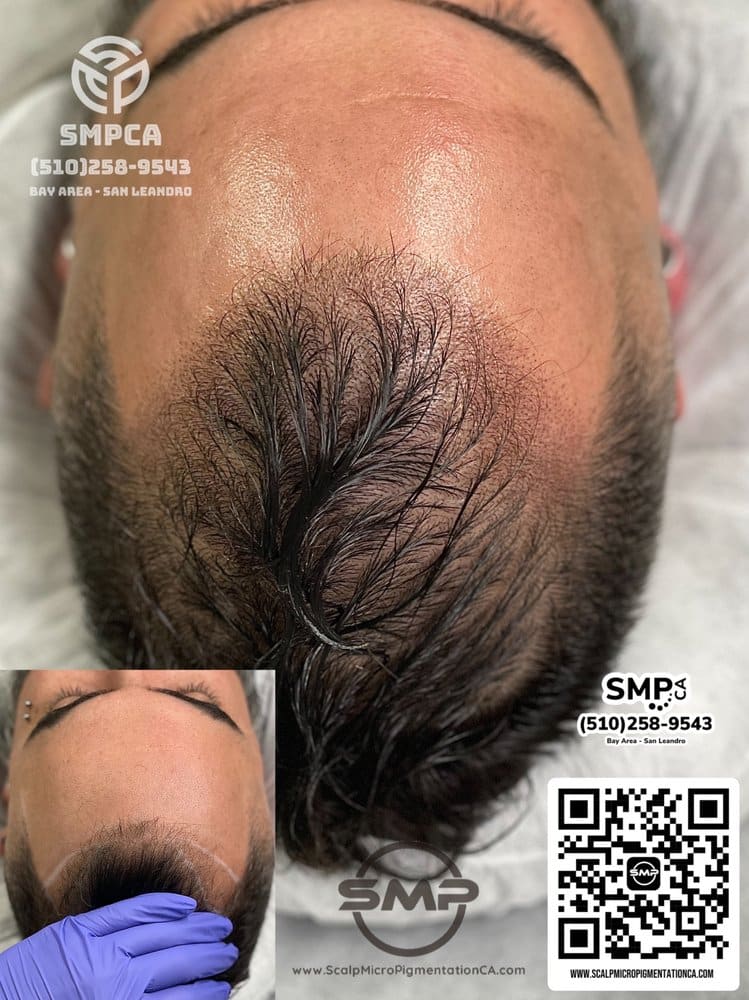
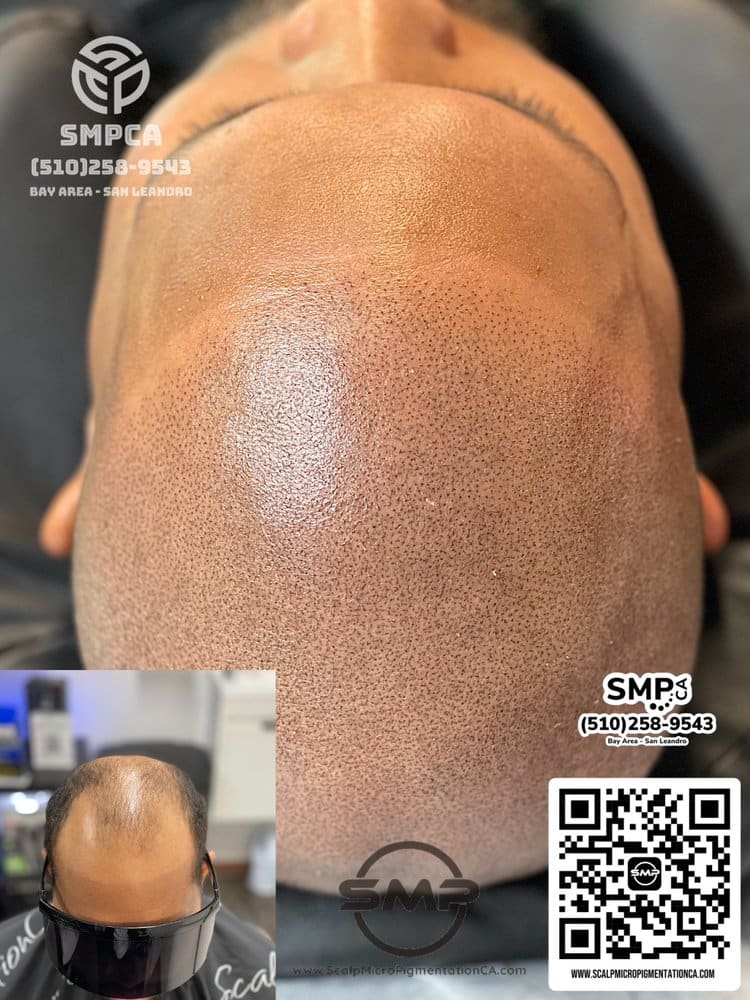
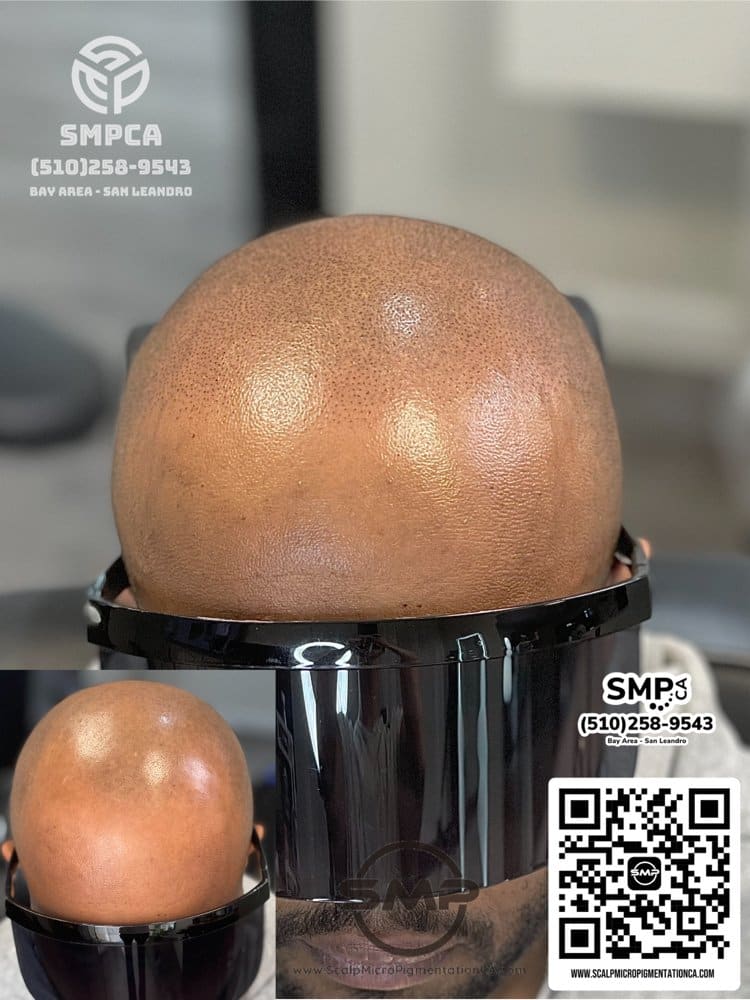
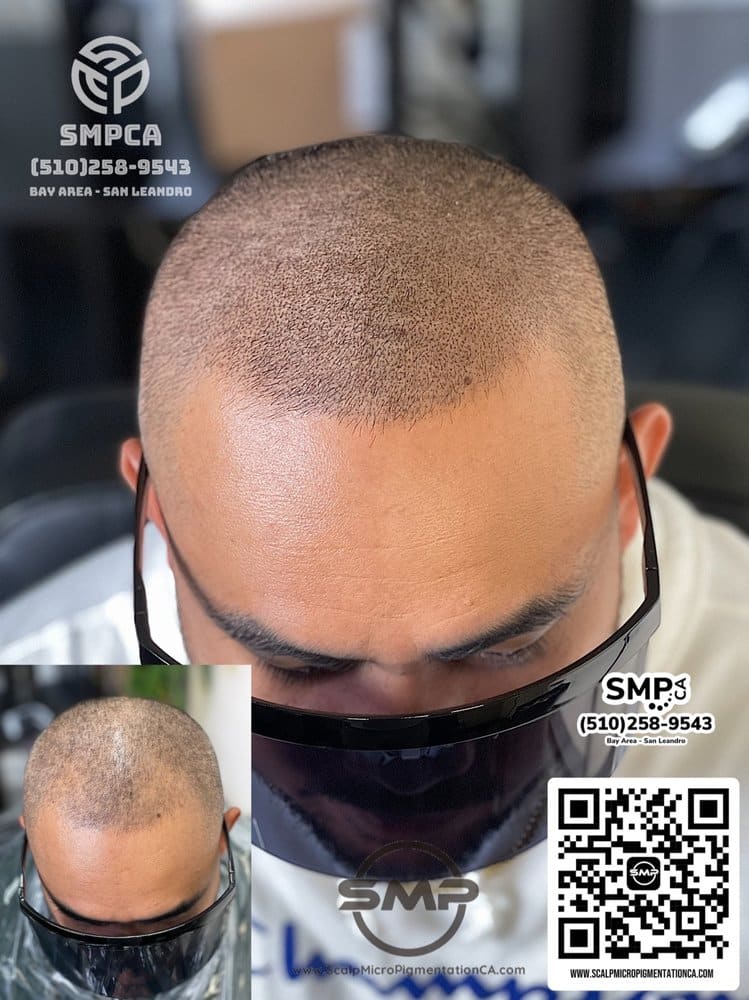
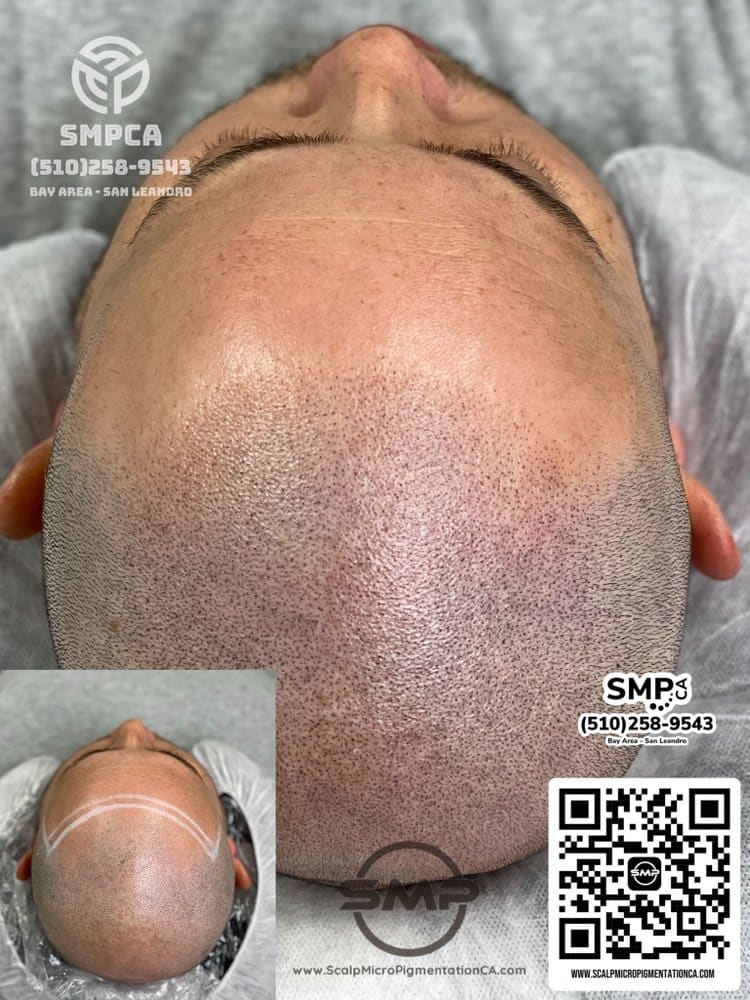
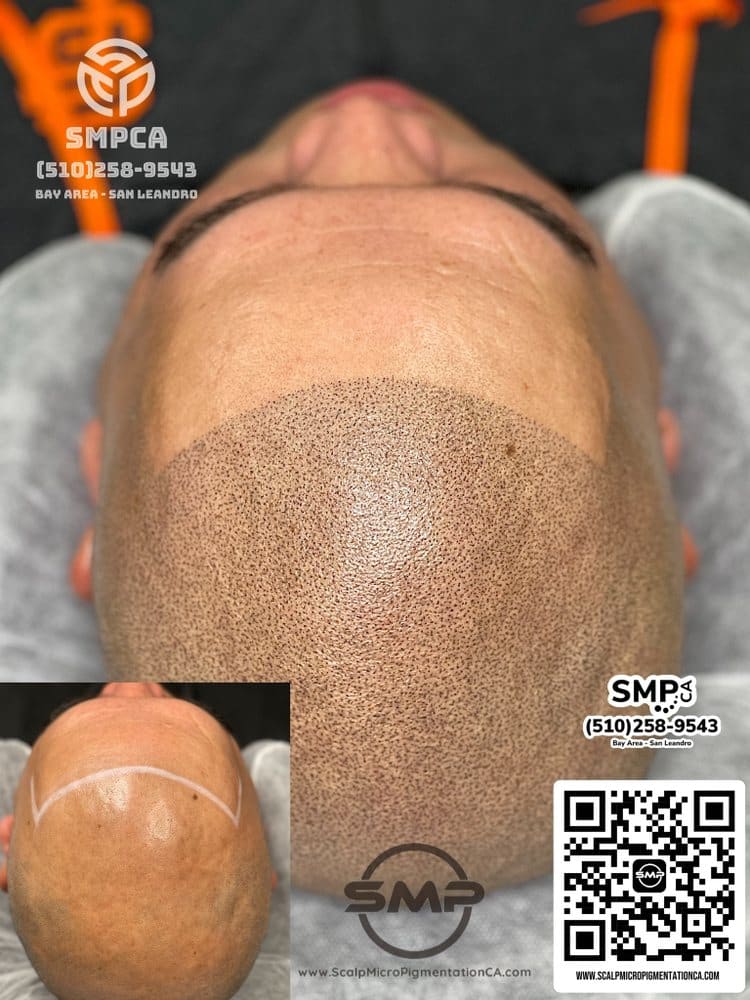
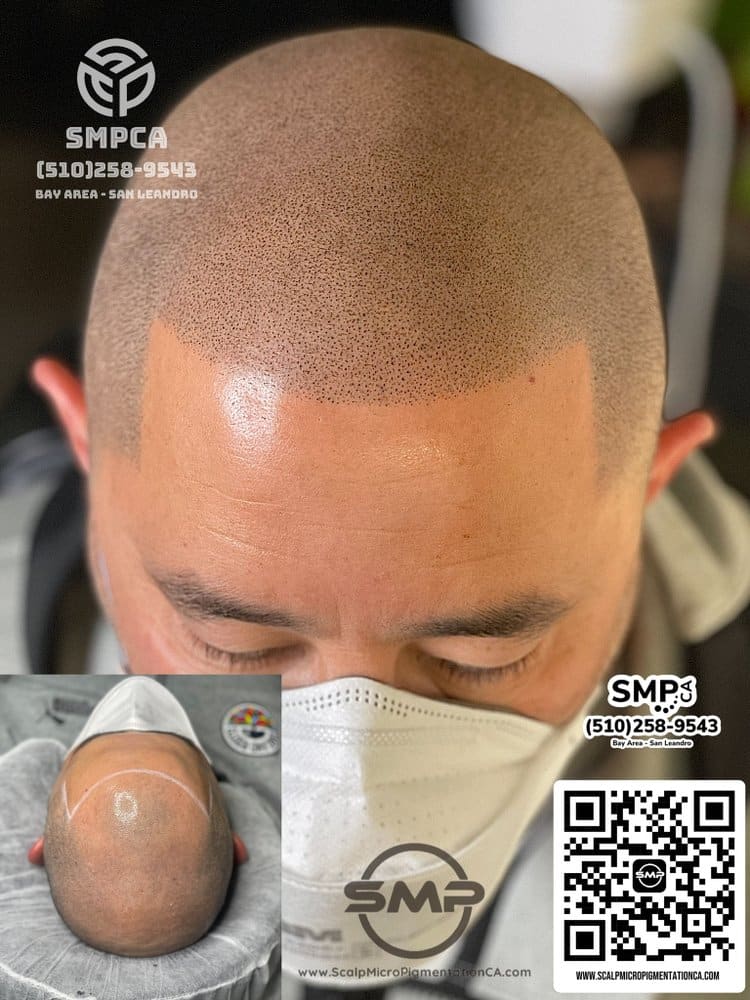
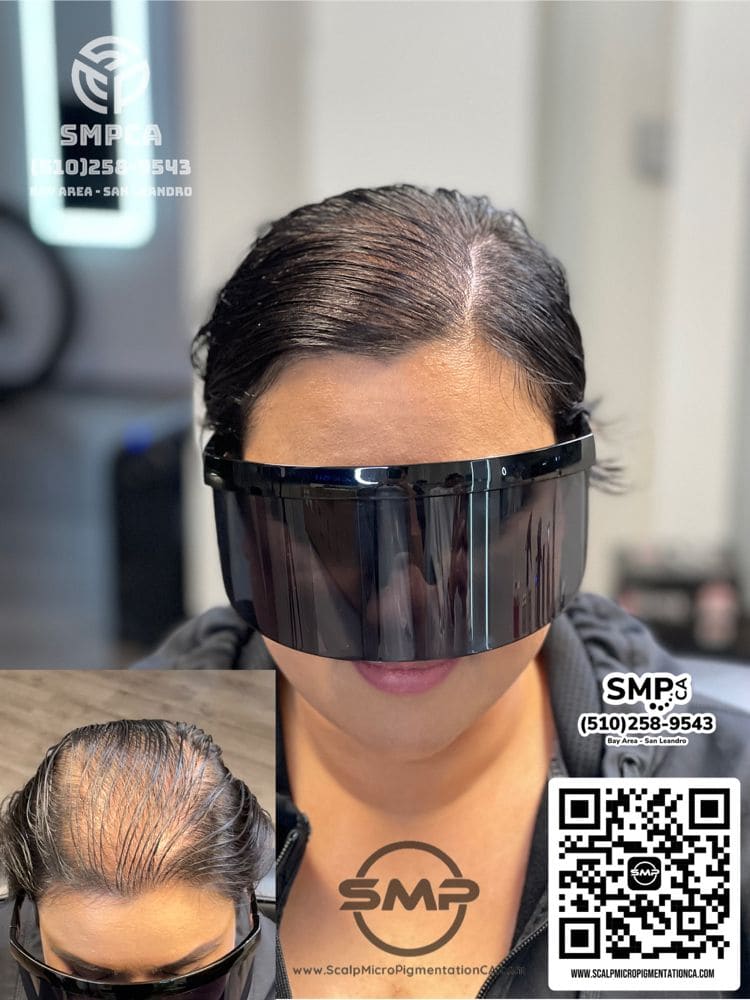
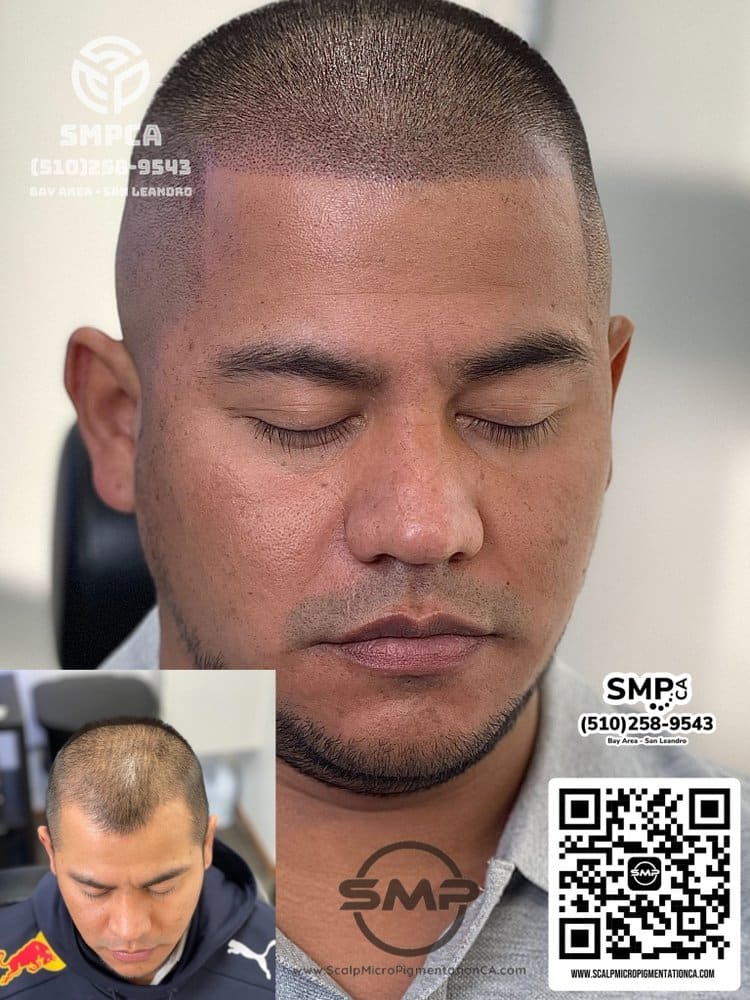
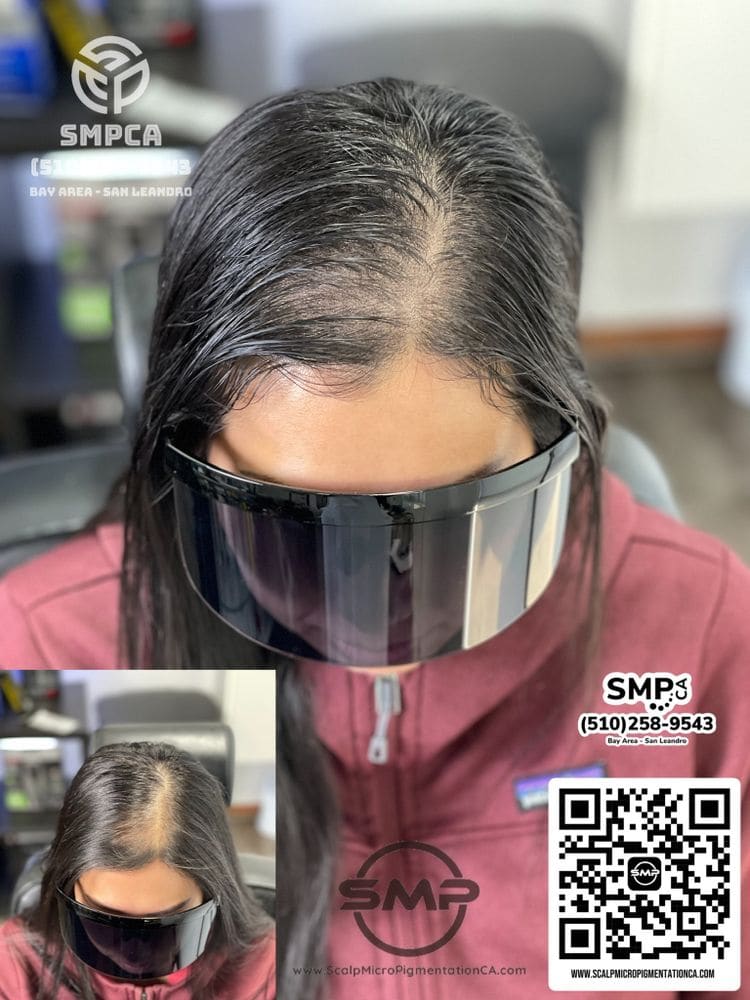
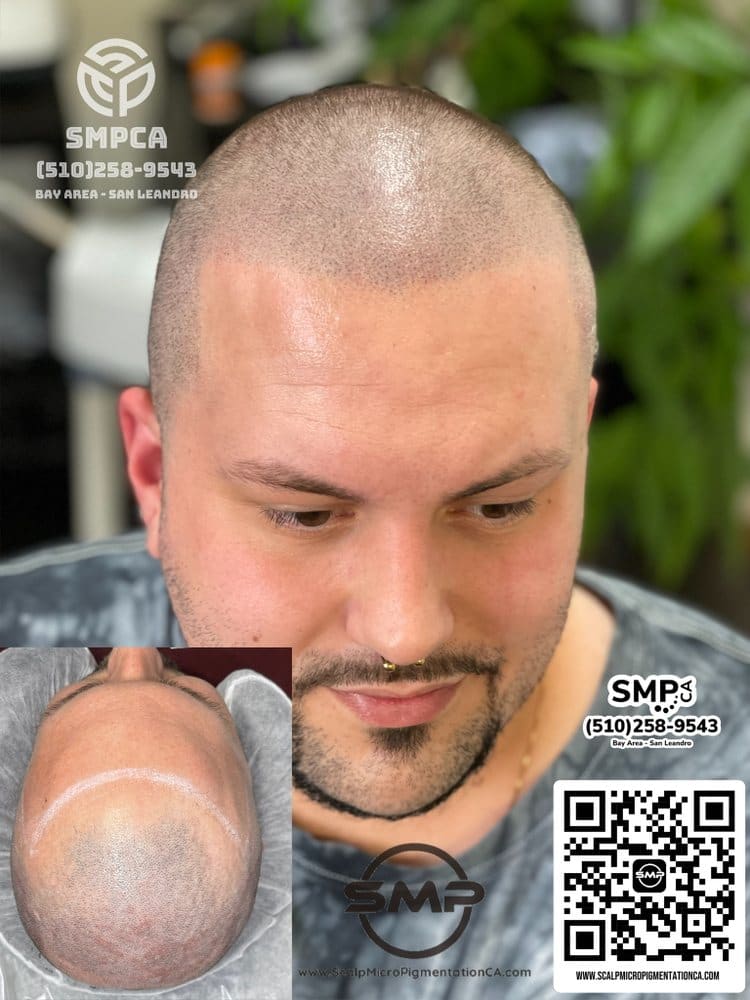
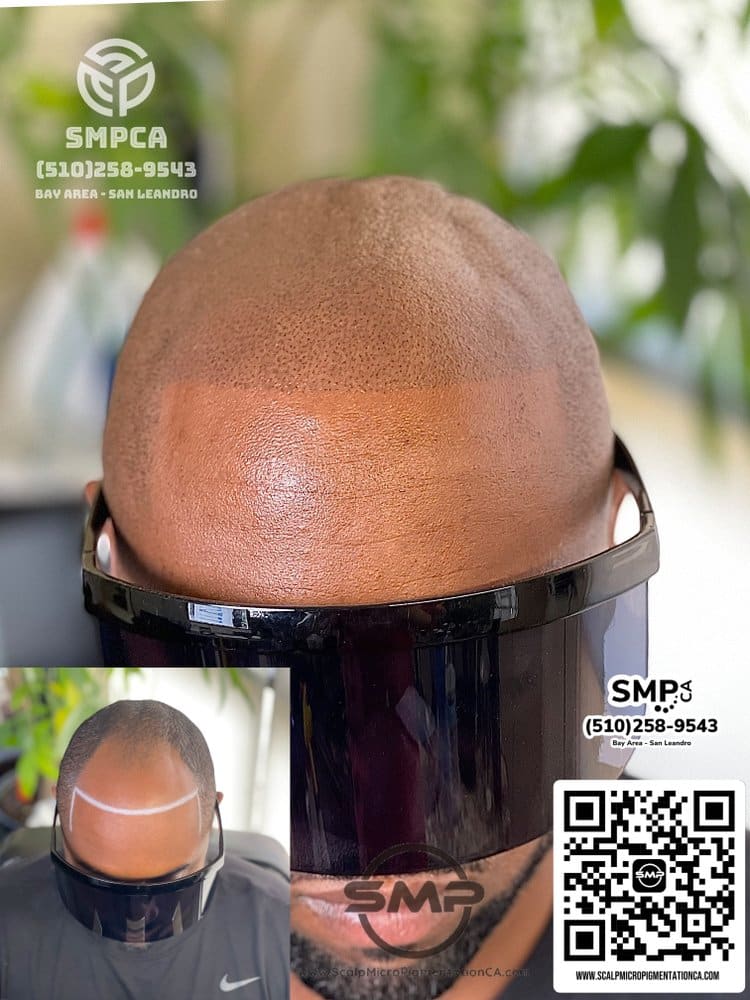
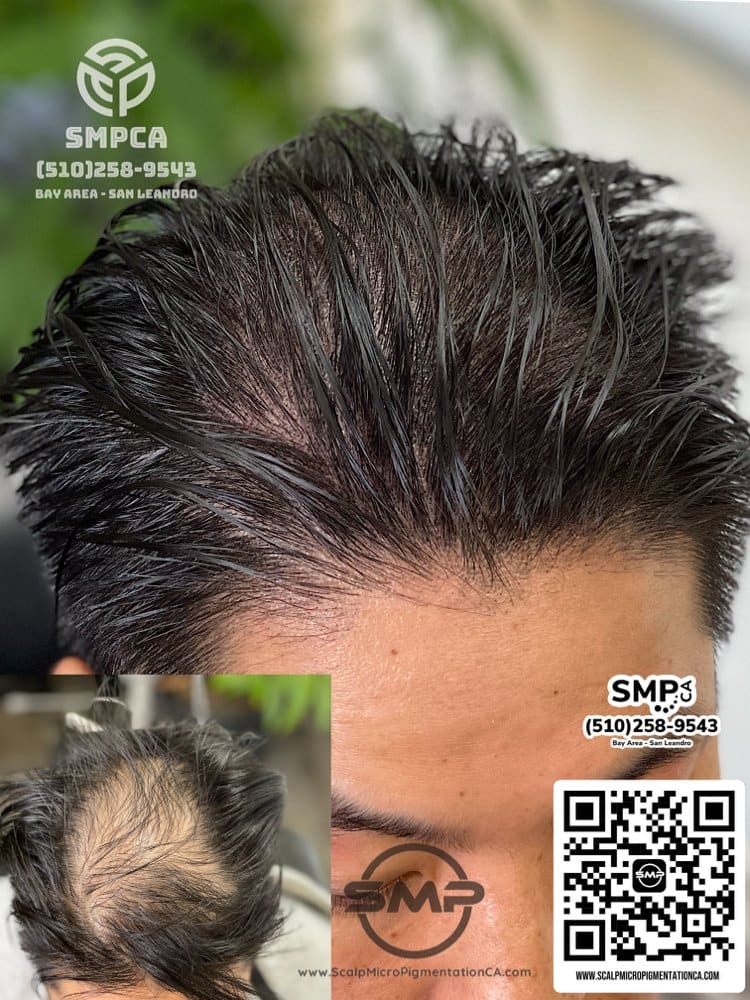
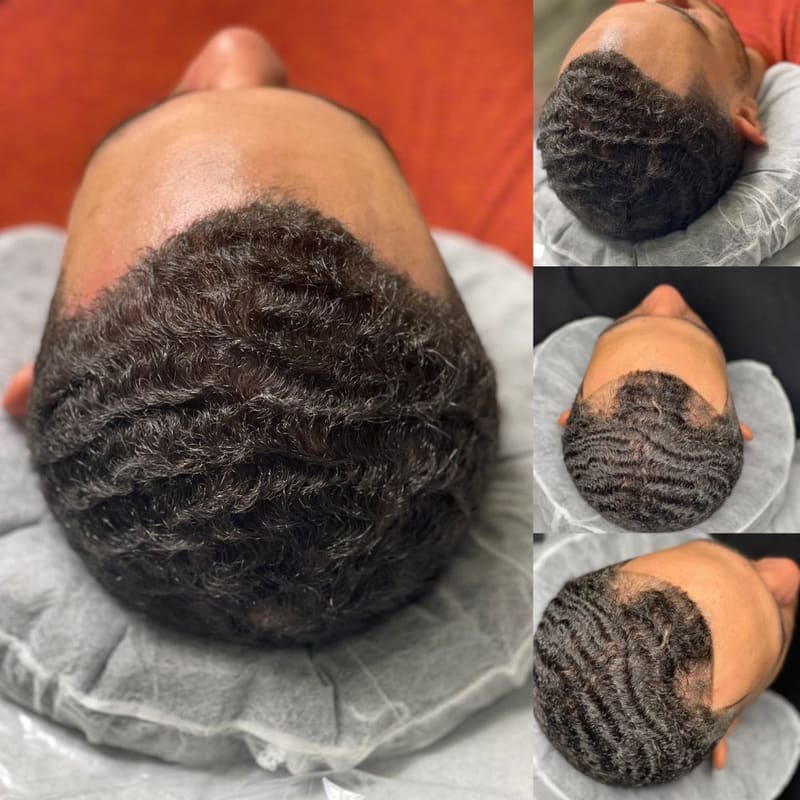
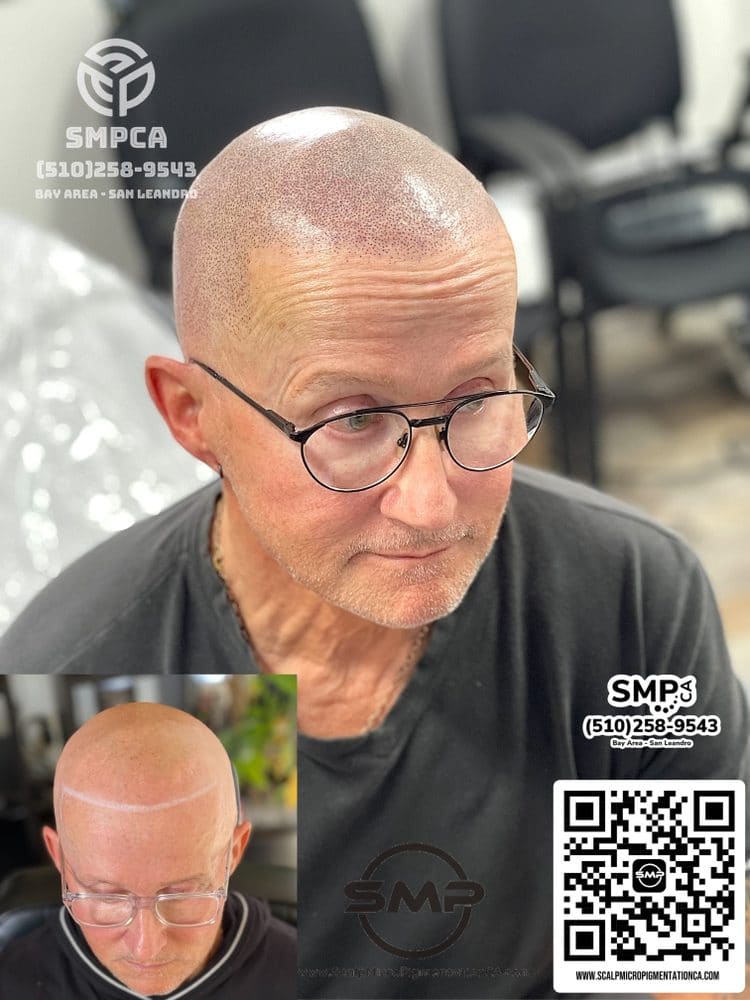
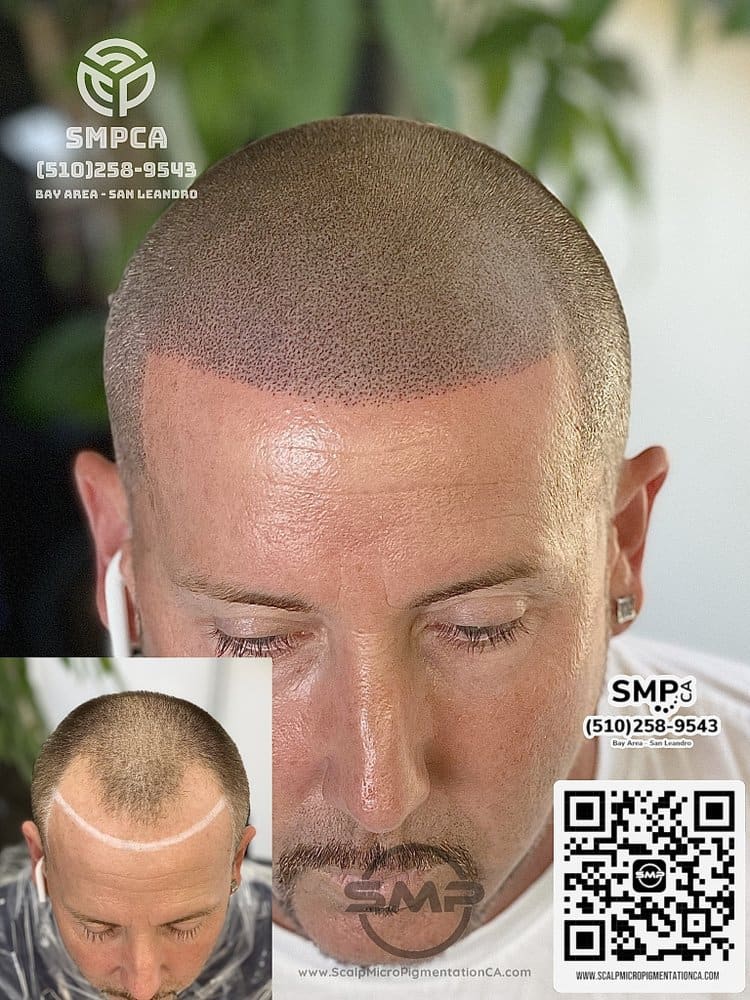
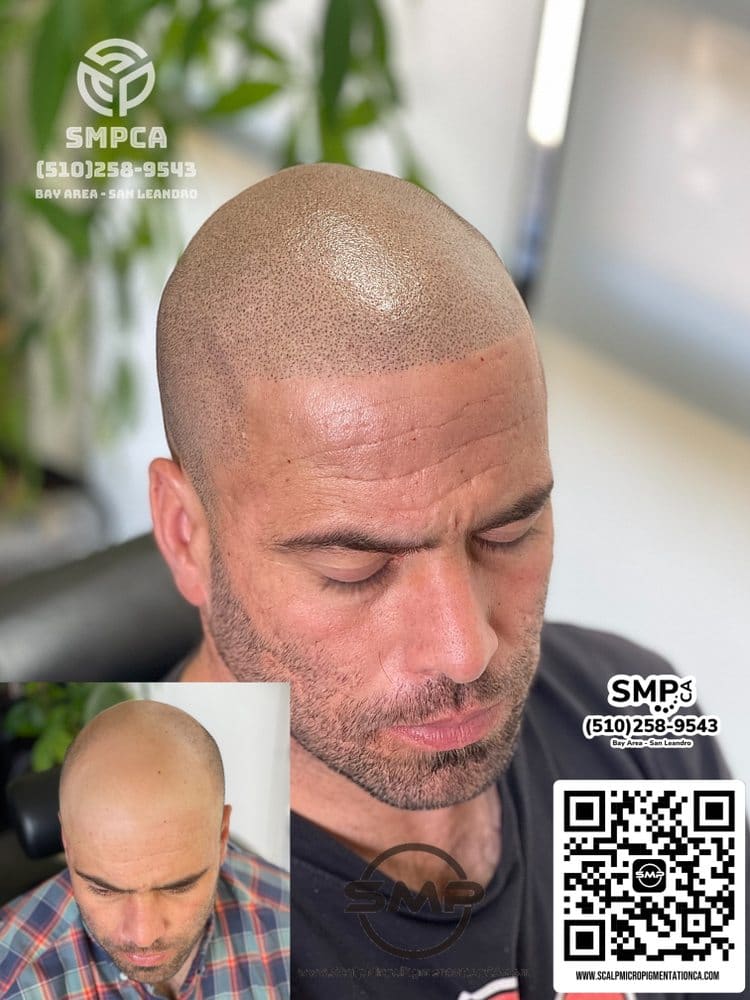
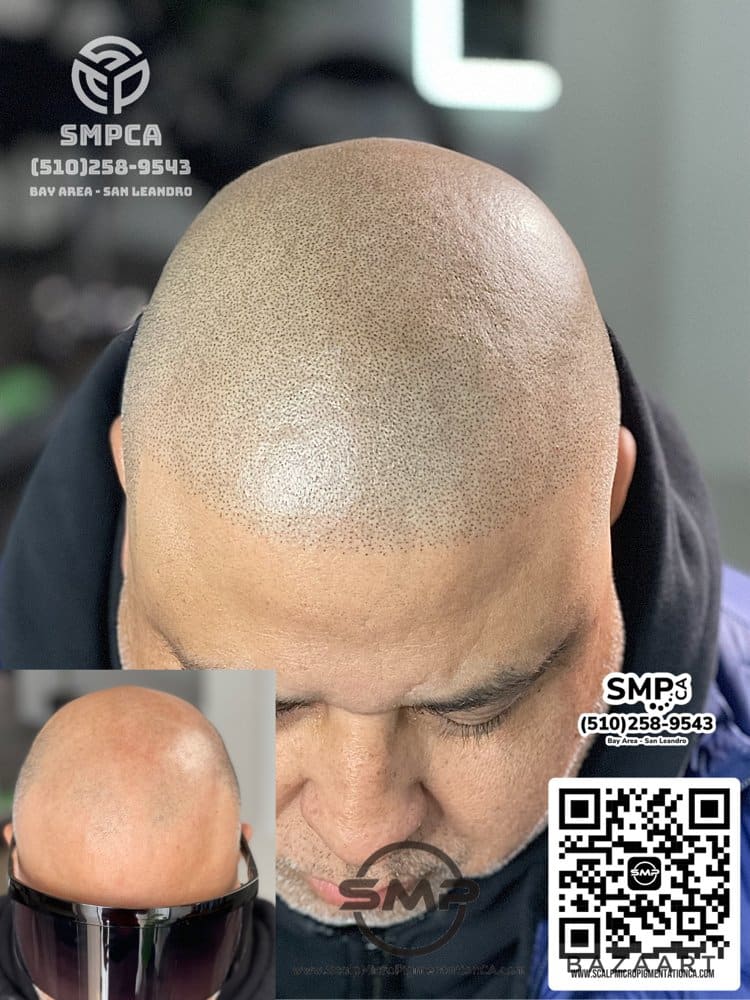
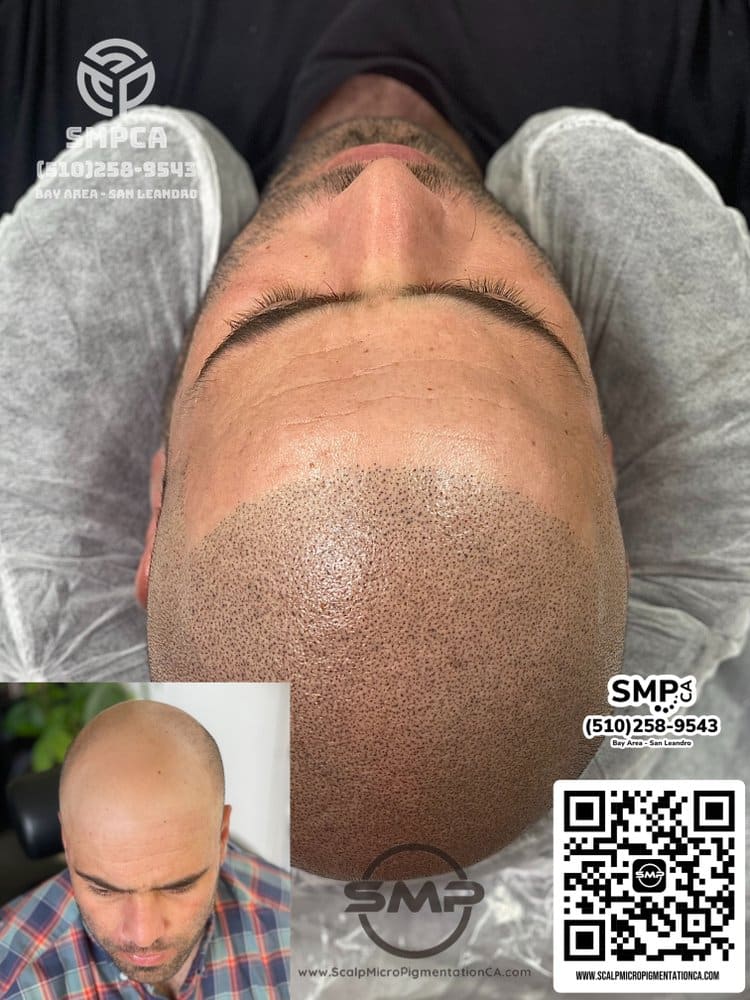
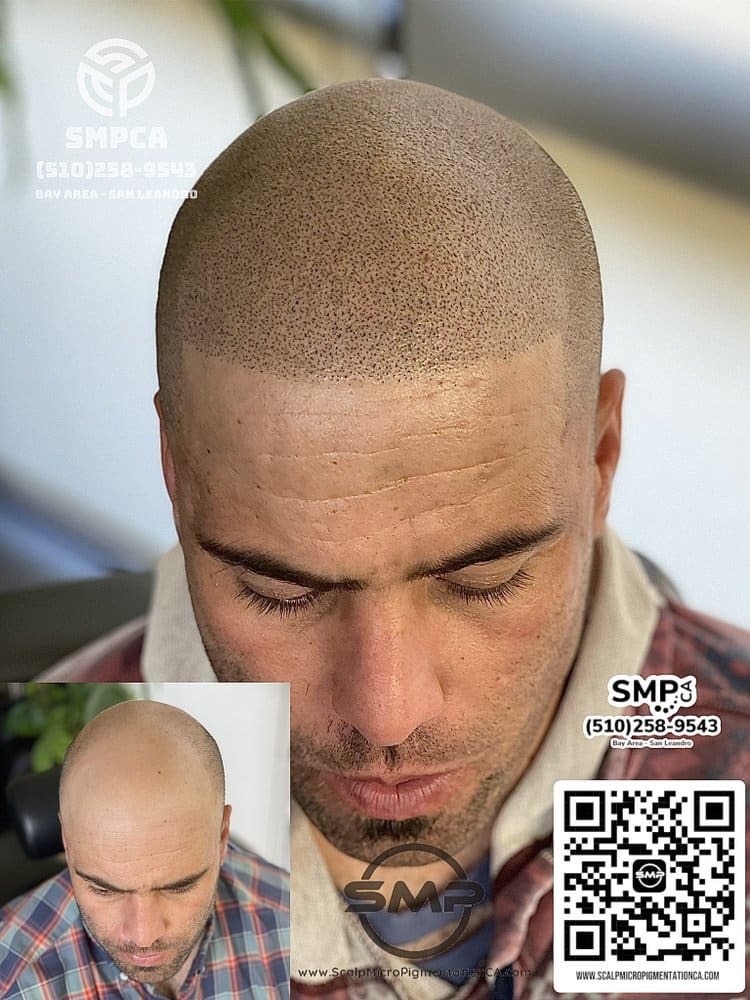
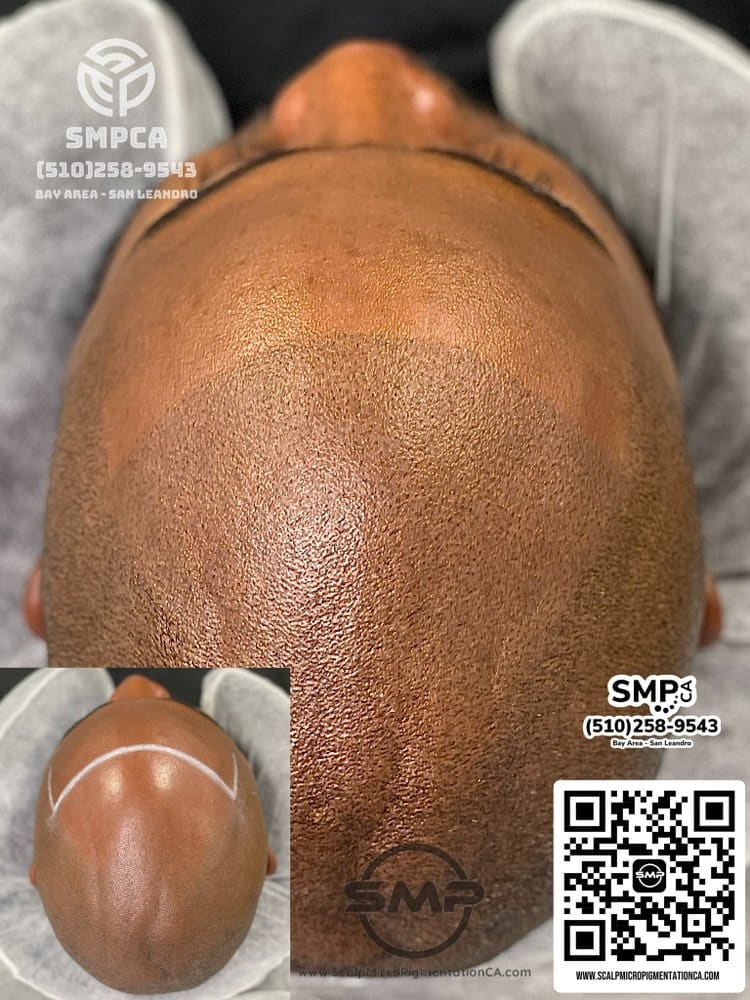
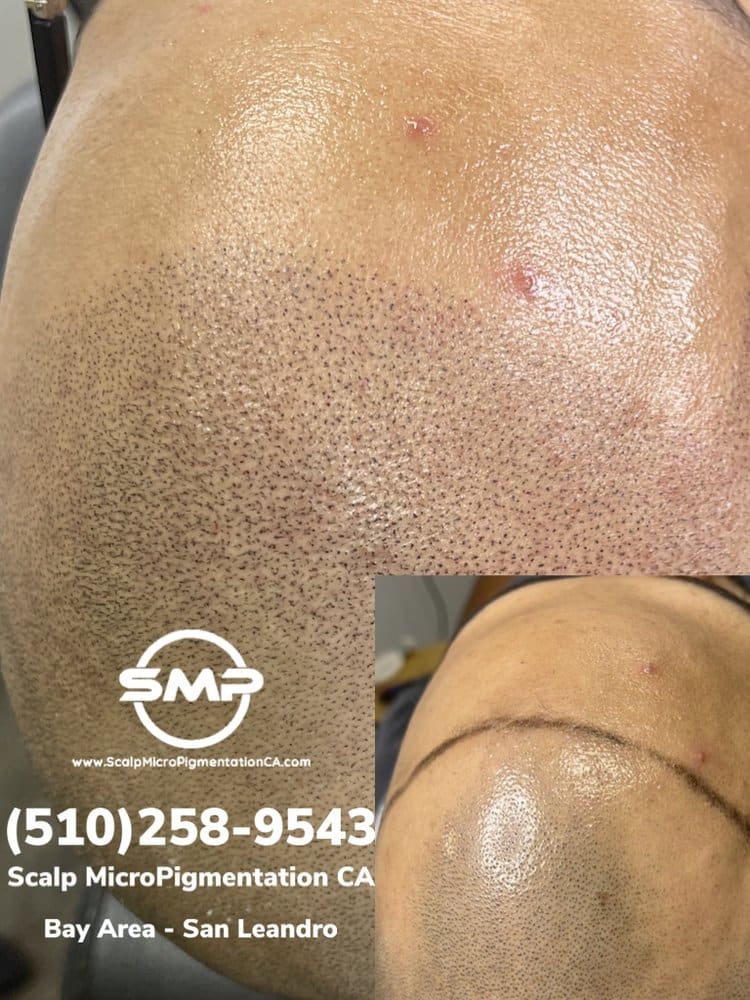
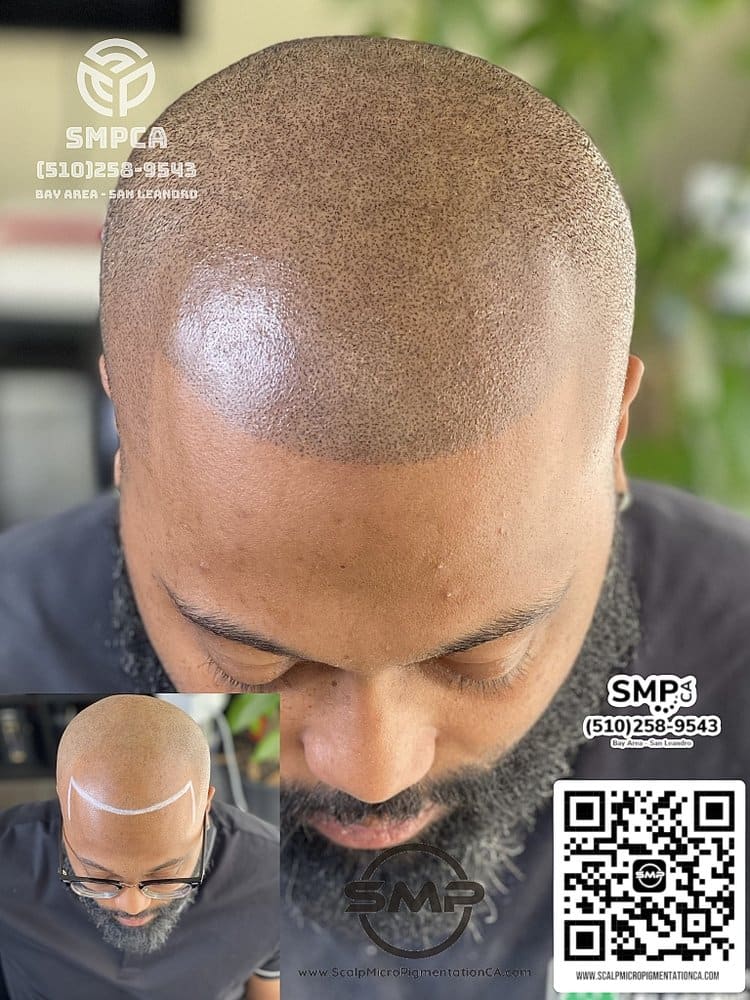
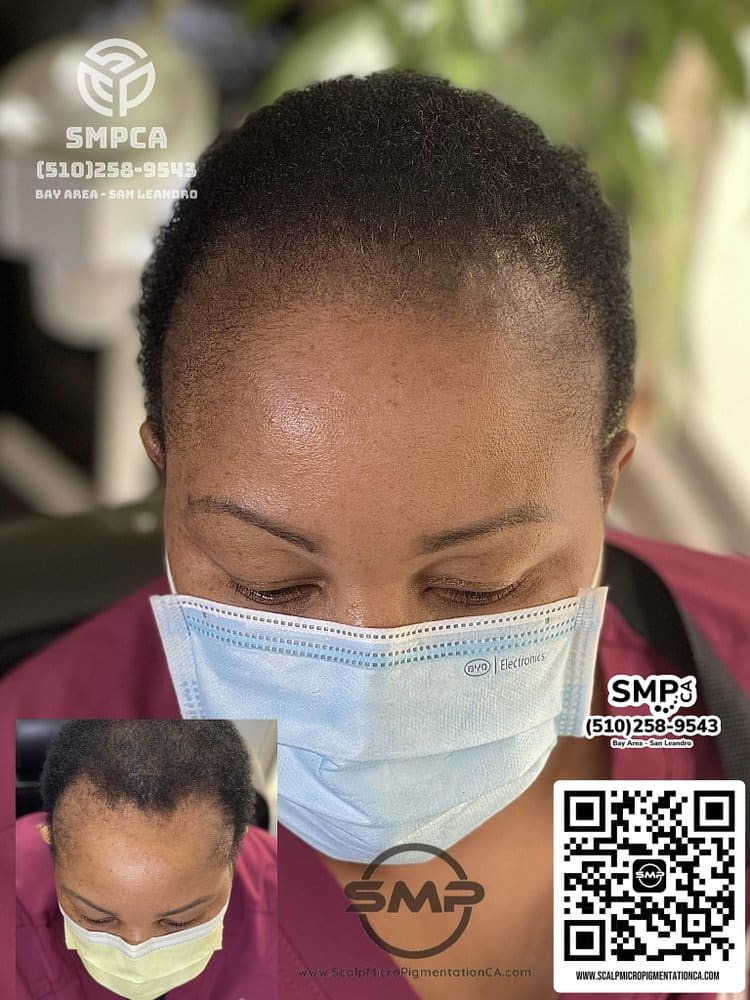
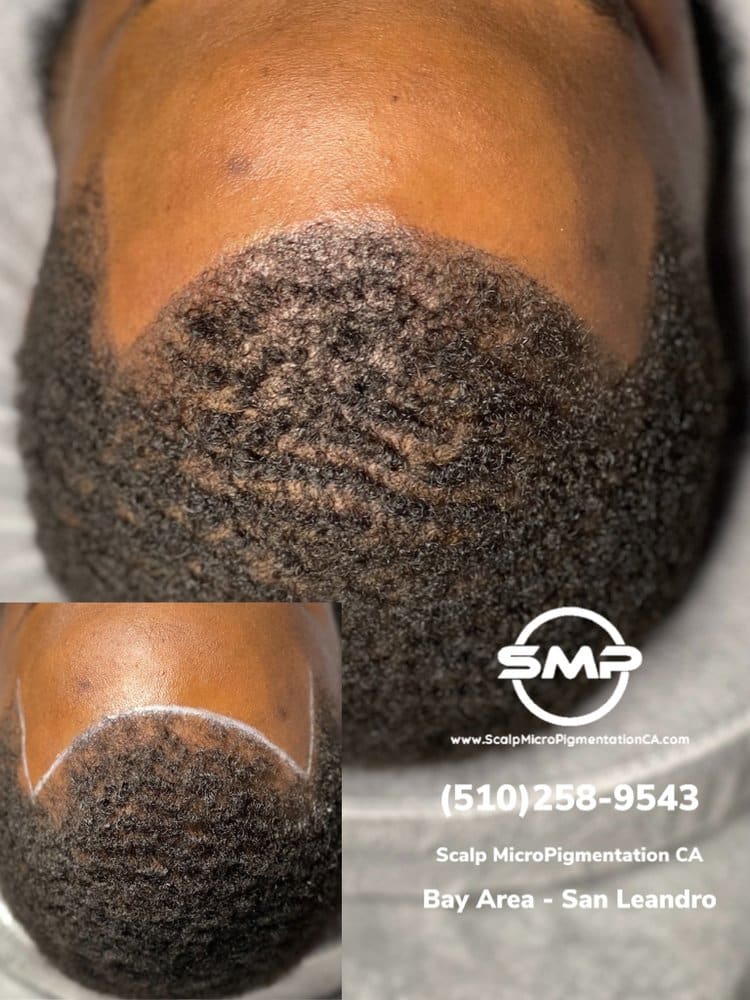
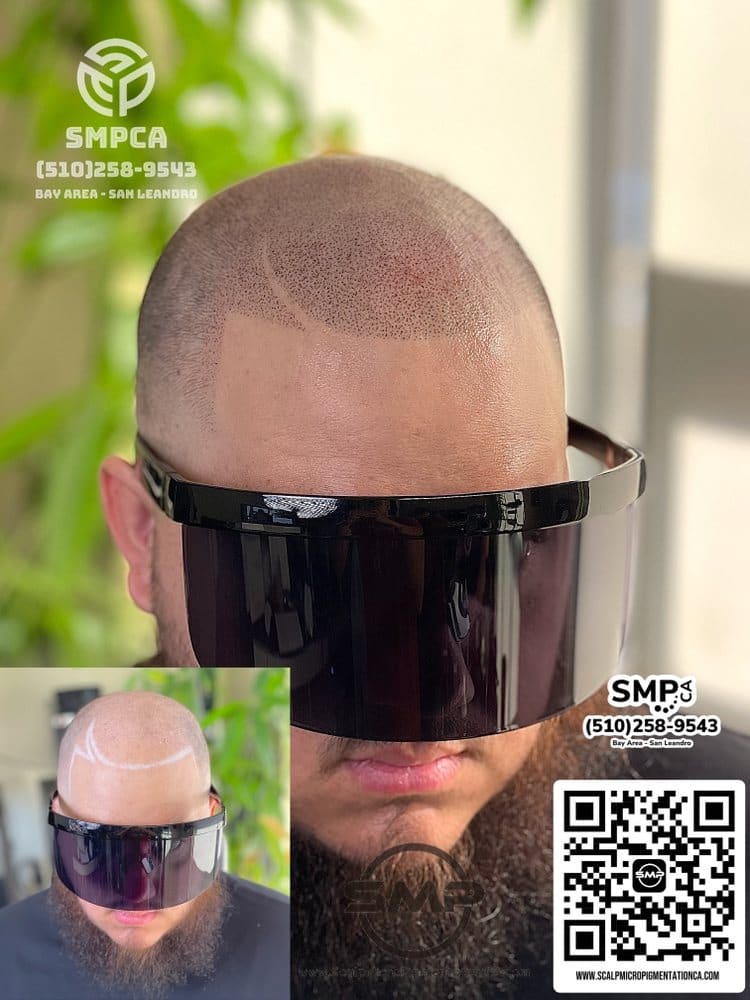
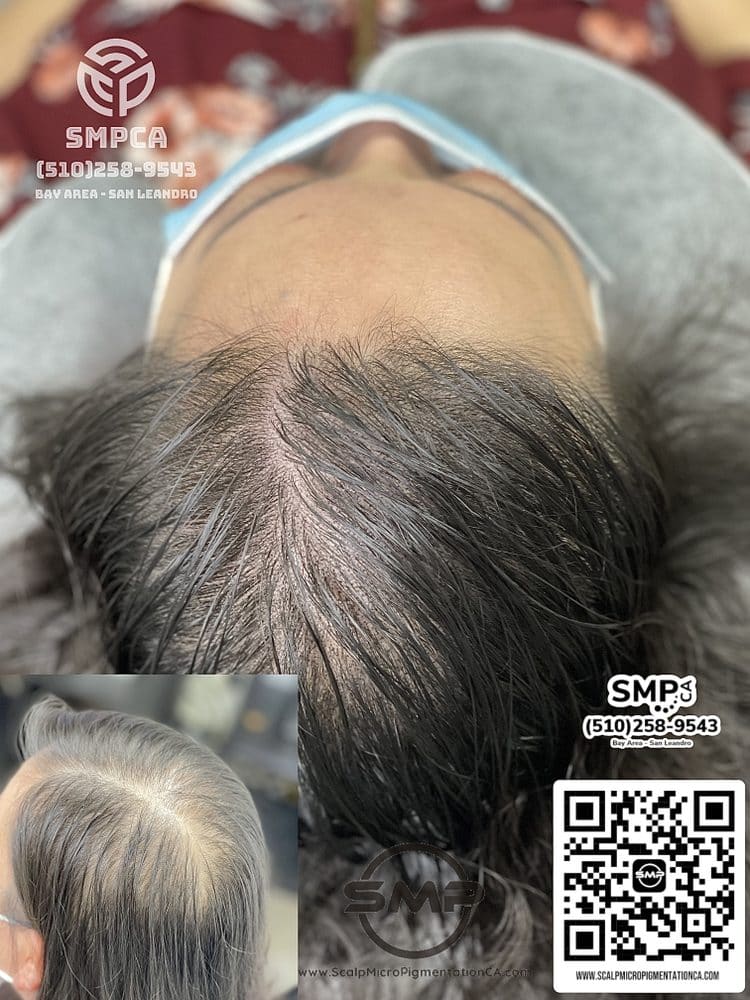
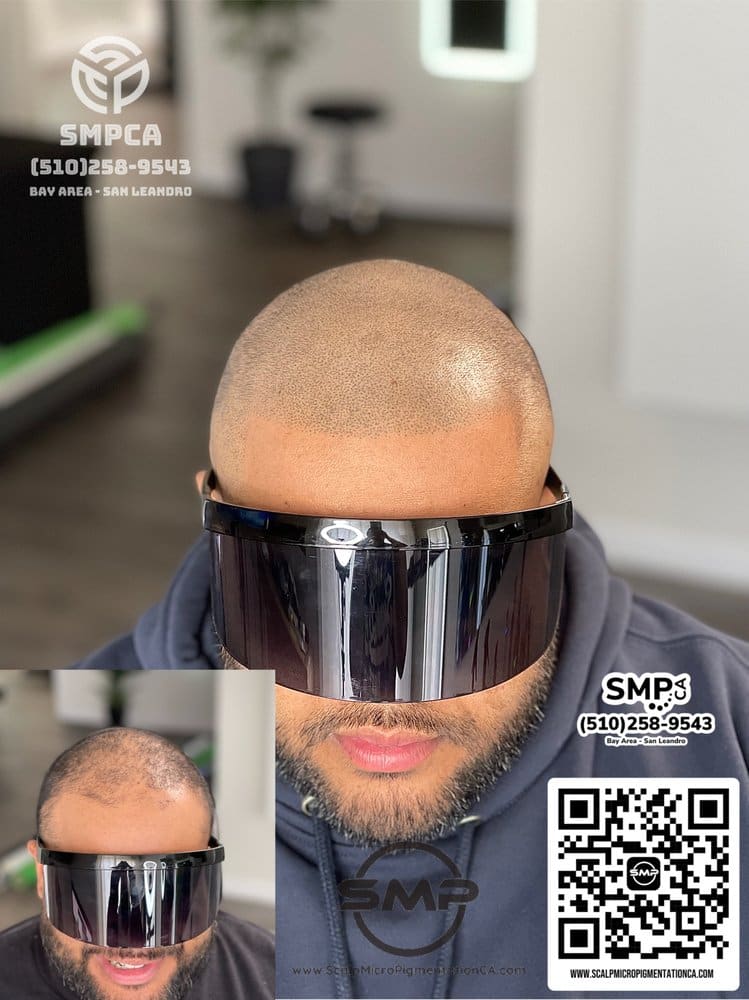
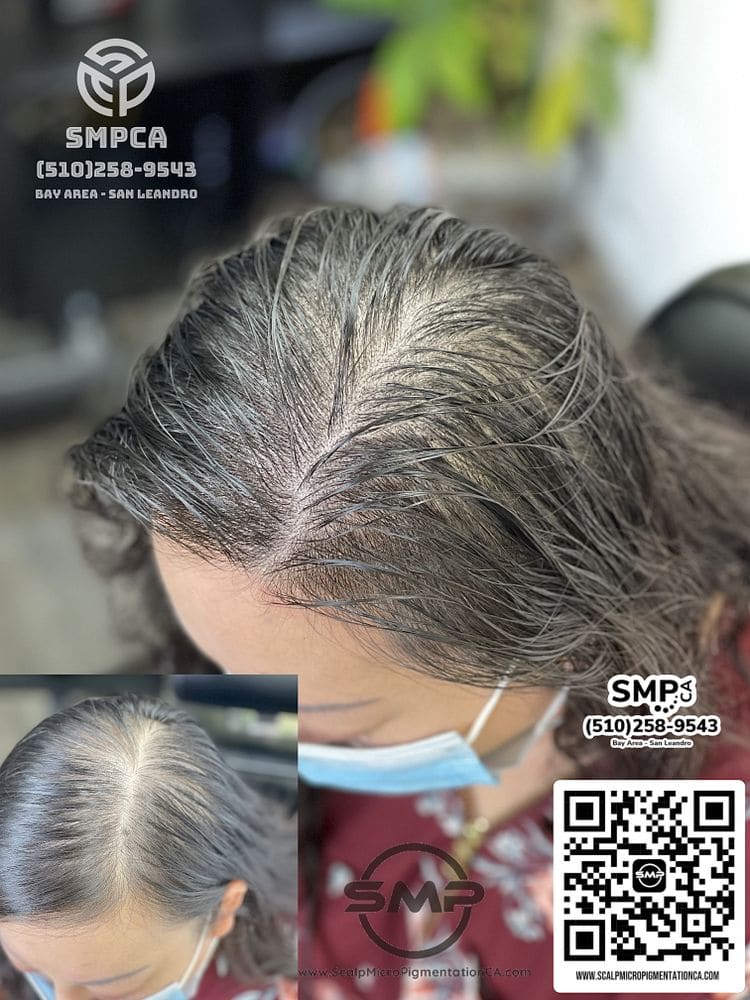

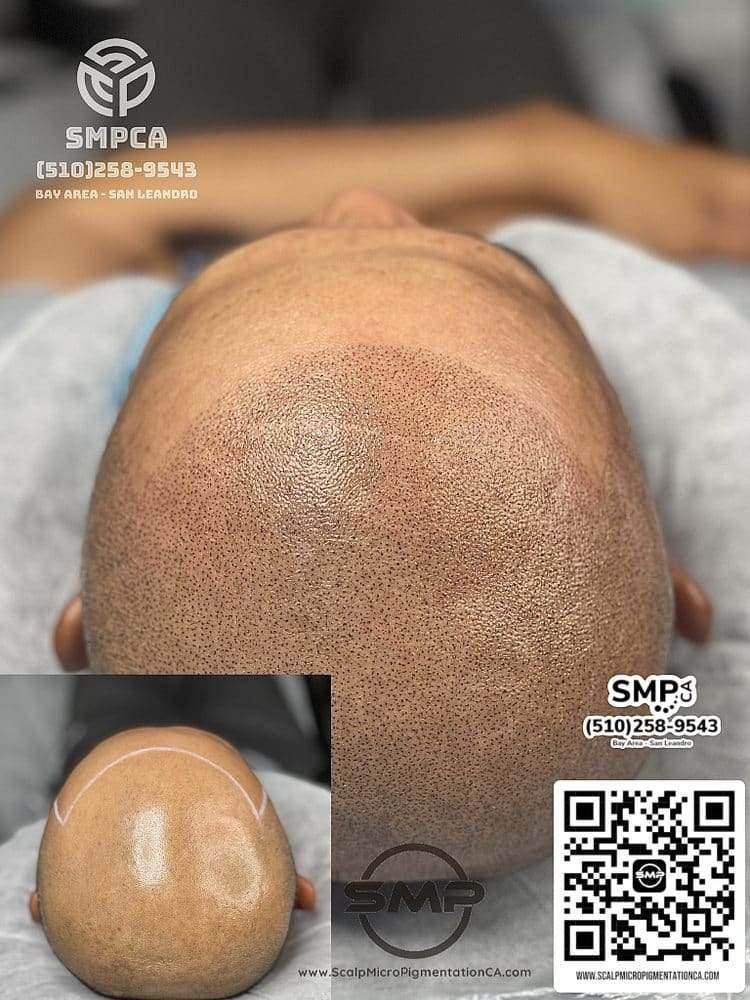
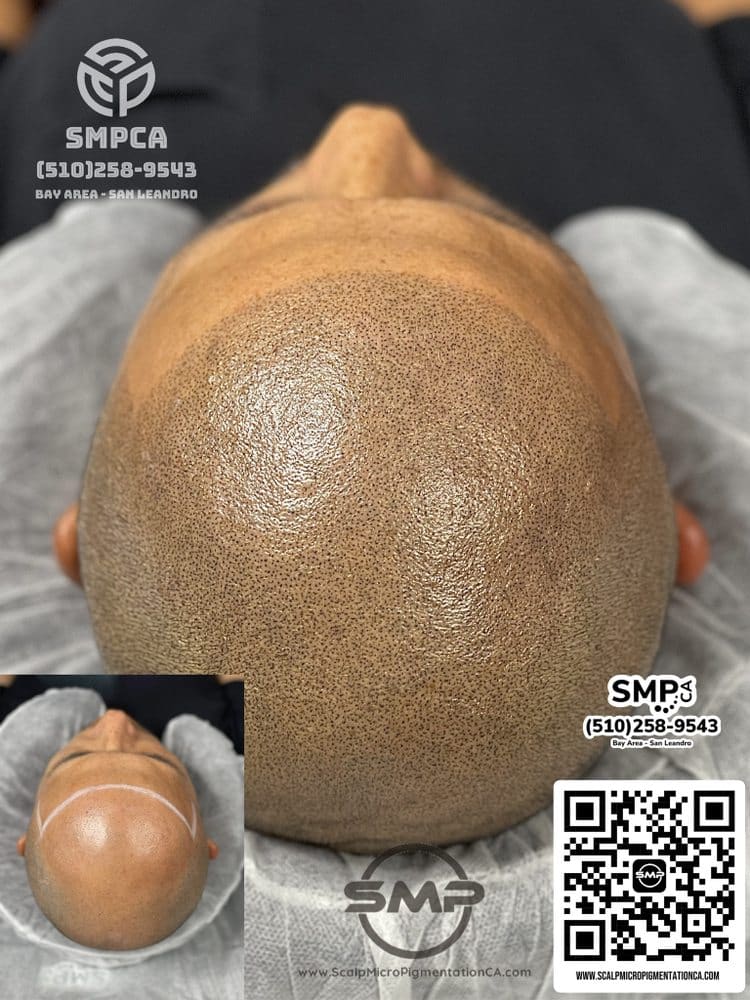
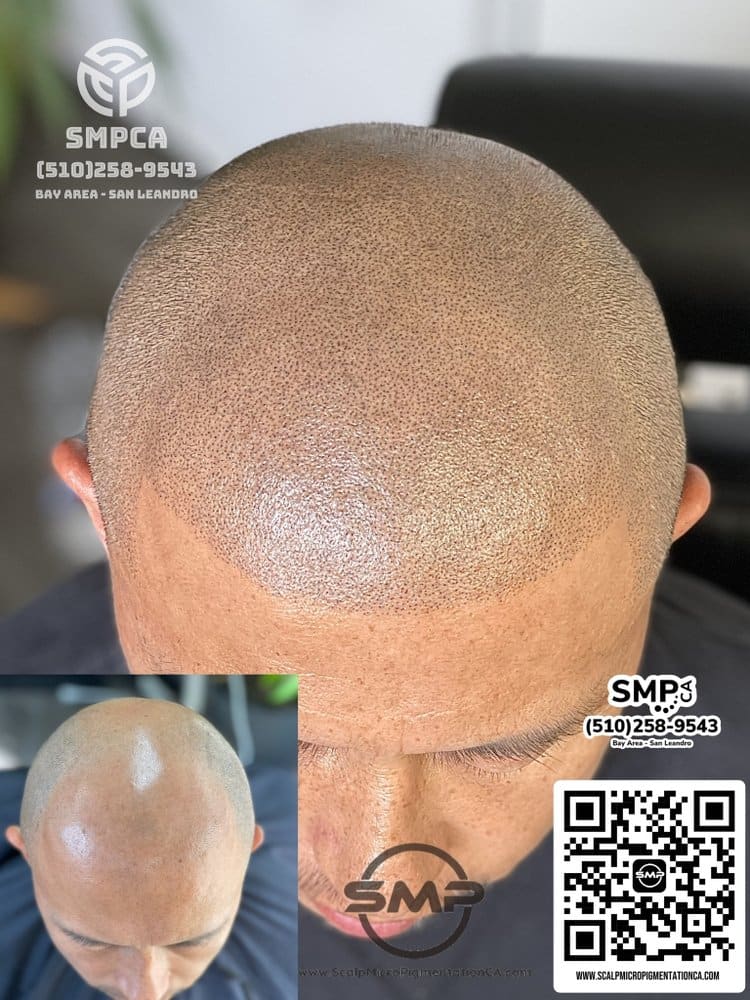
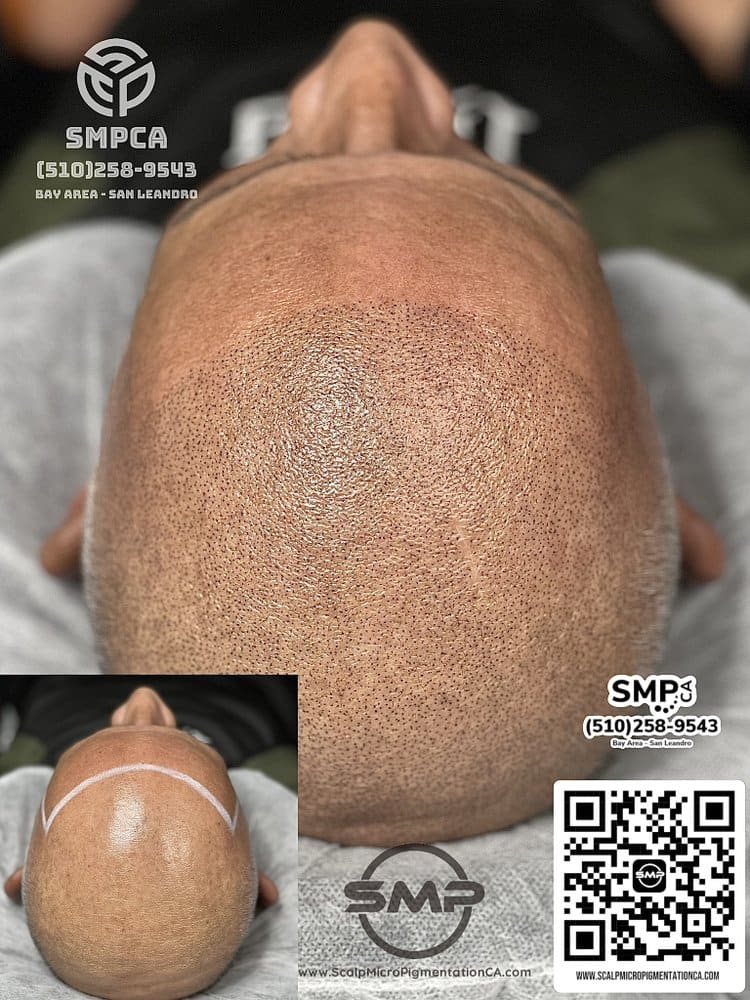
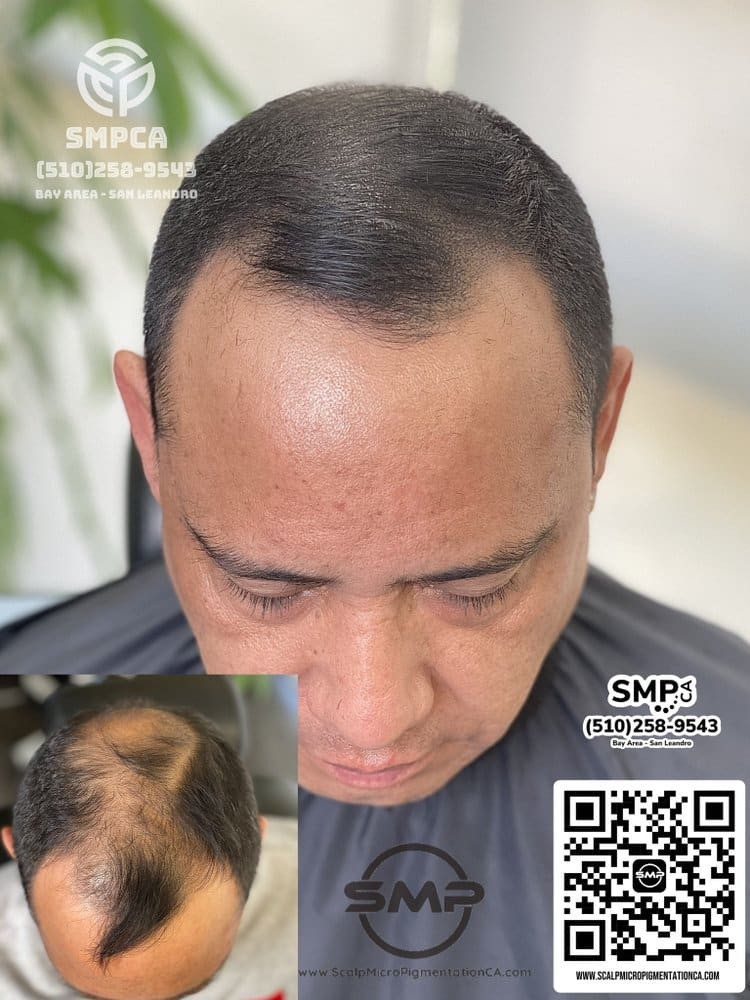
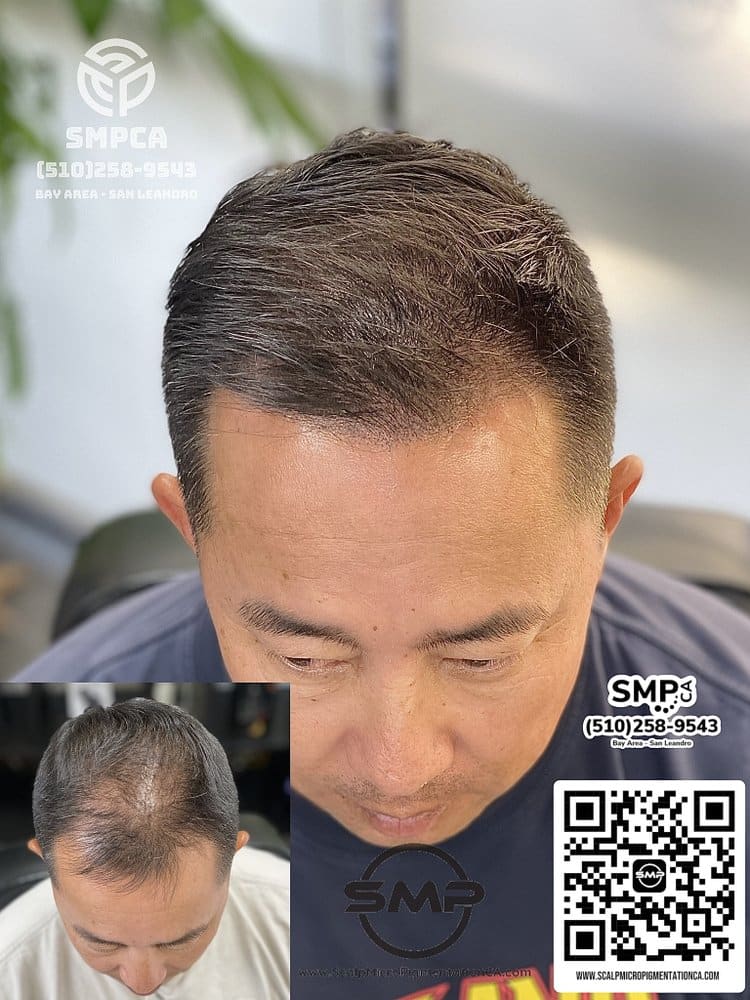
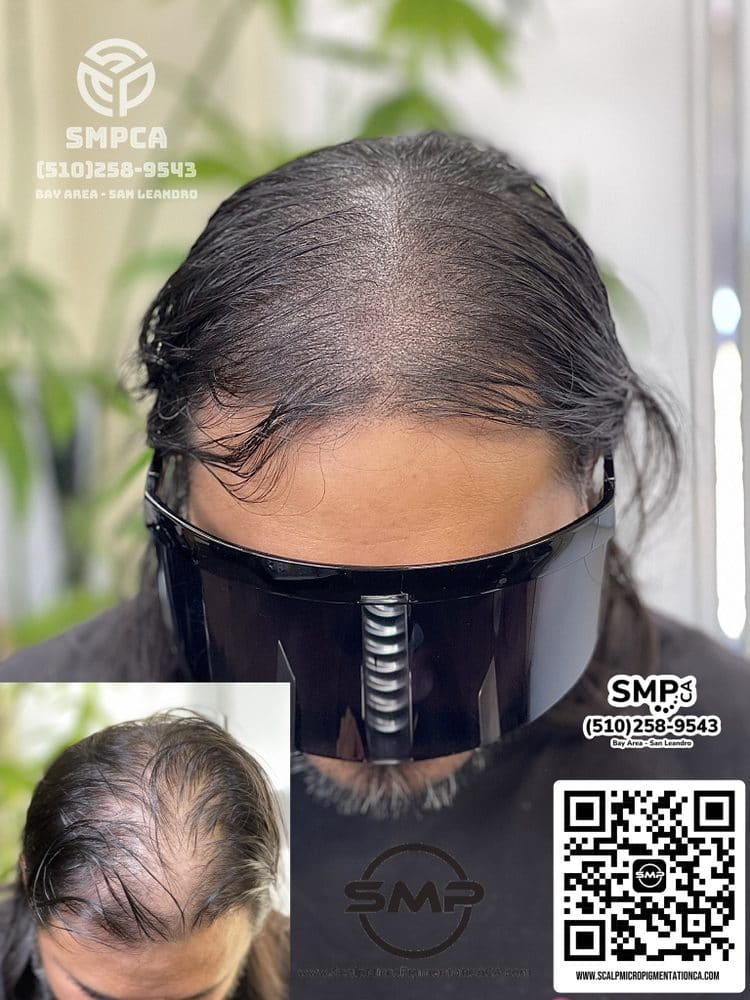
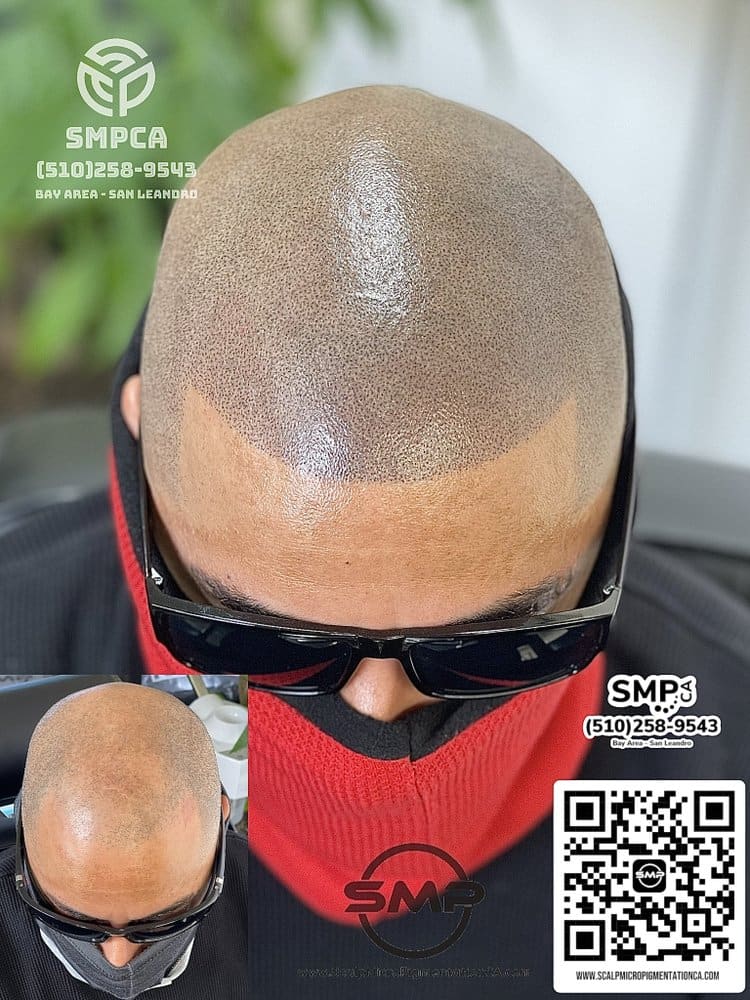
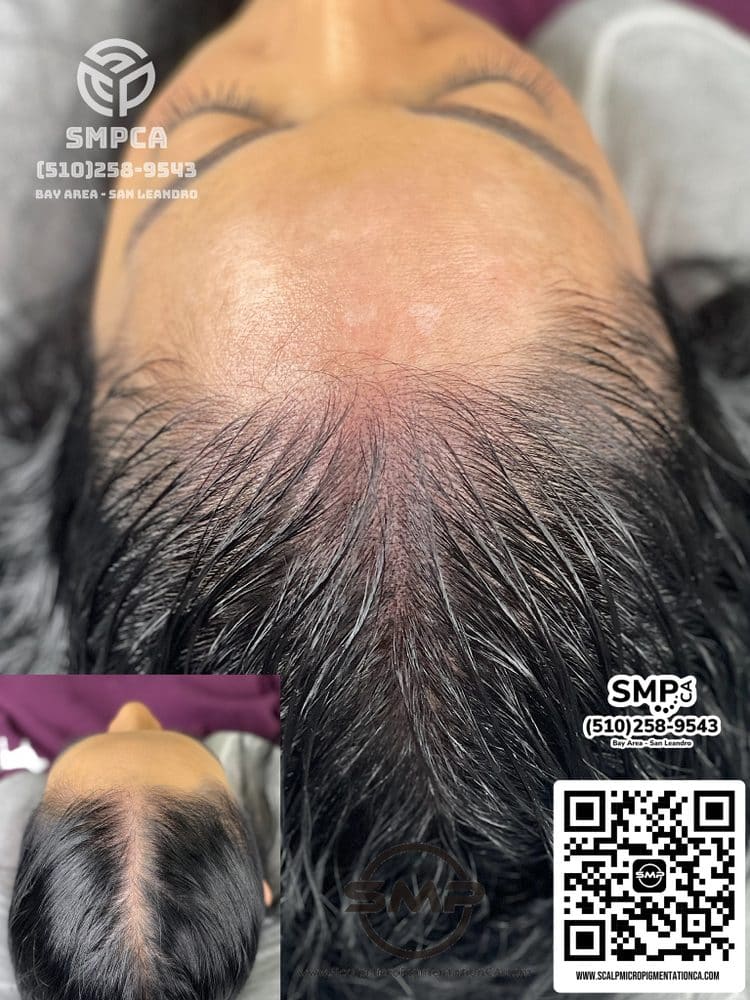
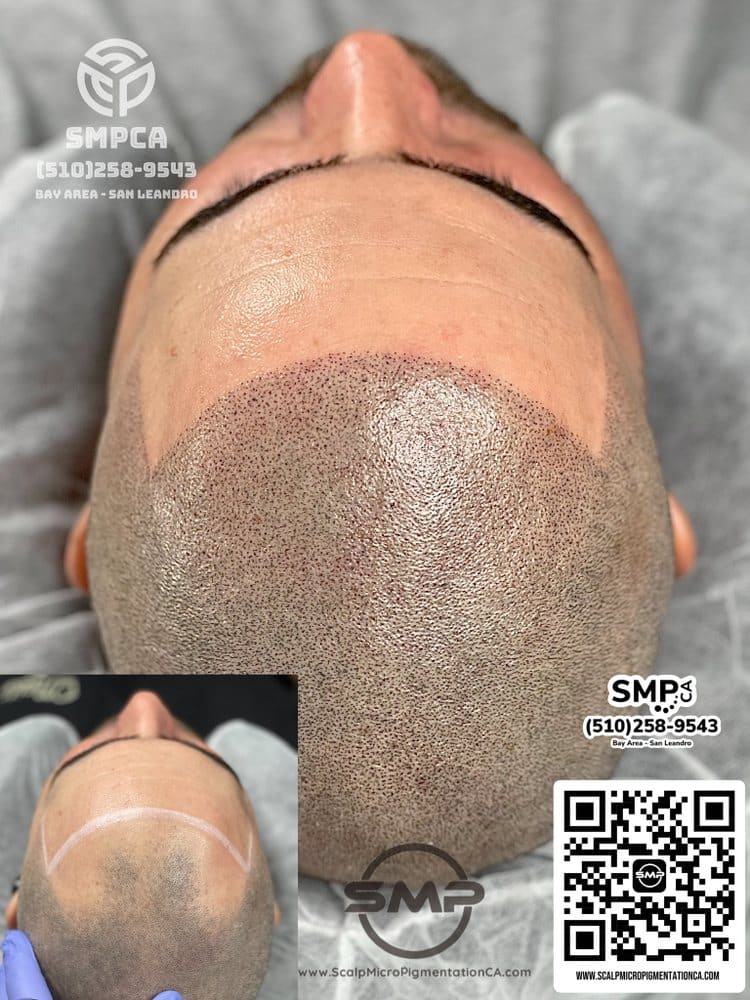
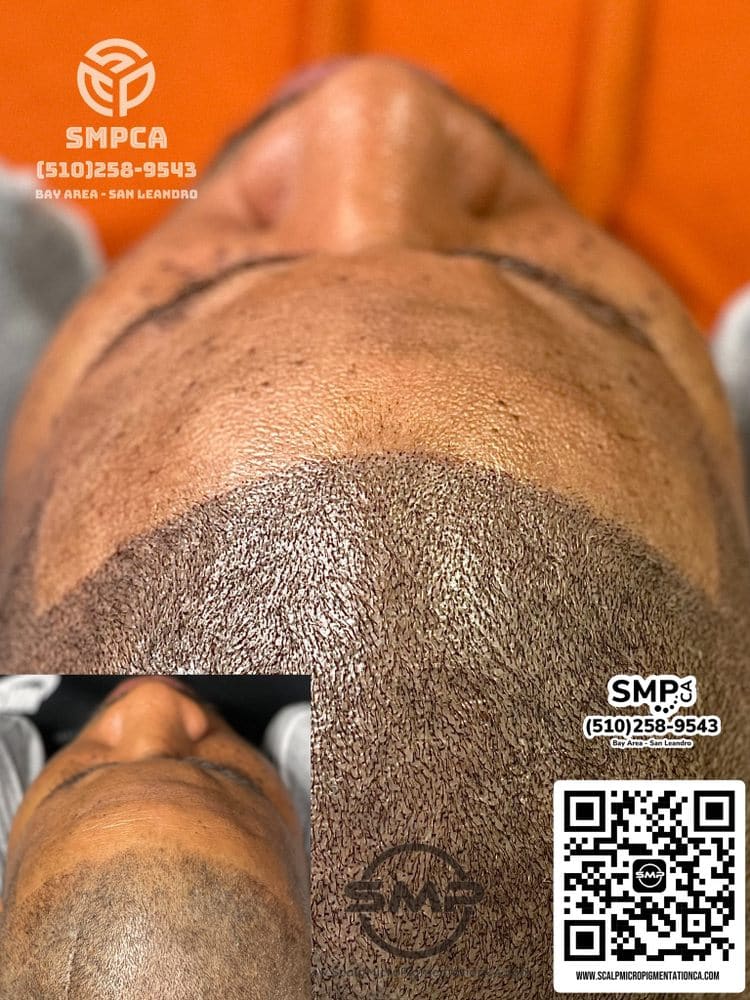
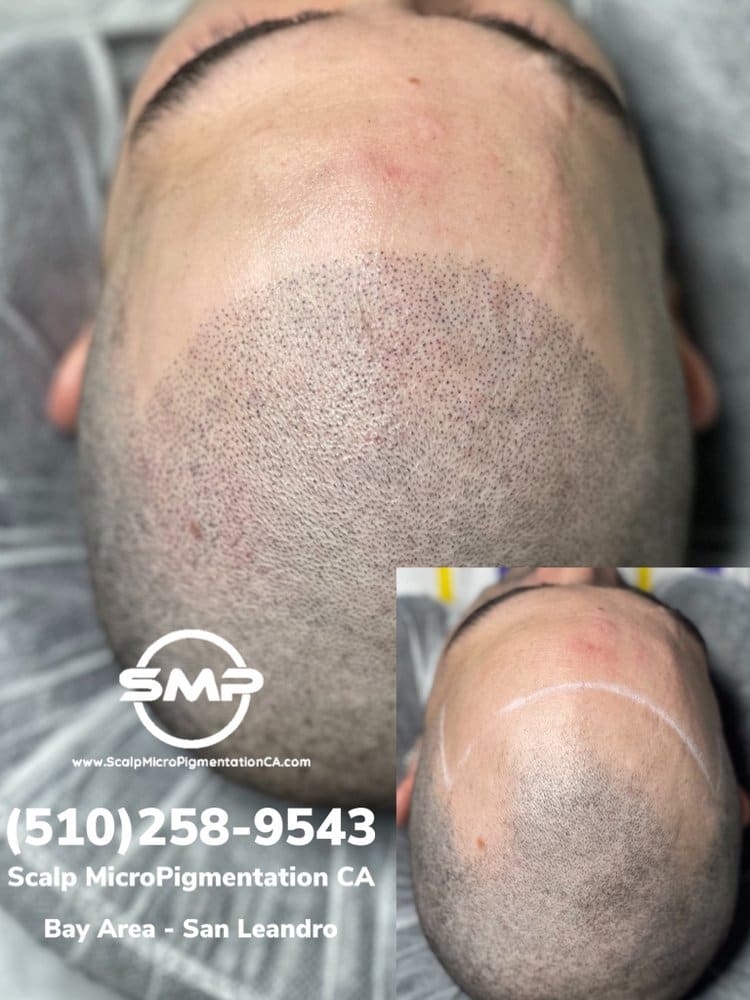
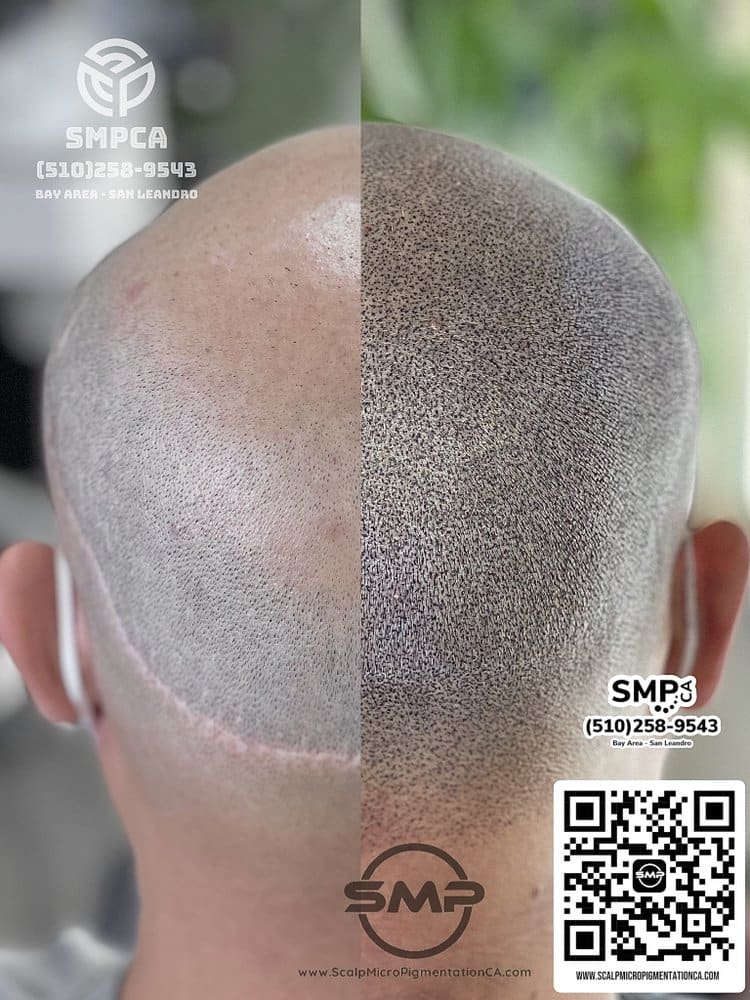
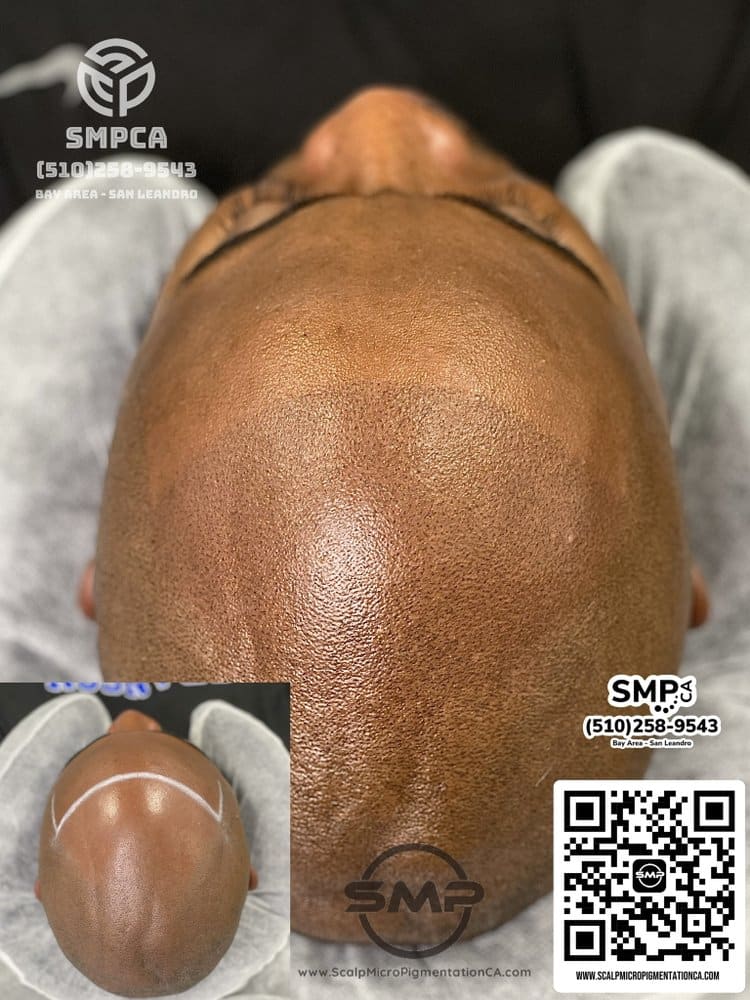
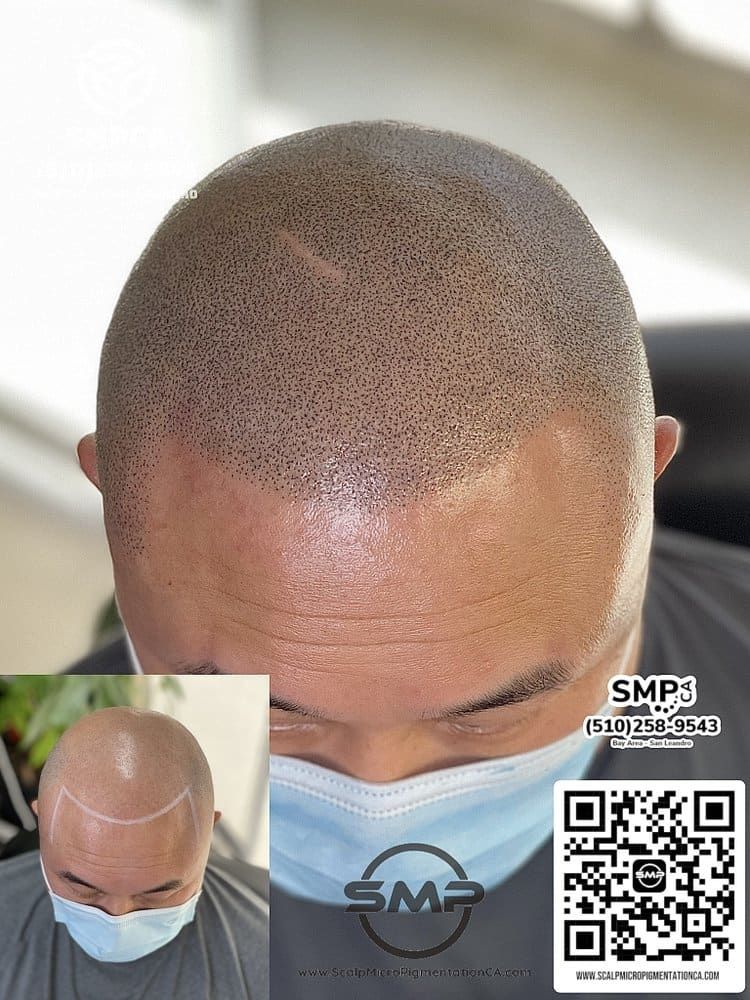
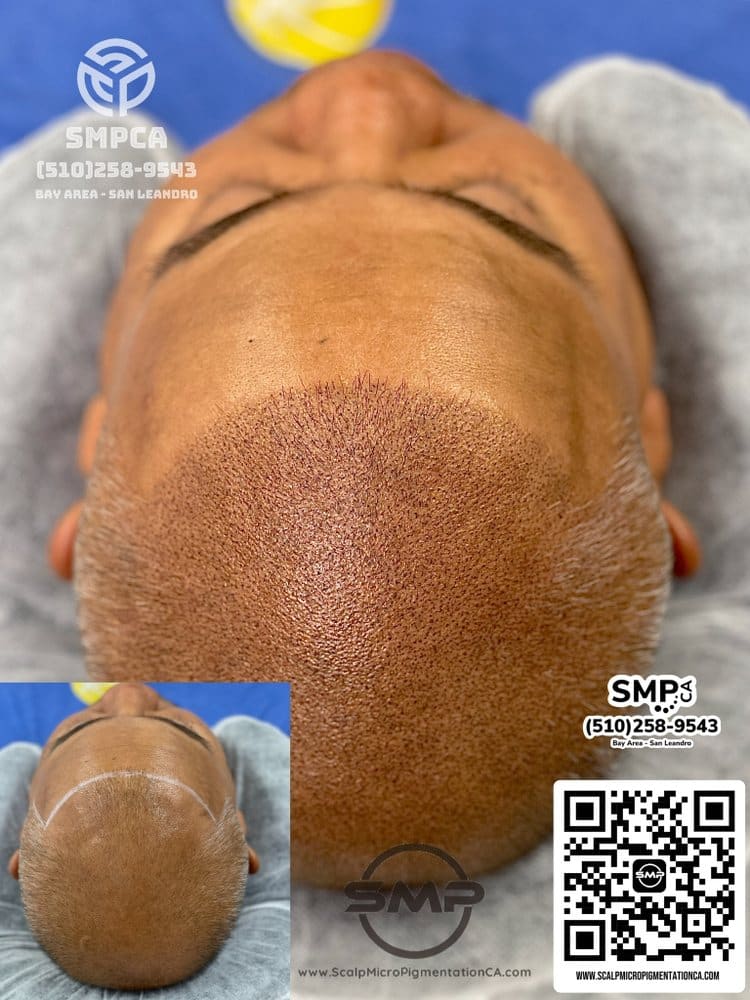
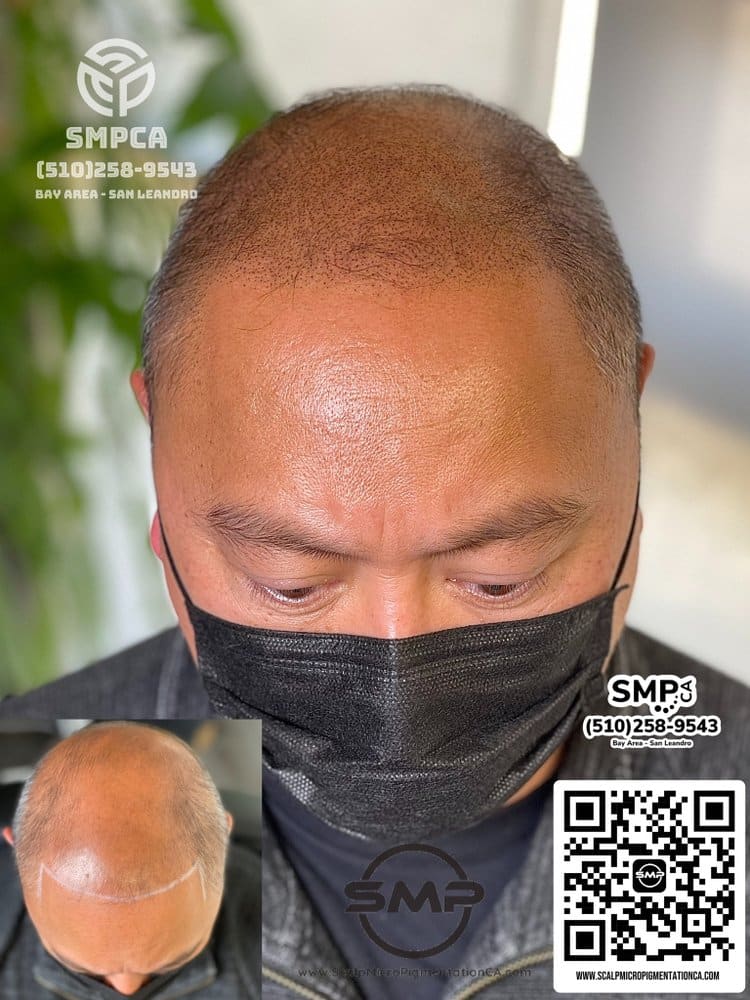
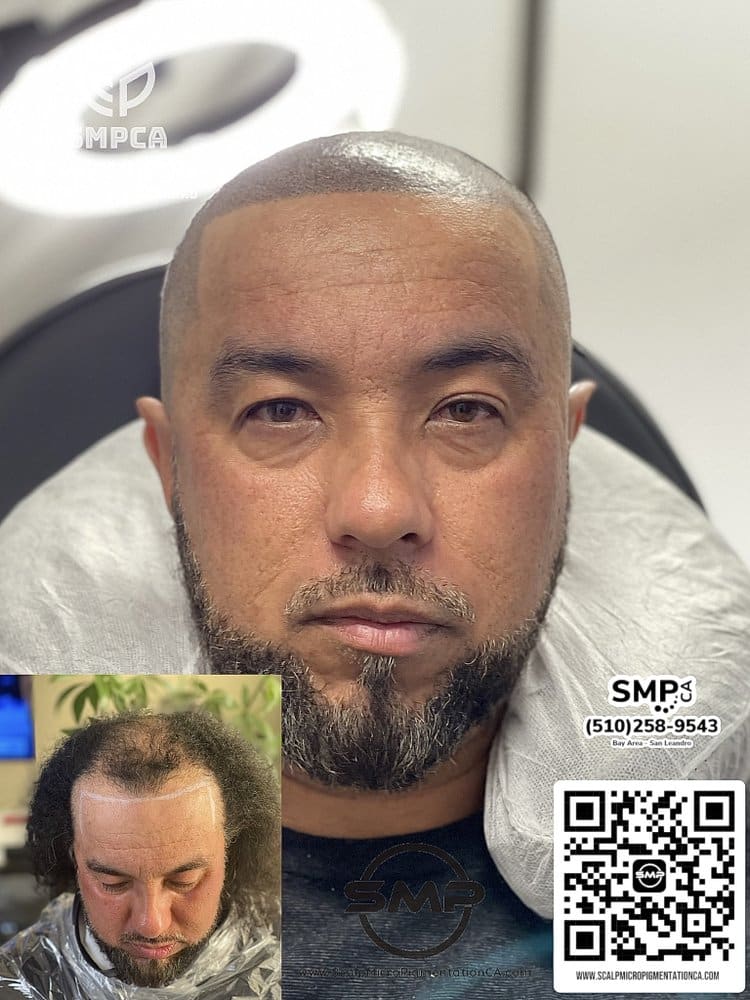
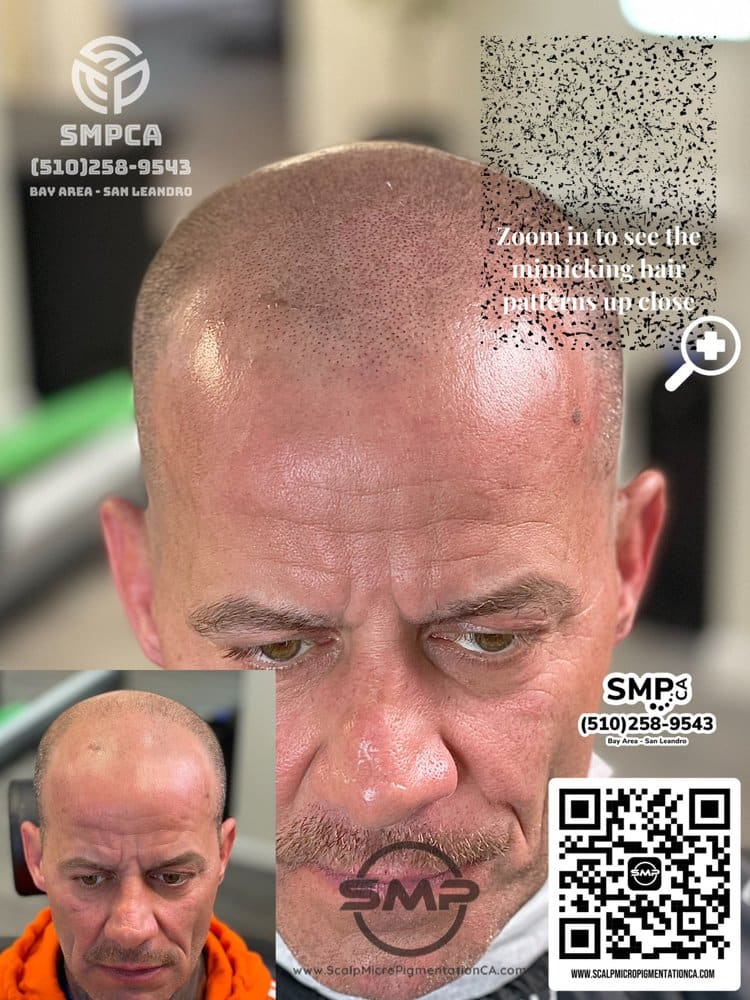
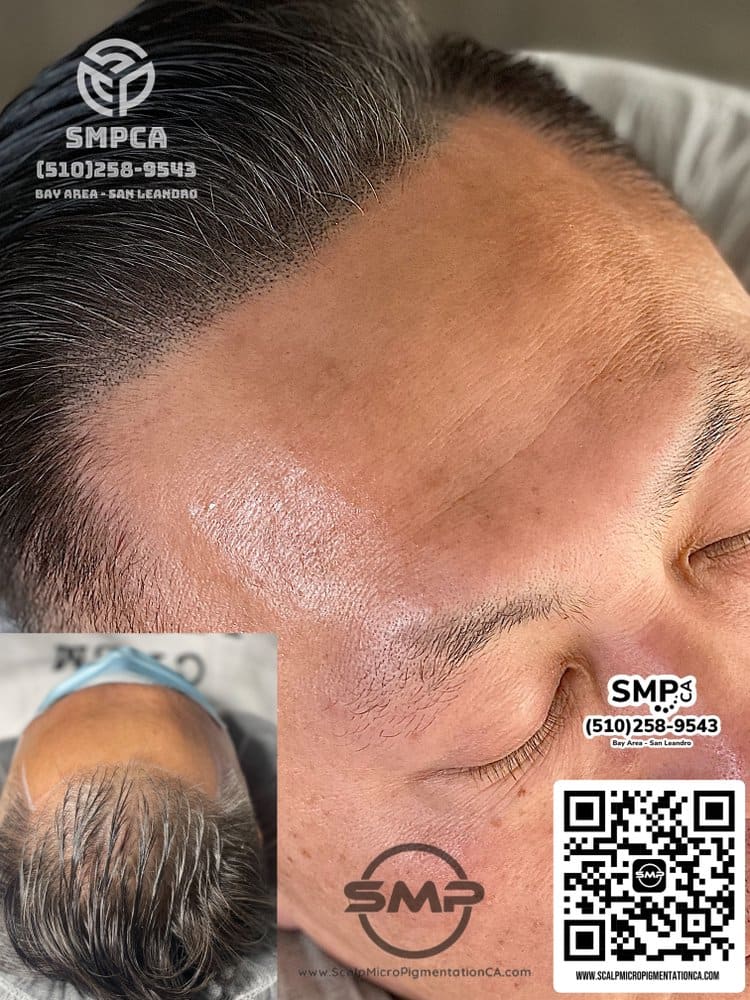
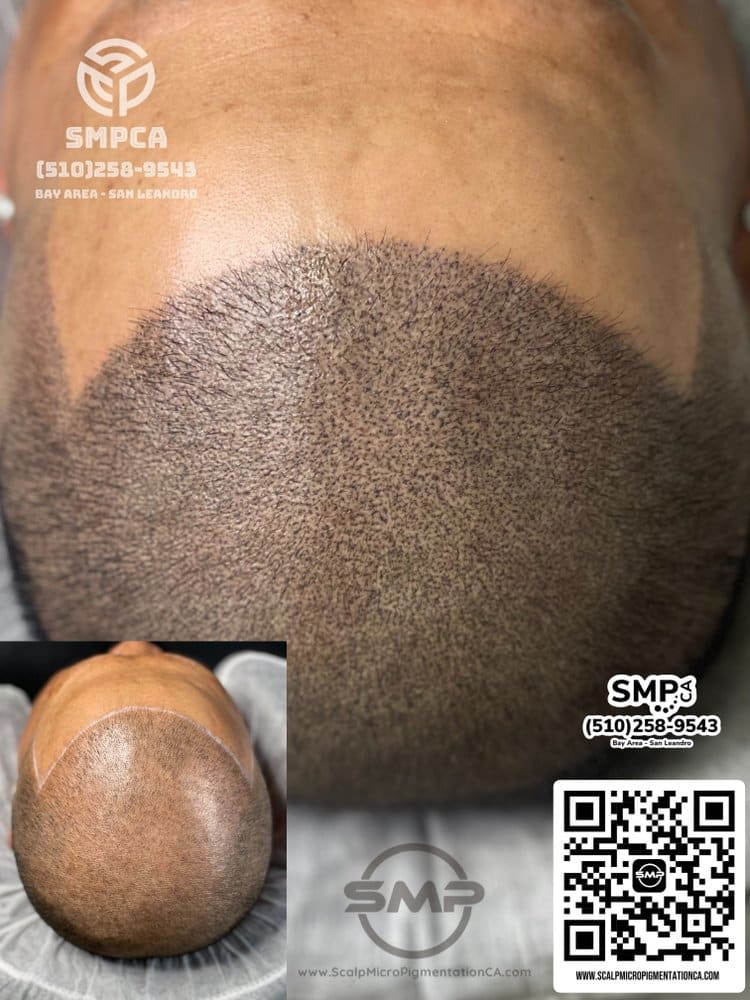
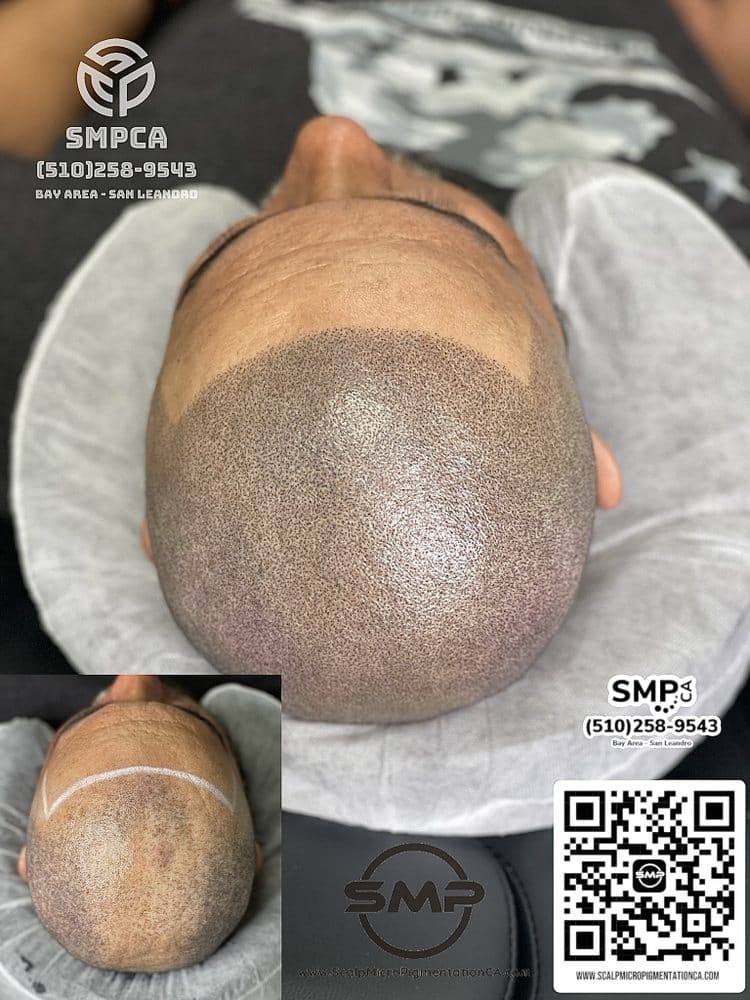
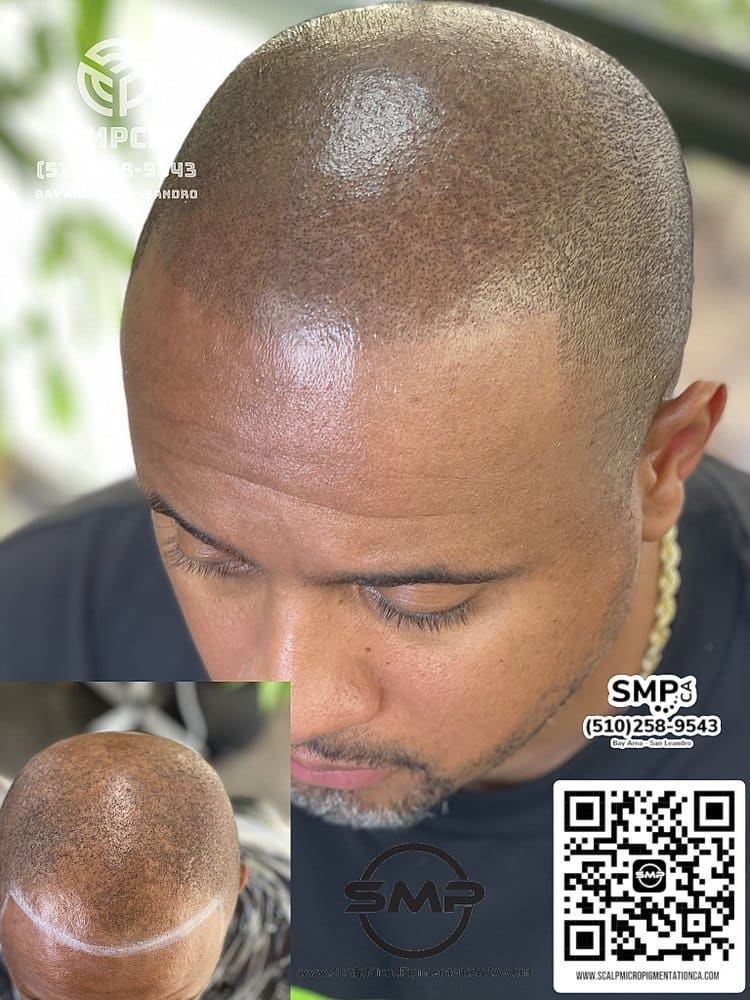
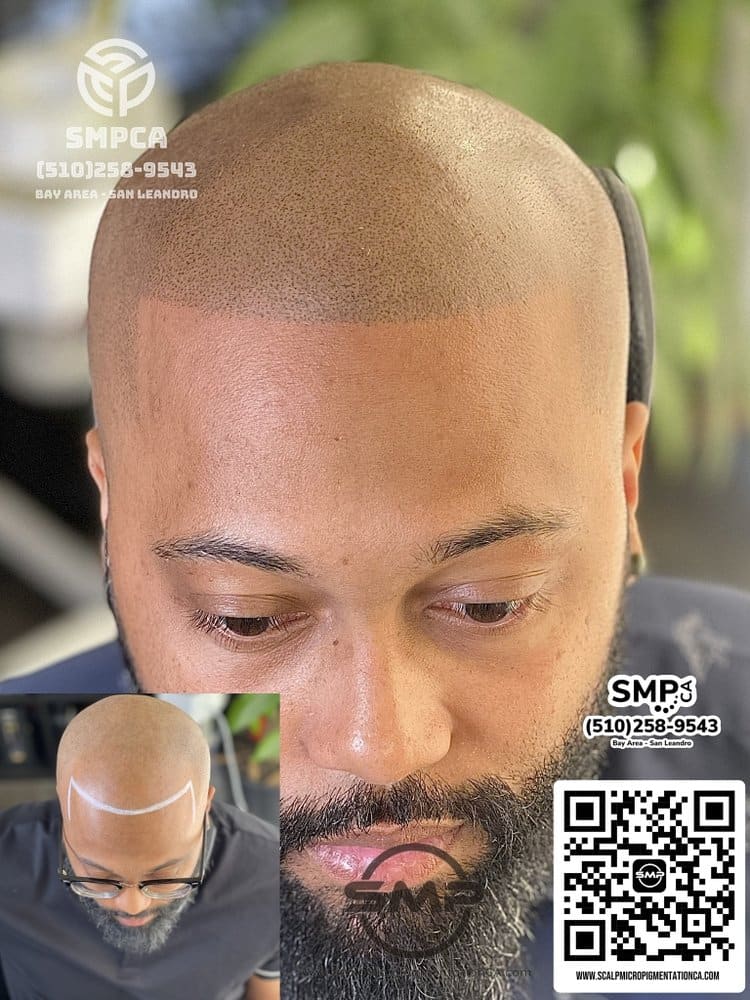
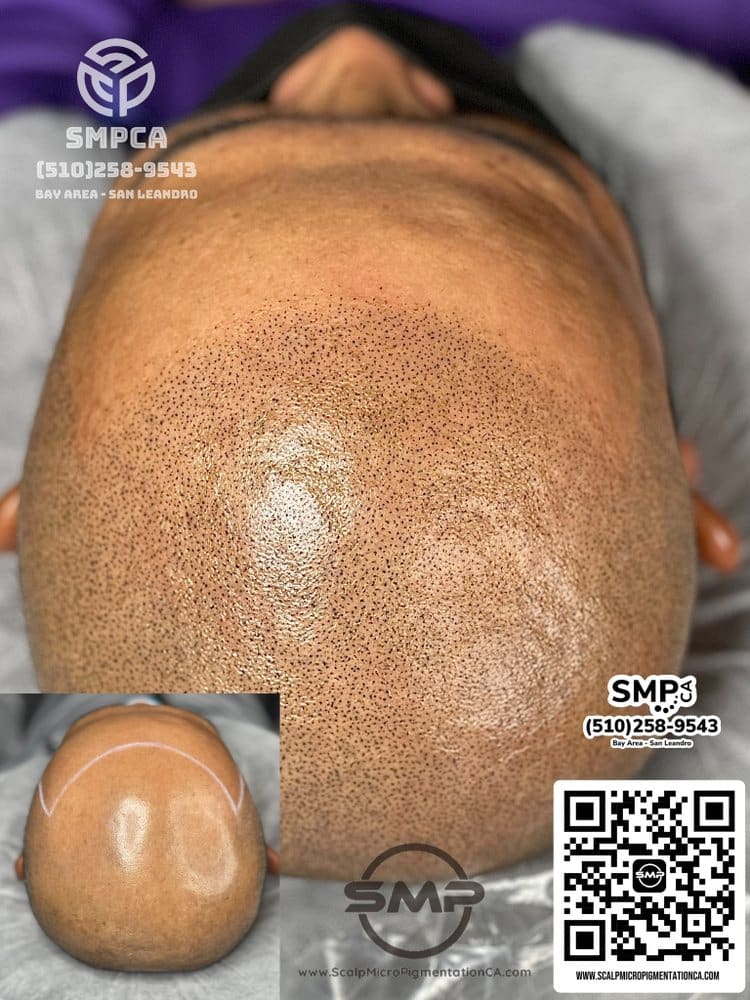
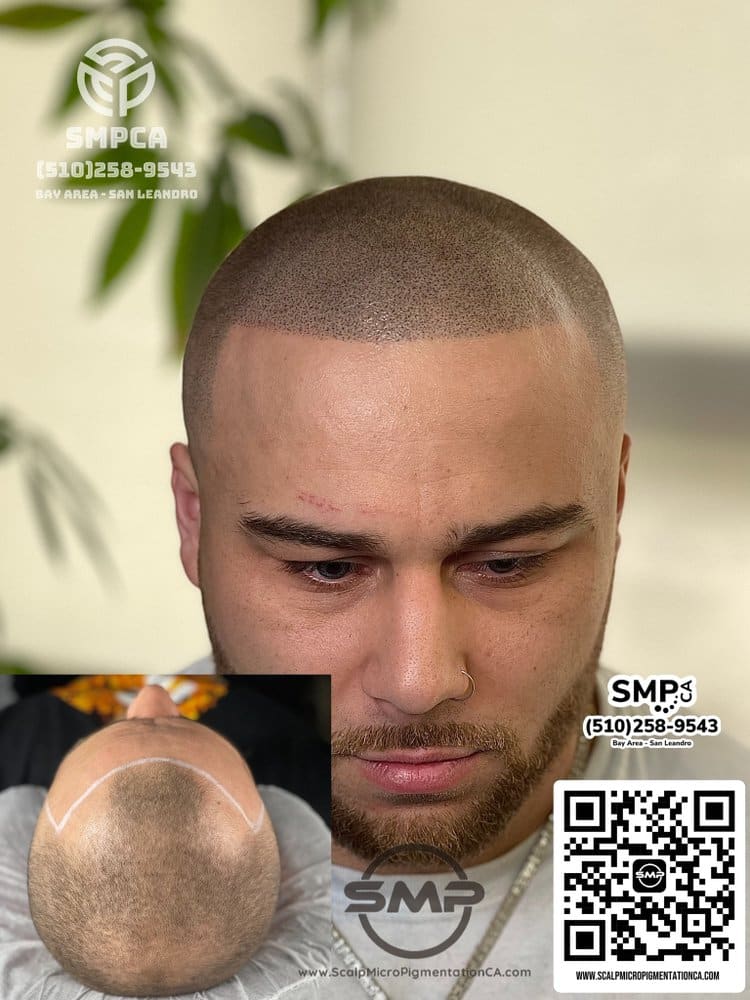
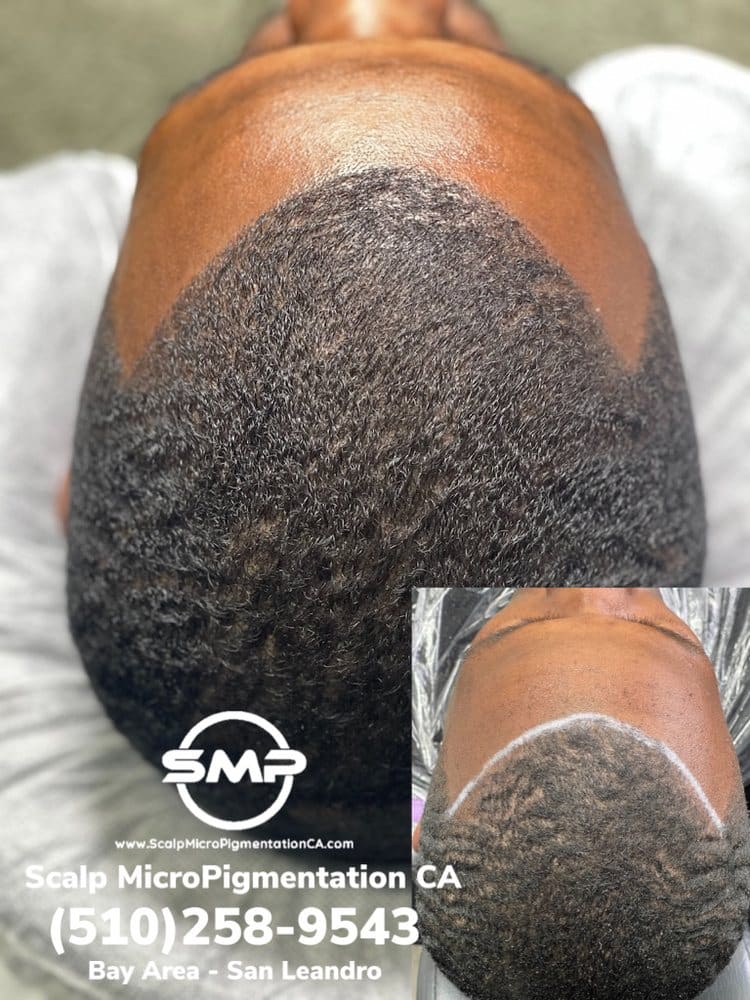
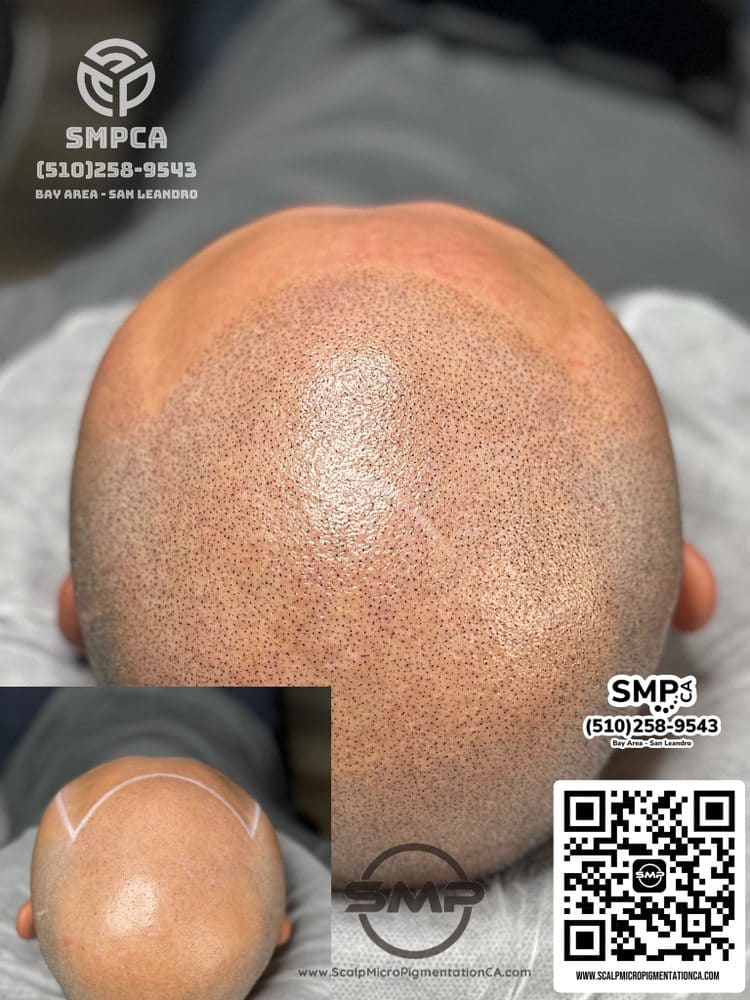
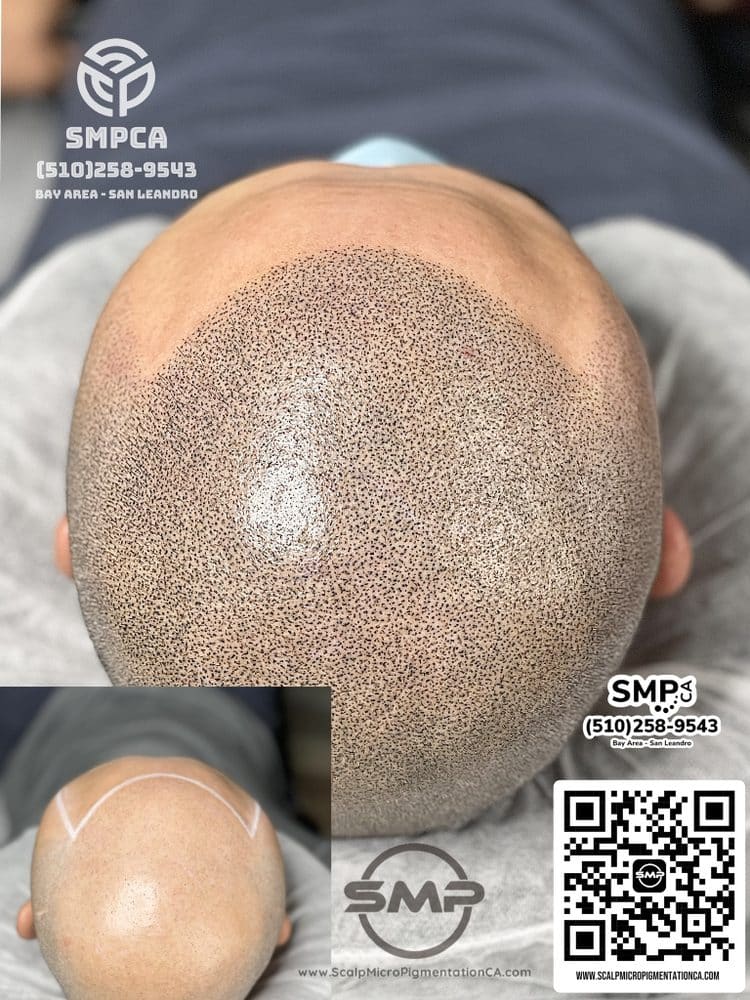
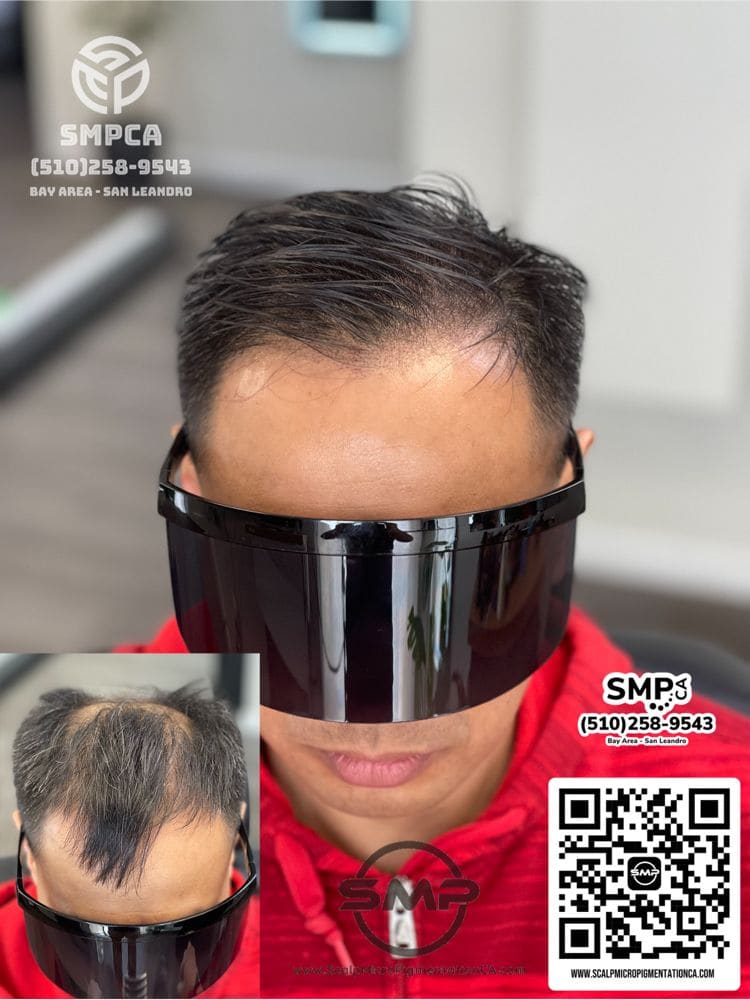

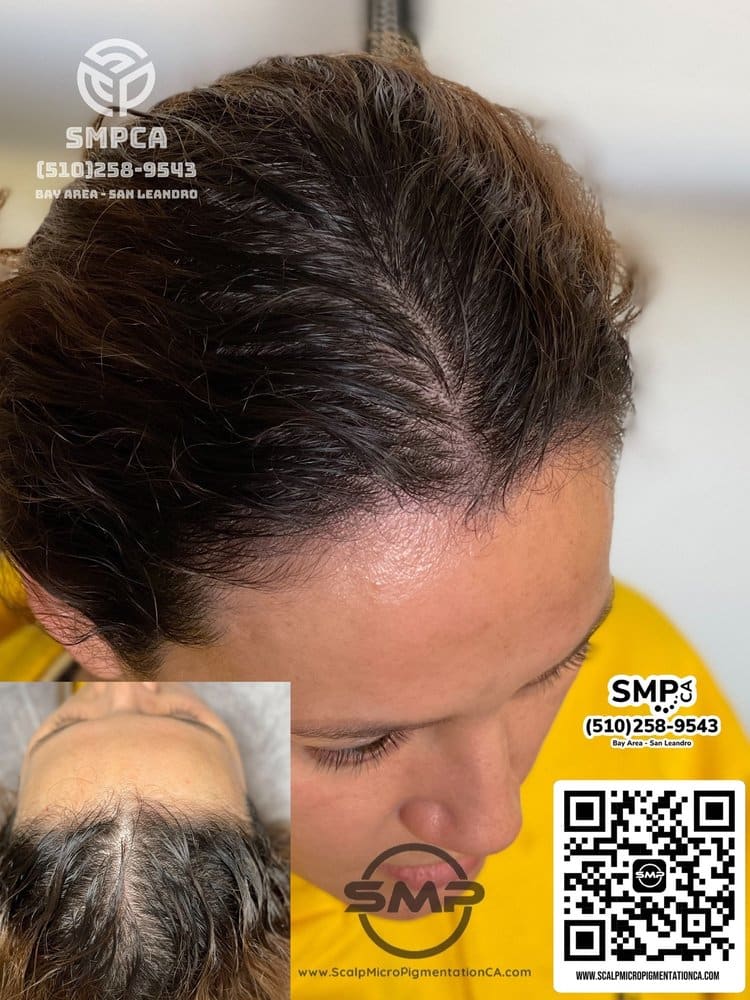
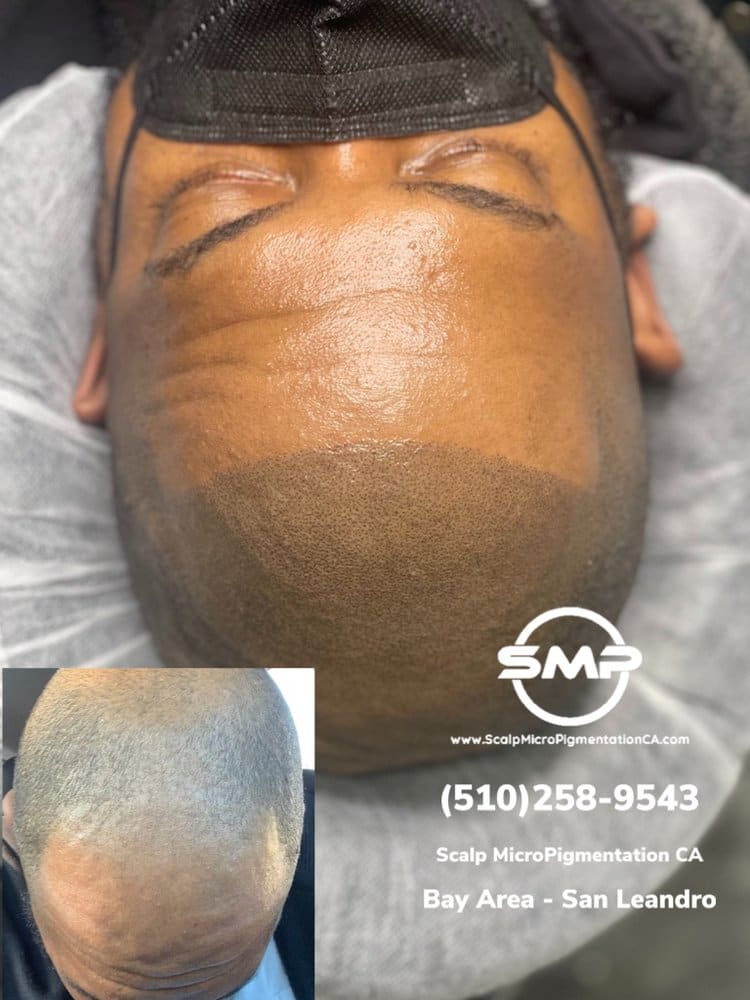
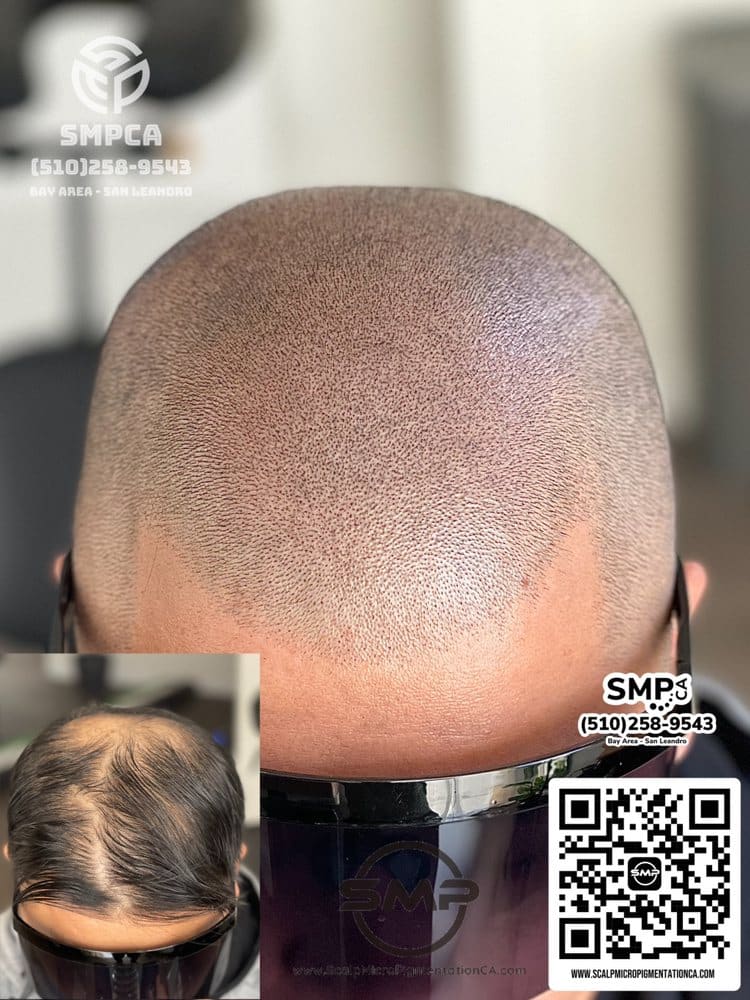
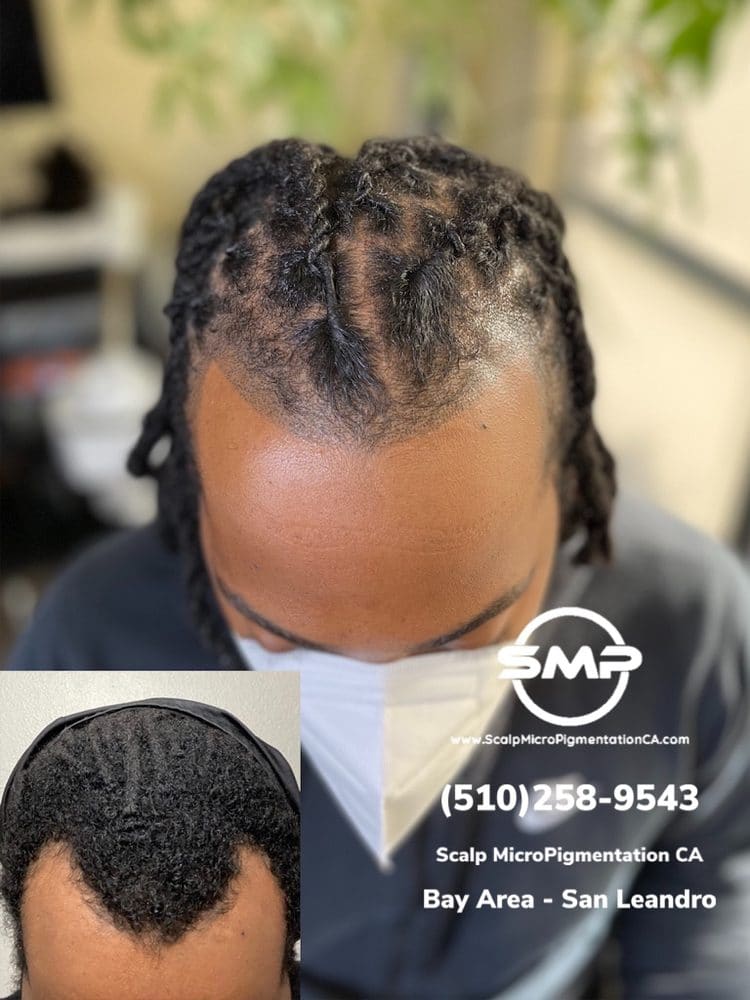
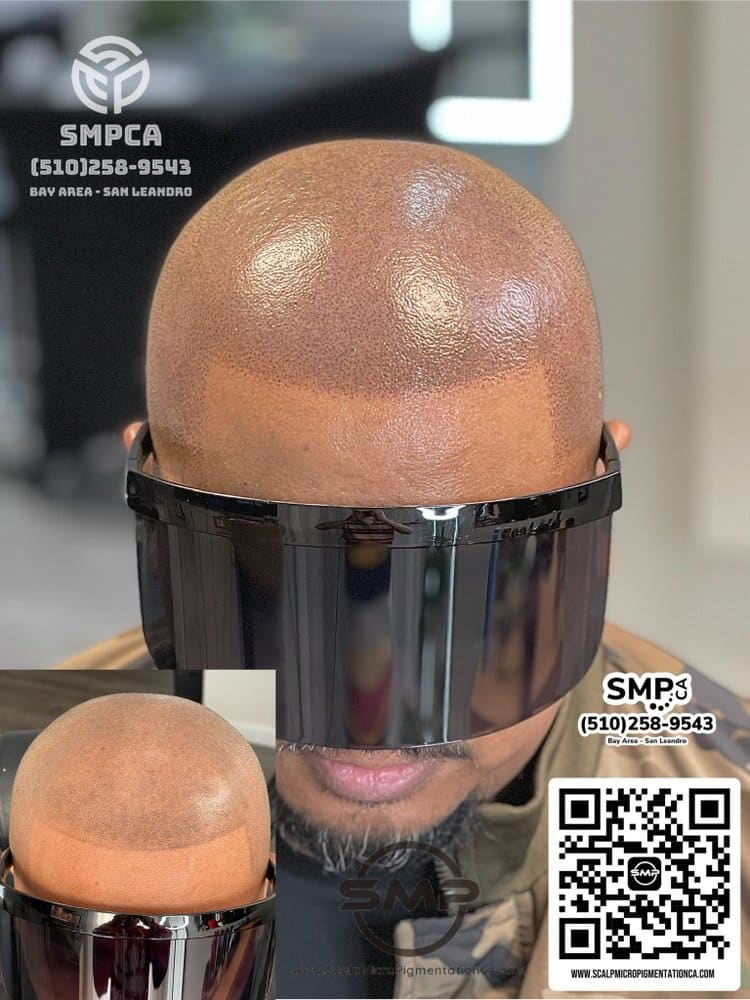
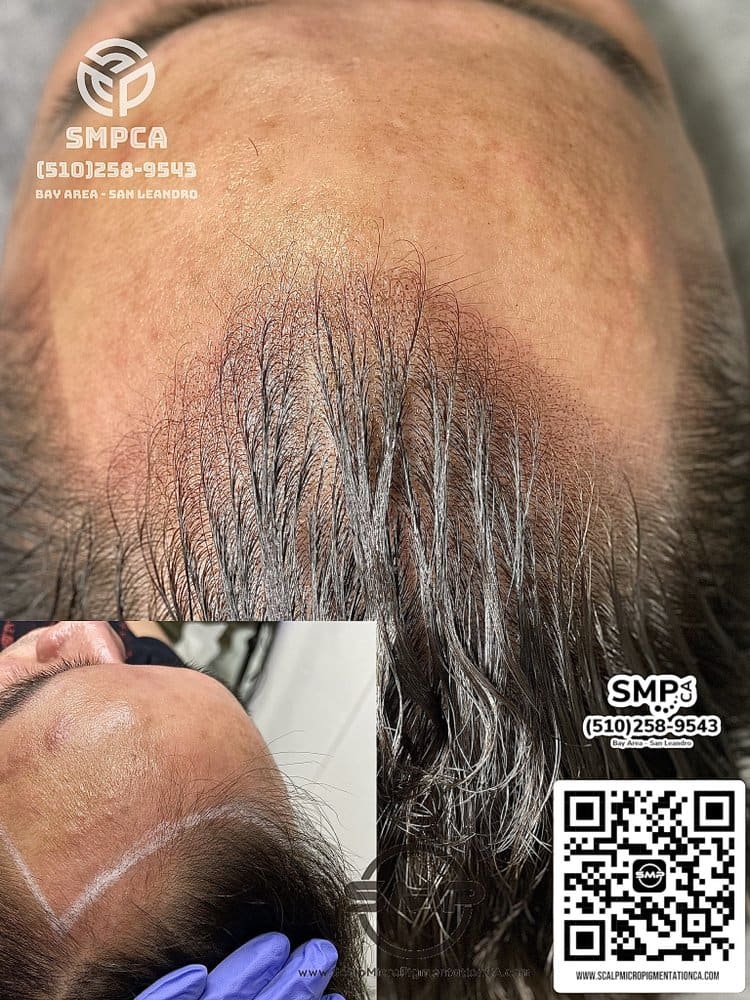
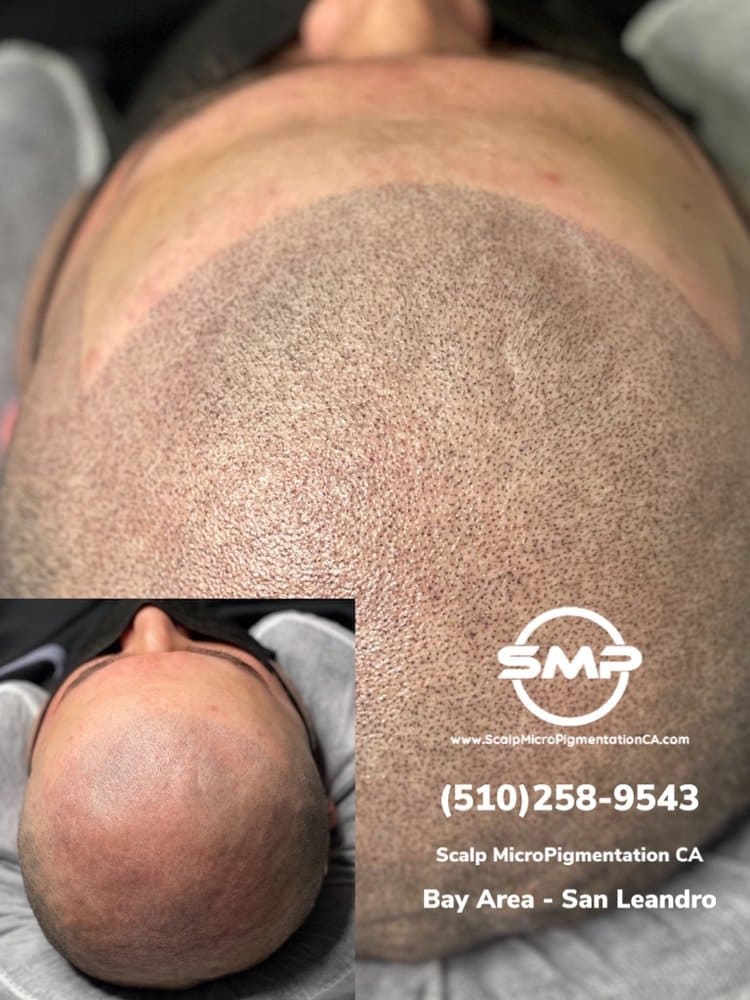
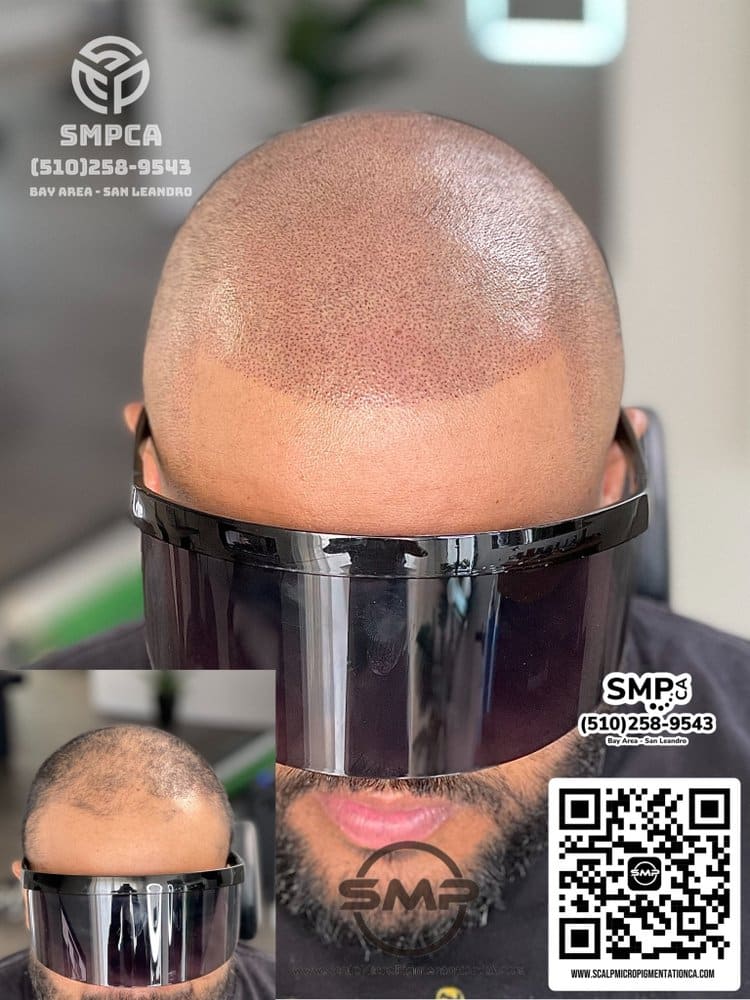
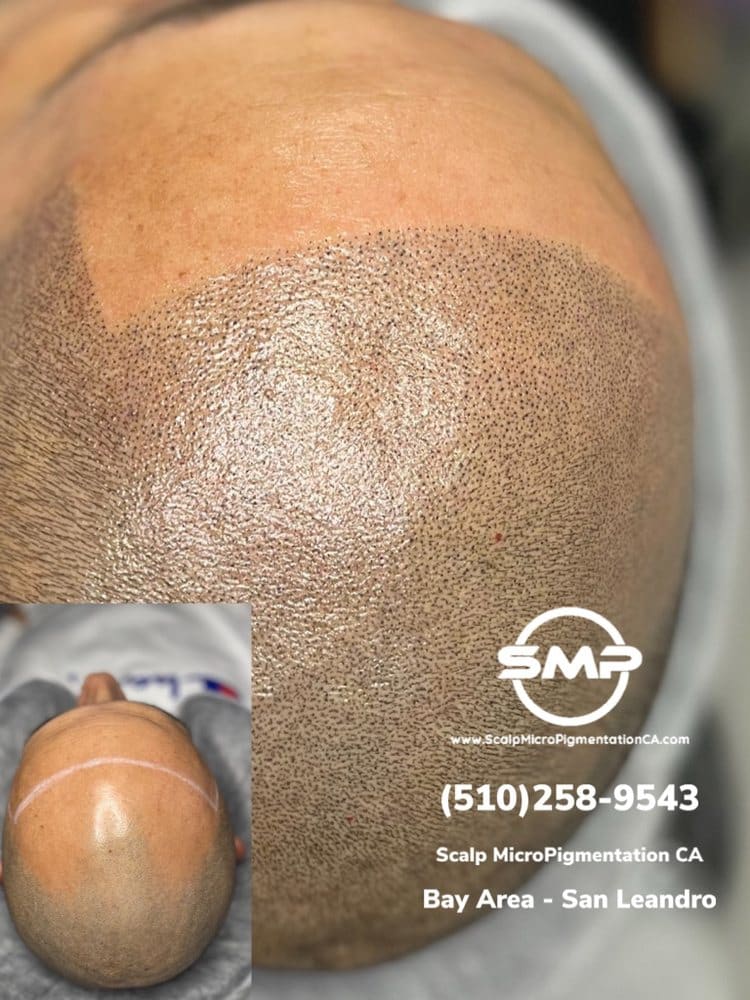
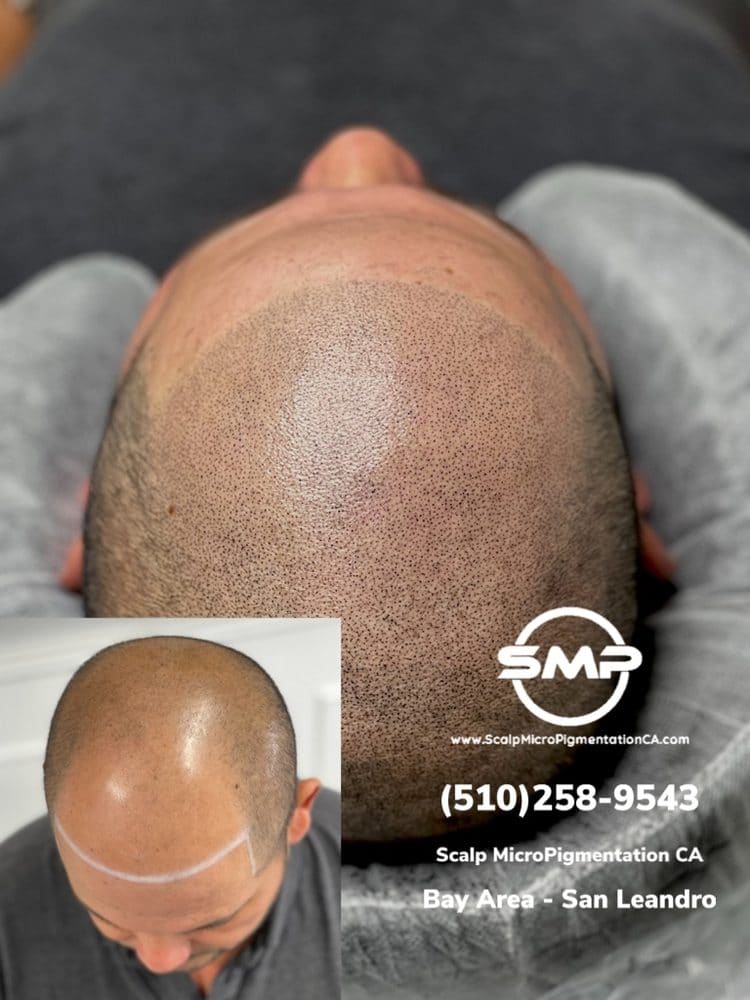

Thousands of sessions · hundreds of clients · one artist
Get your hairline — and your confidence — back.
Free, no-pressure quote. Tell me your situation and I'll show you exactly what's possible before you commit to anything.